Eczema flares and the skin barrier: what is happening beneath the surface?
Atopic dermatitis, often called eczema, is a long-term inflammatory skin condition that causes repeated flares of itching, dryness, and redness. It can affect sleep, comfort, and everyday life [1, 3, 8, 9]. The skin barrier can be pictured as a brick wall: skin cells are the bricks, while natural fats such as ceramides fill the gaps, keep water in, and help keep irritants and microbes out [1, 3, 10]. In some people with eczema, inherited changes involving the protein filaggrin and lower levels of certain fats weaken this barrier. Water escapes faster, the skin dries out, and irritants can enter more easily and activate the immune system [1, 3, 4, 8].
The immune response then releases signals that cause redness and swelling and activate the nerves involved in itching [3, 4, 8]. The usual sites can change with age. In adults and teenagers, eczema often affects the elbow creases, backs of the knees, neck, hands, and skin around the eyes. In babies, it may affect the cheeks, scalp, and outer surfaces of the arms and legs [3, 8, 10, 11]. A doctor may need to distinguish eczema from other causes of itchy bumps, including acne and folliculitis, because the diagnosis guides the treatment plan [1, 3, 8].
Common flare triggers and the vicious itch-scratch cycle
An eczema flare may be linked to one or more triggers, although sometimes the cause is not clear [1, 4, 8, 9, 10]. Common triggers include dry weather and low indoor humidity in winter, or heat and sweat in summer; salts in sweat can sting cracked skin and increase itching [4, 8, 9]. Strong soaps, fragrances, laundry products, and household cleaners may remove protective oils and irritate the skin [1, 8, 9]. Wool and other rough fabrics can add friction, while stress may worsen a flare for some people [4, 8, 9, 11]. Keeping a simple note of what happened before a flare may help reveal a personal pattern instead of assuming there is one fixed trigger.
Itching and scratching can form a repeating itch-scratch cycle [1, 4, 8, 9]. Scratching gives brief relief, but it also makes small breaks in the skin barrier and increases inflammation, so the itch can return more strongly [1, 8, 9]. Repeated scratching may eventually make the skin thick, rough, and more lined; this is called lichenification. It may also make topical treatment harder to absorb and increase the chance that broken skin becomes contaminated with bacteria [1, 3, 8, 10]. Reducing itch and protecting the skin from scratching are important parts of flare care, alongside moisturizing and any treatment a doctor recommends [1, 4, 8].
Restoring the skin barrier: moisturizing and sealing in water
Daily care of the skin barrier is a core part of controlling eczema and may reduce how often flares happen and how severe they become [1, 4, 8, 9, 10]. Use lukewarm rather than hot water, because heat can remove skin oils and increase itching [1, 8, 9]. Keep baths or showers short, around 5 to 10 minutes, and use a mild fragrance-free cleanser or soap substitute (syndet) [1, 8, 9, 10]. After bathing, pat the skin gently rather than rubbing and leave it slightly damp [1, 8, 10]. If a product stings or increases redness, stop using it and review its ingredients with a doctor or pharmacist.
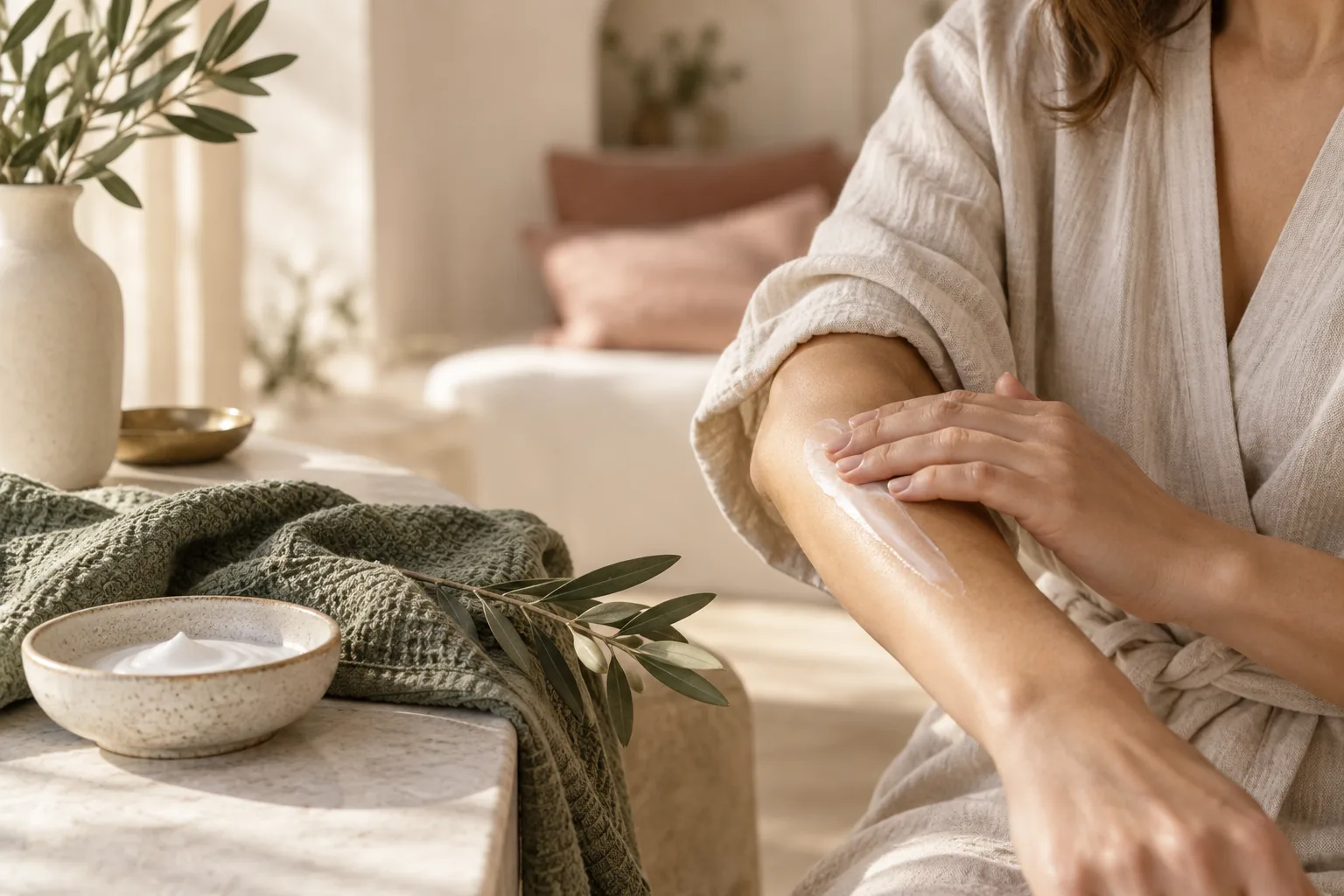
The soak-and-seal method means applying a suitable amount of moisturizer within a few minutes of bathing while the skin is still damp [1, 4, 8, 10]. The aim is to slow water loss and protect the barrier; the timing does not have to be exact for the step to help [1, 4, 8]. Petrolatum-based ointments and ceramide-rich creams often hold moisture longer than a thin lotion, but the best product is one the skin tolerates and the person can use regularly [1, 4, 8, 10]. Some lotions can sting cracked skin because of their ingredients. The same gentle approach applies to eczema and acne care; moisturizing once or more each day, depending on dryness, can protect against cracking and complement a safe home routine for sensitive skin [1, 8, 9].
Evidence-based medical therapies a doctor may consider during flares
Moisturizer matters, but it may not be enough during an inflamed flare. A doctor may add an anti-inflammatory treatment based on age, the affected site, severity, and other medicines [1, 2, 4, 5, 8, 11]. A topical corticosteroid is a common treatment for flares [1, 4, 8, 11]. The doctor chooses the strength: lower-potency products are often used on thin areas such as the face, eyelids, and skin folds, while stronger products may be used for a limited time on thicker skin of the body or limbs [1, 4, 8, 11]. When used in the amount and for the time directed, topical corticosteroids usually have a low risk of side effects. Excessive or prolonged use can thin the skin, while leaving severe inflammation untreated may increase thickening or infection risk [1, 4, 5, 8].
Non-steroid options include topical calcineurin inhibitors such as tacrolimus and pimecrolimus and a phosphodiesterase-4 inhibitor such as crisaborole [1, 4, 5, 8]. A doctor may choose one for the face, around the eyes, or as preventive treatment on areas where flares often return. Each medicine has directions and possible side effects, so no option is risk-free for everyone [1, 4, 5, 8]. If eczema is severe, widespread, or has not responded to topical treatment, a dermatology specialist may discuss narrowband UVB phototherapy, a biologic medicine such as dupilumab, or certain JAK inhibitors. These choices require specialist selection and monitoring; mentioning them does not mean La Rose Clinics offers the devices or medicines as part of its listed services [1, 2, 4, 5].
Common pitfalls to avoid: from folk mixtures to unguided dietary restriction
Some remedies promoted online can irritate eczema instead of calming it [1, 4, 8, 9, 11]. Lemon juice, raw garlic, concentrated vinegar, toothpaste, and undiluted essential oils are not suitable treatments for cracked skin [1, 8, 9]. They can cause a chemical burn or contact dermatitis, increasing redness and pain and weakening the skin barrier [1, 4, 8, 9]. Scrubbing with strong soap or a rough loofah can remove protective oils and make small breaks in the skin, which raises the chance of contamination [1, 8, 10]. If a product causes stinging or swelling, rinse it off gently, stop using it, and seek medical advice according to the severity of the reaction.
Removing whole food groups without medical assessment can create another problem, especially for children [8, 9, 11]. For most people, eczema relates to the skin barrier and inflammation and does not automatically mean an allergy to milk, eggs, wheat, or nuts. An unguided elimination diet may not improve the skin and may cause nutritional deficiency or slower growth [8, 9, 11]. A doctor may consider food-allergy assessment when the history shows a rapid, repeated reaction after a particular food, such as lip swelling, sudden hives, or vomiting [8, 11]. Skin moisturizing and irritant reduction remain central, with separate evaluation when there is a genuine concern about food allergy [1, 4, 8].
Emergency warning signs, eczema herpeticum, and clinical care at La Rose
People with eczema and their families should know the signs that may point to infection or another complication needing urgent care [1, 6, 7, 9, 10]. Eczema herpeticum is a herpes-virus infection affecting skin weakened by eczema [6, 7]. Signs include sudden groups of small, painful blisters with a dent in the center that spread quickly, especially on the face or neck, and then leave round open sores. Fever, chills, swollen glands, or feeling generally unwell may occur [6, 7]. These signs need same-day urgent medical care; some people need hospital admission and antiviral treatment. Delay can lead to complications affecting the eye or the rest of the body [6, 7].
Also seek same-day urgent care for widespread pus, sticky honey-colored crusts, many pustules, or a hot painful area of redness that spreads quickly with fever. These may be signs of a bacterial infection such as impetigo or cellulitis [1, 8, 9]. Redness and peeling over most of the body, especially more than 90%, with shivering or trouble regulating body temperature also needs urgent care, and some people need hospital admission [1, 4, 8]. If a usual flare is not improving with moisturizer or is disrupting sleep, the listed La Rose dermatology consultation includes examination of the skin and scalp, review of the history, medicines, and available tests, assessment of local and internal causes, and a written plan. The doctor may coordinate with the nutrition or internal-medicine teams when needed. You can request a dermatology consultation.