What insulin resistance means, and whether it is the same as prediabetes
Insulin is a pancreatic hormone that helps glucose enter muscle and fat cells and regulates how the liver handles glucose. With insulin resistance, those tissues do not respond as effectively as expected, so the pancreas tries to compensate by releasing more insulin. That compensation may keep blood glucose within the usual range for a time. Insulin resistance therefore does not automatically mean that you have diabetes or even prediabetes [1, 6].
Prediabetes has a different definition: glucose or HbA1c is above the usual range but below the diagnostic range for diabetes. If the pancreas can no longer compensate adequately, glucose may rise over time and eventually reach the type 2 diabetes range. This progression is not inevitable, and its likelihood and pace differ greatly with genetics, age, fat distribution, activity, sleep, medicines and other health conditions [1, 2].
Insulin resistance is also one part of a wider health picture, not a stand-alone label that summarises a person’s health. It may occur alongside high blood pressure, raised triglycerides, low HDL cholesterol or a larger waist. These features may cluster as metabolic syndrome. A useful assessment therefore looks beyond glucose to blood pressure, lipids, family history, smoking and cardiovascular risk. If you already have diabetes, Diabetes review: beyond HbA1c explains the broader follow-up that matters beyond one number [1, 7].
Symptoms: why tiredness, hunger and weight gain cannot make the diagnosis
Most people with insulin resistance or prediabetes have no obvious symptoms. This matters because social-media lists often present fatigue, sleepiness after meals, hunger, sweet cravings, difficulty losing weight or poor concentration as if they confirm insulin resistance. These experiences are real and worth discussing, but they are nonspecific. Inadequate sleep, anaemia, thyroid disease, medicines, psychological strain and many other conditions can cause similar symptoms and need their own assessment [1, 12].
Some findings raise suspicion but still cannot establish the diagnosis alone. They include dark, thickened, velvety skin around the neck or armpits, called acanthosis nigricans, or a cluster of high blood pressure, unhealthy blood lipids and a larger waist. Appearance and body weight are not diagnostic: a person in a larger body may have normal glucose, while a lean person may have insulin resistance or diabetes. Measurements and laboratory results interpreted in context matter more than an impression [1, 6, 7].
Marked thirst, frequent urination, blurred vision, unintentional weight loss, recurrent infections or slowly healing wounds are more consistent with high glucose than with an early, specific sign of insulin resistance. They warrant prompt glucose testing and medical assessment, particularly when new or worsening. Do not wait for symptoms before discussing screening when your risk factors already make testing appropriate [2, 12].
Who should discuss testing? Risk factors matter more than a symptom quiz
Testing decisions are based on age and risk factors, not an online symptom quiz. Current US guidance recommends assessing the risk of prediabetes and diabetes in asymptomatic adults and generally starting screening at age 35. Testing is also considered at any age when overweight or obesity occurs with an additional factor such as a first-degree relative with diabetes, physical inactivity, hypertension, abnormal lipids, cardiovascular disease, a history of gestational diabetes, polycystic ovary syndrome or another condition associated with insulin resistance [2]. The USPSTF recommendation specifically covers adults aged 35 to 70 who have overweight or obesity, with clinicians individualising decisions [5].
Certain medicines can change risk or the timing of follow-up, including repeated or long-term glucocorticoids, some antipsychotics and some HIV treatments. Do not stop prescribed medicine because of concern about glucose; give the clinician its name and dose so they can decide whether and when testing is appropriate. An old normal result is not a permanent guarantee if weight, medicines, symptoms or other risks have changed [1, 2].
PCOS is an important example. Insulin resistance is common in its biology, but the international guideline says clinically available insulin assays have limited clinical relevance and are not recommended routinely; an oral glucose tolerance test has a clearer role in assessing glycaemic status in PCOS. PCOS and weight: understanding the link and what helps covers that relationship and its practical management without turning every hormonal symptom into a self-diagnosis [11].
Useful tests: fasting glucose, HbA1c and the oral glucose tolerance test
In routine care, clinicians usually look for the effect of insulin resistance on glucose and broader health risk instead of trying to prove it with a single insulin measurement. NIDDK explains that direct testing for insulin resistance is used mainly in research. A fasting insulin result or HOMA-IR calculation is therefore not a universally standardised diagnostic criterion for every adult, and the number cannot be interpreted apart from the assay and clinical context [1, 11].
The established tests for detecting prediabetes or diabetes are fasting plasma glucose, HbA1c and, in selected situations, a 75-g oral glucose tolerance test. HbA1c summarises average glucose exposure over roughly three months and does not require fasting. Fasting glucose is a snapshot after at least eight hours without caloric intake. The tolerance test measures the two-hour response and can reveal abnormal glucose handling missed by the other tests, although it requires more time and preparation [2, 3, 4].
For a nonpregnant adult, ADA prediabetes ranges are HbA1c 5.7% to 6.4%, fasting glucose 100 to 125 mg/dL, or two-hour glucose 140 to 199 mg/dL. Diabetes thresholds are HbA1c at least 6.5%, fasting glucose at least 126 mg/dL, or two-hour glucose at least 200 mg/dL. Without unequivocal symptoms or a hyperglycaemic crisis, diagnosis requires a second abnormal result. Tests do not always agree, so the clinician may repeat the result above the threshold or select another test for the situation [2, 3].
HbA1c can be misleading when anaemia, altered red-cell turnover, some haemoglobin variants, pregnancy, bleeding or transfusion, and some kidney or liver conditions are present. If HbA1c does not fit plasma glucose results, the clinician considers interference and may rely more on plasma glucose. Liver assessment has its own pathway; Fatty liver: symptoms, diagnosis and when it becomes serious explains when that concern needs separate evaluation [2, 4].
The clinician assesses the whole picture, not just an insulin number
An organised visit starts with a clear question: is this screening in someone without symptoms, investigation of possible hyperglycaemia, follow-up of an earlier result, or assessment of cardiometabolic risk? The clinician asks about family history, gestational diabetes, PCOS, sleep and snoring, activity, smoking, weight change and eating patterns without blame. Medicines and supplements also matter because some alter glucose or complicate interpretation [1, 2, 5].
Examination may include blood pressure, weight, waist circumference and a skin check when acanthosis nigricans is present, but none diagnoses insulin resistance alone. Tests are selected to answer the clinical question and may include HbA1c or plasma glucose and a lipid profile. Liver tests or other investigations may be appropriate when the history or examination supplies a reason. There is no single panel everyone must have, and repeatedly measuring insulin without a decision that would change can add confusion rather than clarity [1, 3, 7].
Weight is part of the context, not a judgement about behaviour or health. BMI does not describe fat distribution, muscle, blood pressure or glucose, and waist circumference must also be read with the rest of the picture. When weight is the main concern, Scientific update: obesity care goes beyond BMI explains why respectful assessment considers function, complications and personal priorities. The resulting plan should address what is actually established (prediabetes, blood pressure, lipids, sleep, a medicine effect or another cause) rather than a vague label [2, 7].
What actually helps: practical steps without restriction or promises
The aim is not to chase the lowest insulin number; it is to improve insulin sensitivity and reduce the likelihood of rising glucose and cardiovascular harm in a way that can be sustained. Regular activity improves the muscles’ response to insulin even before substantial weight change. WHO generally advises adults to accumulate 150 to 300 minutes of moderate aerobic activity each week plus muscle strengthening on at least two days, but the starting point should be adapted for fitness, pain, heart disease and any medical limitation [8, 10]. Even breaking up long periods of sitting with brief movement is useful.
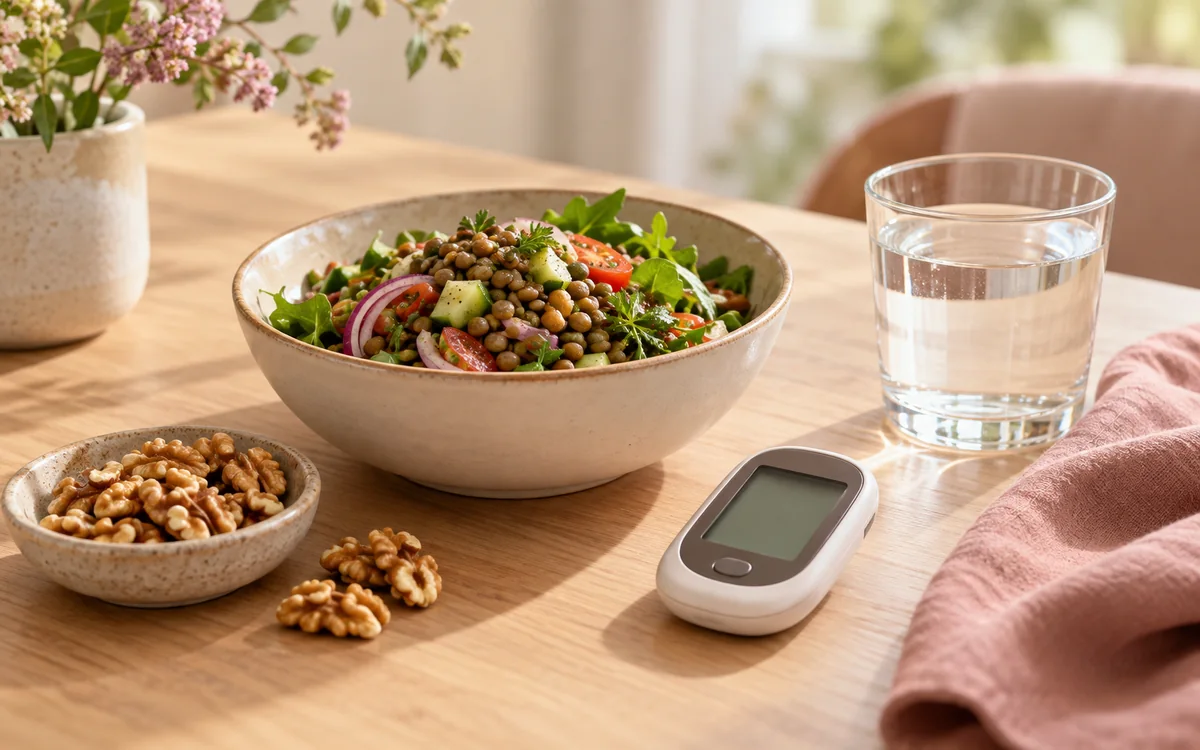
There is no single forbidden-food list. A pattern built around vegetables, pulses, whole grains, whole fruit, suitable protein sources and unsaturated fats, while reducing sugary drinks and heavily processed foods, is usually more sustainable than severe restriction. For a person with overweight and prediabetes, modest sustained weight loss may lower risk, but not everyone needs to lose weight and goals should be agreed without stigma [1, 8].
The Diabetes Prevention Program enrolled people with raised fasting and post-load glucose. Its intensive lifestyle programme, which targeted regular weekly activity and modest weight loss, reduced the development of diabetes compared with placebo. That finding applies to a high-risk study group receiving structured support; it is not an individual promise or a reason for rapid restriction [9]. Adequate sleep, treating sleep apnoea when present, stopping smoking and supporting mental health may also belong in the plan [1].
Medicines are not automatic treatment for a high insulin result. Metformin, weight-management medicines or other therapies may suit selected people with prediabetes or higher risk after discussing benefits, adverse effects, pregnancy, kidney function and other medicines. Do not start or stop a medicine on your own, and avoid supplements or unverified injections promoted as removing insulin resistance [8, 9]. If you already have type 2 diabetes and your readings improve, learn why diabetes remission is not a permanent cure.
Follow-up and red flags: when to review and when to seek urgent help
If a result is in the prediabetes range, follow-up does not mean repeating every test every week. ADA guidance suggests monitoring for progression to diabetes at least annually, with timing adjusted to the result, risk factors and changes in health or medicines. After a normal result, the interval depends on age and risk; every three years may be reasonable for some adults, while higher risk or new symptoms justify earlier testing [2, 5, 8]. Agree with the clinician which test comes next, what it means and which decision would change because of it.
Seek urgent assessment for marked thirst and frequent urination accompanied by vomiting or abdominal pain, rapid or deep breathing, obvious dehydration, profound drowsiness, confusion or rapidly worsening weakness. These can signal severe hyperglycaemia or a metabolic emergency; this is not the time for a fasting insulin test or a routine appointment. Chest pain, sudden breathlessness, fainting or stroke symptoms are separate emergencies and require the appropriate emergency service immediately [2, 12].
When there is no emergency but you have new symptoms, an above-range glucose result, a history of gestational diabetes or several risks that need sorting out, bring a medicine list, earlier results and a short symptom timeline. An internal-medicine clinician can decide whether HbA1c, fasting glucose or an oral glucose tolerance test is appropriate and review blood pressure, lipids and related factors. You can request an internal medicine and diabetes appointment to begin an organised assessment; final testing and treatment decisions follow review of your individual situation [1, 3].