Before use: identify your exact Mounjaro pen
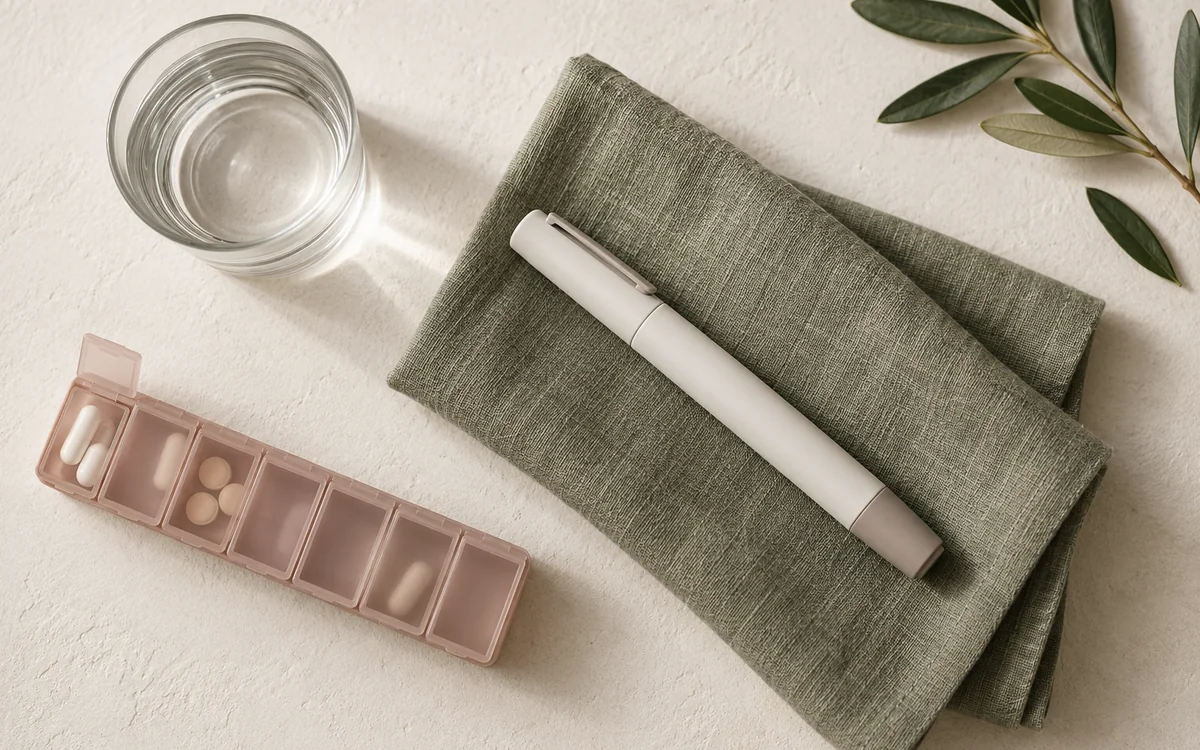
The first step in using a Mounjaro pen is not injecting. Read the product name, strength, device type and the leaflet inside your own pack. Official Mounjaro presentations vary by country and market. Some are single-dose pens used once; multi-dose KwikPens contain four fixed doses, one per week. The button, preparation steps, need for a separate pen needle and permitted time outside refrigeration are not identical across presentations. A video showing a pen from another country cannot replace the instructions supplied with the pen in your hand [1, 2, 3, 5, 8, 12].
Check the pharmacy label and carton every time. Confirm that the name is the prescribed Mounjaro or tirzepatide product, the strength matches the prescription, and the expiry date has not passed. In presentations where the liquid is visible, the instructions describe it as clear and colourless to slightly yellow. Do not use a damaged or frozen pen, or one containing cloudy, discoloured liquid or particles. If the pack differs from the device on which you were trained, or any instruction is unclear, pause and ask the prescriber or a licensed pharmacist before injecting [1, 2, 3, 5].
This guide is limited to administration, storage and a missed dose. It does not decide whether Mounjaro is suitable, choose a strength, or repeat dose-escalation and weight-loss guidance. Those decisions require assessment, prescription and follow-up. The linked GLP-1 guide provides broader context, while the current leaflet in your pack and training on that exact device remain the practical references on injection day [2, 3, 6, 10].
Preparing a KwikPen: a new needle and priming each dose
If your device is a multi-dose KwikPen, wash your hands, remove the cap, and check the pen, label and liquid. Clean the inner seal as directed in the instructions, then attach a new compatible pen needle selected with professional advice. Use a new needle for every injection; the KwikPen instructions link this to preventing infection and blocked needles. Needles may not be included with the pen, so ask the pharmacist which one fits rather than trying an unconfirmed size [1, 5].
Prime the KwikPen before every injection exactly as illustrated in its Instructions for Use. In the current official directions, turn the dose knob to the marked prime position, point the needle upward, tap the cartridge holder gently, then press the knob and count slowly to five until the required symbol appears and a small amount emerges from the needle tip. Priming checks that the pen is working before the dose. It is not an injection into the body and not a method for selecting a partial dose. If liquid does not appear after the number of attempts in your leaflet, follow its troubleshooting route or ask a pharmacist; do not assume the pen is working [1, 5].
Do not transfer medicine from a KwikPen into a syringe or try to withdraw the remainder. The pen provides four full doses, and some liquid remaining after the fourth dose is expected so the device can work correctly. Its directions say to discard the pen after four doses or the stated time because the remainder may not provide a complete dose. Never share a pen, even after changing the needle. These are device rules, not a situation for counting clicks or copying a dose-splitting video [1, 5].
Injection sites and completing the full dose
Mounjaro is injected under the skin of the abdomen or thigh; another person may inject the back of the upper arm. The current Canadian KwikPen instructions specify an abdominal site at least 5 cm from the navel. Rotate the point each week. The same general body area can be used, but select a different spot. Avoid skin that is bruised, tender, thickened, scaly, lumpy, scarred or damaged. If insulin is also used, it may be injected in the same general body area but not immediately beside Mounjaro, and the medicines must not be mixed in one injection [1, 2, 5, 6].
For a KwikPen, turn the dose knob fully until the full-dose symbol shown in the device instructions appears; do not count clicks. Insert the needle as trained, push the knob all the way in, keep holding it and count slowly to five. Confirm the completion symbol before removing the needle. A small drop on the needle tip afterwards can occur and does not mean that the dose was lost. If the symbol does not appear, follow the directions for that pen. If you still think the dose was incomplete, do not start over or repeat the injection independently [1, 5].
After injection, press gently with gauze or cotton if there is a spot of blood; do not rub. Replace the outer needle shield carefully as illustrated, remove the needle, put it straight into a puncture-resistant sharps container, and replace the pen cap. Do not store a KwikPen with the needle attached because the instructions identify possible leakage, blockage or air entry. A sharps container matters at home and while travelling. Final disposal rules vary locally, so ask a pharmacist about the arrangement in your area [1, 5, 9].
Storing Mounjaro in Egyptian heat: refrigeration and the 30°C limit
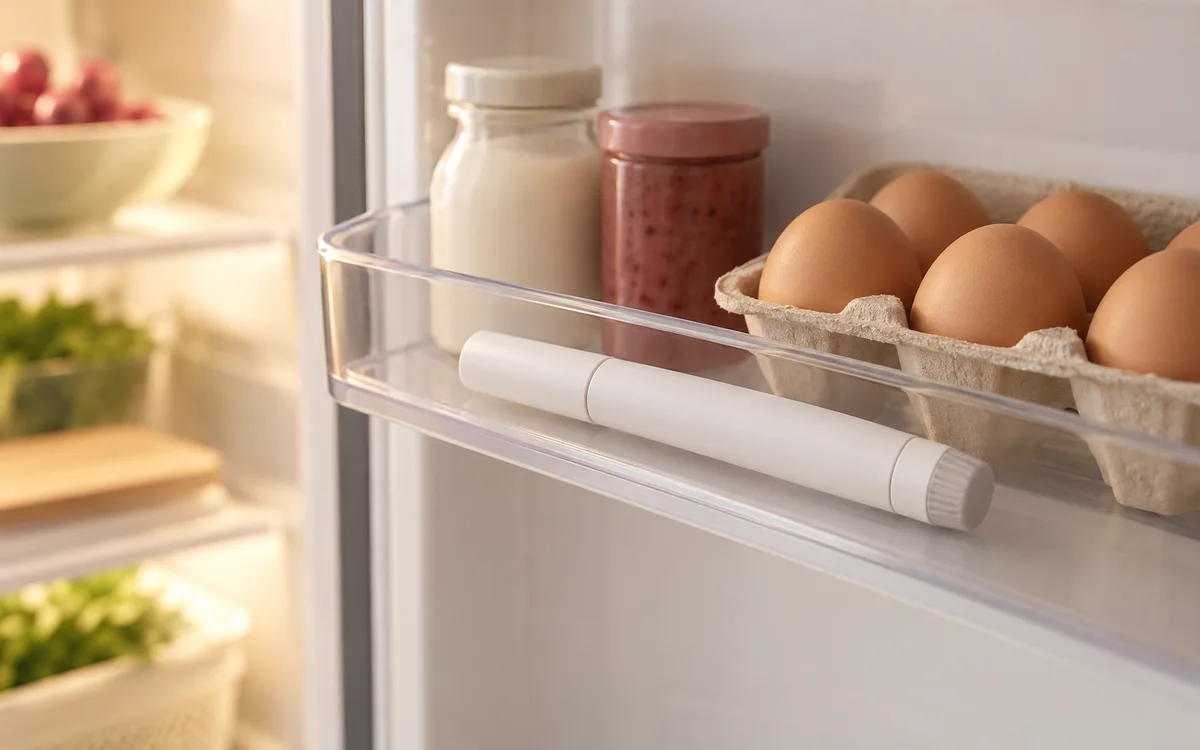
Official instructions share a core rule: keep an unused pen refrigerated at 2–8°C and do not freeze it. Keep it away from the freezer compartment and any surface that could freeze it, and retain the original carton for light protection where the leaflet directs. Do not use a pen that has frozen, even after thawing. Do not use one with visible damage or altered liquid. Choose a stable refrigerator location that maintains the required range without direct contact with a surface that could freeze the pen [1, 2, 3, 5, 7].
There is no single out-of-fridge duration for every pen. Some single-dose pens in current US and European instructions may remain outside refrigeration for a total of up to 21 days, provided the temperature does not exceed 30°C. Current multi-dose KwikPen materials state that an in-use pen may be kept for up to 30 days at or below 30°C, after which it is discarded; it is also discarded after four doses even if liquid remains. Do not apply the 21-day rule to a four-dose pen or the 30-day rule to a single-dose pen without checking its leaflet [1, 2, 3, 4, 5, 7].
Room temperature in Egypt can exceed 30°C, particularly inside a parked car, in a bag in direct sun, or in an uncooled room. The label does not grant extra exposure above the limit merely because it happened during travel. If you do not know how hot the pen became or for how long, do not guess that it remains usable or try to reset the exposure by refrigerating it. Isolate it, note the time and circumstances, and ask a pharmacist or the manufacturer about that exact presentation. Follow the wording on your label: below or up to 30°C as stated, away from heat and light, and never frozen [1, 2, 3, 5, 7].
Travelling with Mounjaro without temperature or equipment confusion
Before travel, identify the device, number of doses, and whether it is unused or an already-started KwikPen; record the first-use date. Keep it in the original labelled carton and carry a prescription copy or clinician letter if the journey or airport rules require one. Pack compatible pen needles if your device needs them, along with swabs and a small sharps container. The FDA advises carrying a travel-size sharps container and keeping medicine identified by the medicine and manufacturer name or a pharmacy label [5, 9].
If the journey requires cooling, use a medicine carrier that maintains the required range without placing the pen directly against ice or a frozen cooling pack. The aim is not to make the pen as cold as possible; it is to avoid both freezing and exposure above the labelled limit. Do not leave it in a car, beside a sunny window or in a hot bag. Track total time outside refrigeration in the way your leaflet specifies, because some presentations count cumulative days while a multi-dose pen also has a limit linked to first use [1, 2, 5, 7].
Cross time zones without bringing two doses closer than the permitted interval. Mounjaro is used weekly at any time of day, with or without food, and the weekly day may be changed when at least 72 hours separate doses. A time-zone change alone is not a reason for an extra dose. If the calculation is confusing, write down the date and time of the last injection and the usual schedule, then ask the prescriber before leaving. Put every used needle straight into the container; never leave a loose needle in aircraft or hotel waste [1, 2, 6, 9].
If a dose is missed or the injection day needs to change
If a Mounjaro dose is missed and remembered within four days, or 96 hours, of its scheduled time, take it as soon as possible. If more than four days have passed, skip it and take the next dose on the usual weekly day. Do not take two doses together to compensate, and do not allow less than three days, or 72 hours, between doses. This rule appears in current official Mounjaro materials, but always compare it with the leaflet supplied with your pack [1, 2, 3, 4, 6].
The weekly day may be changed when at least 72 hours separate the two doses. After the change, continue once weekly on the new day. This is not permission to use the medicine every three days and is not a way to accelerate results. Three days is the minimum interval for a change of day; the basic schedule remains weekly. Record the new day on the phone and pen calendar to prevent accidental duplication [1, 2, 6].
If more than one dose was missed, the last injection is uncertain, or storage conditions were unknown during the interruption, do not resume automatically. The label provides a rule for a missed dose, while returning after several weeks requires the prescriber, especially when treatment stopped because of illness, vomiting or a medical procedure. If two doses were taken too close together or the amount is uncertain, obtain prompt medical advice and bring the pack and pen. Do not attempt to correct the error by independently adding or omitting further doses [1, 3, 6].
Is Mounjaro harmful? Common effects and warning signs
The question “is it harmful?” has no single answer without knowing a person’s medical history and medicines. The official label does list common effects that can occur, particularly when treatment starts or the plan changes: nausea, diarrhoea, vomiting, constipation, abdominal pain or discomfort, indigestion and reduced appetite. Tell the clinician or pharmacist about a troubling or persistent symptom, and do not try to manage vomiting or appetite loss by independently changing the dose or the pen clicks [1, 2, 6, 7].
Seek urgent assessment for severe, persistent abdominal pain, especially if it reaches the back, or upper-abdominal pain with fever, yellow skin or eyes, or pale stools; these symptoms need assessment for a pancreatic or gallbladder problem. Severe vomiting or diarrhoea that prevents drinking, low urine output, marked dizziness, or signs of a serious allergic reaction such as facial or tongue swelling, trouble breathing, widespread rash or fainting also need urgent care. This article cannot diagnose the cause; see the serious Mounjaro side effects that need urgent care [1, 2, 6, 7].
Mounjaro on its own has a lower risk of low blood sugar, but the risk rises with insulin or a sulfonylurea. If either is part of your treatment, ask the prescriber for a glucose-monitoring plan and the symptoms of low blood sugar rather than changing any medicine independently. The label also warns that Mounjaro can affect absorption of oral contraceptive pills at specified points when treatment starts or the plan changes. Check the leaflet and prescriber about a suitable additional contraceptive method; do not assume the same rule fits everyone [1, 2, 6].
A quick mistakes checklist: do not count clicks to select an unprescribed amount; do not split a dose or transfer medicine to a syringe; do not share a pen; do not reuse a needle or store the pen with one attached; do not use a frozen or storage-uncertain pen; and do not repeat an injection just because dose completion is uncertain. Read the window and leaflet for the pack in hand, not a video or social-media comment [1, 2, 5, 6].
An unlabelled pen or injection problem: pause and ask
Do not buy a product advertised as “Mounjaro” from a social-media account or unregulated seller, and do not use a pen without a clear carton, leaflet and label. Regulators have warned about unapproved or illegally marketed tirzepatide and semaglutide products that may be counterfeit or contain the wrong amount or unknown ingredients. The MHRA also explains that powders in vials requiring mixing are not authorised forms of the GLP-1 products in its guidance, and that a counterfeit pre-filled pen can resemble the genuine device. A prescription, licensed pharmacy and traceable supply are more important than appearance alone [10, 11].
If the medicine name or strength does not match, the label is incomplete, the pen is damaged, or the liquid is altered, do not inject it. If a KwikPen knob will not move, a needle blocks, or the completion symbol does not appear, use the troubleshooting section for that exact leaflet. Official instructions say not to start over or repeat a dose merely because the first injection may have been incomplete. Keep the pen and carton out of use and contact a licensed pharmacist, the prescriber, or the manufacturer contact stated in the leaflet [1, 5, 11].
Keep the response proportionate. A drop on the needle tip after injection can be normal, and liquid remaining in a KwikPen after four doses is expected, but neither is a reason to withdraw the remainder. By contrast, a repeated or unknown dose needs medical advice, and severe symptoms after an administration error should not be left unassessed. The linked guide to unidentified slimming products covers pack and claim checks in more detail. Here the simple rule is that an unlabelled, unprescribed product does not go into the body [1, 5, 6, 10, 11].
Your next step: training on your pen and a written plan
Before first use, or after receiving a different pen presentation, request practical training on that exact device. Bring the unopened pack, leaflet and pen, and list the questions: Is it single-dose or a KwikPen? Does it need a separate needle? How does the device show dose completion? What date counts as first use? Which storage rule is written for this presentation? Brief device-specific training is safer than combining instructions from several pens [1, 2, 5, 8].
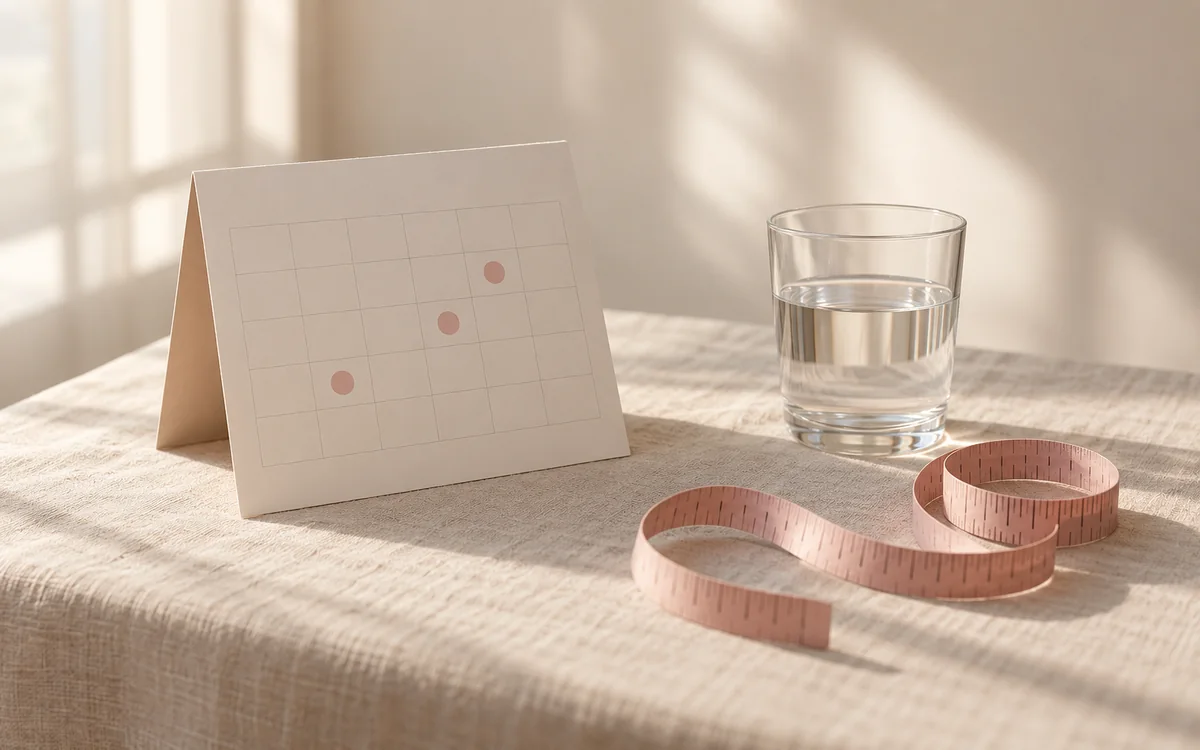
Keep a simple card with the injection day, a KwikPen first-use date, the final permitted date from the leaflet, and the number of doses used. Record time outside refrigeration if that presentation counts cumulative days. If heat exceeded the limit, the pen froze, or dose completion was uncertain, mark it “do not use pending review” and separate it from usable pens. Organisation reduces confusion, but it does not alter product instructions or turn uncertainty into a home judgment about medicine quality [1, 2, 3, 5].
For individual review of administration within an already prescribed treatment plan, the medical team at La Rose can review the pen, leaflet and record during a consultation, with branches in Maadi and Fifth Settlement, New Cairo. For an urgent storage question or an extra dose, contact a licensed pharmacist or emergency care straight away. Bring the original pack and medicine list, and book a consultation if a clear follow-up plan is needed [6, 10]. If you are just starting, see our guide to tests and ultrasound before weight-loss injections.
Book follow-up for a GLP-1 plan
If you have a prescription and need to review pen use within a GLP-1 plan, book follow-up at the Maadi weight clinic with Dr Shimaa Fouad. Bring the original carton, leaflet, medicine list and injection-day record; the visit can organise questions about use, storage and follow-up, but it does not replace emergency care for a warning sign. Book Maadi follow-up via WhatsApp [6, 10].
Weight and obesity care is also available at the Fifth Settlement branch. If that branch suits you, book Fifth Settlement follow-up via WhatsApp and say that you are following a GLP-1 plan and have a Mounjaro-pen question. The team confirms appointment details and the appropriate follow-up route when you book [6, 10].