Low FODMAP Diet for IBS: Direct Answer and Getting Started
The primary evidence-based low FODMAP diet for IBS is a structured, temporary dietary protocol that restricts fermentable carbohydrates to relieve persistent bloating, abdominal cramping, and irregular bowel habits [1, 2]. If you are seeking specialised digestive evaluation in Maadi before altering your nutrition, you can consult Dr Mohab Ashraf Fouad at La Rose Clinics in New Maadi, 14 El-Mokhtar St, off El-Nasr St, behind QNB Bank, with abdominal ultrasound available during the same visit.
The fundamental principle of the low FODMAP approach is neither permanent deprivation nor following a generic online list indefinitely. Clinical research demonstrates that approximately 75% of individuals living with irritable bowel syndrome experience significant symptom relief when high-fermentation foods are temporarily replaced with gentle alternatives [2, 12]. The medical goal is to calm intestinal hypersensitivity initially, followed by systematic reintroduction to identify your personal food triggers while preserving a healthy gut microbiome and nutritional balance [4, 13].
At La Rose in Maadi, we combine medical gastroenterology assessment to rule out organic pathology with personalised nutrition planning alongside our clinical nutrition team, adapting meal choices to everyday Egyptian home dining [1, 10]. You can check current availability and Book your appointment in advance to arrange your consultation; clinic schedules may vary and are confirmed during booking, with further details available directly by phone or WhatsApp.
What Are FODMAPs? How They Cause Bloating and Pain
The term FODMAP is an acronym for a collection of short-chain carbohydrates and sugar alcohols that are poorly absorbed within the small intestine [1, 2]. These encompass four primary chemical groups: oligosaccharides including fructans and galacto-oligosaccharides found in wheat, onions, garlic, and legumes; disaccharides represented by lactose in liquid milk and soft dairy; monosaccharides consisting of excess fructose found in honey and certain fruits such as apples; and polyols, which are sugar alcohols like sorbitol, mannitol, and xylitol found in stone fruits and sugar-free products [1, 4].
When these short-chain carbohydrates escape complete absorption in the small intestine, they travel directly into the large bowel, triggering two distinct physiological mechanisms [2, 13]: 1. Osmotic water draw: FODMAP molecules draw significant volumes of liquid into the intestinal lumen, causing abdominal distension, audible gurgling, and loose or urgent bowel movements [1, 13]. 2. Rapid microbial fermentation: Resident colonic bacteria ferment these readily available carbohydrates, generating substantial volumes of hydrogen, methane, and carbon dioxide gases within hours [2, 4].
In individuals without gut disorders, this gas volume may pass with minimal discomfort. However, in irritable bowel syndrome, patients exhibit visceral hypersensitivity, meaning the sensory nerve endings embedded in the intestinal wall overreact to normal stretching. Consequently, even modest gas production translates into intense abdominal cramping, painful fullness, and distressing bowel urgency that disrupts everyday routines [4, 13].
Essential Medical Assessment and Tests Before Starting the Diet
One of the most frequent missteps is downloading an exclusion list and cutting out wheat, dairy, and beans independently without clinical evaluation [7, 9]. The primary medical requirement is seeing a gastroenterologist to confirm that your symptoms truly represent irritable bowel syndrome and to rule out organic gastrointestinal conditions requiring specific pharmacological care [9, 10].
Gastroenterologists look specifically for alarm symptoms, known as red flags, which require urgent clinical evaluation and potentially endoscopy or imaging rather than mere dietary adjustments [7, 9]: 1. Visible rectal bleeding or dark, tarry stools [7, 9]. 2. Rapid, unintentional weight loss without intentional dieting [7, 9]. 3. Severe abdominal pain or diarrhoea awakening you from restful sleep [9]. 4. A family history of colorectal carcinoma, coeliac disease, or inflammatory bowel disease [9]. 5. New onset of bowel disturbance after 50 years of age or unexplained iron-deficiency anaemia [7, 9].
You can explore these clinical signs further in our comprehensive guide to IBS symptoms and red flags before embarking on major food restrictions [7].
Another crucial consideration is ruling out coeliac disease before eliminating wheat. Diagnostic serology checks for tissue transglutaminase antibodies (tTG-IgA), which remain reliable only while you continue eating gluten regularly for at least 6 weeks before testing [14]. Eliminating traditional Egyptian baladi bread prematurely induces false-negative antibody results, preventing accurate identification of genuine autoimmune disease; read our update on coeliac testing before a gluten-free diet to understand why sequencing matters [10, 14]. Stool investigations, including microbiological examination and faecal calprotectin, are equally vital to exclude chronic gut infections and inflammatory bowel disease [7, 9].
The Three Phases of the Low FODMAP Diet: Elimination to Personalization
The low FODMAP diet is fundamentally an investigative medical pathway divided into three distinct, structured phases rather than lifelong dietary restriction [3, 4]:
Phase 1: Elimination and restriction (lasting 2 to 6 weeks). During this opening phase, all high-FODMAP foods are temporarily eliminated and swapped for low-FODMAP alternatives [3, 12]. The primary purpose is to settle intestinal hyperreactivity and achieve consistent relief from persistent cramping and bloating [3, 5]. If notable symptom improvement does not occur within 6 weeks of strict compliance, fermentable sugars are unlikely to be your primary driver, prompting your physician to investigate small intestinal bacterial overgrowth (SIBO) or neuromuscular motility disorders [4, 12]. Prolonging strict elimination beyond 6 weeks is actively discouraged because it depletes beneficial bifidobacteria and reduces prebiotic diversity [3, 13].
Phase 2: Systematic reintroduction (spanning 6 to 8 weeks). Once gastrointestinal stability is achieved, individual FODMAP subgroups are challenged systematically [3, 4]. A single challenge food representing one isolated carbohydrate category is tested over 3 consecutive days in escalating portions, such as cows milk for lactose, honey for excess fructose, or garlic for fructans [3, 5]. Any physical reactions are noted in a structured symptom journal, followed by a 3-day washout period on baseline low-FODMAP meals before testing the next group [3, 12].
Phase 3: Personalisation and long-term maintenance. The concluding phase integrates your specific tolerance thresholds into a broad, balanced eating pattern [3, 5]. You reintroduce all well-tolerated foods freely, selectively restricting only the specific trigger groups and portion sizes that provoked discomfort during testing [3, 4]. This structured personalization supports dietary freedom, uncomplicated social dining, and comprehensive micronutrient adequacy [3, 5].
Egyptian Foods: High vs Low FODMAP Guide for Everyday Meals
Adapting the low FODMAP approach to the Egyptian kitchen requires practical insight into traditional recipes and cooking techniques [1, 2]. Here is a structured comparison of customary Egyptian staples and their gut-friendly modifications:
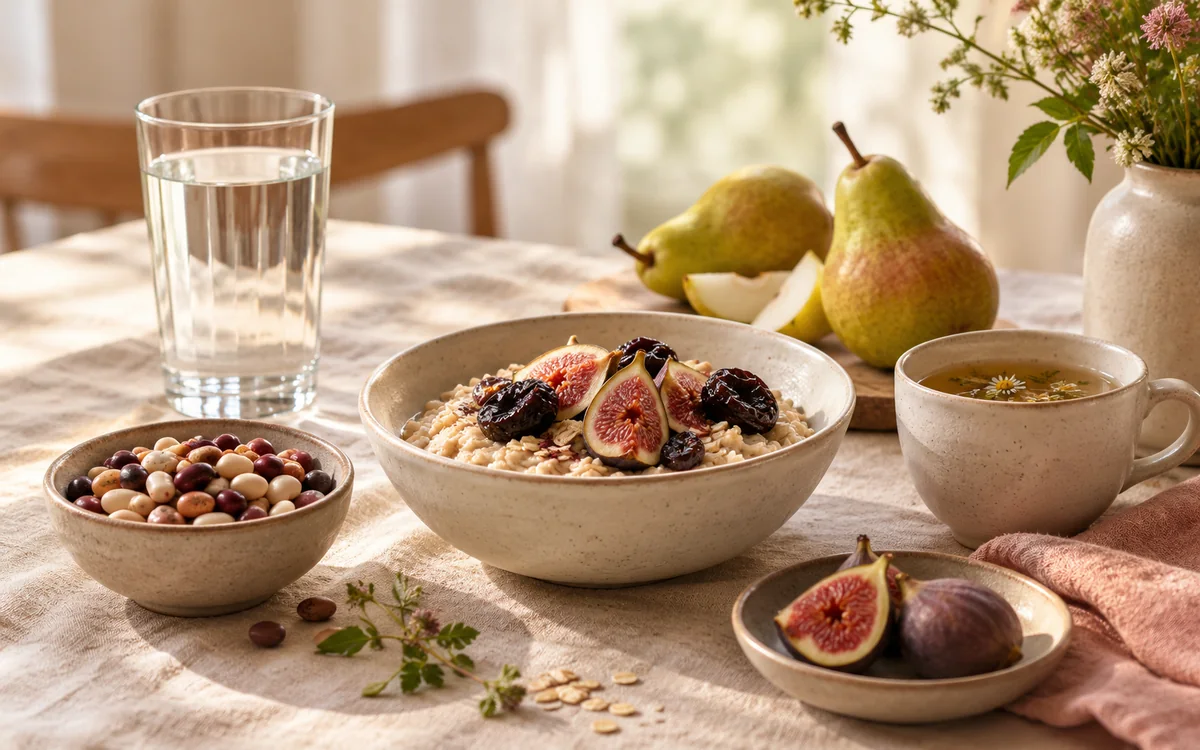
1. Foul medames and taameya: Fava beans are exceptionally rich in galacto-oligosaccharides (GOS), which drive vigorous microbial gas production and severe post-breakfast distension [2, 3]. During the initial elimination phase, substitute broad beans with boiled eggs, olive-oil omelettes, lactose-free cottage cheese, or savoury rolled oats [1, 11]. For lentils and chickpeas, thoroughly rinsed canned lentils contain markedly lower FODMAP levels because water-soluble GOS leaches into the canning brine, making a small serving of approximately 45 grams well tolerated [3, 11].
2. Molokhia and poultry broths: Fresh or frozen jute mallow leaves are inherently low in FODMAPs, yet customary Egyptian preparation involves heavy garlic tasheh and onion-rich stock [1, 3]. To enjoy molokhia comfortably, prepare it with a homemade allium-free poultry broth, and create the sizzling coriander tasheh using garlic-infused olive oil; fructans are water-soluble but lipid-insoluble, meaning garlic aroma infuses into oil without transferring the fermentable carbohydrates that induce cramping [1, 11].
3. Traditional baladi bread: Egyptian whole-wheat flatbread contains high fructan concentrations from the wheat endosperm and bran; substitute with 100% corn flatbread, gluten-free pitta, or plain rice cakes during phase one [1, 2].
4. Home-style koshary: You can construct an easily digested version using steamed white rice, gluten-free macaroni, a small measured portion of rinsed canned lentils, and a fresh tomato cumin sauce made with vinegar and garlic-infused oil rather than boiled alliums [1, 11].
For a deeper clinical breakdown on differentiating benign digestive fullness from medical concerns, consult our guide to persistent abdominal bloating: when to see a doctor [1].
IBS Subtypes: Constipation vs Diarrhoea and Fibre Strategy
Irritable bowel syndrome is clinically classified into three distinct subtypes determined by predominant bowel consistency [6, 10]: 1. Constipation-predominant IBS (IBS-C): Characterised by infrequent defecation, hard or lumpy stools, and an uncomfortable feeling of incomplete evacuation [6, 8]. 2. Diarrhoea-predominant IBS (IBS-D): Involving frequent watery or loose stools, urgent postprandial toilet trips, and recurrent lower abdominal cramping [6, 8]. 3. Mixed-pattern IBS (IBS-M): Showing alternating cycles of hard constipation and loose diarrhoea across varying weeks [6, 10].
Dietary fibre modification requires careful tailoring according to your clinical subtype rather than applying blanket advice [8, 11]. A frequent clinical mistake is instructing individuals with IBS-C to consume coarse insoluble wheat bran; wheat bran acts as a mechanical irritant on hypersensitive mucosal linings, worsening spasmodic pain and bloating [6, 11].
The recommended clinical strategy prioritises soluble fibre, primarily psyllium husk (ispaghula), porridge oats, and finely milled linseeds [6, 10]. Soluble fibre binds water to form a soft, soothing gel that normalises stool transit without triggering excessive bacterial gas fermentation, provided it is accompanied by steady daily fluid intake [6, 8]. If persistent stool infrequency is your main ongoing battle, consult our comprehensive guide on chronic constipation in adults to examine structured medical evaluations [10].
IBS in Women, Hormonal Fluctuations, and the Gut-Brain Axis
Women experience irritable bowel syndrome at higher rates, an observation strongly linked to continuous cyclical fluctuations in sex hormones and their direct effects on gut motility [6, 7]. During the late luteal phase and the onset of menses, shifting oestrogen levels and elevated circulating prostaglandins heighten visceral pain sensitivity, frequently precipitating lower abdominal cramping and sudden diarrhoea [6, 9]. Conversely, elevated progesterone levels in the mid-luteal phase relax intestinal smooth muscle, delaying transit time and exacerbating gaseous distension and stubborn constipation [7, 9].
Furthermore, the gut and the brain communicate through a bi-directional neural pathway known as the gut-brain axis [6, 10]. The enteric nervous system embedded within the bowel wall contains millions of neurons and regulates vast reserves of peripheral serotonin; consequently, psychological stress, professional pressures, domestic exhaustion, and disrupted sleep rapidly manifest as visceral hypersensitivity, painful cramps, and erratic evacuation [6, 10].
Consequently, comprehensive management requires lifestyle support alongside dietary guidance, incorporating diaphragmatic breathing exercises, restorative sleep, and moderate regular walking to regulate visceral autonomic tone [6, 10]. You can explore hormone-related variations and diagnostic considerations in our clinical overview of IBS symptoms in women [7].
Colon and Digestive Clinic in Maadi: What to Expect During Your Visit
When seeking structured medical care to resolve persistent irritable bowel syndrome discomfort, La Rose Clinics provides dedicated gastroenterology services at our New Maadi branch. The clinic is situated at 14 El-Mokhtar St, off El-Nasr St, behind QNB Bank, providing easy accessibility across Maadi via El-Nasr Street and the Autostrad.
Consultations are conducted by Dr Mohab Ashraf Fouad, specialist in internal medicine, diabetes, hepatology, gastroenterology, and endoscopy, available at the Maadi branch on Saturdays from 4 to 7 pm. During the initial consultation, Dr Mohab undertakes a comprehensive clinical history, examining the pattern and chronicity of your symptoms, their correlation with meals or stress, and your current medications [7, 9]. A physical examination and abdominal ultrasound are performed during the same visit to evaluate the liver, gallbladder, and abdominal organs, ruling out gallstones or organic structural inflammation [1, 9].
Alongside medical gastroenterology assessment, patients access clinical nutrition guidance in Maadi with Dr Shimaa Fouad (Saturday, Monday, and Tuesday from 3 to 8 pm) and Dr Alyaa Saeed (Saturday and Monday from 2 to 7 pm) to adapt low-FODMAP meal plans to your domestic routine [1, 10]. To understand clinical diagnostic pathways further, consult our detailed pillar guide on choosing a colon and IBS doctor in Maadi. You can call or message our team via WhatsApp at 01040661893 to check schedules and confirm your consultation.
Common Low FODMAP Mistakes and Practical Kitchen Advice in Egypt
Sustaining digestive comfort on a low-FODMAP dietary plan depends heavily on sidestepping widespread mistakes that derail symptom recovery [3, 12]:
1. Indefinite dietary elimination: Remaining strictly restricted for months starves bifidobacteria, eroding prebiotic diversity vital for healthy metabolic function [3, 13]. Restriction provides transient calm, after which systematic reintroduction must commence [3, 5]. 2. Overlooking portion stacking: Certain food items remain low-FODMAP only at measured servings; consuming larger portions or combining several moderate items within one sitting accumulates fermentable sugars, provoking unexpected bloating [3, 12]. 3. Misconstruing the protocol as a weight-loss regime: Low-FODMAP nutrition is a diagnostic gastrointestinal intervention rather than a weight-reduction regimen, and pairing aggressive caloric deprivation with broad restrictions risks micronutrient deficiency and fatigue [5, 8].
4. Missing concealed polyol sweeteners: Chewing sugar-free gum or consuming diet confections sweetened with sorbitol, xylitol, or isomalt triggers severe osmotic gas and urgent diarrhoea [8, 11].
Practical culinary strategies for Egyptian homes: 1. Prepare homemade garlic-infused olive oil: Gently warm olive oil with halved whole garlic cloves for 10 minutes, then strain and discard the garlic solids thoroughly; this captures authentic culinary flavour without transferring fermentable fructans into your meals [3, 11]. 2. Use solely the green leafy tops of spring onions or leeks for marinades and salads, avoiding the white bulbous bases where fructan compounds reside [3, 12]. 3. Divide daily nutrition into 4 or 5 smaller, evenly spaced meals rather than consuming one heavy, late dinner after long commuting hours, lessening the mechanical burden on gut motility [6, 8]. 4. Sip soothing peppermint, chamomile, or anise herbal infusions to ease intestinal muscle hypercontractility and dissipate retained colonic gas [6, 11].