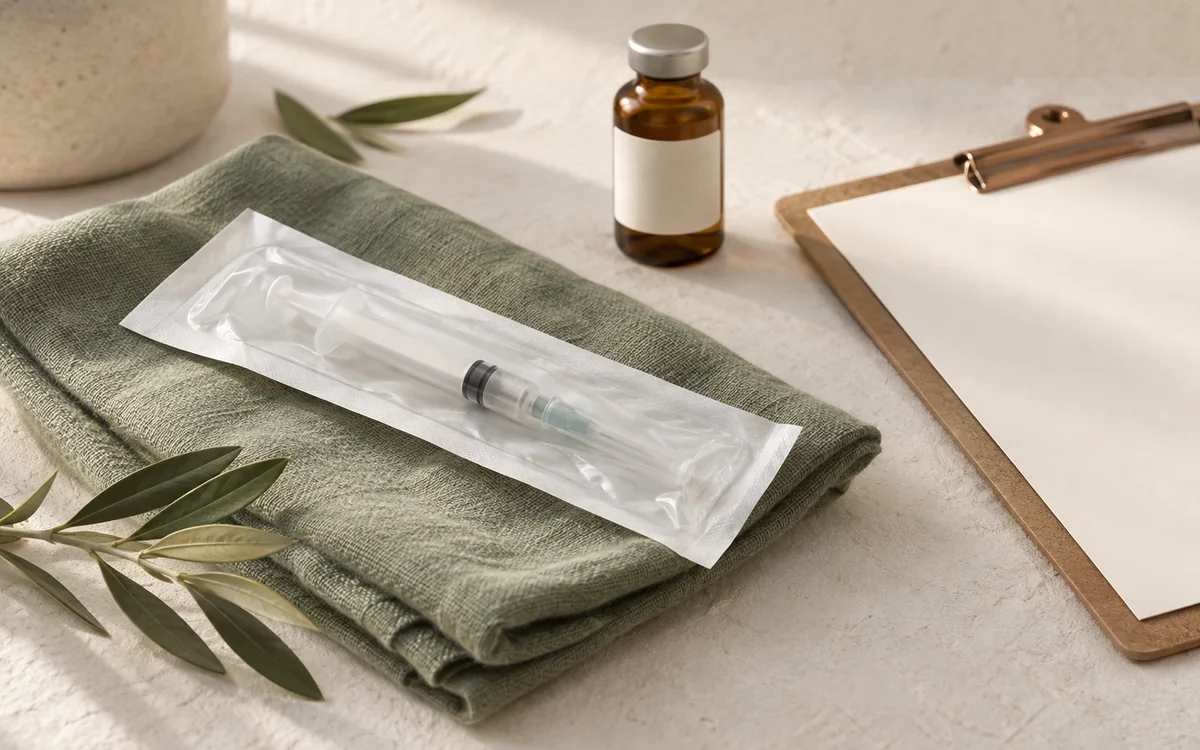
Mesotherapy or liposuction: why this is not a like-for-like comparison
If you are asking whether to choose mesotherapy or liposuction, the first point is that the two names do not describe the same level of intervention. Mesotherapy is used as an umbrella term for injections of different substances into or beneath the skin, while injection lipolysis is a more specific approach aimed at small localised fat deposits. A scientific review of the history of mesotherapy distinguished traditional mixtures from injections containing deoxycholate or phosphatidylcholine and showed why a marketing name alone does not identify the ingredient or the evidence behind it [1, 11].
Liposuction, by contrast, is surgery that reduces subcutaneous fat in selected areas using a thin tube and suction. It may involve local anaesthesia, intravenous sedation or general anaesthesia depending on the area, volume and surgical plan. It is a body-contouring operation, not an obesity treatment or a substitute for a weight-management plan [4, 7, 9].
The useful question is therefore not which option is universally stronger. It is what tissue is causing the bulge, how defined the area is, whether the aim is a small adjustment or removal of a larger amount of subcutaneous fat, and whether the person is prepared for surgery and recovery. It also matters whether the proposed injection has a known ingredient and an authorised use for that area or is an unidentified mixture. Those answers determine whether either route is reasonable in the first place [1, 3, 9].
Fat volume and treatment area: what can each option reasonably do?
Fat-dissolving injections have mainly been studied for focal adjustment rather than changing total body weight. In the United States, deoxycholic acid is the only injectable drug approved by the Food and Drug Administration for reducing fat beneath the chin in adults. That approval is specific to the ingredient and anatomical area; it does not mean that any mixture sold as mesotherapy is suitable for the abdomen, arms or thighs. A review of uses beyond the submental area found preliminary signals but judged the recommendations weak because high-level studies were lacking and treatment and assessment methods varied [1, 2, 12].
Liposuction is designed for localised subcutaneous fat in body areas selected by the surgeon after examination. The surgeon assesses the amount of fat, skin elasticity, boundaries of the area and general health before deciding the scope of surgery; there is no single suitable amount for everyone. A typical candidate has a defined fat deposit, relatively stable weight and realistic expectations rather than a plan to treat obesity through surgery [3, 7, 9].
Neither option treats visceral fat around the internal organs, and neither replaces balanced eating, movement or medical obesity care. If the main goal is a lower scale weight or improvement in diabetes and blood-pressure risk, weight management comes first. If the bulge is actually loose skin, muscle, a hernia or distension that changes through the day, fat removal alone may not solve it. Examination matters more than the name of a procedure [7, 8, 9].
What happens during injections and during liposuction?
With fat-dissolving injections, the substance is placed beneath the skin at points chosen according to the anatomy and treatment area. Before any injection, you need the generic ingredient name, concentration, source of the vial and the anatomical area for which it is authorised. “Cocktail” or “special mixture” is not enough medical information. The Food and Drug Administration has warned about unapproved products sold or injected under various names and against buying them online or self-injecting, because safety depends on the correct substance, needle placement and administration [1, 2].
Liposuction begins with marking the area. After anaesthesia, the surgeon makes small openings and introduces a tube called a cannula to loosen and suction subcutaneous fat. The anaesthetic plan, fluid management and surgical setting vary with the treatment area and health plan, and form part of the plastic surgeon’s assessment and informed-consent discussion [4, 8, 9]. Small incisions do not make the procedure equivalent to an injection; it remains an operation with preparation, monitoring and postoperative instructions.
The practical distinction matters. Injections address small points over staged treatment and require a known substance, while liposuction gives the surgeon direct ability to shape a wider area of subcutaneous fat during an operation. Greater capacity does not promise a perfect contour, and asymmetry or loose skin may remain. Conversely, lower invasiveness does not make every injection product safe or guarantee a result [1, 6, 8, 11].
Recovery and result timing: the difference to plan for
After deoxycholic-acid injections beneath the chin, common effects reported in trials included swelling, pain, bruising, numbness, redness, itching or small nodules. A systematic review found efficacy in this area but also more local adverse effects than placebo, with low-to-moderate certainty of evidence and potential industry-sponsorship bias across the available studies [13]. Calling the injection completely downtime-free is therefore inaccurate. The number and spacing of visits are a separate issue determined by the authorised product and individual response, not copied from an advertisement or another person’s experience [2, 13].
After liposuction, pain, bruising and swelling are expected, with dressings or a compression garment according to the surgeon’s instructions. American Society of Plastic Surgeons guidance explains that activity is substantially limited during the first week and that return to work and exercise varies with the job, treatment area and extent of surgery. Swelling improves gradually, and the final contour takes time to emerge as tissues settle [5]. NHS and Mayo Clinic guidance also stresses that recovery and results are not immediate and that surgical instructions and follow-up are part of safe care [7, 8].
No single downtime figure applies to every person or anatomical area. A physical job, upcoming travel, caring responsibilities, or difficulty wearing compression and limiting activity all belong in the decision. A sound comparison counts the real recovery period, not merely the time until leaving the clinic [5, 7, 8].
Risks: less invasive does not mean complication-free
Injection risks vary with the substance, anatomical area and technique. The official prescribing information for deoxycholic acid beneath the chin warns about marginal mandibular nerve injury that can cause an uneven smile, difficulty swallowing and tissue injury when the product is placed incorrectly [2]. Unapproved products add uncertainty because their quality and effectiveness have not been evaluated; the Food and Drug Administration has received reports of permanent scars, infections, skin deformities, cysts and deep painful knots [1]. A systematic review also documented cutaneous non-tuberculous mycobacterial infections after mesotherapy, underlining the importance of sterile practice and assessment of persistent nodules or drainage [14].
Liposuction carries surgical and anaesthetic risks as well as contour irregularity, fluid collections, numbness, infection, bleeding and injury to deeper structures. Less common but important complications include blood clots, fat embolism and fluid-related problems. A large systematic review of isolated aesthetic liposuction confirmed that complications are reported inconsistently across studies, making individual risk assessment and informed consent more useful than relying on one headline number [6, 8, 9, 10].
After an injection, seek prompt medical assessment if redness or pain is worsening or if there is drainage, fever, an ulcer, difficulty swallowing or weakness of facial movement. After liposuction, sudden shortness of breath, chest pain, swelling in one leg, substantial bleeding or unexpectedly severe pain requires urgent care. This guidance is not meant to alarm you; it gives you a clear threshold for acting early [1, 2, 7, 9].
Who may be a candidate? Assessment comes before preference
A candidate for liposuction is generally healthy enough for surgery, has a clear localised fat deposit, stable weight, reasonably elastic skin and an expectation of improvement rather than perfection. The American Society of Plastic Surgeons also identifies not smoking and realistic expectations as important. The surgeon needs to review chronic conditions, medicines and supplements, clotting history, previous operations and skin quality before deciding that surgery is suitable [3, 6, 9]. Markedly loose skin may require a different discussion because suction alone does not tighten every form of excess skin.
A candidate for fat-dissolving injections first needs a small defined concern, a known ingredient and evidence that fits the anatomical site. An unnamed mixture, a product bought online or injections across a large body area promoted as slimming are sufficient reasons to stop and request clearer information. Current US approval is specifically for deoxycholic acid beneath the chin in adults, while evidence for other sites is weaker [1, 2, 12].
For either route, tell the clinician about bleeding problems, every medicine and supplement, pregnancy or plans for it, allergies, infection or inflammation in the area, previous swallowing difficulty, surgery, scars, hernia and recent weight change. Do not stop a prescribed medicine on your own for a cosmetic procedure. The treating clinician or surgeon weighs the risks and decides whether postponement or another option is more appropriate [2, 8, 9].
How to make a balanced decision without promises or pressure
Start with one describable goal: a small area beneath the chin, a defined abdominal bulge, loose skin, or mainly a wish to lose weight. Then ask for the diagnosis rather than the package name. If the concern is subcutaneous fat across a wider area and you accept surgery and recovery, consultation with a qualified plastic surgeon is the appropriate route for discussing liposuction. If the concern is very small and an injection is proposed, you need the ingredient, authorisation for that site, supporting evidence, complications and follow-up plan [1, 3, 4, 9].
Bring a list of medicines and supplements, your weight history, previous operations and any history of hernia, blood clots or anaesthetic problems. Ask who will perform the procedure, what their qualifications are, where it will take place, what the alternatives are, what change is realistic and what happens if the contour is uneven or a complication occurs. For liposuction, ask about anaesthesia, the surgical facility, compression, activity and follow-up. For injections, ask for the generic ingredient, vial, authorised area and plan for any nodules or infection [1, 5, 6, 8].
Take more time if answers are vague, a result is guaranteed or you are pressured to decide immediately. Before-and-after photographs do not replace evidence or examination because lighting, position and selection can change the impression. A calm decision also allows for neither procedure to be appropriate now, especially while weight is changing or the diagnosis remains unclear [3, 8, 12]. Before believing promotional claims, read whether a mesotherapy result is guaranteed.
Your next step: define the concern before choosing a procedure
If you are still deciding between mesotherapy and liposuction, write down in one sentence what concerns you and what modest change would feel useful. Note whether the area is constant or changes with meals or movement, whether your weight is stable, and bring the names of any products offered to you. Assessment begins by deciding whether the bulge is subcutaneous fat, loose skin, an abdominal-wall problem or really a weight-loss goal. Without that step, comparing two procedures may start in the wrong direction [3, 7, 9].
The medical team at La Rose can begin with a calm assessment of the goal and health context, without promising a result or assuming that a procedure must be performed. La Rose has branches in Maadi and Fifth Settlement, New Cairo. If assessment shows that a surgical opinion is needed, the next step is consultation with a qualified plastic surgeon who can discuss suitability for liposuction, the surgical setting, anaesthesia and recovery. If injections are being considered, the decision must remain tied to the specific ingredient, anatomical site and safety evidence rather than the word mesotherapy alone [1, 2, 4].
Book when you are ready to discuss your goal, weight history, medicines, previous operations and available recovery time. A good consultation does not simply choose the fastest option; it clarifies what may be possible, what the procedure will not treat, and when postponement or a different pathway is the calmer decision [3, 8, 12]. For non-urgent concerns, you can book a consultation with the medical team.