
Approved Mounjaro injection sites according to the product label
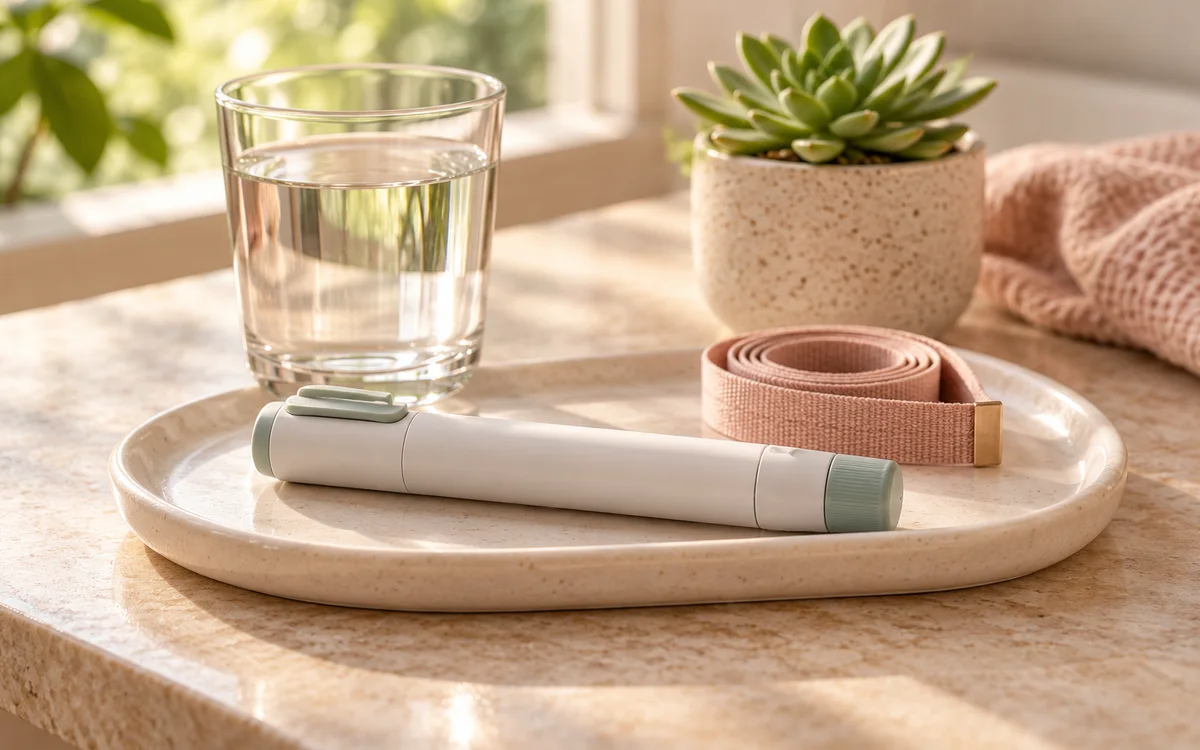
Mounjaro (tirzepatide) is licensed for subcutaneous injection once weekly [10, 11]. Subcutaneous administration delivers the medication into the adipose layer located just beneath the skin and above the muscle tissue, rather than into a vein or deep muscle [5, 10]. Official product labels approved by the United States Food and Drug Administration (FDA) and the UK Medicines and Healthcare products Regulatory Agency (MHRA) identify exactly three approved anatomical sites for subcutaneous administration [10, 11]: the abdomen, the thigh, and the back of the upper arm [10, 11]. In the abdominal area, injections should be placed on the front of the stomach, keeping at least 5 cm (approximately 2 inches) away from the belly button (navel) in all directions [10, 11]. The abdomen is the most widely chosen location for self-injection because it provides a large surface area, is simple to view directly without twisting the torso, and generally offers an accessible layer of subcutaneous tissue [5, 6]. The second approved area is the thigh [10, 11]; in practice, many people choose the front of the thigh because it is easy to see and reach while seated. Many individuals find this location especially stable and comfortable when seated with relaxed leg muscles [5, 6]. The third approved site is the back of the upper arm [10, 11]. The official prescribing information says this site is injected by another person, such as a caregiver [10, 11]; in practice, the back of your own arm is hard to reach steadily with one hand. Tirzepatide is supplied in different device presentations depending on the country and market. Always refer to the package leaflet enclosed with your prescribed medicine and consult your doctor or pharmacist about any details specific to the product you have been dispensed [10, 12].
Does injection site affect weight loss, appetite suppression, or absorption?
A widespread misconception among patients starting weight-loss injections is that administering the medication into a specific anatomical site accelerates localized fat loss, such as assuming that injecting the abdomen selectively burns abdominal fat, or that thigh injections are less potent. Clinical evidence and pharmacology show that this belief is not supported. Pharmacokinetic evaluations submitted to regulatory authorities show that the absolute bioavailability of subcutaneous tirzepatide is approximately 80% [10]. Comparative analyses demonstrate that systemic exposure is similar whether the dose is delivered into the abdomen, thigh, or upper arm [10]. Tirzepatide does not act locally on adjacent fat cells; instead, once absorbed from subcutaneous tissue into systemic circulation, it activates GIP and GLP-1 receptors in the central nervous system to regulate appetite and fullness, while simultaneously modulating gastrointestinal transit and metabolic pathways [7, 8, 9, 10]. Data from the manufacturer's clinical trial programs demonstrate that glycemic control and weight reduction depend on dose titration, therapeutic adherence, and nutritional changes, not on the injection site [7, 8, 9]. What does vary among sites is patient preference, ease of visualization, and individual physical comfort [5, 6]. Some people find abdominal injections less painful because of a thicker subcutaneous adipose cushion, whereas others prefer the front of the thigh to avoid touching the abdomen [5, 6]. Both approved sites deliver similar clinical efficacy [10]. To learn more about medical supervision and safe sourcing standards, review our guide to Mounjaro in Egypt before making decisions about your treatment.
Why rotating injection sites weekly matters: preventing lipohypertrophy
Rotating your injection site each week is not an optional suggestion; it is an important clinical practice to protect subcutaneous tissue and maintain consistent drug absorption [3, 6, 10]. Repeatedly delivering injections into the exact same point causes continuous mechanical microtrauma, triggering a localized inflammatory response and abnormal adipose remodeling known as lipohypertrophy [3, 4, 6]. Lipohypertrophy manifests as rubbery, thickened, or firm nodules situated within the subcutaneous fat layer [3, 4]. While lipohypertrophy is a benign condition, it creates two major therapeutic difficulties [3, 4]. First, it impairs the predictability and rate of drug absorption [3, 4, 6]. Fibrofatty scar tissue possesses compromised microvascular circulation, resulting in delayed, erratic, or incomplete uptake of tirzepatide into the bloodstream [3, 4, 6]. Second, repeatedly injecting into traumatized tissue increases discomfort and localized resistance [3, 6]. High-frequency ultrasound studies demonstrate that subcutaneous changes often develop well before they become visible to the naked eye [4]. Most of the evidence on lipohypertrophy comes from patients using insulin, and it is applied here cautiously as transferred experience [3, 4]. Clinical consensus recommendations and international injection technique guidelines outline systematic rotation rules [3, 6]: First, always choose a new injection site with every weekly dose [6, 10, 11]. Second, when using the same general region (such as the abdomen), leave adequate distance from the previous week's puncture mark [6]. Third, employ a structured rotation scheme, such as dividing the abdomen into four quadrants and moving clockwise weekly, or rotating between the right abdomen, left abdomen, right thigh, and left thigh [3, 6]. Fourth, record the location and date of each injection in a notebook or mobile app to guide your next rotation and give each site enough rest before reuse [6].
Skin areas and anatomical zones to avoid during injection
Knowing where not to inject is just as important as identifying approved anatomical zones [6, 10, 11]. Certain skin areas must be strictly avoided to prevent tissue trauma, pain, and erratic medication absorption [1, 2, 6, 10]: First, the 5 cm (2-inch) perimeter around the belly button: This central zone contains dense connective tissue (the linea alba and umbilical ring), has a thinner adipose layer, and possesses sensitive superficial vascularity, which increases bruising, discomfort, and variable absorption [10, 11]. Second, compromised or damaged skin: Never insert a needle into skin affected by active bruising (hematoma), abrasions, cuts, redness, swelling, active eczema, psoriasis plaques, or pustules; puncturing inflamed or infected skin can carry surface pathogens into deeper subcutaneous fat, increasing the risk of cellulitis or abscess formation [1, 2, 6]. Third, surgical scars and dense stretch marks: Fibrotic scar tissue resulting from past surgical procedures (such as cesarean section scars, laparoscopy port sites, or appendectomy scars) and dense striae consist of dense collagen bundles with reduced blood supply, which impedes the diffusion of the injected fluid; maintain a sensible margin away from any scar [3, 6]. Fourth, existing nodules or hardened lumps: If palpation reveals a firm bump, lump, or area of lipohypertrophy from earlier injections, rest that entire zone until the tissue regains its normal soft texture [3, 4]. Fifth, areas of high friction and clothing pressure: Avoid injecting directly under tight waistbands, rigid belt lines, or constrictive clothing seams; continuous mechanical friction against a fresh injection puncture provokes irritation and prolonged soreness [6]. Sixth, intramuscular or intravenous delivery: Mounjaro is formulated strictly for subcutaneous fat; accidental intramuscular injection is not the intended route [10].
Normal local injection-site reactions: appearance and self-care
Experiencing a mild skin reaction at the injection site is a recognized, common occurrence with tirzepatide therapy [1, 2, 10, 11]. Regulatory safety data from phase 3 clinical programs establish clear rates for these events [10, 11]: In pooled phase 3 placebo-controlled type 2 diabetes trials, injection-site reactions were documented in 3.2% of tirzepatide-treated patients compared with 0.4% in the placebo group [10, 11]. In pooled phase 3 weight management studies, injection-site reactions occurred in 8.0% of tirzepatide participants versus 1.8% of placebo recipients [11]. In trials evaluating obstructive sleep apnea, the incidence was 8.2% versus 2.6%, and in heart failure with preserved ejection fraction studies, 6.0% versus 1.6% [11]. Safety assessments confirmed that the vast majority of these cutaneous reactions were minor: across trials, severity was graded as mild in 91% of affected patients and moderate in 9% [11]. Clinical analyses also noted that adults with type 2 diabetes who developed treatment-emergent anti-tirzepatide antibodies had more injection-site reactions (4.6% versus 0.7%), while the label reports no clinically significant effect of these antibodies on the drug's pharmacokinetics or effectiveness, and any treatment decision belongs to the doctor [10, 11]. Typical features of a normal benign reaction include mild erythema (a localized pink or red ring around the puncture site), mild pruritus (itching), a small transient raised wheal or bump, and occasional minor superficial bruising if a tiny capillary was touched [1, 5, 11]. These manifestations usually appear after injection and resolve spontaneously in most cases without medical intervention [1, 2, 11]. Practical comfort measures include ensuring that the alcohol swab has evaporated completely before inserting the needle [6]. If you feel mild itching or warmth, apply a clean cool compress for a few minutes [1, 6]. Never rub or massage the injection site afterward, as massage irritates tissue and may alter drug distribution [6].
Read also: guide to common Mounjaro side effects in early weeks
Red flags at the injection site: distinguishing infection and severe allergic reactions
Patients must clearly understand how to distinguish a harmless, self-limiting local reaction from red-flag warning signs that indicate bacterial infection or severe systemic hypersensitivity [1, 2, 10]. Signs of suspected bacterial skin infection (such as cellulitis or abscess): 1. Erythema that expands continuously across the skin over 24 to 48 hours rather than shrinking [1, 2]. 2. Marked local heat and tense, painful swelling that feels hot to touch [1, 2]. 3. Throbbing, escalating pain that worsens over time [1, 2]. 4. Purulent discharge, yellow fluid, or drainage weeping from the injection site [1, 2]. 5. Accompanying systemic symptoms, such as fever, shivering, chills, or malaise [1, 2]. If you observe these symptoms, seek prompt medical assessment by a physician to determine whether antibiotic therapy is required. Signs of a severe systemic allergic reaction (anaphylaxis or angioedema): Severe allergic reactions are rare but represent an urgent medical emergency [10, 11]. Symptoms include: 1. Generalized hives (urticaria) or widespread itching developing across the chest, back, limbs, or face, far away from the injection site [1, 10, 11]. 2. Swelling of the lips, tongue, face, eyelids, or throat [10, 11]. 3. Difficulty breathing, throat tightness, hoarseness, stridor, or severe shortness of breath [10, 11]. 4. Severe dizziness, lightheadedness, collapse, or a rapid, pounding pulse [10, 11]. If any signs of severe systemic hypersensitivity appear, seek immediate emergency medical care at the nearest hospital emergency department or call emergency services without delay; never wait to see if symptoms resolve on their own [10, 11]. Medication safety rules: Never adjust your dose, skip injections arbitrarily, or restart therapy at higher doses without explicit medical guidance [10]. If you miss a dose or need guidance on travel storage, consult our guide to Mounjaro pen use, storage, and missed doses for verified official instructions.
A weekly routine that protects the skin
This section outlines proper skin hygiene and weekly routine management for subcutaneous therapy. For pen mechanical operations such as dialing doses, priming, hold times, or needle angles, follow the manufacturer's Instructions for Use provided in the box and consult your doctor or pharmacist [10, 12]. Hygiene and skin preparation: 1. Wash hands thoroughly with soap and warm water, drying them with a clean towel before touching any supplies [6, 12]. 2. Inspect the chosen skin site under adequate lighting to ensure it is completely free from redness, bruising, tenderness, scars, or firm nodules [6]. 3. Cleanse the skin surface with an alcohol swab using a gentle circular motion and wait for the alcohol to air-dry completely; injecting through wet alcohol causes unnecessary stinging [6]. 4. Relax the underlying musculature: if injecting into the front of the thigh, sit comfortably with feet resting flat on the floor and thigh muscles loose; if injecting into the abdomen, maintain normal breathing without contracting abdominal muscles; relaxed tissue minimizes needle discomfort and facilitates subcutaneous delivery [5, 6]. Timing and weekly scheduling: Mounjaro is taken on the same day each week, at any time of day that suits your routine, with or without meals [10, 11]. Establishing a regular day, such as every Friday morning or Sunday evening, builds treatment consistency [10]. Safe disposal and recording: After administering the dose according to your device's instructions, immediately discard the used needle or single-use autoinjector into a puncture-resistant sharps disposal container; never discard loose needles in household trash bins [6, 12]. Record the date and the specific anatomical site used (for example, lower left abdomen) in a treatment notebook or mobile app to guide your next rotation and avoid repeated injection at the same point [6].
Medical follow-up and clinical review at La Rose Clinics
Regular medical supervision is an important part of successful weight management and protecting your overall health during modern pharmacotherapy. At La Rose Clinics, Dr. Shimaa Fouad, physician and clinical nutrition specialist, including follow-up for Mounjaro and Wegovy users, leads personalized clinical nutrition and medical weight-loss programs in our Maadi and Fifth Settlement branches (Wednesdays from 3:30 pm). Dr. Alyaa Said Abu Taleb also practices clinical nutrition. Routine follow-up includes comprehensive body composition tracking, dietary assessments, and tolerability monitoring. If signs of a suspected localized skin infection develop, internal medicine evaluation is available with Dr. Mohab Ashraf Fouad, specialist in internal medicine and diabetes, at the Maadi branch. Severe allergic reactions need immediate emergency hospital care [10, 11]. You can use the booking page to arrange a medical weight-management consultation at La Rose Clinics.