
The short answer: is losing weight before pregnancy necessary?
Weight is one factor in fertility, not the only one, so no single number blocks pregnancy on its own. Losing weight can raise the chance of conceiving for some people, for some people, but the evidence does not show that it raises live births, and it does not suit everyone [3][2].
The safest route is a simple food-first plan: gradual loss of about 0.5 to 1 kg a week, folic acid as the guidelines advise, and a review of thyroid and blood sugar before actively trying [12][8][7].
This article answers, in order, the questions people ask most: does 80 kg block pregnancy, can 4 kg really come off in a week, what should the diet look like, and does losing weight truly raise the chances.
Does weight really decide fertility? What the research says
The NHS notes that being underweight or overweight can make it harder to get pregnant [9]. But the NHS lists age, general health, any fertility issues and how often you have sex as factors too [9].
The research on losing weight first is mixed, and it is fair to say so plainly. A review of 16 randomised trials found that people assigned to weight-loss programmes were more likely to become pregnant (risk ratio 1.24), but the difference in live birth was not statistically significant (1.19), nor was miscarriage. The authors said the results do not support one-size-fits-all advice [3].
In a Dutch trial of women with a BMI of 29 or higher, a 6-month lifestyle programme before treatment lowered weight by 4.4 kg versus 1.1 kg, yet a healthy term vaginal birth within 24 months occurred in 27.1% versus 35.2% of those who started treatment promptly. So the long delay did not improve the result [1].
An earlier meta-analysis found that a reduced-calorie diet plus exercise was linked to a higher chance of pregnancy (risk ratio 1.59), while miscarriage rates were not reduced by any intervention [2]. The practical takeaway: moderate loss may help, but waiting many months for a specific number on the scale has no proven benefit, which is why the plan here is moderate and time-limited.
Does a weight of 80 kg block pregnancy?
A weight number alone says little, because the assessment depends on height. BMI is weight in kilograms divided by height in metres squared. At 80 kg: with a height of 1.60 m the BMI is about 31, at 1.65 m about 29, at 1.70 m about 28, and at 1.75 m about 26.
The standard categories: healthy is 18.5 to under 25, overweight is 25 to under 30, and obesity is 30 or above. The CDC calls BMI a screening measure that should be considered with other factors [11].
So 80 kg is not a barrier that blocks pregnancy, and it is not proof that all is well either. What matters is the whole picture: regular periods, ovulation, test results and any other conditions. If periods are irregular or conception is delayed, that is the time for a review rather than blaming weight alone [9].
The first tests and reviews, before you start the plan
Before eating less or changing the whole routine, an early review saves time. The 2026 American Thyroid Association guidelines cover thyroid function testing, autoimmunity and hypothyroidism before and during pregnancy [7]. Thyroid disease is a common issue around pregnancy, so the thyroid test is one of the first steps [7].
Blood sugar too: the international PCOS guideline says diabetes, blood pressure and mental health conditions should be well managed before pregnancy [6]. The same guideline asks for a review of nutritional status, and any further blood tests are at the doctor's discretion [6].
If there is an autoimmune disease such as lupus, planning has extra steps for timing and follow-up, explained in our article on planning pregnancy with lupus. You can also read how to understand thyroid test results.
Read also: thyroid test results explained
Folic acid: what the guidelines say and when
The US CDC recommends that everyone who could become pregnant take 400 mcg a day, starting at least 1 month before conception, because folic acid helps prevent neural tube defects [8]. MedlinePlus confirms that enough folic acid before and during pregnancy can prevent major birth defects of the baby's brain or spine [15].
In some situations the dose differs: after a previous pregnancy affected by a neural tube defect, the CDC recommends a higher dose of 4,000 mcg, to be discussed with a doctor [8]. The PCOS guideline advises higher-dose folate when BMI is above 30 [6]. Your own doctor sets the dose, not the internet.
One key point: folic acid is not tied to losing weight first. The recommendation stands from the planning stage, whatever the scale says. The NHS also lists vitamins, including folic acid and vitamin D, as part of preparation, without giving doses [9].
The food plan: what goes on the plate before pregnancy
No single diet is superior. The PCOS guideline says there is no evidence that one diet composition beats another, that any diet consistent with healthy-eating guidelines has benefits, and that advice should be tailored to personal preferences [6]. That means a plan you can keep up beats a perfect-looking plan abandoned after two weeks.
The Mediterranean pattern (vegetables, fruit, legumes, whole grains, olive oil and fish) has reasonable evidence: a pooled analysis of 7 trials showed lower gestational diabetes (risk ratio 0.74), preterm birth (0.45) and gestational hypertension (0.71), although the authors called the fertility evidence suggestive yet limited [5].
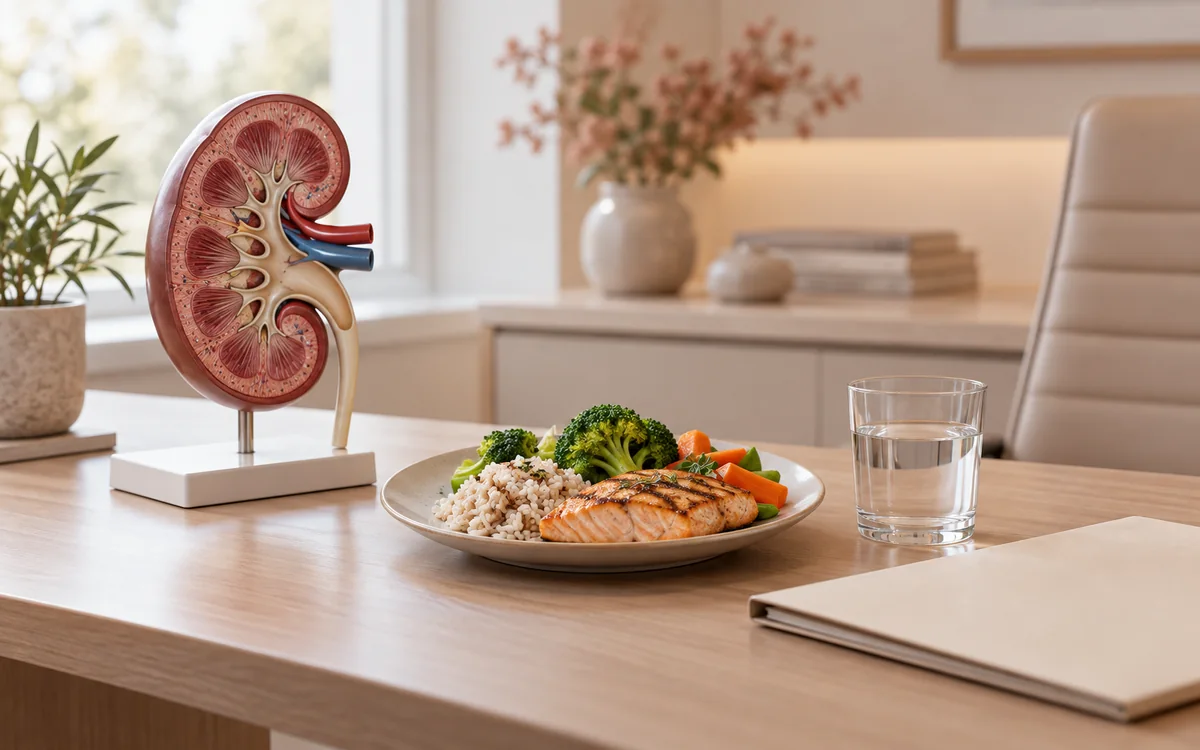
A practical Egyptian example. Half the plate vegetables: salad, molokhia, okra, spinach, vegetable soup. A quarter protein: grilled fish, chicken, eggs, lentils or ful medames. A quarter whole starches: baladi bread, oats, freekeh or a small portion of rice. Olive oil instead of ghee, a piece of fruit, yoghurt and a handful of unsalted nuts.
Cut back on sweetened drinks, fried food and large portions of sweets, and avoid alcohol and smoking, which the NHS supports for anyone trying to conceive [9]. Portions can be tuned more precisely after a body-composition reading, which we offer with InBody.
A realistic pace: why 4 kg in a week is not the way
The US CDC recommends steady loss of about 1 to 2 lb a week, roughly 0.5 to 1 kg, and notes that people who lose weight at this pace are more likely to keep it off than those who lose weight quicker. It warns against unrealistic goals such as losing 20 lb in 2 weeks [12].
4 kg in a week is about 9 lb, several times the recommended rate. That speed demands severe restriction, and just before pregnancy restriction clashes with the priorities of nutritional status and folate [6]. Nobody should put themselves through it without a medical reason.
The numbers to rely on: losing 5 kg at 0.5 to 1 kg a week takes 5 to 10 weeks, which is plenty for a preconception plan. In the Dutch programme, 21.8% of the intervention group dropped out, which shows how hard harsh programmes are to sustain [1].
In a later analysis of the same trial, women in the middle weight-loss groups had lower odds of hypertensive complications than those who lost least (adjusted odds ratios 0.30 and 0.39), with no significant difference in gestational diabetes or caesarean section. This is an exploratory analysis, not final proof, but it supports moderate loss [4].
If there is PCOS: what changes in the plan
The NHS explains that PCOS can make pregnancy harder because eggs are not released each month, and that the core steps are losing weight if overweight, a healthy balanced diet and regular exercise [10].
The 2023 international guideline adds practical points. Healthy lifestyle is recommended for everyone with PCOS, with benefits even without weight loss. Weekly activity of 150 to 300 minutes at moderate intensity applies to adults. It advises explaining the effect of excess weight on pregnancy, miscarriage and live birth after infertility treatment, while avoiding stigma and the suggestion that weight is the whole problem [6].
On the treatment side, medicines that trigger ovulation are decided by the fertility or obstetrics doctor. They are not part of a food plan and are never adjusted on your own [10]. More on PCOS and weight is in the linked article.
Timing: when to start, and when to ask for help
Start the review and the folic acid right away, since folic acid should begin at least 1 month before conception [8]. A moderate weight plan takes a few weeks, not long months. The pooled analysis found that weight-loss interventions lasting 12 weeks or less were linked to a higher chance of pregnancy (risk ratio 1.43) [3].
Do not postpone with no time limit. The Dutch trial showed that delaying treatment for 6 months just to lose weight did not raise the birth rate [1]. The NHS lists age among the factors that affect the chance of conceiving, so the older the person, the earlier the conversation with the doctor should be [9].
In ordinary cases, the NHS says sex every 2 to 3 days makes pregnancy within a year likely for those aged 39 or under, and advises seeing a doctor after a year or more of trying [9]. The NHS also advises speaking to a GP before trying if there is a known health or fertility condition [9]. With irregular periods or known PCOS, do not wait that long.
Medicines and weight-loss injections: the prescriber decides
This plan is food-based and does not discuss using weight-loss medicines while trying to conceive. Weight-loss injections carry label instructions: MedlinePlus states that the doctor will say when to stop semaglutide, 2 months before a planned pregnancy [13], and for tirzepatide, tell your doctor if you plan to become pregnant, as it may reduce the effectiveness of hormonal contraceptives [14].
What matters for you: if anyone takes any medicine, tell the prescriber you are planning a pregnancy well before trying. The prescriber decides timing and any change. Nobody should stop a medicine or change a dose on their own.
Details on the period before pregnancy and on contraception during injection use are in two dedicated articles.
Read also: weight-loss medicines before pregnancy · injections, contraception and pregnancy
The path at our clinics: from first visit to plan
The NHS advises talking to a doctor about managing weight when it may be making pregnancy harder [9]. At our clinics, nutrition and weight management are available in Maadi and Fifth Settlement, and a body-composition reading with InBody is part of the visit.
Internal medicine (Dr Mohab Ashraf Fouad) is in Maadi only and reviews your test results. Rheumatology and autoimmune follow-up are at both branches. DEXA scans and physiotherapy are done externally.
Maadi: 14 El-Mokhtar Street, behind QNB, New Maadi. Fifth Settlement: CMC Medical Mall, 4th floor, North 90th Street, Wednesdays from 3:30 pm. Book well before you start trying, so the plan is built on your own results.
Read also: Book an appointment