Before booking: what question should the scan answer?
If you are in Egypt for a short visit, or your doctor abroad has requested an abdominal ultrasound, start by naming the clinical question. Where is the pain? Were liver tests abnormal? Is a known stone being followed? Is there an earlier image to compare? A scan is more useful when the request identifies the organ and concern. An upper-abdominal examination is different from an abdominal and pelvic examination, and preparation may differ too. A clear question helps the examiner focus on the right area and helps your clinician interpret the result alongside your symptoms [1, 3].
If symptoms persist or several problems are involved, an internal-medicine visit first may be more useful. The doctor can take a history, examine you, and decide whether ultrasound is the first test or whether blood tests or another investigation is needed. If your treating doctor has already requested a defined scan, a standalone examination may be sensible, provided you confirm exactly which examination and preparation were requested. Ultrasound is one tool within a clinical assessment, not a diagnosis promised by a single image [1, 3, 7]. This is a narrower decision than planning a complete medical check-up.
An internist and scan in one visit, or a standalone scan?
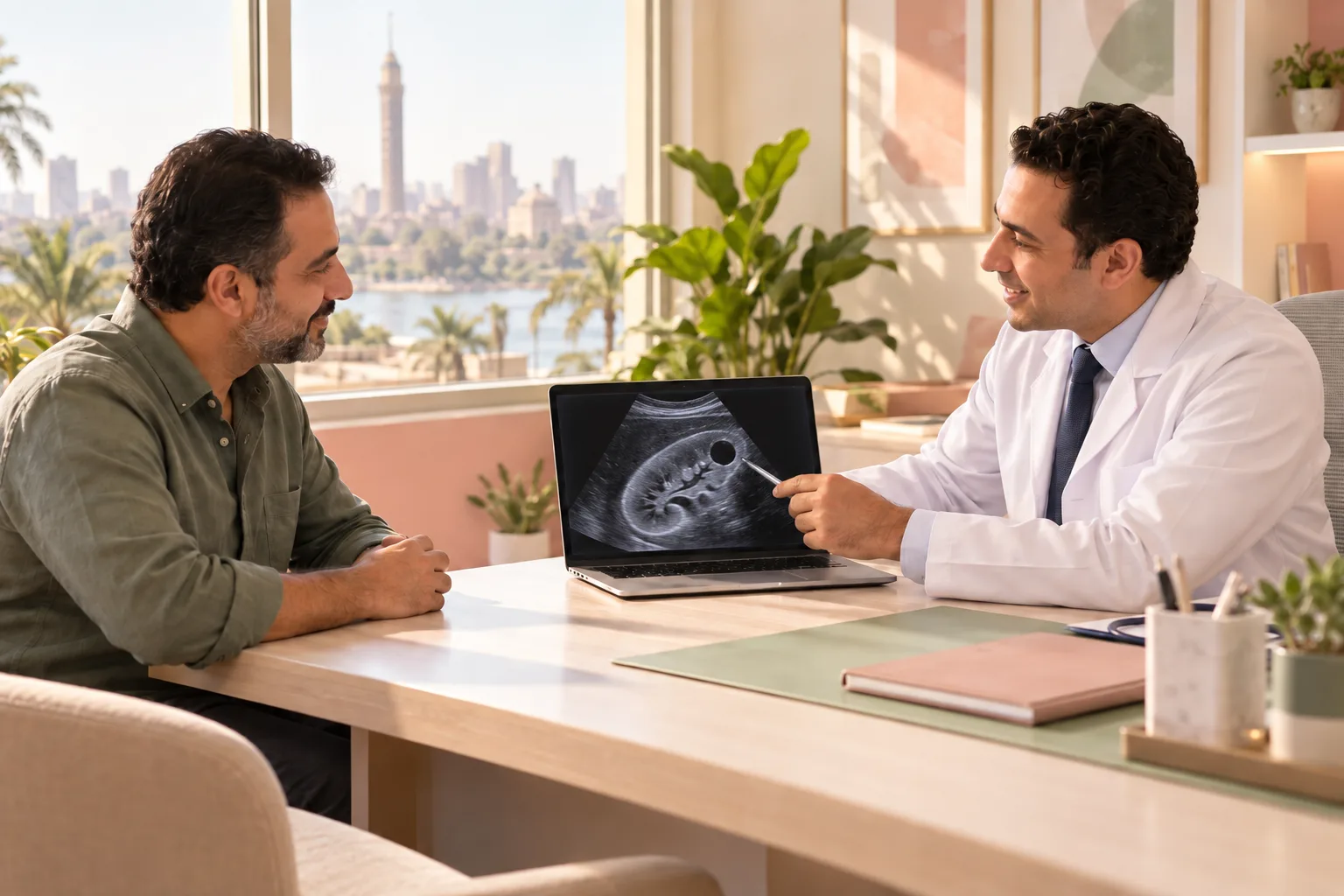
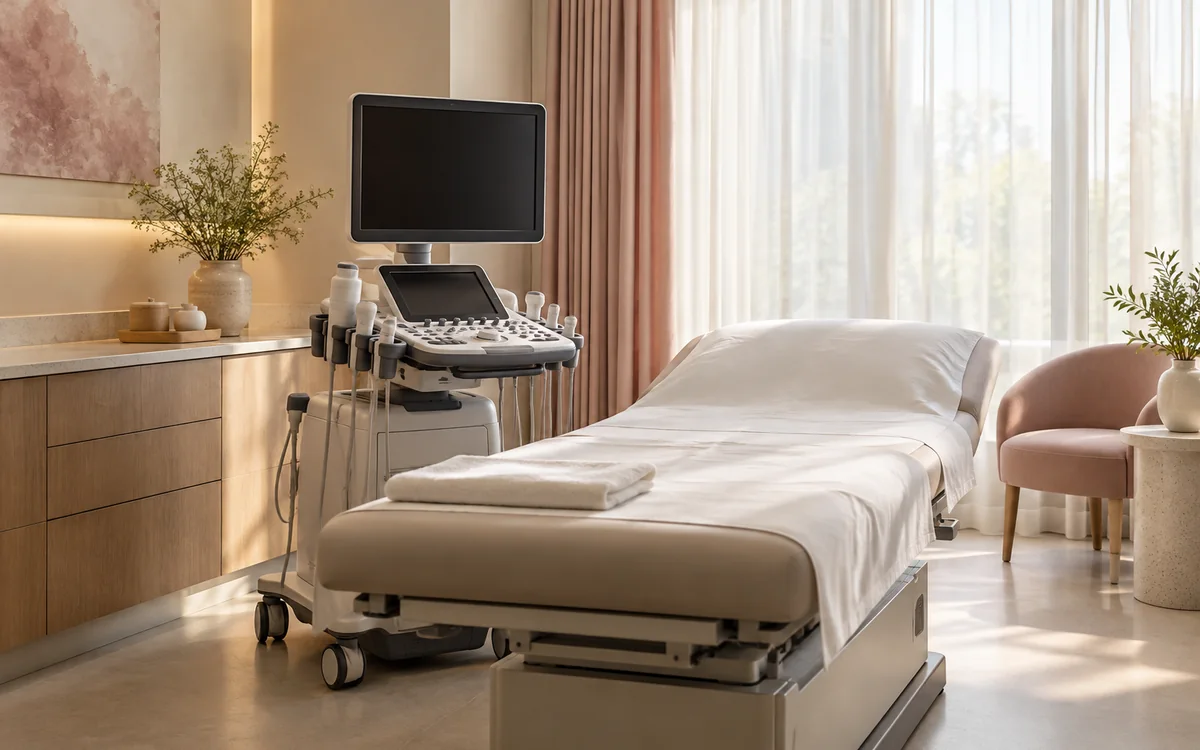
The choice depends on what part of your assessment is missing. With new pain, unclear blood tests, or uncertainty about which examination to request, an internist who examines you and performs the scan in the same visit can connect the image with the location of pain, medicines, laboratory results, and medical history. The doctor can explain the finding and the next step rather than leaving you to interpret an isolated phrase. In Maadi, Dr. Mohab Ashraf provides internal medicine, digestive care, and abdominal and pelvic ultrasound in the same visit on Saturday in the clinic's current records. Confirm the appointment and examination type when booking [1, 3].
A standalone imaging examination may suit someone who already has a precise request from a treating doctor abroad or needs a defined imaging study and comparison with earlier images. Typically, an imaging specialist interprets those images and the treating clinician discusses their meaning with the patient. Neither route answers every question: an image can require further investigation, or show a finding unrelated to the symptom. Before booking, ask who will explain the finding and how important details can be shared with your doctor after you return [1, 3]. The clinical question and a plan to review the result matter more than the name of a scan alone.
What can abdominal ultrasound show, and where are its limits?
Ultrasound uses sound waves without ionizing radiation. Depending on the examination and visibility, it can show the appearance of the liver, gallbladder, bile ducts, kidneys, spleen, and sometimes the pancreas, vessels, or fluid in the abdomen. It is a useful first test for many upper-abdominal and gallbladder questions. It can show gallstones and may suggest fat in the liver. Visible liver fat alone cannot establish whether inflammation or fibrosis is present; follow-up also depends on history, tests, and clinical assessment [1, 5, 6, 7]. For an organ-by-organ explanation, read our guide to what abdominal ultrasound shows rather than treating this short list as a ready-made diagnosis.
Air in the bowel interrupts ultrasound waves, so ordinary abdominal ultrasound is not a comprehensive colon examination or a substitute for endoscopy when that is clinically indicated. The whole pancreas may also be difficult to see in some people. A normal result does not settle persistent symptoms or rule out every cause of pain. If the original question remains unanswered, a clinician may recommend review, laboratory tests, endoscopy, or different imaging according to the case. If your request says “abdominal and pelvic ultrasound,” confirm that the pelvic part is included: the structures examined and preparation are not necessarily identical at every appointment [1, 3].
How do you fit the scan into a short visit?
When booking, ask which ultrasound is specified in the request and follow its particular eating and drinking instructions. An upper-abdominal scan, especially one assessing the gallbladder, may require a period without food to improve the view; a pelvic examination may call for a full bladder. Do not apply one rule to every scan or start a prolonged fast on your own. If you have diabetes, use insulin or medicines tied to meals, or fasting is difficult, tell the team before the appointment so instructions can be adapted. An early slot is practical for some visitors, but it is not a medical requirement for everyone [2, 8].
Bring the doctor's request if you have one, a brief account of symptoms and their duration, a medicine list, relevant blood tests, and any previous imaging or files. Actual earlier images are more helpful than remembering that “there was a stone”: comparison may show whether its size or appearance changed and whether a new description matches an old finding. With limited time, leave space after the scan to discuss its meaning and the next step. Do not put the appointment immediately before departure on the assumption that every question will be resolved at once [3]. Preparation should clarify the clinical question rather than trigger unrelated tests.
How can the findings help your doctor after you return home?
Before the visit ends, ask the clinician whether the scan answered the original question. Is a finding connected to your symptoms, or might it be incidental? Was any organ difficult to see? What comes next: observation, blood tests, another imaging method, or specialist review? Those questions are more useful than interpreting one isolated report term yourself. Guidance on reading imaging findings explains that the conclusion and recommendations need the reason for the examination, and comparison with older images may change their meaning [3].
Organize the information your clinician at home needs: date and type of examination, the reason it was requested, the key findings discussed, earlier images used for comparison, and the proposed next step or review date. Ask the examination provider how its available images and information can be shared with your doctor; methods vary by provider. If new symptoms arise or old symptoms continue after you travel, present the image in its time sequence rather than relying on “the scan was normal.” Sound interpretation joins symptoms, examination, tests, and imaging [1, 3]. Do not postpone review of a finding that requires follow-up simply because the visit ended.
If the scan is for a child, or symptoms need urgent care
A child's abdominal ultrasound can involve different questions and preparation according to age and the organ examined. The team may give specific food or drink instructions for that examination. For a child, begin with age-appropriate clinical assessment and read our children's abdominal ultrasound guide; do not automatically apply adult fasting instructions or assume an adult internist's appointment is the child's pathway. The examination itself does not use ionizing radiation, but choosing and interpreting the right test remains part of the child's care [4].
If you have sudden or severe abdominal pain, fever together with yellow eyes or skin, or vomiting blood, do not wait for a routine scan appointment. Seek urgent or emergency assessment according to severity; rapid examination and treatment may be needed, and ultrasound alone is not an emergency plan. Persistent pain with deterioration or signs of dehydration also needs medical review. Do not use an older reassuring image as a reason to delay help when symptoms have changed [5, 9, 10]. Safety comes first, followed by imaging selected by the treating team.
The practical next step for an abdominal scan in Maadi
If you need an internist who also performs abdominal ultrasound in Maadi during a visit to Egypt, the medical team at La Rose can arrange an internal-medicine and digestive consultation with Dr. Mohab Ashraf at the Maadi branch. According to the clinic's records, he performs the clinical examination and abdominal and pelvic ultrasound in the same visit. He sees patients on Saturday. Ask on WhatsApp about an available appointment, the examination that fits your request, preparation instructions, and the cost before booking. If your doctor abroad made a specific request, mention it when contacting the team and bring relevant earlier images or tests. The address is 14 El-Mokhtar Street, off El-Nasr Street, behind QNB, New Maadi [1, 3].
If you already have a finding that needs interpretation, tell the team before the appointment so the visit can focus on its meaning and the next step. If symptoms call for urgent assessment, seek urgent care instead of waiting for a booking. Book an internal-medicine and ultrasound consultation in Maadi when this route suits your situation, and aim to leave with a clear clinical explanation you can discuss with your doctor after returning home [3, 9].