What is an anal fissure, and what does it feel like?
An anal fissure is a small, lengthwise tear in the sensitive lining at the anal opening. Its most characteristic pattern is sharp, cutting pain as stool passes, followed by soreness or burning that may continue for minutes or hours. You may also notice a streak or a few spots of bright-red blood on toilet paper or on the surface of the stool. This pattern is common, but not every episode of anal pain or bleeding is a fissure, so persistent or unusual symptoms should not be diagnosed by guesswork [2, 4, 6].
The tear itself may be small, yet the area is highly sensitive, so pain intensity does not show how large the fissure is. Some people hurt mainly during the bowel movement, while others remain sore afterwards because the anal muscle tightens or spasms. Pain may settle substantially between bowel movements. Itching without the characteristic cutting pain, a lump that hurts continuously, or discharge follows a different pattern and deserves examination rather than an assumption that it is a fissure [2, 4, 6].
The reassuring practical point is that fissures have a well-defined, staged care pathway. The first goal is to let stool pass easily without repeatedly injuring the tear, while soothing the area and allowing it to heal. If that is not enough, clinicians can choose among progressively more involved treatments according to symptom duration, the fissure's appearance, and the person's history of bowel or gas control [1, 2].
Fissure or haemorrhoids: how do the symptom patterns differ?
Fissures and haemorrhoids can both produce bright-red blood after a bowel movement, and constipation and straining can contribute to either problem. That overlap explains why they are often confused. A useful distinction is that a fissure commonly causes clearly cutting pain as stool passes, and that pain may continue afterwards. Internal haemorrhoids are swollen blood vessels inside the anus or lower rectum and often bleed without the sharp pain typical of a fissure. External haemorrhoids may cause a lump, itching, aching, or pain while sitting, especially if a clot develops [2, 6, 12].
This distinction helps you describe the problem, but it cannot confirm the diagnosis at home. A fissure and haemorrhoids can coexist, and other sources of bleeding can resemble both. A general product described as a haemorrhoid cream is not automatically the right treatment for any anal pain or bleeding. Fissure care focuses first on preventing repeated injury to the tear and may later include a prescribed topical medicine that relaxes the muscle. Treating the wrong label can allow symptoms to persist without the real cause being assessed [1, 2, 12].
Note how pain relates to bowel movements, the colour and amount of blood, whether there is a lump or discharge, and how long the problem has lasted. Those details make an assessment more useful. If bleeding recurs, do not automatically attribute it to either piles or a fissure; evaluation also takes account of age, changes in bowel habit, abdominal pain, unintended weight loss, and family history [5, 12, 13].
Acute or chronic: duration, appearance, and cause all matter
An acute fissure is a recent tear, commonly beginning after a hard or bulky stool, constipation and straining, and sometimes after repeated diarrhoea or direct local trauma. Medical sources do not all use exactly the same time threshold: some guidance describes symptoms persisting beyond roughly six weeks as chronic, while other resources use eight weeks. A clinician does not rely on duration alone; the examination also looks for a deeper tear, thickened edges, or a skin tag associated with chronic disease [1, 2, 4, 5, 7].
When pain makes someone postpone a bowel movement, stool can become harder, making the next passage more difficult and reopening the tear. Breaking this cycle means aiming for soft, regular bowel movements without straining, not avoiding defecation or cutting food intake indiscriminately. Repeated diarrhoea also deserves attention because frequent loose stool may keep irritating the lining and prevent healing [2, 3, 4].
Most typical fissures lie in the front or back midline. A tear at the side, several fissures, a wound that is unexpectedly painless, or one that does not heal despite suitable treatment raises the possibility of a secondary cause such as Crohn's disease, infection, trauma, or a less common disorder. This does not mean that one of those conditions is present. It means that examination and investigation of the cause are more appropriate than repeatedly trying home treatment without a diagnosis [1, 2, 4, 8].
How is a fissure assessed, and does everyone need a colonoscopy?
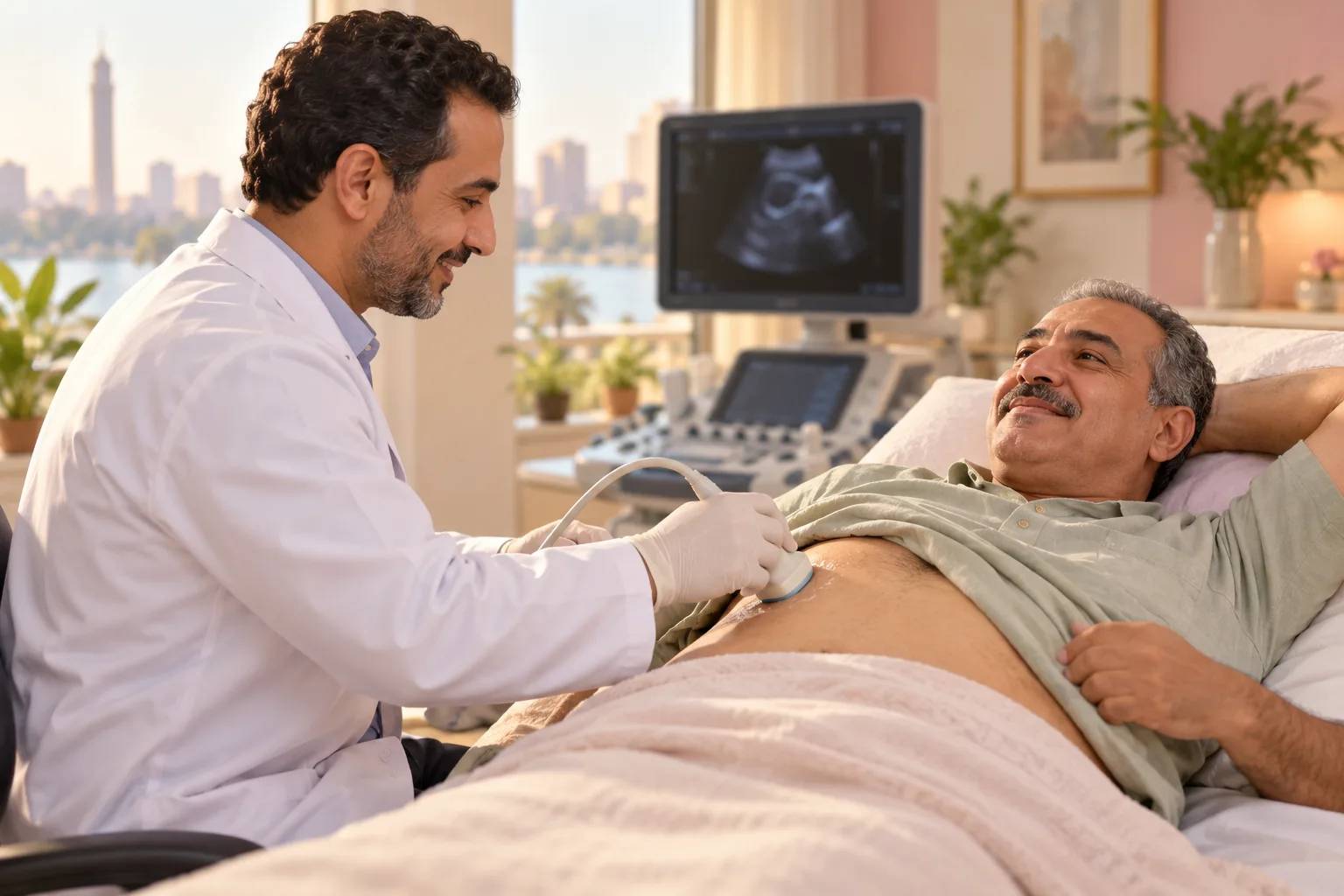
In many cases, the history and a gentle inspection are enough for a clinician to identify a typical fissure. Assessment starts with questions about the pattern of pain and bleeding, constipation or diarrhoea, medicines, and accompanying symptoms. A careful external look may follow. If pain is intense, the clinician decides what can be done safely; an internal examination or instrument is not compulsory at every visit and may be deferred when discomfort prevents it [4, 5, 7].
Colonoscopy is not a routine test for every clearly visible fissure. A clinician may recommend anoscopy, flexible sigmoidoscopy, or colonoscopy when there is a reason to look for another source of bleeding or bowel disease. The decision changes with age, colorectal-cancer risk factors, additional symptoms such as abdominal pain or diarrhoea, the bleeding pattern, and medical and family history. An unusual location or concern about inflammatory bowel disease, a mass, infection, or a hidden abscess may call for more directed investigation [5, 8].
A small amount of bright-red blood with cutting pain suggests a source near the anal opening, but colour alone cannot establish the diagnosis. Blood mixed through the stool, black tarry stool, a large amount of bleeding, or general symptoms require a different assessment. The purpose of examination is not to make the situation sound alarming; it is to identify the correct source so care fits the problem and another treatable cause is not missed [5, 13].
First-line care: soft, regular stool without straining
Initial treatment for an acute fissure is usually conservative: improve stool consistency, drink adequate fluid, and increase fibre gradually through food or a supplement if a clinician considers it suitable. Gradual change matters because a sudden fibre increase can be uncomfortable and cause bloating. If constipation continues or stool remains hard, a clinician or pharmacist can select a stool-softening or laxative option that fits your health and medicines; no single choice is right for everyone [1, 2, 3, 5].
Avoid sitting on the toilet for a long time, forceful straining, and postponing the urge to pass stool because of anticipated pain. A warm sitz bath (a short soak in comfortably warm, not scalding, water) may soothe the area and help the muscle relax. Clean gently without vigorous rubbing or fragranced products that add irritation. The appropriate pain reliever depends on your health history and medicines, so ask a clinician or pharmacist rather than using a stronger treatment that may worsen constipation [1, 2, 3, 5].
This is not merely a two-day plan. Regular, soft stool remains important while the tear heals and afterwards to reduce reinjury. If repeated diarrhoea is the trigger, the answer is not simply to add fibre indiscriminately; the cause and pattern of diarrhoea also need attention. If symptoms worsen or do not improve over the following weeks, return for assessment rather than continuing the same measures indefinitely without review [2, 3, 6].
When does prescribed topical treatment enter the plan?
If a fissure does not heal with conservative care or becomes chronic, a clinician may prescribe a topical medicine from a class that relaxes the internal anal muscle. Guidelines discuss topical nitrates and topical calcium-channel blockers as nonsurgical options. The aim is to reduce muscle tension long enough to allow healing, while stool-softening measures continue. These are prescribed treatments, and their formulation, use, and compatibility with other medicines require clinical review [1, 7, 9, 10].
These medicine classes can have adverse effects. Topical nitrates may cause headache or lower blood pressure, while topical calcium-channel blockers can cause headache or local irritation in some people; tolerability differs between individuals. Important contraindications and interactions depend on heart or blood-pressure treatment and certain other medicines. Do not use someone else's prescription or request a compounded preparation without having your medicine list reviewed [1, 2, 9].
A topical anaesthetic may provide brief pain relief if a clinician selects it, but reducing sensation alone does not correct the cause or replace keeping stool soft. Antibiotics and antifungal medicines are not routine treatment for a typical fissure without evidence of infection. Follow-up asks two separate questions: have pain and bleeding improved, and has the fissure itself healed? Relief is useful, but if the tear persists or repeatedly returns, another examination helps guide the next step [2, 7, 10].
Injection or surgery: when are they discussed?
If a chronic fissure persists despite suitable nonsurgical treatment, a colorectal surgeon may discuss botulinum toxin injection into the muscle or an operation called lateral internal sphincterotomy. Injection produces temporary muscle relaxation; surgery makes a controlled division in part of the internal sphincter to reduce tension. The choice is not a fixed sequence for every person. It depends on the fissure's features, treatment already tried, symptom severity, and the individual's risk of altered gas or stool control [1, 2, 5, 9, 11].
Surgery is effective for chronic fissures that resist treatment, but it carries a risk of changes in control of gas or stool, making an individual risk discussion essential. The clinician asks about leakage before treatment, a previous sphincter injury, earlier anorectal surgery, childbirth-related injury, and illnesses associated with diarrhoea. People at higher risk may need a sphincter-preserving option or a different plan rather than an assumption that one operation suits everyone [1, 2, 5].
When a fissure is atypical or results from another disease, treating that underlying condition is central, and standard surgery for a primary fissure may not be appropriate. The decision to perform a procedure therefore follows confirmation of the diagnosis, not pain intensity alone. Ask about the goal, alternatives, likelihood of recurrence, possible effects on continence, and the plan for maintaining soft stool afterwards [1, 4, 8, 11].
When should you arrange an assessment or seek urgent care?
Arrange an assessment if bleeding recurs, pain is not improving, the fissure keeps returning, or pain prevents a normal bowel routine. Review also matters with a persistent change in bowel habit, repeated diarrhoea, abdominal pain, unintended weight loss, or a relevant family history. Several tears, a side-positioned wound, discharge or pus, swelling, fever, or constant throbbing pain unrelated to bowel movements should not be assumed to be a simple fissure; these patterns deserve earlier examination [4, 8, 13].
Seek urgent care for a large amount of bleeding or bleeding that continues, black tarry stool, or blood accompanied by dizziness, fainting, shortness of breath, marked pallor, confusion, or a clearly rapid heartbeat. Fever with swelling, increasing pain, or pus may point to infection or an abscess and needs prompt assessment. None of these signs establishes a diagnosis on its own, but each is an appropriate reason not to wait on home treatment [8, 13].
If symptoms are stable and there is no urgent sign, prepare for the appointment by noting duration, how pain relates to bowel movements, what the blood looks like, stool consistency, and treatments already tried. The medical team at La Rose can begin with an assessment and identify the appropriate next step, with clinics in Maadi and Fifth Settlement, New Cairo. A treatment decision should follow a real examination and review of your health history, not an online symptom description alone [4, 5]. For non-urgent concerns, you can book a consultation with the medical team.