Which foods are rich in calcium?
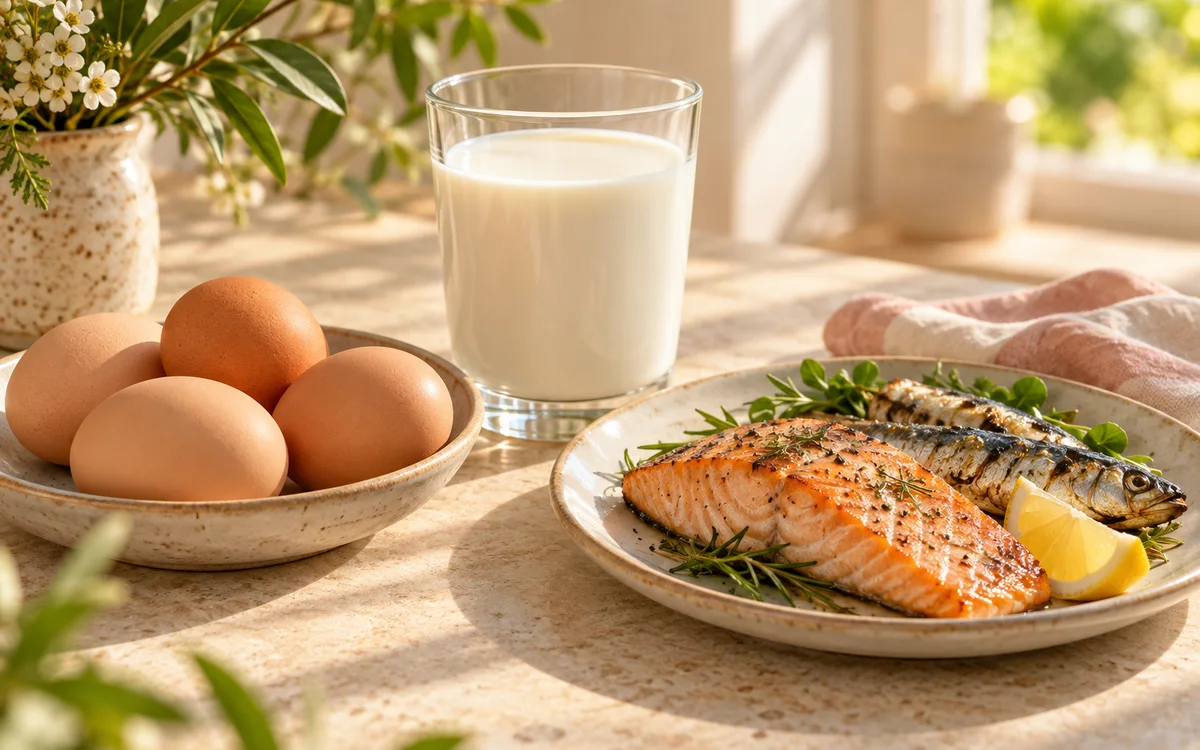
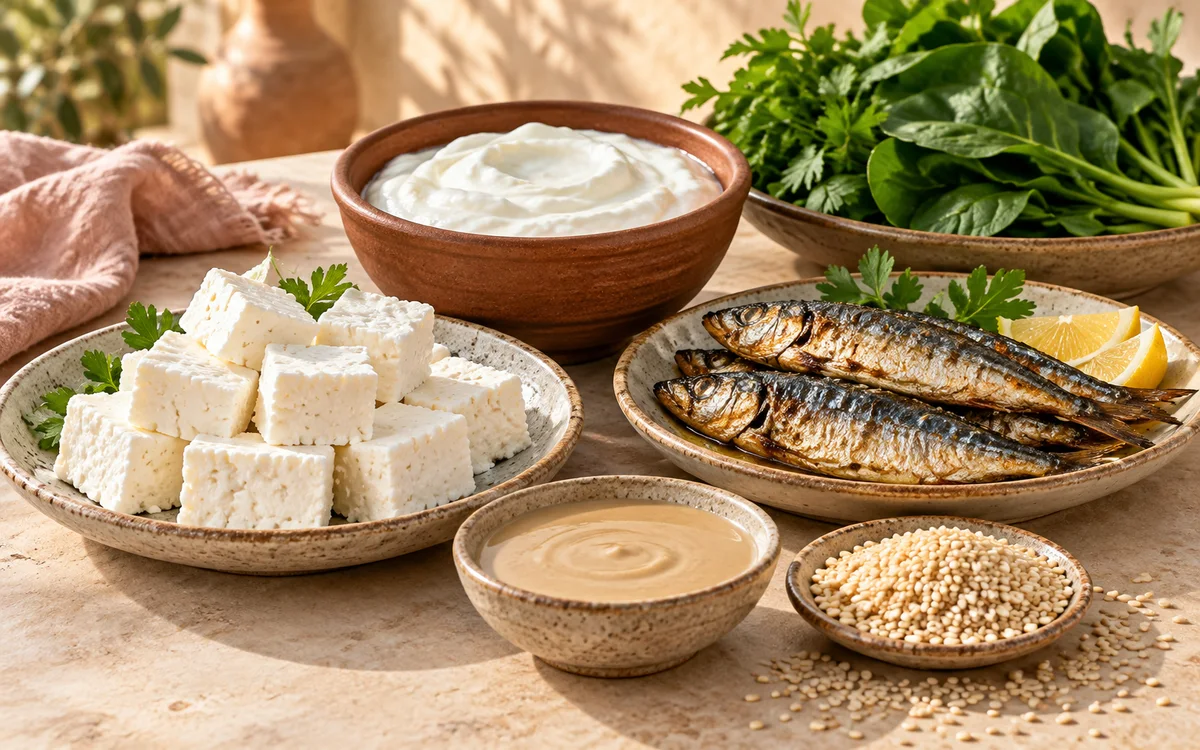
Calcium-rich foods in Egypt include milk, yogurt and cheese, sardines eaten with their soft bones, tahini and sesame, almonds, some greens, and foods fortified with calcium. If you dislike milk or cannot tolerate lactose, you can combine other sources rather than assuming a calcium tablet is your only option [1, 2]. Look at a whole day of eating: is there a substantial calcium source in more than one meal, and is the portion you actually eat realistic? A spoon of tahini or a sprinkle of sesame is useful, but it is not automatically equivalent to a bowl of yogurt. Calcium content, serving size and absorption differ [1].
Calcium helps build and maintain bone and supports normal muscle and nerve function. Needs differ by age, sex and circumstances; the NIH Office of Dietary Supplements table gives the relevant age and sex groups, so one universal intake figure would mislead [1, 3]. Bone health also depends on adequate vitamin D and regular weight-bearing, strength and balance activity. A good diet supports prevention but cannot guarantee freedom from osteoporosis or fracture [3, 4]. For assessment rather than a food list, see our osteoporosis and bone density guide; for a related nutrient, read vitamin D deficiency in adults. To discuss an individual eating plan, Book your appointment [3, 4].
Milk, yogurt and cheese: making useful choices
Milk and plain yogurt are straightforward choices in an ordinary day: a glass of milk with breakfast or a bowl of unsweetened yogurt with fruit. White cheese and aged or hard cheese can contribute calcium too, but their calcium and sodium content differ widely. Read the package label and choose a lower-salt option when possible, particularly if you are managing blood pressure or have been advised to limit sodium [1, 5]. Salty cheese eaten with bread and pickles can make the whole meal high in salt. Its calcium content does not erase that issue. A smaller amount of cheese with vegetables and yogurt may fit better than a large serving of a very salty cheese [1, 5].
Plain yogurt is useful if you dislike drinking milk, and fruit can add flavour without relying on a sweetened product. Both reduced-fat and full-fat milk contain calcium; your overall diet and health needs guide which works for you. Neither is a stand-alone treatment for osteoporosis [1]. If you choose cottage-style cheese, read its label instead of assuming all packages contain the same amount. Products and processing methods differ, so the word cheese does not tell you how much calcium you consumed. Rotate familiar foods through the week rather than relying on one supposed superfood, and note your usual portions before deciding whether supplementation is necessary [1, 2].
Non-dairy calcium in familiar Egyptian meals
Canned sardines with their soft, edible bones are a useful source. Much of the calcium comes from those bones, so removing them changes what you gain from the fish. Check the product's salt content and serve it with salad and baladi bread if that suits your meals [1, 2, 6]. Sesame, tahini and almonds also contribute calcium, but portions matter. Tahini and nuts are energy-dense, and a tiny sprinkle does not meet a whole day's needs. Use a spoon of tahini in a lemon dressing or a small handful of almonds alongside another meal, then consider the day's other sources [1, 2].
Molokhia and other leafy vegetables belong in a varied diet, yet the amount of calcium absorbed differs by plant. Spinach can contain calcium on paper while its oxalate substantially limits absorption; it is not a direct substitute for yogurt or a reliable sole source. There is no single precise calcium figure for every pot of molokhia because ingredients, preparation and serving size change [1, 2]. Fortified plant drinks or breakfast cereals can help if available, but check the label for added calcium. Tofu contributes meaningfully when it is made with a calcium-setting ingredient; not every tofu or plant milk is fortified. The practical aim is to assemble available foods across the day, rather than to chase an imported product as though it were essential [1, 2].
If lactose bothers you or you eat plant-based
Lactose intolerance means that digesting milk sugar is difficult to varying degrees; it does not automatically make every dairy food off limits. Some people tolerate yogurt or a small portion of hard cheese better than a glass of milk. Lactose-free milk is another option when available. Let your own symptoms guide you, and seek advice if they persist [7]. Milk-protein allergy is different and needs an allergen-avoidance plan from a clinician. A product labelled lactose-free is not necessarily safe for someone allergic to milk protein [7].
If you eat no dairy, combine suitable greens, tahini, calcium-fortified products and calcium-set tofu where available. Sardines with bones also work if you eat fish. A fully plant-based eater needs to look carefully at fortification and vitamin D rather than assuming any plant drink contains calcium [1, 2, 7]. Our guide to vegetarian protein, iron and B12 addresses separate nutrients that also deserve planning. If you have cut out whole food groups because of gut symptoms or preference, bring a record of one or two usual days to your consultation. That is more informative than asking for a universal best food and can show where you need an achievable replacement [1, 7].
Calcium on a label is not the same as calcium absorbed
The fraction of calcium absorbed varies by food and by the body's needs. Oxalates in spinach and some other leaves bind a portion of it, so leafy foods cannot all be treated as interchangeable calcium sources. Vegetables still matter for a healthy pattern, but relying on a high-oxalate leaf alone for calcium is a weak plan [1]. Vitamin D helps the body use calcium; possible deficiency is assessed from context rather than answered with a self-prescribed high dose [3, 8]. Very high sodium intake also increases urinary calcium loss. Cutting back on salt can help both bone and blood-pressure care. In Egyptian meals, pickles, salty cheese, bread and ready-made food can add up; assess the whole day's intake, not only the salt shaker [1, 5].
Very high caffeine intake can modestly affect calcium balance, but most adults need not ban tea or coffee altogether. Adequate food intake and avoiding excess are more useful than rigid rules around a familiar drink [1]. No special food timing sends calcium straight to bone. Activity, avoiding tobacco and checking relevant medical causes matter more than kitchen tricks. If you have had kidney stones, do not remove dietary calcium on your own. Stone-prevention advice is more nuanced than the idea that all calcium feeds stones, and a clinician should review the stone type and the rest of your diet [1, 4, 9].
Food first, with supplements only when indicated
Start by estimating what you already eat. If familiar, tolerated foods can meet your needs, that is usually a simpler starting point than buying tablets on your own. A supplement may help when food intake is insufficient or a medical situation changes requirements, but the choice should follow a review of age, diet, medicines and kidney history [1, 10]. Giving calcium and vitamin D supplements to every otherwise healthy community-dwelling adult solely to prevent fractures has not shown a clear benefit in some groups, while certain regimens increased kidney-stone risk. A population prevention recommendation is not a prescription for everyone [10].
The heart question needs care. Some studies have raised a possible link between supplemental calcium and cardiovascular events, while others have not confirmed it. Evidence does not support a blunt claim that calcium tablets block arteries, or the opposite claim that they are risk-free. Review why you would take one, how much calcium your food already provides and any kidney-stone or kidney-disease history with a clinician [1, 10]. If a supplement has been prescribed for a defined deficiency or part of osteoporosis care, do not stop it because of an alarming headline; ask about its aim and follow-up. Back pain alone does not diagnose calcium deficiency or establish a need for tablets [1, 3].
A realistic Egyptian day with several calcium sources
Think in several opportunities across the day rather than one enormous serving. Breakfast could include plain yogurt or lactose-free milk if needed. Lunch might include molokhia alongside protein and other vegetables. On another day, sardines with edible bones can become part of lunch. Dinner could include a reasonable serving of lower-salt cheese with cucumber and tomato, or tahini dressing alongside a meal. These are examples of variety, not mandatory portions or a promise that they meet your personal requirement [1, 2, 7]. If you eat no dairy, replace it with a clearly calcium-fortified plant drink or calcium-set tofu when available, while retaining other sources rather than depending on that one substitute [1, 2].
Write down an ordinary day, including drinks and small bites, and notice which sources truly appear. Many people assume that a tiny piece of cheese covers the day, or that all green vegetables supply equally absorbable calcium. A useful comparison needs a realistic serving, the package label and the food type [1]. You can cook the same main family meal while varying additions for different needs. A child who drinks enough milk to displace meals has a different issue from an adult seeking calcium; our guide to too much milk, appetite and iron in children addresses that situation separately [11].
When food advice is not enough
Ask for assessment after a fracture from a minor fall, a genuine concern about bone density, loss of height over time, or a clear risk factor such as early menopause or long-term steroid use. A clinician can assess fracture risk and decide whether a bone-density scan is appropriate. A normal blood calcium result alone does not establish that your bones have adequate density [3, 12]. Discuss kidney or bowel disease and repeated stones as well, because these can change the food, supplement and testing plan. Bone pain or notable muscle weakness should not automatically be reduced to a presumed calcium shortage; an assessment considers other possible causes [1, 3, 8].
At La Rose, discuss clinical nutrition with Dr. Alyaa Said Abu Taleb in Maadi or Dr. Shimaa Fouad in Maadi and Fifth Settlement. The Maadi branch is at 14 Al Mokhtar Street, off Al Nasr Street, behind QNB Bank, New Maadi. The Fifth Settlement branch is in CMC Medical Mall, fourth floor, North 90th Street, behind Air Force Specialized Hospital. Call or WhatsApp 010 4066 1893; schedules are confirmed when booking. Bring a list of your usual foods and any medicines or supplements so a plan can begin with your actual routine rather than a generic list [1, 3].