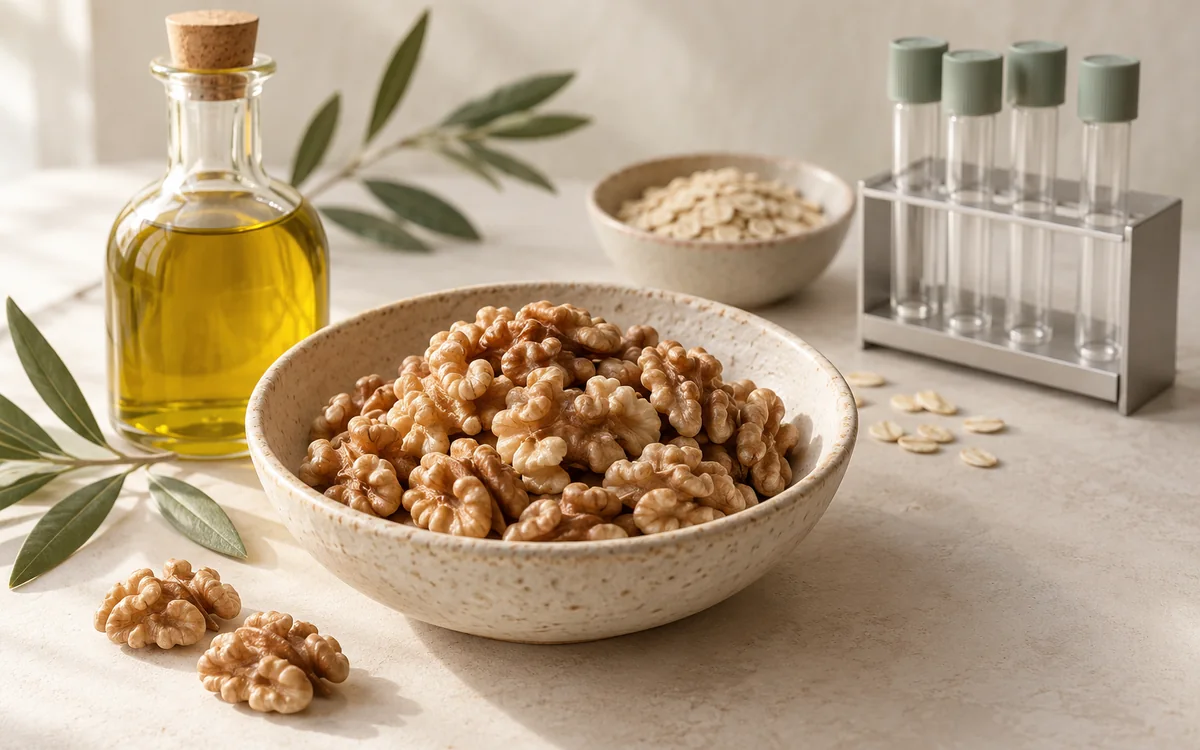
High Triglycerides: The Direct Answer
High triglycerides means that a type of fat in your blood is above the usual limit of 150 on the mg/dL scale. Values from 150 to 199 are called borderline high, 200 to 499 high, and 500 or more very high [1, 2]. There are usually no symptoms at all, so a blood test is the only way to find out [1, 12]. The most common causes are extra calories, sugar and refined starches, excess weight, alcohol, diabetes and insulin resistance, and sometimes the thyroid, the kidneys or a particular medicine [1, 2].
The encouraging part is that this number responds to lifestyle changes better than most results on a lab sheet, because modest weight loss, regular movement and less sugar and alcohol all bring it down [4]. A very high value, however, needs faster follow-up because it can trigger inflammation of the pancreas, which this guide explains in detail [2, 4].
If your result is raised and you want to know the reason and the next step, Dr Mohab Ashraf Fouad, a specialist in internal medicine, diabetes, liver, gastroenterology and endoscopy, reviews your tests and performs an abdominal ultrasound in the same visit at the La Rose Maadi branch on Saturday from 4 to 7 pm. You can start the process here: Book your appointment.
Reading the Result: What Each Band Means and What to Do
Egyptian labs usually print triglycerides in mg/dL, while some labs and European guidelines use mmol/L. For a rough conversion, divide the mg/dL figure by 88.5: 150 is about 1.7, 200 about 2.3 and 500 about 5.6. These are laboratory units, not doses. Triglycerides are the most common type of fat in the body, coming from butter and oils and from surplus calories that the body stores in fat cells [2].
For adults the bands and the sensible reaction to each are:
1. Below 150 (about 1.7 mmol/L): normal. Simply repeat it with your routine check-up [1, 3, 11]. 2. 150 to 199: borderline high. Food, weight and activity are usually the treatment here, and it is a good moment to look for causes such as blood sugar and weight [1, 2]. 3. 200 to 499: high. This needs a medical look at the causes, a clear food and movement plan, and a repeat test after a while. If you also have heart risk or diabetes, the doctor decides whether a medicine is needed [1, 4]. 4. 500 or more: very high. Do not wait for the next routine check-up; book soon because the risk of pancreatitis rises at very high values [2, 3].
Compared with the European guideline, the level at which pancreatitis becomes a main concern is above 10 mmol/L, about 880 on the mg/dL scale, although the guideline warns that pancreatitis can occur at lower values in the 5 to 10 mmol/L range [4]. That is why interpretation depends on your whole situation, not on a single figure.
One last point: one test is not a verdict. The value moves from day to day with your last meal and the previous evening, so if it is raised, confirm it with a properly fasted repeat before you worry or overhaul your life. For cholesterol alongside triglycerides, also read High cholesterol: understanding results and next steps.
Fasting or Not: How to Prepare for the Test
US medical references say you may need to fast for 8 to 12 hours before the blood draw, and the doctor or lab tells you whether fasting is required [1, 3]. By contrast, a recent European guideline noted that a non-fasting sample shows triglycerides about 0.3 mmol/L higher on average, that this difference usually has no clinical importance, and that non-fasting samples predict heart risk at least as well as fasting ones [4].
In practice: if a non-fasting result comes back under 150, it is probably fine. If it is raised, repeat it after a proper fast. Fasting means water only, with no food, juice or sweet tea. In the days before the test keep your usual diet, because a heavy meal or an evening of sweets and alcohol can push the number up and mislead you.
A few other points improve how well results compare:
1. Keep away from alcohol for at least 24 hours if you can, and tell the lab if you drank. 2. Do not change your medicines on your own, but write down their names and bring the list, because some of them affect blood fats [1, 3]. 3. Repeat the test at a similar time of day, at the same lab if possible, so you compare like with like. 4. If your report includes a calculated LDL, know that the usual formula becomes unreliable once triglycerides pass roughly 400 on the mg/dL scale, and your doctor may order a direct measurement [4].
During Ramadan, a test shortly after iftar does not represent your usual state. It is better to agree a suitable time with your doctor, for example in the morning after the natural overnight fast.
Causes of High Triglycerides: Why Yours Went Up
There is often more than one cause, and identifying it matters because treatment follows the cause. The commonest ones in the medical references are [1, 2, 3, 12]:
1. Diet: more calories than the body burns, particularly sugar, simple starches and saturated fat. 2. Excess weight and inactivity: a body mass index above 25 goes with higher triglycerides. 3. Alcohol: even moderate amounts raise them in some people, and the effect is large in those whose triglycerides are already high [4]. 4. Poorly controlled diabetes and insulin resistance. 5. Liver and kidney disease. 6. An underactive thyroid, which is linked with raised cholesterol, and thyroid testing is advised for people with abnormal blood fats [8]. 7. Smoking and inflammatory diseases such as rheumatoid arthritis. 8. Genes: a family history of high blood fats or heart disease increases the likelihood [1].
Medicines can contribute too: diuretics, hormones, corticosteroids, beta-blockers, some HIV medicines and some breast cancer treatments [1, 3]. It is very important not to stop a blood pressure, heart or other medicine on your own just because it might affect the result; tell your doctor, who decides whether a suitable alternative exists.
In Egyptian daily life we often see the same combination: late evenings with sweets, juices and fizzy drinks, bread, rice and pasta on the same plate, long hours seated at work, and weight that has crept up around the middle. Belly fat in particular is an important clue, because it is often tied to insulin resistance, which pushes triglycerides up [7]. If the value is very high without any obvious dietary or weight explanation, an inherited cause or a medicine becomes more likely, and a specialist assessment is worthwhile.
Triglycerides, Fatty Liver, Insulin Resistance and Diabetes
High triglycerides rarely come alone. Together with a large waist, raised blood pressure, higher blood sugar and low HDL cholesterol, they can form what is called metabolic syndrome, diagnosed when three of five elements are present: a large waist, high blood pressure, high blood sugar, high triglycerides and low HDL [7]. The same condition is also called insulin resistance syndrome [7].
The relationship with the liver runs in both directions. US health institutes note that people with fatty liver are more likely to have abnormal blood fats such as cholesterol and triglycerides, and that between one third and two thirds of people with type 2 diabetes have fatty liver [6]. Practically, if your triglycerides are raised and you also have a larger belly or higher blood sugar, an abdominal ultrasound is useful because it can show fat accumulation in the liver during the same visit. The details of symptoms and diagnosis are in Fatty liver: symptoms, diagnosis and when it becomes serious, and the suitable way of eating is in Fatty Liver Diet: What to Eat and Limit in Everyday Meals.
Insulin resistance means the body needs more insulin to handle the same amount of sugar. That pushes the liver to make more triglycerides, which is why the pattern often travels with a bigger belly and, in some people, darker skin folds at the neck. If you suspect it, read Insulin resistance in adults: symptoms and tests, and then fasting glucose and HbA1c.
If blood sugar itself is high, controlling it is one of the strongest ways to bring triglycerides down. So a fasting glucose and HbA1c deserve to be checked alongside every raised triglyceride result, not a year later. Losing 5 to 7 percent of starting weight with 30 minutes of activity on 5 days a week lowers the risk of type 2 diabetes [10], and it usually improves triglycerides as well [4].
The Risks: Heart and Pancreas
Why does this matter when there are no symptoms? For two reasons.
First, the heart and blood vessels. Levels above 150 may raise the risk of heart disease [2]. When high triglycerides combine with low HDL or high LDL cholesterol, the risk of heart attack and stroke rises [11]. References link them with disease of the heart, brain and limb arteries and with metabolic syndrome [1]. That means you judge the whole picture, not triglycerides alone: blood pressure, sugar, smoking, family history and the cholesterol result.
Second, the pancreas. Extremely high triglycerides raise the risk of acute pancreatitis in adults and children [3]. This is a severe, painful and potentially life-threatening inflammation [1]. The European guideline puts the clear risk above 10 mmol/L, although it can occur in the 5 to 10 range [4]. Prevention is a low-fat diet, no alcohol, a fibrate-class medicine and sometimes omega-3 as an add-on, and insulin for people with diabetes [4].
Signs that mean emergency care now: sudden severe pain in the upper tummy, sharp or knife-like, which may spread to the back and worsen after eating or lying flat, and may ease when leaning forward, with nausea, vomiting or fever [5]. If the pain comes with bloating that does not settle, a fast heartbeat or difficulty breathing, call an ambulance and do not drive yourself [5]. Take your medicines with you.
By contrast, a raised result without symptoms is not an emergency, but it is a golden chance to act before damage occurs. If the value is 500 or more, follow-up should be sooner. And chest pain or sudden breathlessness does not wait for a lab result: go to the emergency department.
Lifestyle Steps That Genuinely Lower Triglycerides
The evidence says the two strongest levers are usually weight loss and movement. Losing weight improves insulin sensitivity and lowers triglycerides, and regular exercise lowers them over and above the effect of weight loss [4]. A simple, achievable target is 30 minutes of activity a day [1] and a loss of 5 to 7 percent of body weight [10].
The practical order we suggest, starting with the most important:
1. Cut added sugar, juices and fizzy drinks first. Fructose raises triglycerides in proportion to the amount, and in the European guideline high intakes could raise them by 30 to 40 percent [4]. The NHS advises limiting juice to one portion a day because it is sugary [9]. 2. Cut refined carbohydrates such as white bread, pastries and sweets, replacing them with wholegrains, pulses and high-fibre vegetables [4, 9]. 3. Reduce alcohol or stop it. The effect is large, especially when the value is high [4]. 4. Replace saturated fat with healthier fats. Fish such as sardines and mackerel at least twice a week, one portion of it oily [9], [4]. 5. Move: brisk walking, stairs, cycling, swimming; regularity matters most. 6. Sleep well, reduce stress and stop smoking [1]. 7. Keep blood sugar and blood pressure under control with your doctor [1].
Know that the result moves over weeks, not days. It is best to repeat the test 8 to 12 weeks after a real change and compare under the same conditions. If it fell but stayed above 200, or you also carry heart or diabetes risk, the doctor considers an extra step instead of continuing to experiment without a result.
Egyptian Food Habits: What Raises Triglycerides and What to Swap
No Egyptian food is banned outright; the problem is the quantity and the stacking. Some common patterns worth adjusting:
1. The repeated starchy meal: bread with rice with pasta, as in koshary or stuffed pigeon with rice. Suggestion: half the plate vegetables, a quarter protein, a quarter starch, and baladi wholemeal bread instead of white fino where available. 2. Eastern sweets and juices: konafa, basbousa, qatayef, sugarcane, carob and tamarind juices, and fizzy drinks. Suggestion: a small portion occasionally rather than daily, whole fruit instead of a glass of juice, and tea and coffee with little or no sugar. 3. Fried food: ta'ameya, chips and fried fish. Choose the oven, the grill or an air fryer, with a measured amount of olive or vegetable oil rather than ghee. 4. Ful, lentils, chickpeas and beans: excellent because they are rich in fibre, but without extra oil or a lot of bread alongside [4, 9]. 5. Fish: tilapia, sardines and mackerel, grilled or baked, twice a week [9]. 6. Fruit: all fruit is possible, in sensible portions and separate from a big starchy meal, and not turned into juice.
Ramadan deserves special attention. A large iftar, sweetened drinks and the late evening afterwards pack calories and sugar into a short window. One workable pattern: a date or two and water, then soup and salad, then the main meal unhurried, with dessert once or twice a week. An hour after iftar, a gentle walk.
Small changes that last beat a strict diet that ends after two weeks. Choose just two changes to start with, and adjust each week.
When Medicines Are Considered (Classes Only)
Medicine is not the first step for most people, but it matters in certain situations. US references say some people will need cholesterol medicines to lower their triglycerides [2], especially those at high risk of heart attack or stroke [1]. The European guideline says drug treatment is usually considered when the value stays above 2.3 mmol/L (about 200 on the mg/dL scale) and cannot be lowered by lifestyle measures [4].
The recognised classes, with no doses because choosing them is the doctor's decision:
1. Statins: designed mainly to lower LDL and also reduce triglycerides to a degree; they are the foundation for people with heart risk [1, 4]. 2. Fibrates: they can lower triglycerides by up to about half depending on the starting value, and are used when the level is very high [4]. An important caution: combining a statin with gemfibrozil in particular raises the risk of muscle problems, while other fibrates carry less risk [4]. That is why this is a doctor's decision, not improvisation. 3. Prescription-strength omega-3: it lowers triglycerides, and the guideline does not recommend it routinely for everyone, but a purified form (icosapent ethyl) showed benefit in statin-treated patients with raised values [4]. This differs from ordinary fish-oil supplements bought without a prescription. 4. Insulin or diabetes medicines for people with uncontrolled diabetes, because controlling sugar lowers triglycerides [4].
In every case medicine complements food and movement rather than replacing them. Review all your current medicines with your doctor, because some can raise blood fats [1, 3]. Do not start or stop any medicine on your own. For more on cholesterol and statins, read High cholesterol: understanding results and next steps.
The Visit in Maadi: What Happens and Who Follows You
If your result is raised, the La Rose Maadi branch is at 14 El-Mokhtar St, off El-Nasr St, behind QNB Bank, New Maadi. Dr Mohab Ashraf Fouad is there on Saturday from 4 to 7 pm, and schedules can change, so confirm when booking. The basics of the consultation are in Internal medicine doctor with ultrasound in Maadi.
The visit includes:
1. A history: food, alcohol, diabetes, thyroid, kidneys, medicines and family history. 2. Weight, waist and blood pressure. 3. A review of your tests: triglycerides, cholesterol, fasting glucose and HbA1c, TSH, and liver and kidney tests. If tests are missing, we choose only the ones that are needed. 4. An abdominal ultrasound in the same visit for the liver, pancreas, gallbladder and kidneys, because fatty liver is one of the most important companions. 5. A written plan with food and movement steps, a date for the repeat test, and when to consider medicine if it is needed.
Bring with you: all previous lipid results with their dates, a glucose and HbA1c result if you have one, a thyroid TSH result, the names of all your medicines with photos of the boxes, and a note about alcohol and smoking. For a broader assessment, see Comprehensive medical check-up in Maadi: which tests are worth doing by age and risk, for thyroid results see TSH thyroid test results: how to understand them, and for diabetes follow-up see Diabetes doctor in Maadi: how to choose complete follow-up.
To book or ask about cost, send a WhatsApp message or call 010 4066 1893, or Book at the Maadi branch directly. If you have sudden severe tummy pain or chest pain, do not wait for the appointment; go to the emergency department [5].