The short answer: no single food cleans the liver
A fatty liver diet is not a detox drink, a week of deprivation, or a promise that lemon, herbs or one special food can remove fat from liver cells. The current name for fatty liver linked to metabolic risk is metabolic dysfunction-associated steatotic liver disease (MASLD). What matters is a sustainable eating pattern alongside suitable activity and management of glucose, lipids and blood pressure when relevant [1, 2, 3].
Food is an important part of care, but it does not replace staging. Simple fat seen on imaging is not the same as inflammation or fibrosis, and a usual body weight or normal liver enzymes does not close the case. For the wider clinical pathway, read the fatty liver treatment and follow-up plan and the guide to fatty liver symptoms and diagnosis rather than trying to infer disease stage from one meal or symptom [1, 2, 11].
This guide has a practical aim: build a Mediterranean-style plate from familiar Egyptian food while reducing the main sources of added sugar, saturated fat and highly processed food. Every meal does not need to look perfect. The useful target is a pattern repeated across most of the week, with manageable changes that last longer than a strict short-lived plan [1, 3, 5, 6].
An Egyptian Mediterranean-style plate: vegetables, protein and better-quality carbohydrates
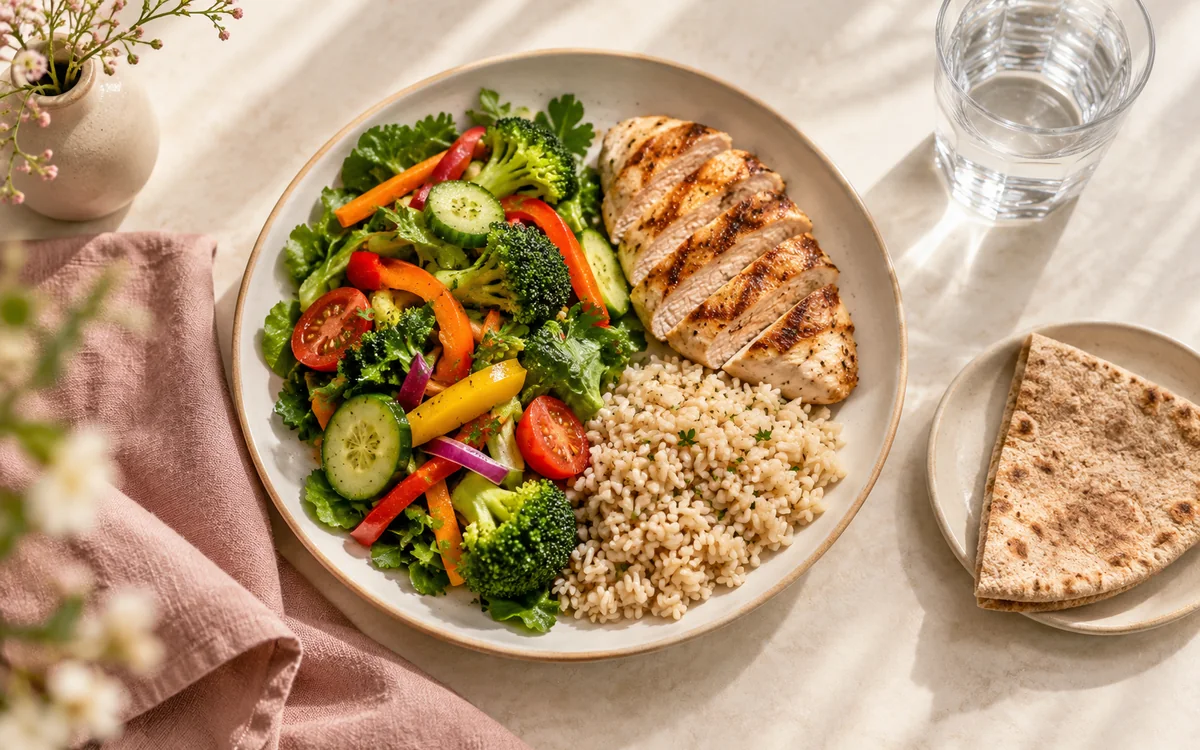
A Mediterranean pattern is not a list of foreign foods; it is a way to organise meals. Start with about half the plate as vegetables or salad, one quarter as a suitable protein source, and the remaining quarter as whole grains or another carbohydrate in an amount that fits your needs. Add a modest source of unsaturated fat, such as olive oil or a small handful of unsalted nuts, instead of making ghee, butter or deep-frying the main fat source [1, 3, 5, 6].
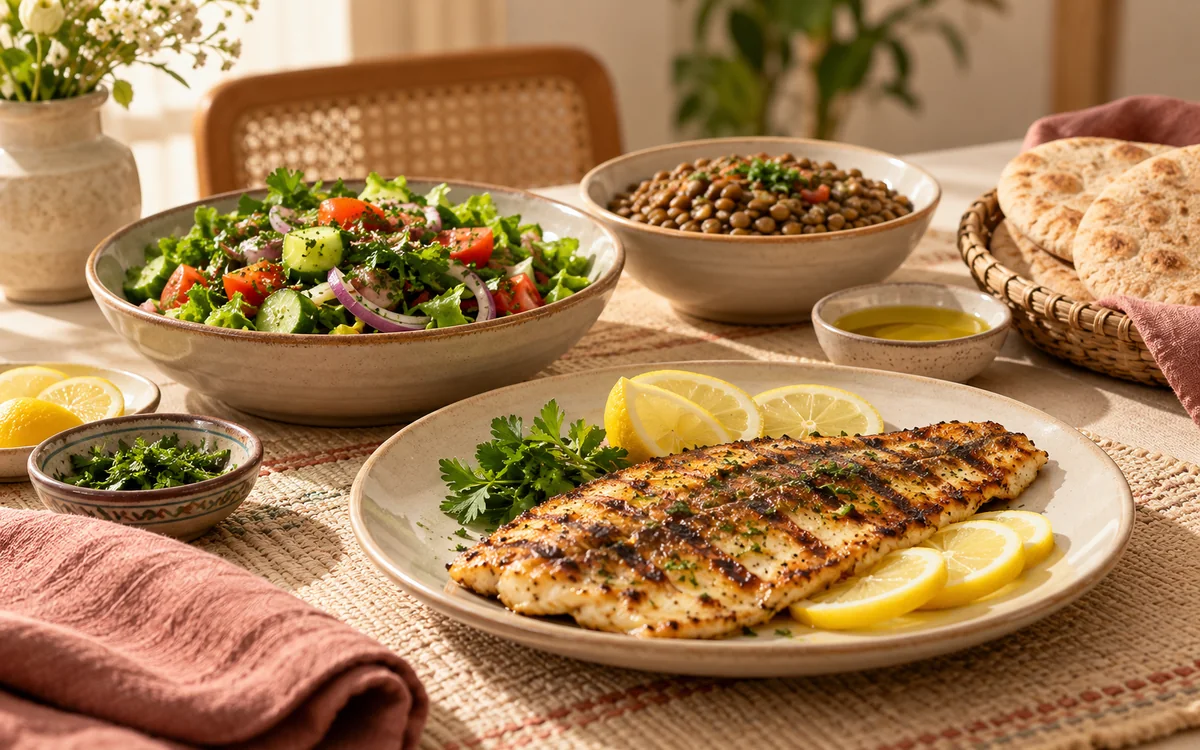
In an Egyptian home, protein can come from grilled fish, skinless poultry, eggs, fava beans, lentils, white beans or chickpeas. Pulses combine plant protein with fibre, while cooked vegetables and salad increase the substance of a meal without relying on fried food or desserts. Baladi bread, oats, bulgur or rice can fit the pattern. The point is not to ban carbohydrates, but to improve quality and place the amount in the context of the whole meal [1, 3, 5].
Diet trials do not establish one winning formula for every person. The DIRECT PLUS trial found a greater reduction in liver fat with a green Mediterranean pattern inside a comprehensive programme, while another trial found that both Mediterranean and low-fat patterns reduced liver fat. These findings support dietary quality and adherence, not buying special ingredients or copying a research protocol literally [7, 8].
What should you reduce first? Start with sugary drinks and oversized portions
If you make one change first, examine drinks. Sugar-sweetened soft drinks, juice even when marketed as natural, tea or coffee with substantial added sugar, and energy or sports drinks can deliver sugar and energy quickly without much fullness. Guidelines prioritise reducing added sugar, especially sweetened beverages, because frequent intake is associated with liver fat and metabolic risk [1, 2, 3].
Then review foods that are easy to eat in large amounts: biscuits, cakes, sweets, crisps, pastries made with refined flour and fat, and fast food. They do not all need to be labelled absolutely forbidden, but they should be less frequent and served in smaller amounts. A diet or light claim on a package does not automatically make it suitable. The repeated meal pattern matters more than one product [1, 5, 6].
Fat itself is not one uniform enemy. The priority is to reduce saturated and trans fats, including frequent large amounts of ghee, butter, fatty meat and processed meat, and replace some of them with olive oil, nuts, seeds and fish. Healthy oil still has a portion: deep-frying or pouring it freely can substantially raise the meal's energy. Portion context matters even for nutritious food [1, 2, 3, 5].
Fruit, dates, bread and rice: not a total ban, but form and amount matter
Whole fruit is not automatically prohibited with fatty liver. A whole apple or orange contains water and fibre and requires chewing, while a glass of juice may concentrate several fruits and can be consumed quickly without the same fullness. That is why reliable guidance includes most whole fruit in a healthy pattern while advising people to reduce juices and drinks high in simple sugars [3, 5, 6].
Dates are not liver poison either, but they are concentrated and easy to eat in larger amounts. This matters if you have diabetes or if dates accompany desserts or sweetened drinks. Instead of asking only whether they are allowed or forbidden, ask how much, how often, and what they replace in the meal. A small amount may fit an individual plan, but there is no fixed number for everyone, especially when glucose-lowering medicines and energy needs differ [1, 3, 5].
The same principle applies to bread, rice and potatoes. Total avoidance is not required to manage fatty liver. Choose whole grains where practical, reduce refined flour and fried preparations, and combine the carbohydrate with vegetables and protein rather than letting it occupy most of the plate. Diabetes, kidney disease, pregnancy, underweight or advanced fibrosis requires an individual plan with the treating team rather than a general internet template [1, 2, 3, 6].
An illustrative Egyptian day: practical options, not a prescription
This day illustrates meal assembly; it is not a universal prescription. Breakfast could be fava beans prepared with modest oil, salad and a piece of baladi bread, or eggs with vegetables and plain yoghurt without added sugar. If a snack is useful, choose a whole fruit, plain yoghurt or a small amount of unsalted nuts according to hunger and the individual plan [3, 5, 6].
Lunch could be grilled fish or poultry with cooked vegetables and salad, plus a suitable amount of rice, bulgur or bread. On a plant-based day, lentil soup or white beans with vegetables and salad can make a satisfying meal. Dinner may be lighter, such as plain yoghurt with oats and whole fruit, or a suitable cheese with vegetables and bread, adjusted to medical and nutritional needs [1, 3, 5].
Swaps are more useful than blanket bans: replace a sugary soft drink with water or an unsweetened drink, replace fried potatoes with oven-cooked potatoes and salad, and replace processed meat with fava beans, lentils, fish or poultry. If portions are large, begin with a manageable reduction and add vegetables. A pattern you can repeat is more valuable than one perfect day followed by complete relapse [1, 4, 6, 8].
Coffee is not medicine, and liver cleanses can cause harm
Observational studies have found an association between coffee drinking and less severe fibrosis in some people with fatty liver. However, the systematic review found cross-sectional studies with inconsistent definitions of coffee and no trial establishing a therapeutic dose or ideal preparation. Coffee may fit your usual pattern if it suits you, but it is not medicine and is not a reason to start despite palpitations, reflux, pregnancy considerations or sleep problems [2, 9].
Plain coffee or coffee with a little milk differs from a large drink loaded with sugar and cream. If you are reducing added sugar, count the additions as part of the day. Do not use coffee to replace meals or increase it because of a number circulating on social media. A clinician or dietitian can review suitability when another condition or a medicine may interact with caffeine [1, 3, 9].
With liver-cleanse mixtures and herbal supplements, natural does not guarantee safe or pure. Liver injury linked to herbs and dietary supplements is documented, and multi-ingredient products can make it difficult to identify the responsible substance. Do not start a vitamin or herb as a fatty liver treatment on your own; bring the containers or ingredient photographs to the appointment [4, 10].
Food matters, but fibrosis assessment and follow-up have their own pathway
Improving food choices or losing weight is encouraging, but it cannot by itself establish whether fibrosis is present or has improved. Fibrosis needs its own assessment based on clinical history, blood tests and non-invasive scores, with liver-stiffness testing when risk warrants it. Likewise, normal liver enzymes do not close the case because important liver disease can be present despite normal enzymes in some people [1, 2, 11].
An ultrasound report can identify or suggest liver fat, but it does not accurately stage every degree of fibrosis or turn the severity of a bright liver into a daily dietary target. Read the guide to ultrasound and fatty liver, and bring the report, laboratory results, medicine list and supplements to the appointment. Seek urgent care for new jaundice, vomiting blood, black stools, confusion, rapidly increasing abdominal swelling, severe persistent pain or marked deterioration; changing the diet is not an adequate response to a red flag [1, 2, 6, 12].
Liver and gastroenterology assessment and ultrasound are available at the Maadi branch with Dr. Mohab Ashraf on Saturday. Nutrition follow-up may take place in Maadi or Fifth Settlement, or through the verified online nutrition service when clinically appropriate. The author, Dr. Youssef Hagag, is a content contributor and is not available for clinic booking. If you have a fatty liver report or associated conditions and need an individual plan, book a consultation with the medical team at La Rose [1, 2, 6].