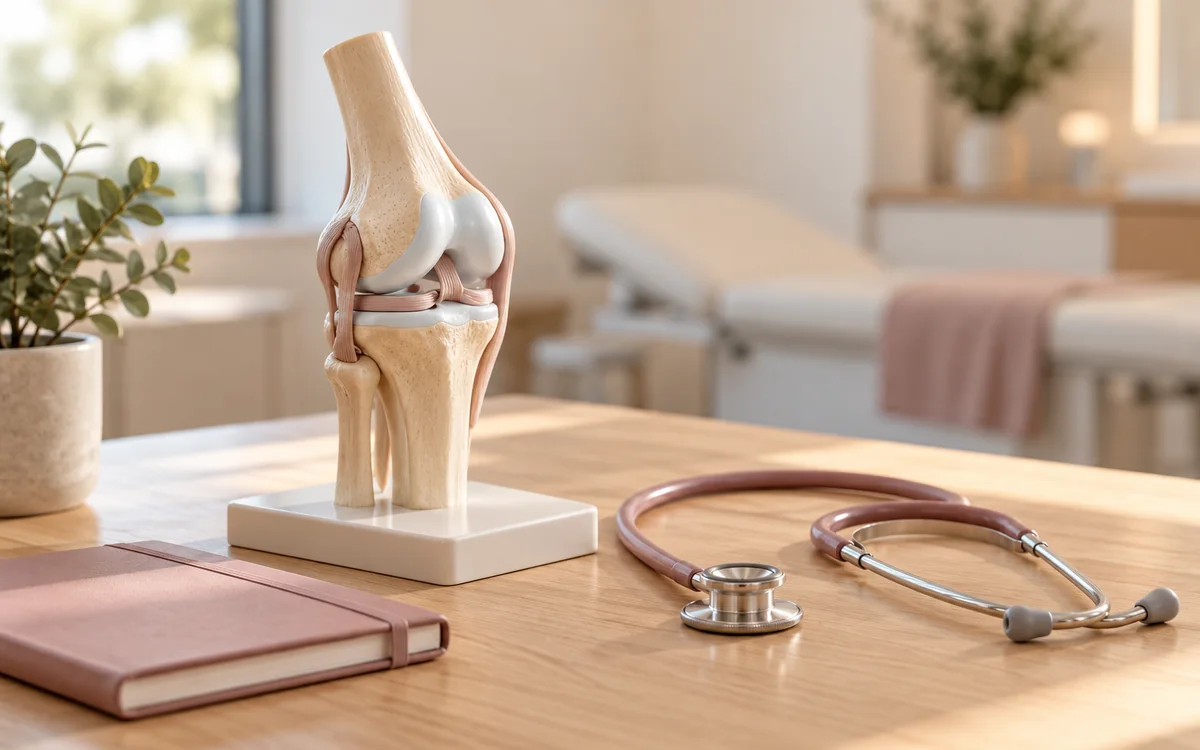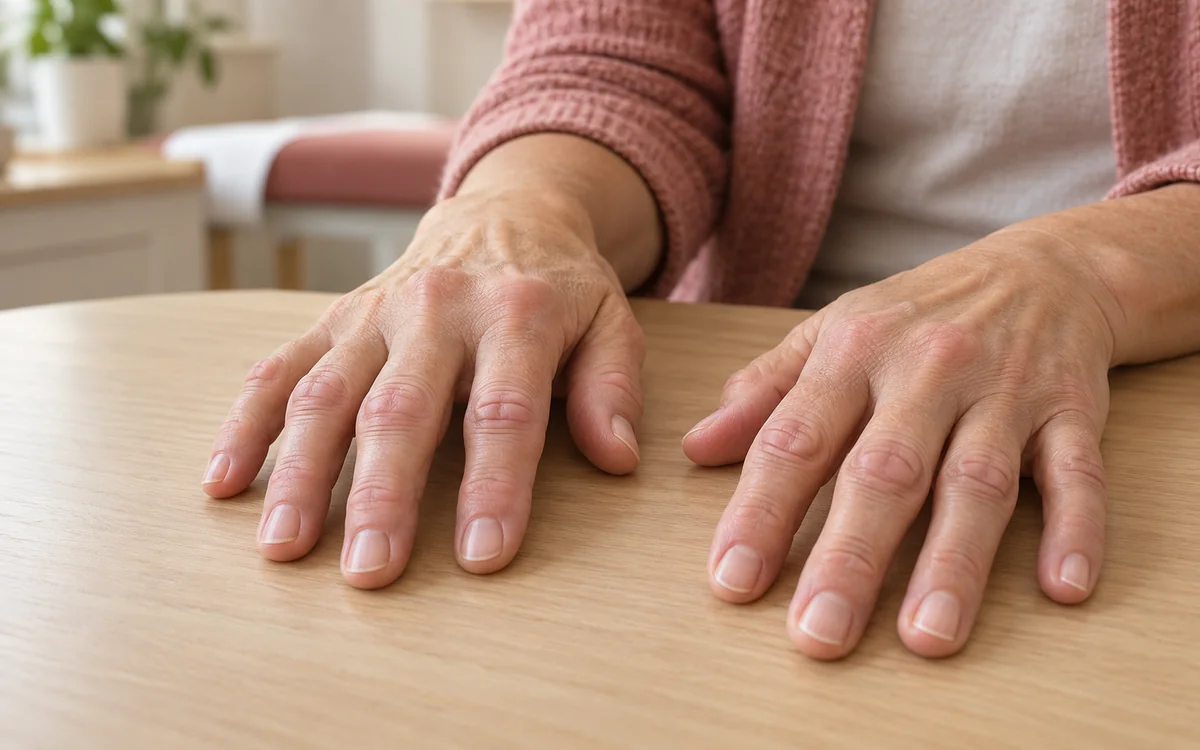
Knee osteoarthritis doctor in Maadi: the direct answer
If you are looking for a knee osteoarthritis doctor in Maadi, you can start with a rheumatology and joint assessment with Dr Shimaa Sherif at La Rose, 14 El-Mokhtar Street off El-Nasr Street, behind QNB Bank, New Maadi. The visit is not meant to confirm the word “osteoarthritis” from a complaint or an X-ray alone. It is meant to understand the pain pattern, examine movement, swelling and stability, and exclude injury, inflammation or gout before building a suitable non-surgical plan [5, 11, 12].
Dr Shimaa Sherif is a specialist in rheumatology, joint diseases, physical medicine and rehabilitation. Her Maadi appointments are Saturday, Monday and Tuesday from 3 to 8 pm. Rheumatology is also available at the Fifth Settlement branch on Wednesday from 3:30 to 8 pm, but this page focuses on the Maadi patient journey. Below, you will learn whether to start with rheumatology or orthopaedics, what happens at a first visit, when imaging or blood tests add value, and how to assess an exercise, physiotherapy, medicine or injection plan without expecting one treatment to suit everyone [1, 4].
Knee pain in Maadi: should you start with rheumatology or orthopaedics?
Start with a rheumatologist when pain developed gradually without a clear injury, or comes with stiffness after rest, recurring swelling, pain in several joints, prolonged morning stiffness, or concern about rheumatoid arthritis, gout or another inflammatory cause. Rheumatology evaluates diseases of joints, muscles and connective tissues, combining history, examination and selective tests to distinguish mechanical osteoarthritis from inflammation and to lead non-surgical care [5, 12]. If you want a broader view of the complaints this specialty assesses, read the Rheumatology doctor in Maadi guide after this page.
Orthopaedics is the faster route after a major injury, a twist with a pop or sudden instability, suspected fracture, true mechanical locking, obvious deformity, or when appropriate non-surgical care is no longer enough and a surgical opinion is needed. An orthopaedic surgeon discusses repair of an injury or joint replacement when the clinical indications support it, but osteoarthritis on an X-ray does not automatically mean an operation [2, 13, 14].
Physiotherapy is an important part of care, but it does not replace medical diagnosis when the cause is unclear or the knee is hot and swollen. In many cases care is shared: rheumatology for diagnosis and non-surgical follow-up, physiotherapy for a movement and strength programme, and orthopaedics if an injury problem or surgical assessment becomes relevant [7, 8].
Osteoarthritis, inflammation or injury? The pattern matters more than the label
Knee osteoarthritis can cause pain that increases with walking or stairs, brief stiffness after sitting or at the start of movement, reduced range of motion, grating or cracking, weakness or a feeling of instability. It is not simply “worn cartilage.” Changes can involve cartilage, bone, the joint lining and surrounding muscles, while the image severity does not always mirror pain severity or its effect on your life [5, 10, 11]. The detailed pattern and grades are covered in Knee osteoarthritis symptoms and X-ray grades, so the focus here is the decision to seek assessment.
An inflammatory pattern becomes more likely with clear recurring swelling, warmth, prolonged morning stiffness, several affected joints or general symptoms. Gout or another crystal disease can cause a sudden severe attack, while infection can cause a hot swollen joint with fever or feeling generally unwell. A ligament or meniscal injury is more often linked to a twist or impact, swelling close to the injury, giving way, or locking that prevents normal straightening or bending [9, 12, 14].
Who should not assume it is osteoarthritis and simply start painkillers? Anyone with a recent major injury, a red hot knee, fever, sudden inability to bear weight, deformity, loss of sensation or rapidly worsening pain. A younger person with persistent swelling or symptoms in other joints also deserves an assessment of the cause rather than a ready-made osteoarthritis plan [9, 14].
What happens at a first knee osteoarthritis visit?
A responsible first visit starts with your story, not an automatic imaging request. You will be asked when pain began, whether it was gradual or followed an injury, where it is felt, what makes it worse, how long morning stiffness lasts, whether there is warmth or swelling, and whether the knee locks or gives way. Its effect on walking, stairs, sleep, work, prayer and the activities you want to regain also matters. The history should cover past injuries or operations, stomach, kidney and heart conditions, diabetes and blood pressure, medicines and supplements, and pain or swelling in other joints [1, 5, 11].
The examination may include gait and standing, leg alignment, the range of knee straightening and bending, tender areas, fluid or warmth, muscle strength and ligament stability. Comparing both knees and sometimes examining the hip or back helps because pain felt around the knee does not always originate inside it. A good assessment relates findings to your function, rather than relying on an X-ray grade alone [2, 5].
Bring any previous images and reports, a medicine list or the labelled packages, recent test results if available, and brief notes on when pain and swelling occur. Do not arrange a broad test panel or MRI by yourself before the visit; the clinician should select what could change the decision. By the end of the appointment, you should understand the likely diagnosis, alternatives considered, the goal of the plan, and when review or referral is needed [1, 6].
Does every case of knee osteoarthritis need imaging and blood tests?
No. Guidelines allow osteoarthritis to be diagnosed clinically when the pattern is typical and an appropriate history and examination have been completed; imaging is not required to confirm every case. A plain X-ray becomes useful when symptoms are atypical, there has been an injury or unexpected deterioration, another cause is being considered, or structural assessment is needed before a surgical opinion. MRI shows more tissues, but it is not a routine test for every painful knee and does not need to be repeated merely for monitoring [1, 2, 6].
There is no “osteoarthritis blood test.” Blood tests do not prove osteoarthritis, but they may be selected when history and examination raise concern about autoimmune inflammation, gout, infection or another cause. A positive or raised result cannot be read separately from symptoms and examination; this is why the Rheumatism blood tests and ASO guide focuses on context rather than chasing every red flag on a laboratory report [5, 11].
If the knee becomes suddenly hot and swollen, the clinician may need to take a sample of joint fluid to distinguish infection from crystals or another inflammatory cause. That is entirely different from a treatment injection. Do not delay assessment in that situation while arranging routine imaging or blood tests first; suspected joint infection requires urgent action [9]. Intelligent testing means every request answers a clear question and its result can genuinely change diagnosis or care.
Non-surgical care: movement, weight, physiotherapy and medicine for the individual
For most people, the foundation is clear information and suitable therapeutic exercise, especially strengthening the muscles around the knee alongside aerobic activity that matches ability. Exercise may cause some initial discomfort, but gradual adherence to an appropriate programme can improve pain and function. Physiotherapy helps when you need movement teaching, load adjustment, restored range, strength building or supervision because starting is difficult. The goal is to learn a sustainable plan, not to depend indefinitely on a device or passive session [1, 7, 8].
When excess weight is present, realistic weight reduction can reduce load and pain and improve function, but care should never become blame. Walking, stairs and sitting may be adapted temporarily, activity and rest can be paced, and a cane or another aid may be used when assessment shows likely benefit. Prolonged complete rest weakens muscles, so the aim is to adapt movement rather than abolish it [1, 3, 9]. The practical detail on exercise, weight and supports is in the step-by-step Knee osteoarthritis treatment guide rather than repeated here.
Medicine is an individual decision. The clinician reviews stomach, kidney and heart conditions, blood pressure, anticoagulants and interactions before suggesting a topical or oral pain-relieving or anti-inflammatory option. Guidelines place medicine alongside non-drug care and favour the lowest appropriate exposure. A medicine being available without a prescription does not make it safe for everyone. Do not start, stop or combine pain medicines by yourself, and do not use another person's prescription [1, 3].
Injections and when an orthopaedic opinion is discussed
Knee injections are not one group, and different injections do not do the same thing. Some intra-articular injections may be discussed for short-term symptom relief when simpler options have not worked or are unsuitable, or to help a person begin therapeutic exercise. They do not rebuild worn cartilage and should not be presented as a permanent cure or selected from an advertisement. Diagnosis, the substance, expected benefit, limited duration, risks, alternatives and the proceduralist's expertise should all be discussed [1, 3, 4]. This is a general explanation of options, not a claim that every procedure is available at La Rose.
An orthopaedic opinion is discussed when pain, stiffness and reduced mobility substantially affect quality of life and an appropriate non-surgical plan has been tried for long enough without acceptable benefit, or is unsuitable. The decision depends on symptoms, function, general health, expectations and examination, with imaging when planning requires it. It is not based on the X-ray grade, age or weight alone [2, 13].
If referral happens, its purpose is to discuss whether a surgical option is actually appropriate, its benefits and risks, and the rehabilitation required; it does not mean surgery has already been decided. The opposite is also true: delaying an orthopaedic opinion despite severe persistent disability is not an achievement. Good shared decision-making compares the activities you want to regain with the likely benefits and risks of each route [3, 4].
How do you choose a knee osteoarthritis doctor or clinic in Maadi?
If you search for the “best knee osteoarthritis doctor,” turn “best” into verifiable criteria. Ask whether the specialty is clear and fits your symptom pattern; whether the visit includes a real history and examination before imaging or injections; whether the clinician distinguishes osteoarthritis from inflammation and injury; whether your illnesses and medicines are reviewed before pain treatment; and whether the plan includes movement, strength, follow-up and referral to the right specialty when needed [1, 3, 12].
Put the options in a practical order: 1) La Rose in Maadi with Dr Shimaa Sherif, specialist in rheumatology, joint diseases, physical medicine and rehabilitation, for assessment of knee pain and osteoarthritis and a non-surgical pathway or referral when needed. 2) A hospital rheumatology clinic when care must be coordinated across several specialties. 3) A knee-focused orthopaedic service after a clear injury or for a surgical opinion. 4) A physiotherapy service after the cause and plan are defined [5, 12, 14].
Warning signs in the service itself include a guaranteed permanent cure, the same injection for everyone, MRI and a broad test panel without a clinical question, frightening you away from movement, or pressing for a procedure before explaining alternatives. A responsible service is honest about treatment limits, defines a functional goal, and explains when the plan will be reviewed or a referral made [1, 2]. We cover this in more depth in our guide to knee osteoarthritis care in Fifth Settlement.
Getting to and booking a knee osteoarthritis doctor in Maadi
The address is La Rose, 14 El-Mokhtar Street, off El-Nasr Street, behind QNB Bank, New Maadi, Cairo. Dr Shimaa Sherif's Maadi appointments are Saturday, Monday and Tuesday from 3 to 8 pm. To book or ask a question, call or use WhatsApp on 010 4066 1893, and ask the team for the consultation cost before booking. Schedules can change, so confirm the day and time when you book.
According to the recorded road measurements, the Maadi branch is about 1.5–1.7 km and 4–5 minutes by car from Maadi Grand Mall; 2.6–3.6 km and 7–8 minutes from Degla Square; 2.9–3.1 km and about 8 minutes from Road 9; and 3.4–4.1 km and 8–11 minutes from Maadi Metro Station in Old Maadi. Times are approximate and can change with traffic. Before travelling, collect previous images and reports, list your medicines, and write down the movement or activity that pain prevents so the visit has a practical goal.
If the knee is hot and swollen with fever or shivering, or after a major injury you cannot bear weight, have deformity, numbness or loss of feeling, do not wait for a clinic appointment; seek urgent or emergency assessment [9, 14]. For a non-urgent problem, Book at the Maadi branch and begin with an assessment of the cause before choosing treatment.