Knee osteoarthritis treatment is not one prescription
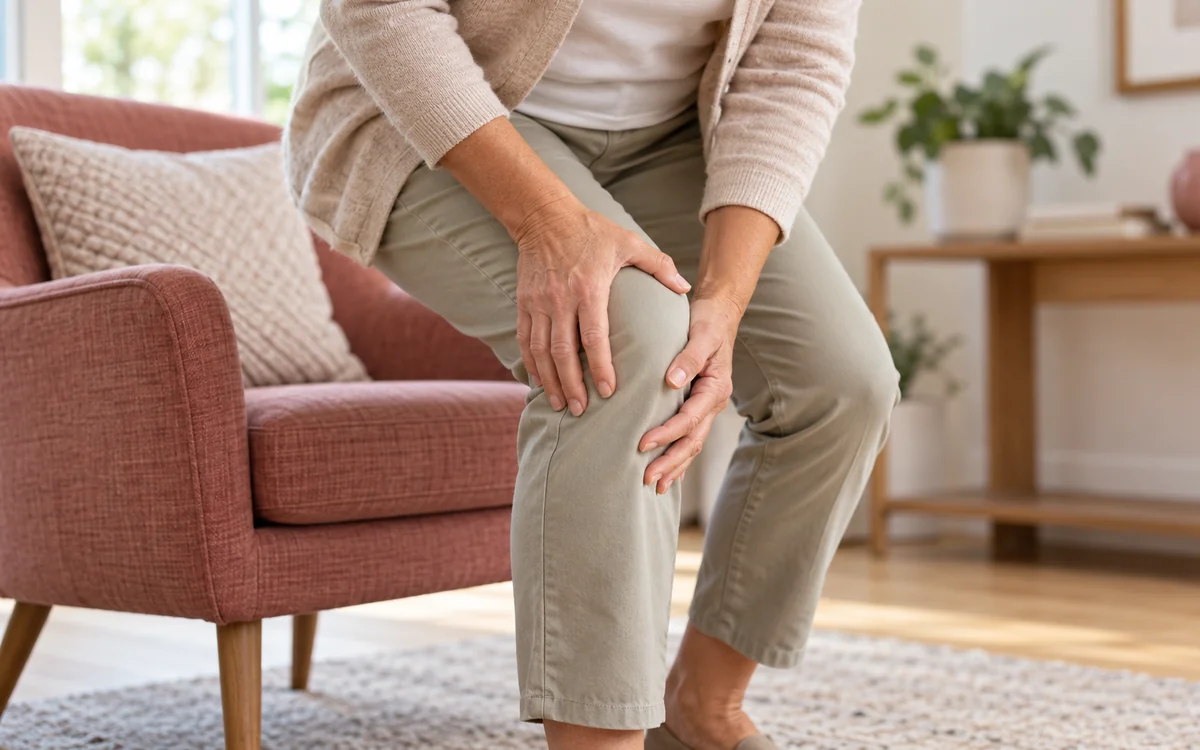
If you are asking for the best treatment for knee osteoarthritis, the answer is not the name of one medicine or injection. The plan depends on pain severity, how well you can walk, sleep and work, your other conditions and medicines, and what you have already tried. Guidelines begin with clear information, suitable therapeutic exercise and weight management when relevant, then add pain relief or movement support according to need. An X-ray grade alone does not choose treatment; the practical goals are less pain, better movement and greater ability to carry out daily activities [1, 2, 3].
This order does not mean that one stage must be completed before the next starts. Physiotherapy can run alongside a topical anti-inflammatory medicine, while a correctly chosen walking aid may help you remain active. Not every painful knee is osteoarthritis, either. Diagnosis requires a history and examination, with imaging or joint-fluid testing sometimes used when the pattern is unusual. No treatment restores cartilage to its original state, but several options can reduce symptoms and improve function, and many people never need surgery [4, 5, 11].
Agree on a measurable goal with your clinician: walking for longer, climbing a defined number of steps, rising from a chair more easily, or sleeping without being woken by pain. Record pain, activity and any adverse effects, then review the plan instead of moving randomly between remedies. Improvement is often gradual, and continuing the foundations matters more than chasing a rapid fix [1, 4, 12].
Exercise and physiotherapy form the foundation
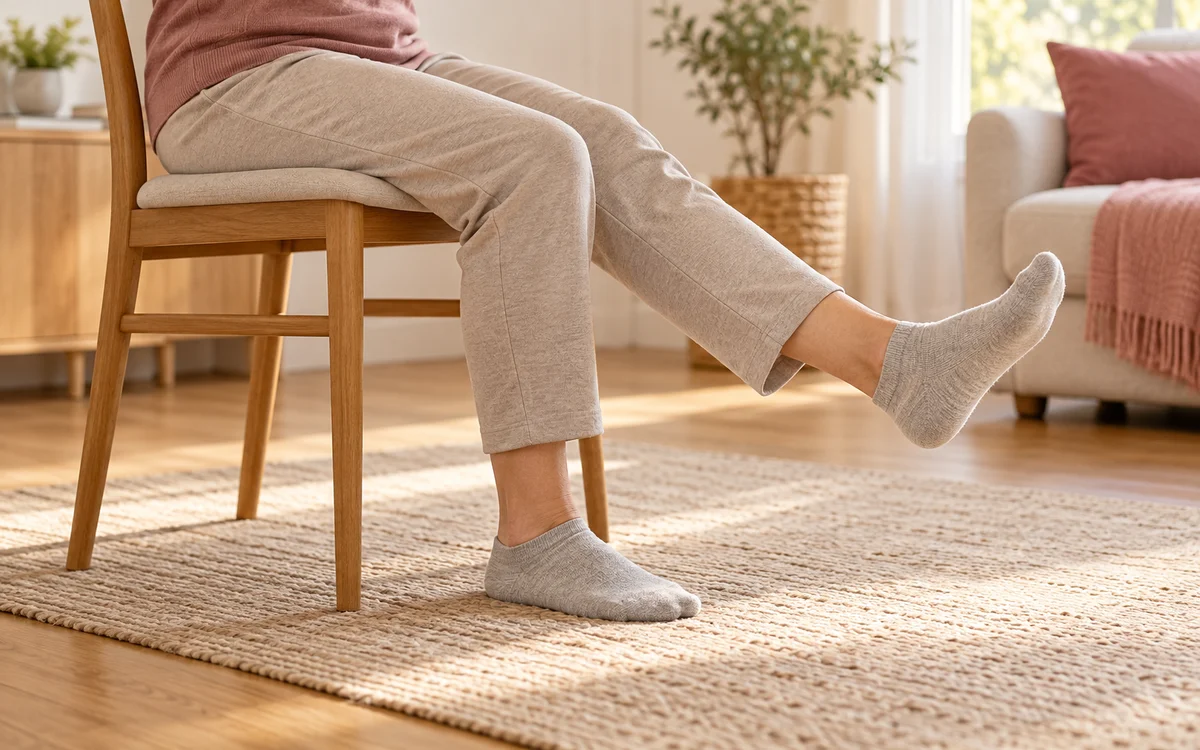
Prolonged rest weakens the thigh muscles and makes movement harder, which is why almost every guideline places therapeutic exercise at the centre of knee osteoarthritis care. A suitable programme combines strengthening of the muscles around the knee and hip, range-of-motion work, and low-impact aerobic activity such as comfortable walking, stationary cycling or water exercise. There is no single perfect exercise for everyone; what matters is that it fits your ability, progresses gradually and is repeated consistently [1, 2, 3, 4].
A small, temporary increase in discomfort can happen when you start, and it does not automatically mean that exercise is wearing away cartilage. Begin with an amount you can repeat, then increase time or resistance in small steps. If pain rises substantially and remains worse the next day, or if new swelling or marked limping appears, reduce the load and speak to your physiotherapist or clinician. Supervised sessions can teach correct movement, but long-term success also needs a programme you can continue at home [1, 5, 7].
Walking is often useful when adjusted to your situation. Start on level ground, use stable and comfortable footwear, and split the time into shorter bouts if a long walk aggravates pain. Swimming or water walking can be a good alternative when weight-bearing is painful, while strength work helps with rising from a chair and climbing stairs. The aim is not to exercise through sharp pain; it is to find a sustainable dose of movement that preserves muscle and fitness [4, 5, 10].
Walking, stairs and prostration: adapt movement instead of stopping
In daily life, the aim is not to ban every movement that loads the knee, but to organise it. On stairs, use the handrail, move steadily and place the whole foot on the step. If one knee is more painful, a physiotherapist can teach a safe sequence for going up and down and assess whether a walking stick would help. Reduce repeated stair use during a flare, but do not treat permanent avoidance as therapy; thigh strength and balance are part of regaining this ability [4, 5, 12].
Prostration and sitting on the floor require deep knee flexion, which can increase pain for some people. Use a stable surface, take time when lowering and rising, and use safe support if a movement professional recommends it. If deep bending causes sharp pain or the knee locks, do not force it. A temporary adaptation, such as praying on a chair when ordinary movement is not possible, should reflect your physical ability; ask a trusted religious authority about the relevant ruling because this article addresses movement safety only [4, 7, 12].
Spread tasks out rather than having one exhausting day followed by two days of rest. Alternate standing and sitting, take short breaks, and raise chair height if standing up is difficult. Warm packs may ease stiffness, while cold packs may settle pain or swelling after activity; protect the skin with a barrier and do not apply heat to a hot, swollen joint without assessment. The idea is to adapt activity so you remain involved in life, not withdraw from it [4, 5, 12].
Weight, walking aids and braces are tools, not judgements
If you live with excess weight, losing any amount may improve pain and movement, and NICE notes that improvement is likely to be greater with a ten percent loss than with five percent. Weight loss is not, however, a prerequisite for deserving pain treatment or a surgical referral. A weight plan should be realistic, protect nutrition and muscle, and adapt activity so the knee allows consistency. Knee osteoarthritis should not be reduced to a scale number because previous injury, age, joint structure and other factors also contribute [1, 2, 10].
A walking stick can reduce load and improve safety, particularly when the knee feels unstable or you limp. Height and technique matter; it is commonly held on the side opposite the painful knee, but a movement professional should confirm the right setup for you. A walker may be more suitable when balance is poor or both sides are affected. Using an aid is not surrender. It is a tool that can help you move confidently and remain active [2, 4, 10].
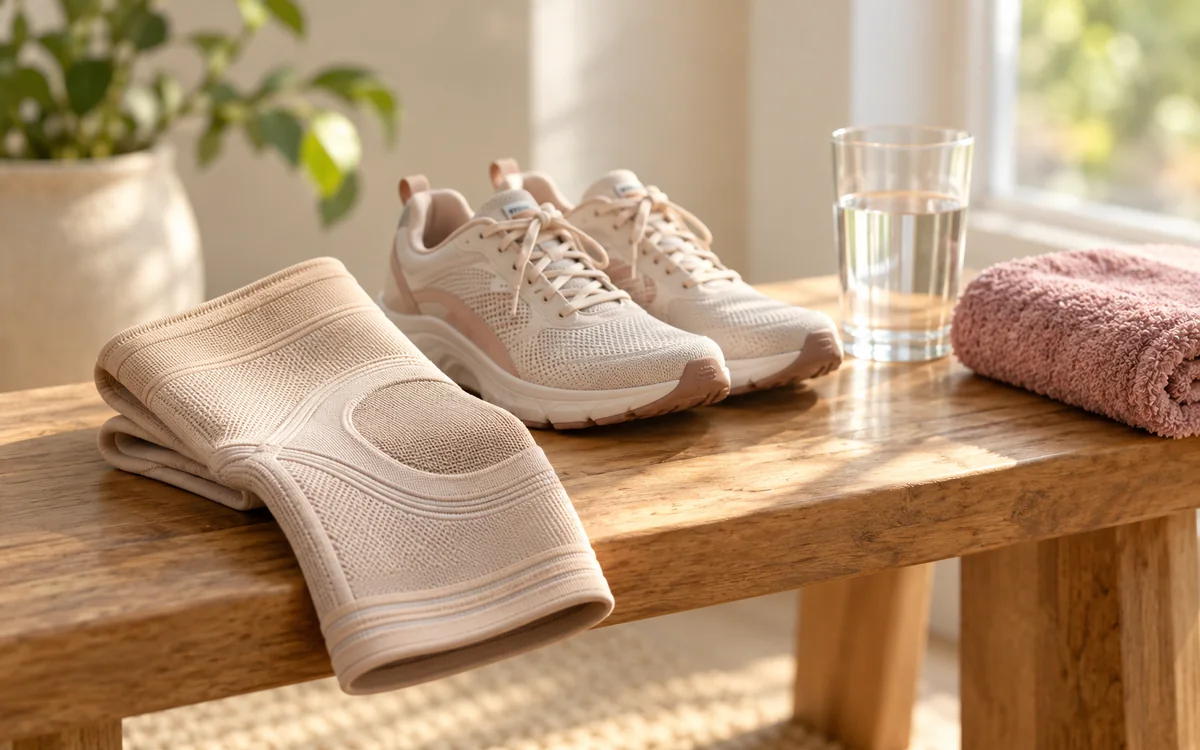
Braces are not routine for everyone. An unloading brace may help when osteoarthritis is concentrated in one knee compartment, while a patellofemoral brace may suit a different pattern. A poorly fitted device can cause rubbing or pressure without benefit. NICE does not advise routinely offering braces, insoles, tape or supports unless there is instability or abnormal loading and the device is expected to improve movement. Assessment before purchase is therefore better than choosing one at random [1, 2, 6].
Medicines: appropriate relief with a risk review
For knee osteoarthritis, topical non-steroidal anti-inflammatory drugs come before tablets in the NICE and ACR guidelines because they treat the area with less exposure to the rest of the body. That does not make them automatically suitable for everyone; allergies, skin problems and other medicines still need review. Use any medicine for the method and duration agreed with your clinician or pharmacist, and do not combine more than one anti-inflammatory medicine on your own [1, 2, 5].
If topical treatment is insufficient or unsuitable, a clinician may discuss an oral anti-inflammatory after reviewing your stomach, kidneys, heart, blood pressure and liver, as well as blood thinners and other medicines. The lowest effective dose for the shortest appropriate time is an important principle, and stomach protection may be needed in your situation. The word painkiller does not mean harmless: gastrointestinal bleeding, fluid retention and kidney injury are recognised risks. Do not start or stop a prescribed medicine by yourself [1, 2, 11].
Paracetamol is not a strong routine choice in recent guidance because its benefit in knee osteoarthritis is limited, although a clinician may discuss short-term use when alternatives are unsuitable. Strong opioids are not recommended because harms outweigh benefits, including drowsiness, falls and dependence. Other chronic-pain medicines may suit selected situations, but this is an individual decision rather than a general prescription [1, 2, 3].
Injections and surgery: when do they enter the plan?
An intra-articular corticosteroid injection may be discussed when other medicines are ineffective or unsuitable, or to make participation in an exercise programme possible. Its benefit is usually short term; NICE gives an approximate range of two to ten weeks. An injection does not rebuild cartilage and is not a step to repeat automatically. Before deciding, the clinician reviews the diagnosis, diabetes, medicines and the timing of any possible surgery, then explains benefits and risks [1, 2, 11].
Sources differ on hyaluronic acid injections, but NICE advises against offering them for osteoarthritis, while ACR conditionally recommends against their use because benefit becomes limited when lower-bias studies are considered. Treatments such as platelet-rich plasma or stem cells should not be presented as guaranteed solutions; guidelines differ or judge the evidence insufficient, and products and protocols are not uniform. Ask about evidence for the exact proposed procedure, its risks and alternatives, and do not postpone the foundations of care for it [1, 2, 6, 10].
Referral for joint replacement becomes reasonable when pain, stiffness or reduced function substantially affects your quality of life and suitable non-surgical care is no longer effective or appropriate. The decision should not rest on age, weight or an X-ray alone, and you do not have to wait until you are completely disabled. The surgeon explains expected benefits, rehabilitation, risks such as infection and blood clots, and whether partial or total replacement fits the pattern. Arthroscopic washout is not a routine treatment for knee osteoarthritis alone [1, 5, 6, 11].
Collagen, glucosamine, cupping, bee venom and herbs
Glucosamine is one of the most frequently discussed supplements. NICE says not to offer it for osteoarthritis because there is no strong evidence of benefit, and ACR strongly recommends against it for knee osteoarthritis, while other sources note differing results between preparations. The practical conclusion is not to treat it as foundational care or a substitute for exercise, weight management and medical treatment. Glucosamine and chondroitin can interact with certain blood thinners, so tell your clinician and pharmacist about every supplement you take [1, 2, 8, 9].
Evidence for collagen, herbs and mixed remedies is less consistent and cannot support a promise that cartilage will regrow or osteoarthritis will disappear. Natural does not mean safe because concentration and purity can vary, while a supplement may interact with a medicine or affect the liver or kidneys. Bee venom can trigger a severe allergic reaction, and there is no reason to experiment without clear evidence and safeguards. Do not stop an effective treatment for a product marketed as cartilage-building [8, 9].
Cupping and acupuncture have mixed findings and recommendations. NICE advises against acupuncture or dry needling for osteoarthritis, while ACR gives acupuncture a conditional recommendation, showing that certainty is lower than it is for exercise. Evidence for cupping or bee venom is insufficient for either to become a core part of the treatment ladder. If you are considering a complementary approach, discuss it as a possible addition for symptoms rather than a cartilage treatment, and ask about infection, bleeding, allergy and interactions [1, 2, 8].
When do you need urgent assessment, and what comes next?
Knee osteoarthritis usually causes gradual pain and stiffness, but a suddenly hot, red and swollen knee, especially with fever, shivering or feeling generally unwell, needs urgent assessment to exclude joint infection or another cause. Seek urgent care after a major injury if you cannot bear weight or the knee looks deformed, and for severe leg pain and swelling accompanied by breathlessness. Do not assume that every flare is simply osteoarthritis [4, 7, 11].
Arrange a timely clinical assessment if pain persists, wakes you, limits walking, work or prayer, or if the knee locks or gives way. Bring a list of medicines and supplements, when pain gets worse, and what you have tried and how it worked. Assessment establishes whether the pattern really is osteoarthritis and whether you need physiotherapy, a medicine review or evaluation for another intervention. Do not change medicine or start an injection or supplement on the basis of this article alone [1, 4, 7].
The medical team at La Rose can begin with a whole-picture assessment and plan a next step suited to your situation, with branches in Maadi and Fifth Settlement, New Cairo. The purpose of the visit is not to sell one solution; it is to order the options by safety and by the effect of pain on your life, and to identify when another specialty or intervention is needed. Bring previous reports or images if available, but decisions depend on symptoms and examination rather than paperwork alone [1, 4, 10]. For non-urgent concerns, you can book a consultation with the medical team.