Lupus doctor in Maadi and New Cairo: the direct answer
If you are looking for a lupus doctor in Maadi or New Cairo, the specialty that diagnoses and follows systemic lupus erythematosus is rheumatology and immunology, the branch of medicine that deals with immune-driven disease of the joints and connective tissue [2, 4, 7]. At La Rose, Dr Shimaa Sherif, a specialist in rheumatology, joint diseases, physical medicine and rehabilitation, sees patients at the Maadi branch (14 El-Mokhtar Street, behind QNB Bank, New Maadi) on Saturday, Monday and Tuesday from 3 to 8 pm, and at the Fifth Settlement branch (CMC Medical Mall, 4th floor, North 90th Street) on Wednesday from 3:30 to 8 pm. To book, call or message on WhatsApp on 010 4066 1893.
Lupus is a long-term condition that comes in waves: symptoms can flare for a few weeks and then settle, and each person's course differs. There is no cure, but symptoms can improve when treatment starts early [2]. That is why a rheumatology visit combines the story of your symptoms, a clinical examination, selected tests, imaging when needed, and then a clear follow-up plan [7].
This page focuses on four things: when to see a rheumatologist, what happens at a first visit, which tests and reports to bring, and how follow-up works. Symptom and test detail lives in our lupus symptoms and tests article, and pregnancy planning in our lupus pregnancy planning article; here they are summarised in a couple of lines and linked [1, 3].
Read also: Lupus pregnancy planning
When should you see a rheumatologist for lupus?
See a rheumatologist when your symptoms point to an immune disease that affects more than one part of the body. The main features in medical sources are joint and muscle pain, extreme tiredness that does not go away however much you rest, and a rash that tends to appear after sun exposure, often over the nose and cheeks [2]. There may also be headaches, mouth or nose ulcers, a high temperature, hair loss, weight loss, and fingers that change colour in the cold [2, 4].
There are also clues that involve the kidneys: a change in how the urine looks, new swelling in the legs or around the eyes, or swelling in the hands and feet [1, 4]. These do not necessarily mean lupus, but they deserve a specialist looking for the cause.
See a rheumatologist as well if another doctor, such as internal medicine, dermatology or gynaecology, has found a positive antinuclear antibody result or suspects lupus, or if immune disease runs in your family. The antinuclear antibody is present in nearly everyone with lupus [4], but on its own it is not a diagnosis, because diagnosis remains clinical and is supported by tests [7]. The modern classification criteria also use a positive antinuclear antibody as the entry point and then add up points from symptoms and tests across several domains [6].
Some symptoms should not wait for a clinic slot and need urgent assessment: chest pain or breathlessness, a severe headache with seizures or confusion, sudden weakness or numbness, very little urine with swelling, or a high fever with severe exhaustion. This is general safety advice. In severe cases lupus can affect the heart, lungs, brain and kidneys [2], but these symptoms can also have other causes, and either way they take priority.
Lupus affects women about nine times more often than men, and most cases begin between the ages of 15 and 45, although it can appear in childhood or later [1]. Age and sex alone therefore neither confirm nor exclude it.
What happens at a first lupus visit?
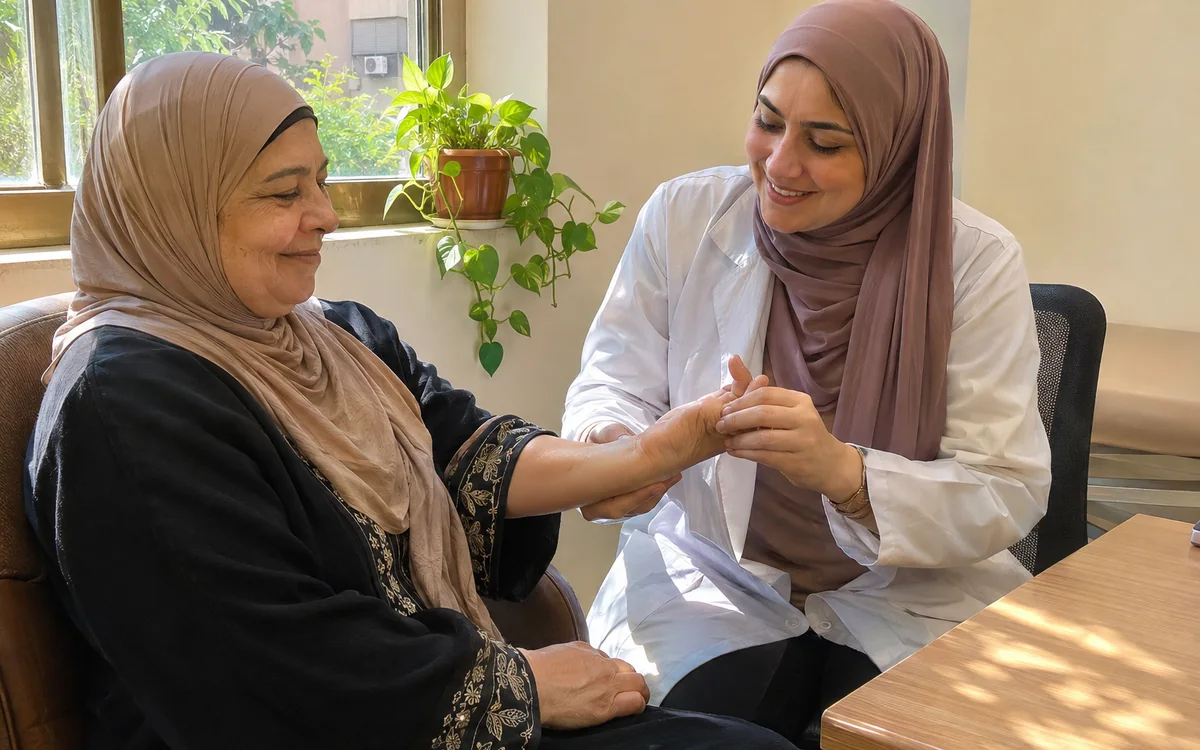
A responsible visit starts with your story, not with an automatic test panel. The doctor asks when the symptoms began and how they evolved, whether they come and go in waves or stay constant, and which systems are involved: skin, joints, kidneys, blood and nerves. She also asks about tiredness, fever, sun sensitivity, mouth ulcers, hair loss, and any chest or breathing symptoms [2, 4].
Next comes the examination: skin, hair and joints, blood pressure, listening to the heart and lungs, and checking the abdomen and nerves. She reviews the medicines you take now, including supplements, pregnancy and family planning, family history, and conditions such as blood pressure, diabetes and anaemia. Other conditions and infections carry a lot of weight in managing lupus [7].
If the clinical picture supports the suspicion, the tests are chosen. Sources describe blood tests for certain antibodies, a urine test to check the kidneys, blood tests for anaemia, and sometimes X-rays or scans of the heart, kidneys and other organs that may be affected [2, 3].
By the end of the visit you should understand the likely diagnosis or the alternatives, which tests are needed and why, the follow-up plan, and when to come back. Do not arrange tests or imaging yourself before the visit, because the doctor chooses the ones that change the decision.
Which tests and reports should you bring to a lupus visit?
Bring what you already have, and do not order new tests yourself. Take any previous immune tests such as the antinuclear antibody and related antibodies, complement levels, a full blood count, kidney and liver function, a urine test, the sedimentation rate and C-reactive protein, any X-ray, ultrasound or MRI that was done, and a list of current medicines with doses. The antinuclear antibody test matters in lupus [4], and blood and urine tests are repeated during follow-up [2].
If results come from a laboratory or hospital, bring the original report, on paper or as a file, not just a summary. If the kidneys or liver were affected, results from the last 6 to 12 months show the trend better than a single test. The tests used to follow the kidneys include urine protein and kidney function [4]. If you are planning a pregnancy, bring your antibody results and your previous pregnancy history [9, 10].
Do not ask for a full test panel before the visit. Many tests without a clear clinical question can blur the picture instead of clarifying it, and diagnosis depends on symptoms together with tests, not on one number [6, 7]. Detail on rheumatology blood tests and the antinuclear antibody is in our rheumatism blood tests article.
Read also: Rheumatism blood tests and ANA
How does lupus follow-up work?
Follow-up is tailored to disease activity and to which organs are affected. The goals agreed in the guidelines are remission or low disease activity, prevention of flares, keeping glucocorticoids to the lowest possible dose, and protecting the organs [5, 7]. The European recommendations advise hydroxychloroquine for all people with lupus unless there is a medical reason against it [5]. That decision, and any change in dose, belongs to the treating doctor alone.
There is no fixed number of visits, because it depends on how active and how stable the disease is. At each visit the symptoms and examination are reviewed, and blood and urine tests are done as the situation requires. Once lupus is confirmed you are advised to have regular checks, including blood tests for anaemia and urine tests for kidney problems [2]. If the kidneys are involved, monitoring is closer; the nephritis guidance describes lifelong assessment of kidney disease activity and a repeat kidney biopsy when the response is incomplete [11]. Hydroxychloroquine also calls for regular monitoring by an eye doctor [11].
If new symptoms appear, contact the clinic early. Symptoms can worsen for a few weeks and then settle [2], and you should not adjust medicines yourself, because that is a decision for the treating doctor. Pregnancy plans should be discussed early, since it is best for the disease to be quiet on pregnancy-compatible medicines before conception [10].
Some things you can do yourself make a difference: a high-protection sunscreen and a hat in the sun, pacing yourself to avoid exhaustion, staying active even on a bad day, managing stress, a healthy diet that includes vitamin D and calcium, and not smoking, which makes lupus worse [2]. Managing related conditions, especially infections and hardening of the arteries, is very important in lupus [7]. Detail on symptoms and tests is in our lupus symptoms and tests article, and on pregnancy in our lupus pregnancy planning article.
Pregnancy and family planning with lupus
Pregnancy is possible with lupus, most women can have a successful pregnancy when it is planned properly, and there are measures that reduce risk for mother and baby [9]. The guidelines say family planning should be discussed early after diagnosis, and that it is best for the disease to be well controlled on pregnancy-compatible medicines before conception [9, 10]. They advise staying on hydroxychloroquine through pregnancy unless there is a reason against it [10].
Low-dose aspirin (81 mg) is added at the end of the first trimester to reduce the risk of pre-eclampsia, according to a recent review [10]; that decision belongs to your doctor and the pregnancy team. Assessing antibodies such as anti-Ro, anti-La and antiphospholipid antibodies is part of estimating risk [8, 9], and some are linked to problems such as heart block and neonatal lupus [10].
Medicines differ in pregnancy safety: azathioprine, tacrolimus and cyclosporine are compatible with pregnancy and breastfeeding, while mycophenolate is not [10]. Never start or stop a medicine yourself; changes are decided by your doctor in coordination with obstetrics.
Detail on contraception, fertility and pregnancy monitoring is in our lupus pregnancy planning article.
How to reach La Rose from nearby areas
Maadi branch: La Rose, 14 El-Mokhtar Street, off El-Nasr Street, behind QNB Bank, New Maadi, Cairo. Dr Shimaa Sherif is there on Saturday, Monday and Tuesday from 3 to 8 pm.
According to recorded road measurements, the Maadi branch is about 1.6 km and 5 minutes by car from Maadi Grand Mall; 2.6 km and 7 minutes from Degla Square; 3 km and 8 minutes from Road 9; 3.4 km and 8 minutes from Old Maadi (Maadi metro station); 3.5 km and 10 minutes from El Basatin; 5.5 km and 11 minutes from Corniche El Maadi; 6 km and 15 minutes from Tora El-Balad; and 7 km and 11 minutes from Zahraa El Maadi.
Fifth Settlement branch: CMC Medical Mall, 4th floor, North 90th Street, behind the Air Force Specialized Hospital, Fifth Settlement, New Cairo. Dr Shimaa Sherif is there on Wednesday from 3:30 to 8 pm.
The Fifth Settlement branch is about 5.2 km and 10 minutes from Cairo Festival City; 5 km and 10 minutes from El Yasmeen; 6.5 km and 12 minutes from Al Narges; 6.9 km and 10 minutes from El Banafseg; 7.4 km and 12 minutes from First Settlement; 8 km and 12 minutes from Katameya Heights; and 9 km and 12 minutes from Point 90 Mall and AUC Avenue.
Times are approximate and can change with traffic. Before you come, collect previous tests and reports and list your medicines. Because lupus runs in waves [2], do not ignore new symptoms while you wait for your appointment.
Read also: Book your appointment
Branch hours and booking
The Maadi branch is at 14 El-Mokhtar Street, behind QNB Bank, New Maadi, and Dr Shimaa Sherif sees patients there on Saturday, Monday and Tuesday from 3 to 8 pm. The Fifth Settlement branch is in CMC Medical Mall, 4th floor, North 90th Street, and she is there on Wednesday from 3:30 to 8 pm.
To book or ask a question, contact us on 010 4066 1893 by call or WhatsApp. Schedules can change, so confirm the day and time when you book. If you want any other detail about the visit, ask the team on WhatsApp.
If a warning sign appears, such as chest pain, breathlessness, seizures, very little urine, or a high fever with severe exhaustion, do not wait for a clinic appointment and seek urgent assessment, because severe lupus can affect the heart, lungs, brain and kidneys [2]. For a non-urgent problem, book your appointment and start with an assessment of the cause before choosing treatment.
How do you choose a lupus doctor or clinic?
Turn the word "best" into criteria you can check. Ask yourself: is the specialty clear and appropriate, meaning rheumatology and immunology? Does the visit include a real history and examination before tests are requested? Does the doctor tell lupus apart from other conditions such as arthritis, infection and drug effects, given that the symptoms overlap with many conditions [2]? Does she review medicines and related conditions? And does the plan include regular follow-up, kidney monitoring and pregnancy guidance when relevant [7, 11]?
Warning signs: a promise of a permanent cure, the same treatment for everyone, a broad test or imaging panel without a clinical question, frightening you away from movement or pregnancy, or pushing a procedure before the alternatives are explained. A responsible service is honest about the limits of treatment, sets a goal, and explains when the plan will be reviewed and when a referral may be needed [7].
La Rose in Maadi and New Cairo provides rheumatology together with nutrition, weight management and body composition measurement on an InBody device when the case needs it. There is no cardiology, endocrinology, nephrology or surgery in the clinic, and DEXA bone density scans and physiotherapy are done at external centres; if your case needs one of them, the doctor will direct you to a suitable place. For a wider view of rheumatology care in Maadi, read our rheumatology doctor in Maadi guide.
Read also: Rheumatology doctor in Maadi