Rheumatoid arthritis doctor in Maadi: the direct answer
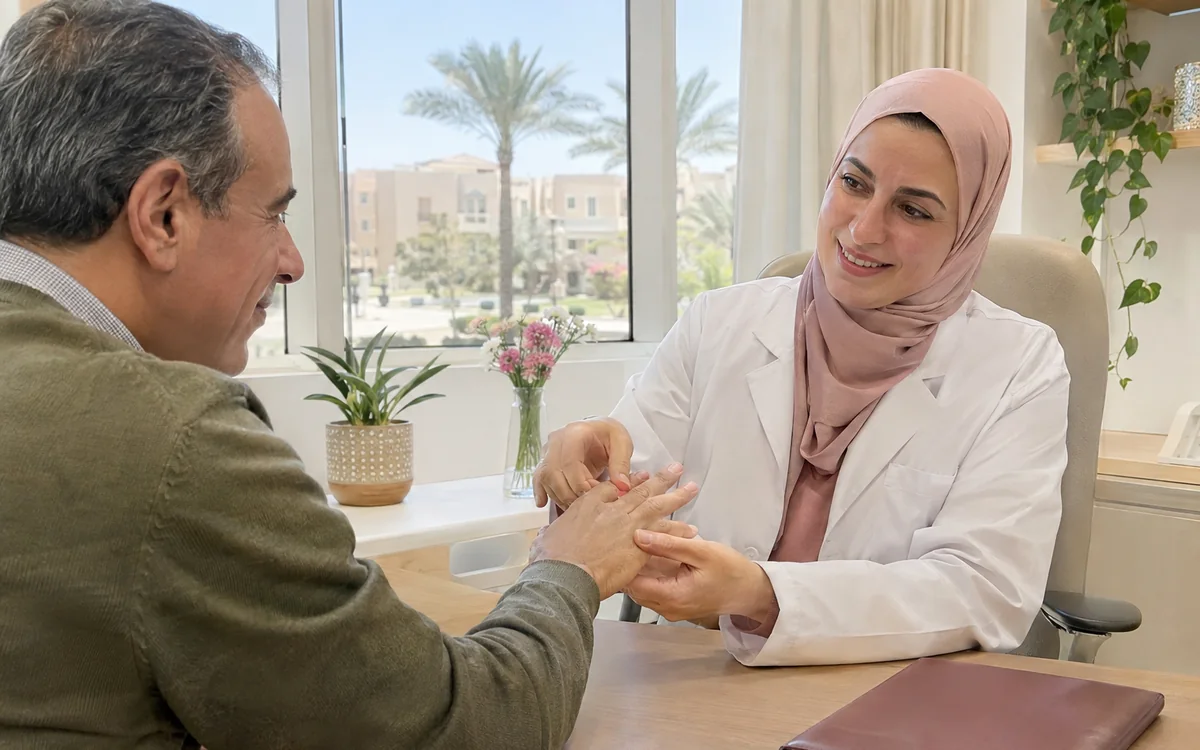
If you are looking for a rheumatoid arthritis doctor in Maadi, rheumatoid arthritis is a chronic autoimmune disease that a rheumatologist follows, not an orthopaedic doctor or a pharmacy [4, 6]. You can start with a rheumatology and joint assessment with Dr Shimaa Sherif at La Rose, 14 El-Mokhtar Street off El-Nasr Street, behind QNB Bank, New Maadi. Her Maadi appointments are Saturday, Monday and Tuesday from 3 to 8 pm.
Rheumatology is also available at the Fifth Settlement branch on Wednesday from 3:30 to 8 pm, in CMC Medical Mall, 4th floor, North 90th Street, behind the Air Force Specialized Hospital. This page, however, focuses on the Maadi patient journey.
The aim of a first visit is not to confirm the words “rheumatoid arthritis” from one complaint or one test. It is to understand the symptom pattern, examine the joints by hand, exclude other causes such as gout, infection and other connective-tissue diseases, and then build a suitable treatment and follow-up plan. Early diagnosis reduces the risk of joint damage [4, 9].
Bring reports of any previous tests or imaging if you have them, since they shorten the consultation and help the doctor see the full picture.
When should you see a rheumatoid arthritis doctor? Warning signs
Rheumatoid arthritis is a chronic autoimmune disease that inflames the joint lining and, over time, can damage cartilage and bone. Medical sources describe a condition that can begin at any age, with risk rising with age, and that is more common in women, about two to three times more often than in men [6, 7].
Warning signs that should prompt assessment include morning stiffness lasting longer than 30 minutes; swelling and stiffness in joints on both sides in the same pattern; pain in the small joints of the hands and feet; warm, tender, swollen joints; fatigue and occasional low-grade fever; loss of appetite; and rheumatoid nodules, which are firm lumps just under the skin [6, 7].
How it differs from osteoarthritis: in osteoarthritis, pain worsens with use and morning stiffness is short, a matter of minutes. In rheumatoid arthritis, stiffness lasts longer than 30 minutes and often eases with movement, and a symmetrical pattern is typical [6, 7].
When not to wait for a routine clinic appointment: a hot, swollen joint with fever. Clinical guidance treats suspected infection of a joint as something that needs urgent management [8]. As general safety advice, not specific to rheumatoid arthritis, also go to emergency care straight away if, after a major injury, you cannot bear weight, or if you have joint deformity, numbness, chest pain or shortness of breath.
If these symptoms keep coming back, do not wait until the joints change shape. Earlier assessment is better, because early treatment is what protects the joints [4, 9].
What happens at a first rheumatoid arthritis visit?
There is no single definitive test. Diagnosing rheumatoid arthritis is difficult because many conditions cause joint stiffness and inflammation, so the clinician relies on history, physical examination, blood tests and sometimes imaging [5].
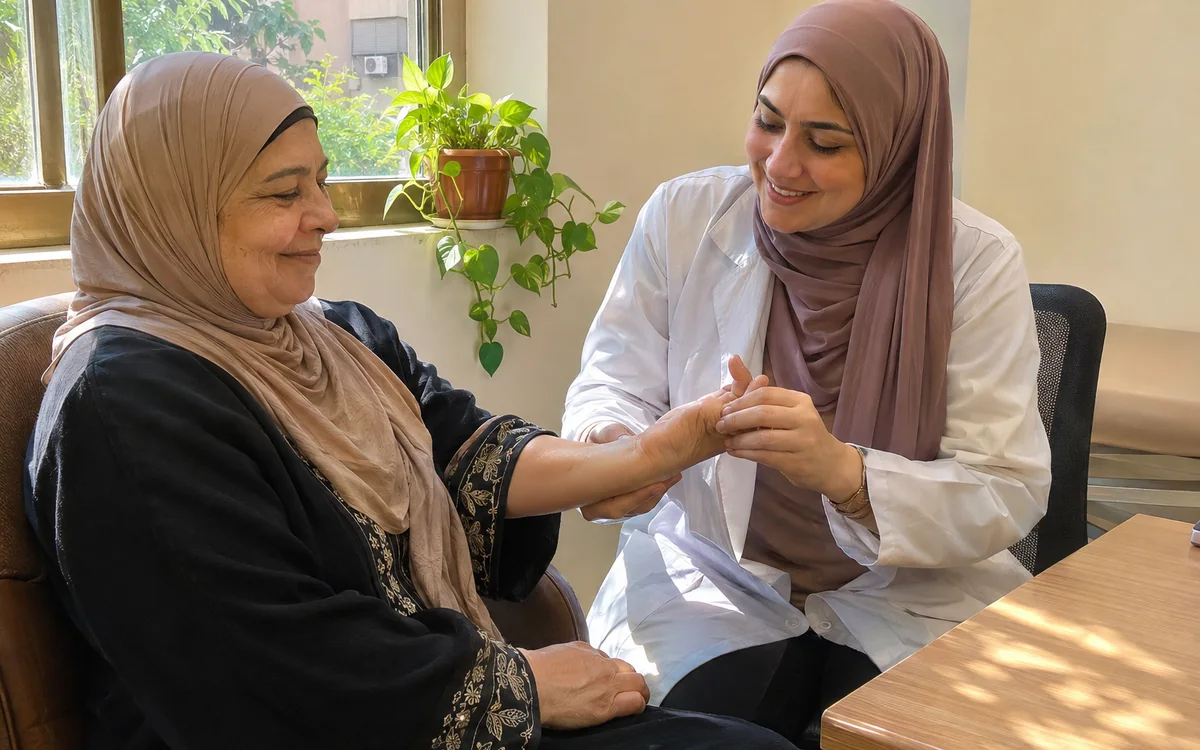
At a first visit you can expect questions about when symptoms began, how long morning stiffness lasts, which joints are affected, fatigue, family history and medicines. Then the joints are examined for swelling, warmth, tenderness and range of motion. Blood tests include ESR and CRP for inflammation, rheumatoid factor (RF) and anti-CCP antibodies. Imaging (X-ray or ultrasound) is added when needed to look for damage or inflammation [5, 10, 11].
If rheumatoid factor is positive: more than half of people with rheumatoid arthritis have a high level when the disease starts, but about 1 in 20 people without it also test positive. A positive anti-CCP result strongly supports the diagnosis. People positive for both may be more likely to have severe disease needing higher levels of treatment [5].
Do not arrange blood tests or imaging on your own before the visit; the clinician chooses what could change the decision. Bring old labs and X-rays, a medication list, family history and a symptom diary with dates [5].
Do not hesitate to ask the doctor to explain any result you do not understand in plain words, because understanding your condition is part of treatment.
Read also: positive rheumatoid factor explanation
Tests and reports to bring to a rheumatoid arthritis visit
Bring any previous images and reports, a medication list with doses, recent test results if you have them, and brief notes on when pain and swelling occur. Do not arrange a broad test panel or an MRI on your own before the visit, because choosing the right test saves you effort and expense [5].
Clinicians also use the 2010 ACR/EULAR classification criteria, which combine joint involvement, serology (RF and anti-CCP), acute-phase reactants (CRP and ESR) and symptom duration [3]. This is a framework clinicians use to classify disease, not a self-test.
For patients taking methotrexate or other disease-modifying drugs, monitoring includes blood counts and liver tests as the treating clinician decides [9]. See the linked article on methotrexate safety and monitoring.
If you have records from other clinics, bring them, but do not repeat full panels unnecessarily [5].
Read also: Methotrexate for rheumatoid arthritis: safety and monitoring
Follow-up: how rheumatoid arthritis care works
There is currently no cure for rheumatoid arthritis, but early treatment can help control symptoms, reduce joint damage and keep you active [7]. Treatment aims to control inflammation, relieve pain, prevent or slow joint damage, reduce disability and let you be as active as possible [9].
Main options: disease-modifying drugs taken long term to slow progression; biological treatments when those are not enough; JAK inhibitors for moderate to severe disease; anti-inflammatory painkillers and steroids for pain relief and flares; physiotherapy and occupational therapy for function; and surgery for damaged joints [9].
Follow-up with your rheumatologist is regular, and any change to treatment is the treating clinician's decision alone, so do not change any medicine or dose on your own [9]. On lifestyle: physical activity, a healthy weight and avoiding smoking [7].
A note on services: the clinic has no in-house surgery, and physiotherapy is provided externally, so if you need either the doctor will guide you.
For detailed treatment options and monitoring, see the linked article. For early signs, see the early-signs article.
At each visit, ask the doctor how the joints are doing now, whether the symptoms have changed, and what to watch for until the next visit. Keep a small symptom diary so follow-up is more accurate.
Read also: rheumatoid arthritis treatment options and monitoring
How to reach the Maadi branch (and Fifth Settlement)
Maadi branch: 14 El-Mokhtar Street, off El-Nasr Street, behind QNB Bank, New Maadi, Cairo. Dr Shimaa Sherif's appointments are Saturday, Monday and Tuesday from 3 to 8 pm. To book, call or use WhatsApp on 010 4066 1893.
According to recorded road measurements, the Maadi branch is about: Maadi Grand Mall 1.6 km (about 5 minutes); Degla Square 2.6 km (about 7 minutes); Road 9 in Maadi 3 km (about 8 minutes); Old Maadi, the metro station, 3.4 km (about 8 minutes); El Basatin 3.5 km (about 10 minutes); Corniche El Maadi 5.5 km (about 11 minutes); Tora El-Balad 6 km (about 15 minutes); and Zahraa El Maadi 7 km (about 11 minutes).
Fifth Settlement (second option): CMC Medical Mall, 4th floor, North 90th Street, behind the Air Force Specialized Hospital, Fifth Settlement, New Cairo. Rheumatology is on Wednesday from 3:30 to 8 pm. Times are approximate and can change with traffic.
Before you come, collect old labs, imaging and a medication list, because diagnosis relies on history, examination, blood tests and imaging together [5].
Read also: Book at the Maadi branch
How do you choose a rheumatoid arthritis doctor or clinic in Maadi?
Turn “best” into criteria you can verify: is the specialty clear and does it fit your symptom pattern? Does the visit include a real history and examination before any imaging or injections? Does the clinician distinguish rheumatoid arthritis from other inflammation and from infection? Are your illnesses and medicines reviewed before a treatment is written? Does the plan include follow-up and referral to the right specialty when needed? [2, 5, 9].
At La Rose Maadi you will find Dr Shimaa Sherif for rheumatology and joint assessment. The clinic has no in-house cardiology, endocrinology, nephrology or surgery, and bone-density scanning and physiotherapy are provided externally, so if your case needs any of them the doctor will guide you to the right place.
Warning signs in any service include a promise of a guaranteed permanent cure, because rheumatoid arthritis currently has no cure [4, 9], the same treatment for every patient, or pressure for a procedure before alternatives are explained. A responsible service is honest about the limits of treatment, defines a functional goal and explains when the plan will be reviewed [2].
A good clinic also listens to your questions and explains why each test is needed before you have it.
Read also: knee osteoarthritis care in Maadi
Booking and red flags
The address is La Rose, 14 El-Mokhtar Street, off El-Nasr Street, behind QNB Bank, New Maadi, Cairo. Dr Shimaa Sherif's Maadi appointments are Saturday, Monday and Tuesday from 3 to 8 pm. To book or ask a question, call or use WhatsApp on 010 4066 1893. Schedules can change, so confirm the day and time when you book.
A joint that is hot and swollen with fever is one of the situations that needs urgent assessment [8]. As general safety advice, if after a major injury you cannot bear weight, or you have deformity, numbness, chest pain or shortness of breath, do not wait for a clinic appointment; go to the nearest emergency department.
For non-urgent problems, book at the Maadi branch and begin with an assessment of the cause before choosing treatment. If you need rheumatology in Fifth Settlement, that branch is open on Wednesday from 3:30 to 8 pm.