Start with the product and area, not the session name
The word “mesotherapy” is sometimes used for very different injections: products marketed for local fat, vitamins or other skin and hair preparations, and mixtures that vary between settings. The name alone cannot tell you the likely benefit, safety profile or whether a substance is appropriate for the area injected. The full product name, concentration, source, batch number, area, depth and technique are clinically relevant details. [1, 5]
If you have a concern after an earlier session, ask for those details in writing rather than relying on memory or a shortened name in a message. Photograph the label if appropriate, do not share the vial or use leftovers, and note where each substance was injected and when symptoms began. These details do not diagnose the problem by themselves, but they let a clinician connect a change to the product, area and timeline instead of guessing. [1, 5]
This matters especially when the stated goal is local fat. The US Food and Drug Administration warns against unapproved fat-dissolving injections and against buying injectable products online or injecting them yourself. It also notes that a product evaluated there for fat under the chin has not automatically been evaluated for the abdomen, arms, thighs or another area. A practical rule is not to turn a marketing session name into medical consent: ask what will be injected, where and why. [1, 2]
What can the evidence say, and what can it not say?
Before-and-after pictures or another person’s experience do not establish that the same substance will give the same result in a different body or area. A review of mesotherapy for local fat described small studies and non-standardised mixtures and called for more research rather than broader use. In a small controlled thigh study, treated and untreated sides did not differ significantly in fat measures or thigh circumference. These findings do not mean every procedure is useless; they mean a precise promise needs precise evidence for the product, area and goal in question. [6, 7]
A local injection is not obesity treatment and does not automatically explain why an area looks prominent. The concern may be superficial fat, loose skin, normal body variation, a hernia or another medical issue. Before repeating sessions, ask: what exact problem are we trying to change, and how will any change be measured fairly? Our pages on local fat injections and body contouring versus weight loss provide the wider context. [1, 6]
Be wary of anyone promising a guaranteed result from a fixed number of sessions. Response varies between people according to the product, area, skin and fat. Our Q&A on guaranteed mesotherapy results explains why that promise alone is a reason to ask more before starting. [5, 6, 7]
Temporary effects versus concerning changes
After an injection, local pain, redness, swelling or bruising can occur for a short time. But a general webpage cannot confirm online that a particular symptom is “normal”: that depends on the product, amount, area, timing and an in-person assessment. Keep the product name, session date and time, clear chronological photos if useful, and written aftercare instructions. They help the clinician assessing the problem. [2, 5]
Seek prompt medical assessment for pain that is worsening rather than improving, spreading redness, marked warmth, pus or discharge, fever, major colour change, ulceration, blisters, unusual swelling or persistent painful lumps. Difficulty breathing, facial or throat swelling, fainting or severe general symptoms are an emergency. Do not try to open or squeeze a lump, or inject another substance to correct the shape. [1, 3, 5]
Not every complication is immediate. A systematic review of non-tuberculous mycobacterial infections associated with mesotherapy described skin lesions after injections that sometimes needed prolonged treatment and could leave scarring. That does not make every lump an infection, but it explains why a delayed or worsening problem should not be ignored. [8, 9]
Why process safety affects the outcome
Injection safety is more than gloves or the appearance of a room. The US Centers for Disease Control and Prevention recommends aseptic technique, a new sterile needle and syringe for each patient and each use, and never using the same syringe to enter medication that could be used later. It also prefers single-dose vials where possible. These are standards for injected care generally; they do not promise zero risk. [3, 4]
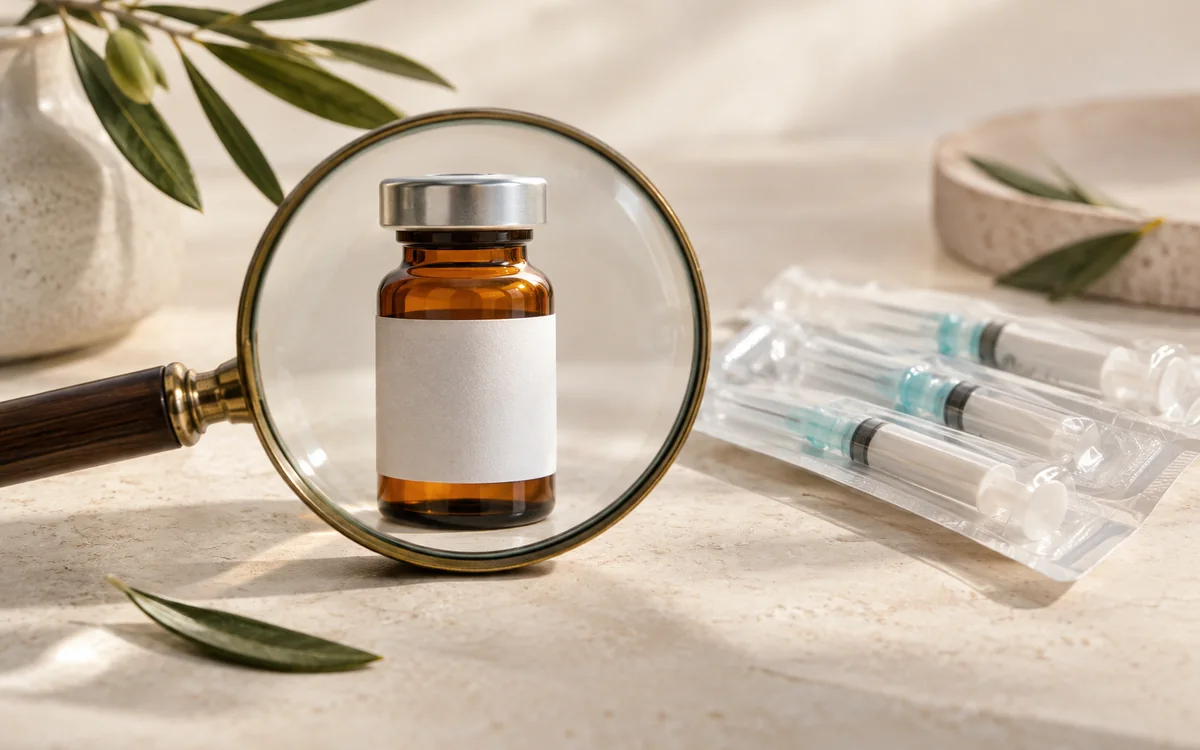
Before a procedure, it is reasonable to ask how the product is stored, whether the vial is clearly labelled, whether it is opened when appropriate, who will inject it and what training they have, and how to contact the service if a problem occurs. Avoid buying or bringing unknown ampoules from the internet or accepting treatment whose components cannot be identified. Regulatory warnings do not mean every cosmetic injection is unsafe; they draw a clear line between a known product with a safe process and something merely cheap or available online. [1, 3]
A qualified provider also needs relevant disclosure: allergies, medicines that affect bleeding, pregnancy or breastfeeding, wound-healing problems, immune conditions, prior injections in the area and a history of raised scars. These details can change the decision, timing or need for a different assessment. [4, 5]
What to do if you are worried now
The first step is not to search for a “dissolver,” random cream or immediate corrective session. Contact the service that performed the procedure and ask for the written product and procedure details: full name, label or batch number if available, substances used, injection area and date. Then seek appropriate medical assessment if symptoms are present or the result is getting worse. A clinician may need to examine skin and tissue, review the history and sometimes arrange tests or referral according to findings; there is no one home fix for every swelling or lump. [5, 8]
Do not start antibiotics, steroids or forceful massage by yourself to hide the problem. That can change the appearance or delay diagnosis of infection or inflammation. A published case report of skin infection after mesotherapy notes that delayed infection not responding to usual treatment may require different diagnostic thinking. Treatment should follow assessment, not precede it. [9, 10]
If the concern is only appearance and there is no pain, redness, warmth or general symptoms, a short wait following the provider’s instructions can be reasonable in some situations. But do not agree to an open-ended series of “corrections” without an explanation of the problem and a measurable goal. Seek a second opinion if you cannot obtain the substance name or a clear explanation of risks and alternatives. [1, 5]
Before another session: a short decision checklist
Before starting or repeating a session, get clear answers: What is the exact goal? What are the substance’s name, concentration and source? Is that use appropriate for this area under the relevant evidence and local regulation? What are the realistic benefits and alternatives, including doing nothing? What effects are expected and which are danger signs? How will change be measured and when will the plan be reviewed? These are informed-consent questions, not obstacles to care. [1, 5, 6]
If the concern is overall weight or metabolic health, injecting one area does not replace a plan for food, activity, sleep and medical assessment that fits the person. If the concern is local, a good diagnosis comes before choosing a procedure. Our Q&A on mesotherapy risks is a quick practical reference, but new symptoms after an injection need individual assessment and cannot be resolved by reading alone. [1, 3]
In short, “mesotherapy gone wrong” is not one diagnosis. When a concerning sign appears, put safety first: stop home experiments, keep product information and get an appropriate assessment in time. When planning a new session, do not let a promise or a picture replace a known product, realistic goal and safe procedure. If you want your situation assessed before a session or after a problem, you can book a visit at La Rose, and the doctor will listen, examine you and advise on the right next step. [1, 5, 8]