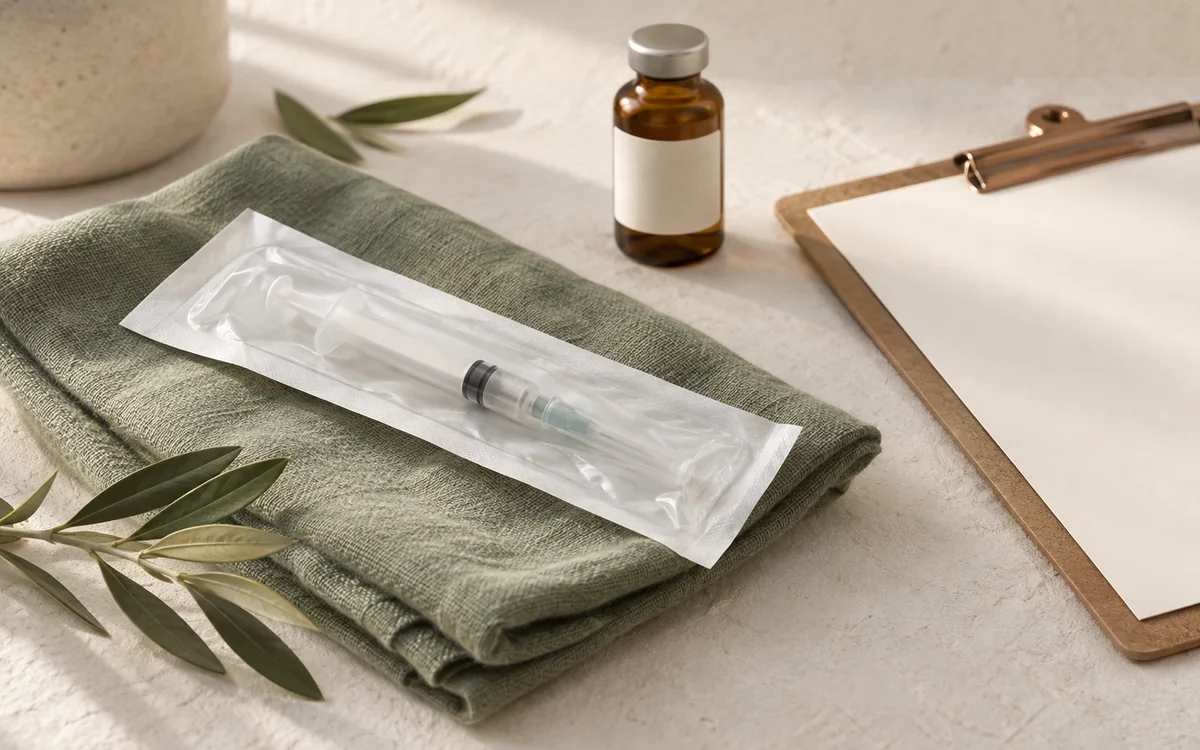
First: mesotherapy is not one substance or one protocol
The short answer is that mesotherapy is not risk-free, but the word “mesotherapy” alone is not enough to judge safety. It describes small injections into or beneath the skin, while the substances, purpose, depth, number of injection points and technique can vary greatly between providers. The useful question is therefore not simply “Is mesotherapy safe?” but: What is the exact ingredient and concentration? Is that product manufactured for injection? Where will it be placed, and who will administer it? Reviews repeatedly identify the lack of standardized products and protocols as a central reason why one result or one risk estimate cannot be applied to every mesotherapy session [4, 5, 10].
There is also an important distinction between skin mesotherapy performed for various aims and products marketed as fat-dissolving injections. The terms are sometimes used interchangeably even though the formulation, intended outcome and evidence may differ. That is why Mesotherapy: check the ingredients first explains that a session name is not a substitute for seeing the actual vial. Words such as “natural,” “vitamins” or “cocktail” do not establish safety. Anything injected into skin can cause a local reaction, allergy or infection, and some mixtures lack adequate evidence for the proposed cosmetic use [1, 5, 10].
Evidence is not transferable between products or body areas
Deoxycholic acid illustrates why those details matter. The US Food and Drug Administration says the prescription formulation it evaluated and approved is intended to improve moderate-to-severe fullness from fat beneath the chin in adults. Its label states that safe and effective use for subcutaneous fat outside the submental region has not been established. Approval of one substance at a defined concentration, technique and anatomical site does not transfer to a similar-looking mixture injected into the abdomen, arms or thighs [1, 2]. Trials and a systematic review of that specific submental product found improvement over placebo alongside frequent local reactions, but they do not establish the safety of unknown mixtures or injections elsewhere [7, 8].
The FDA has warned about unapproved fat-dissolving injections after reports of serious infections, permanent scars, skin deformities, cysts and deep painful knots. Some affected consumers bought products online and injected themselves [1]. In a small exploratory trial comparing deoxycholate alone with a phosphatidylcholine/deoxycholate mixture beneath the chin, overall improvement was modest and the addition of phosphatidylcholine showed no clear advantage [9]. For a separate discussion of likely benefit rather than safety alone, read What are local fat-dissolving injections, and do they really work? Local injection is not obesity treatment, nor is it a substitute for balanced nutrition, physical activity or medical weight assessment [1, 9, 13].
What may be temporary, and what are the important complications?
Pain or stinging, redness, swelling, bruising, numbness and temporary firmness can occur after injection. These are recognized local reactions and were common in studies of deoxycholic acid beneath the chin; many were temporary. Even a common effect should be explained before treatment, including its expected course and how to contact the treating clinician if it intensifies instead of settling [2, 7, 8]. Swelling should not automatically be dismissed as normal, because its appearance, timing and direction of change matter.
Less common but more consequential complications include allergic reactions, infection, abscess or cellulitis, ulceration or skin necrosis, pigment change, scarring, persistent nodules, and foreign-body granulomatous inflammation. A systematic review of mesotherapy complications found varied reports and no standardized management approach, which is another reason not to minimize a persistent reaction [5]. A separate systematic review of mesotherapy-associated nontuberculous mycobacterial infections described multiple localized skin lesions that may occur without prominent general symptoms, sometimes requiring prolonged treatment and leaving scars [6].
For injections beneath the chin, the approved label also warns about injury to a facial-nerve branch causing an uneven smile or weak lip muscles, difficulty swallowing, and tissue or vascular injury when needle placement or depth is wrong [2]. Those risks depend on anatomy, substance and technique. The injector’s knowledge of the treatment area and ability to recognize and manage complications are therefore central safety requirements, not cosmetic extras.
Who needs deferral or a more careful assessment?
Do not inject through infection, a wound, rash or inflamed skin. For the approved submental product, infection at the injection site is a formal contraindication. Its label also calls for particular caution with bleeding disorders, antiplatelet or anticoagulant medicines, current or previous swallowing difficulty, and prior surgery or aesthetic treatment that may have altered local anatomy [2]. Tell the clinician about drug allergies, chronic disease, impaired immunity, poorly controlled diabetes, bleeding or healing problems, and every medicine and supplement you use. The decision must be specific to the actual product and site, not a generic checklist [2, 5, 10].
Pregnancy and breastfeeding require an explicit discussion with the treating clinician, with elective cosmetic treatment deferred when safety information is insufficient. The deoxycholic-acid label states that adequate human pregnancy data are unavailable and that it is unknown whether the medicine is present in human milk. This is not a setting for assumptions or broad reassurance about all mixtures [2]. Age matters too: that product is studied for adults, and its safety and effectiveness below age 18 are not established in the label [2].
A bulge described as “local fat” may instead reflect loose skin, a prominent muscle, a hernia, a gland or another condition that fat-dissolving injections will not correct. Proper assessment distinguishes pinchable fat from anatomical or medical causes and considers whether volume reduction might worsen laxity or asymmetry. If the diagnosis is uncertain, pause the decision until the area has been examined appropriately [2, 4].
A safety checklist before you agree to treatment
Before deciding, ask to see the product name on the vial, active ingredient, concentration, manufacturer, batch and expiry, and whether it is intended for injection at the proposed site. Ask who will inject it, what training and licensing they have, and how they would manage severe allergy, infection or skin injury. Informed consent should explain realistic benefit, alternatives, risks and recovery, while giving you time to ask questions without pressure. The American Society of Plastic Surgeons states that the literature on mesotherapy and injection lipolysis is limited and that each therapy must be evaluated against the relevant product, regulation and evidence [4].
Asepsis is more than a quick skin wipe. CDC guidance calls for medicine preparation in a clean area, aseptic technique, a new sterile needle and syringe for each patient, and no sharing of single-dose containers or reuse of equipment [3]. Do not accept a prefilled syringe when its source is unclear or a mixture compounded out of sight from unidentified vials. Never buy a product online to inject yourself; the regulator has associated this practice with infections, scars and serious complications [1, 3].
Keep a clear photo or copy of the product name, treatment record, aftercare instructions and a contact number. Standardized pretreatment photographs can help judge change without relying on memory or different lighting. For the broader decision framework, Non-surgical body contouring is a medical procedure, not a risk-free session explains why selection starts with diagnosis and realistic expectations rather than a trend name or quick promise [4, 13].
After injection: watch the direction of change and know the red flags
Follow the written instructions for the specific product. Do not massage, squeeze, apply creams or start antibiotics unless the treating clinician advises it. Note when symptoms began and take photographs in consistent lighting when a visible change develops. Mild pain or swelling may be expected, but you should be told the usual course and contact threshold. Increasing pain, hot skin, spreading redness, discharge, fever, new or persistent painful lumps, ulceration, blisters, or unusually dark or pale skin needs prompt medical assessment; cellulitis can spread when treatment is delayed [2, 6, 11].
Seek emergency help immediately for sudden tongue or throat swelling, breathing or swallowing difficulty, severe dizziness, collapse or confusion, as these can signal life-threatening anaphylaxis [12]. After treatment beneath the chin, a newly uneven smile, weak lip movement or difficulty swallowing requires prompt contact with the treating clinician or urgent assessment according to severity [2]. A very high temperature with shivering, fast breathing or heartbeat, purple skin patches, faintness or confusion alongside skin inflammation also warrants emergency care because these may indicate severe infection [11].
Do not open or squeeze a lump, and do not self-start a random antibiotic. Some infections reported after mesotherapy are unusual and may require culture, tissue sampling and specialist-directed treatment [6]. Keep the vial or exact product name, photographs, session date and approximate injection locations; this information helps a clinician distinguish infection from allergy, inflammatory reaction or tissue injury.
How to make a balanced decision
A balanced decision does not begin with “Who offers the strongest session?” It begins by defining the problem and goal. Are you seeking a small contour change or weight loss? Is the bulge truly fat rather than skin or muscle? Is there a less invasive option, including choosing no procedure? The FDA explains that non-invasive body-contouring technologies aim for limited cosmetic change; they do not treat obesity or deliver the health benefits of weight loss [13]. If you are comparing devices rather than injections, Non-surgical body contouring technologies compared: how to choose summarizes their different scopes without conflating them with mesotherapy injections.
Deferral is sensible when the substance is unidentified, the vial is unavailable, an inadequately studied use is proposed without a clear explanation, or the injector cannot explain their credentials and complication plan. If a reaction has already occurred, diagnosis and treatment take priority over attempting to hide it with another session. Current evidence does not support a blanket promise that all mesotherapy is safe or effective; equally, the existence of possible adverse effects does not mean every injection causes a complication. Individual assessment connects the exact product, anatomical site, health history and alternatives [4, 5, 10].
A clinic assessment should remain neutral: review the product, examine the area, discuss medical history and expectations, and explain whether any procedure is appropriate and who would provide follow-up. If you need a structured medical discussion before cosmetic injections, you can request a body-contouring assessment. The final decision belongs with you and the treating clinician once the information is clear, without any promise of a guaranteed result [1, 4].