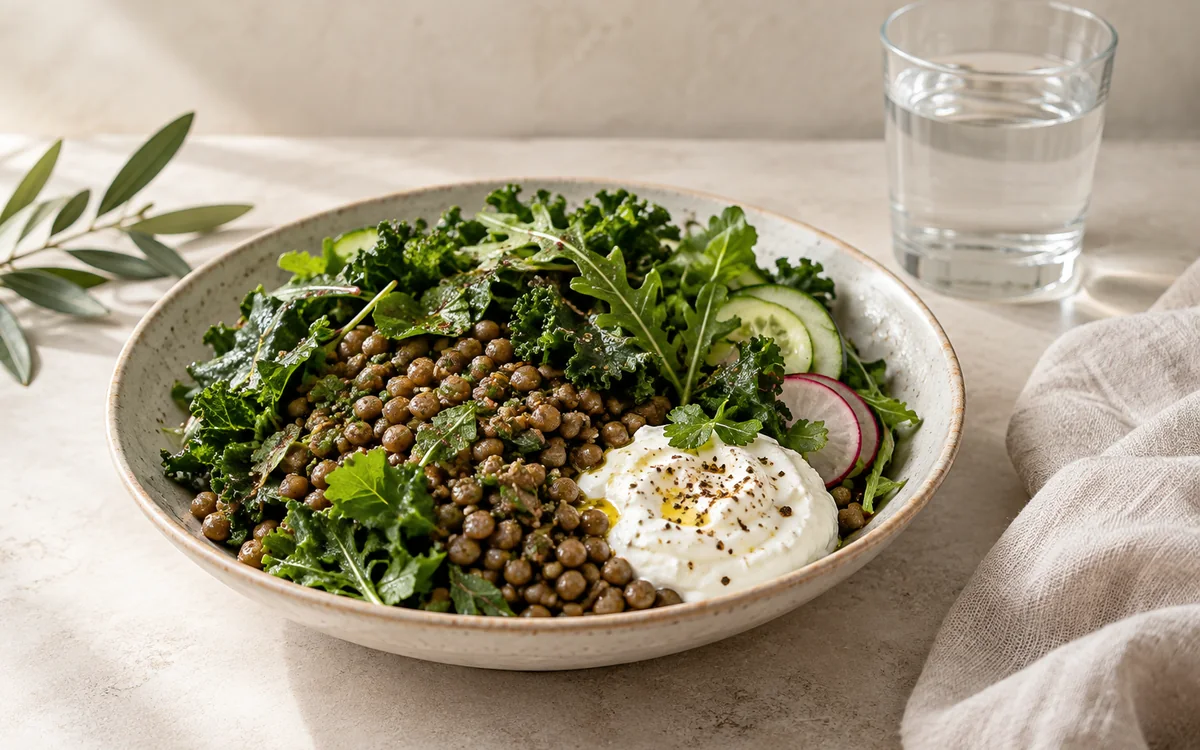
Why can hunger feel stronger while breastfeeding?
Feeling hungry while breastfeeding is not a failure of willpower, and it does not automatically mean something is wrong. Producing milk uses energy, while needs vary with age, activity, body size, whether feeding is exclusive or mixed, and the stage after birth. The US Centers for Disease Control and Prevention notes that a well-nourished breastfeeding parent will often need more energy than before pregnancy, but its estimate is not a single prescription for everyone [1]. Current dietary-reference guidance also explains that milk production, return to activity and the later introduction of complementary foods all change requirements over time [2].
Everyday circumstances matter as much as physiology. Broken sleep, night feeds, a meal delayed while caring for the baby, or a day sustained by coffee and quick bites can allow hunger to become intense. Thirst may sometimes be mistaken for hunger, and sometimes the body genuinely needs food because too little was available. The first step is therefore not resisting the feeling or counting every mouthful. Notice the pattern: when hunger appears, what the last meal contained, whether you have had fluids, how much sleep was possible, and whether that day involved more exertion.
Hunger itself does not measure milk supply, and breastfeeding does not guarantee rapid weight loss. Bodies respond differently in this period. The useful goal is a plan that protects nutrition and makes food available before hunger becomes exhausting, followed by review of weight trend, energy and feeding rather than a judgement based on one day [1, 2].
Build a satisfying day without deprivation
Breastfeeding food does not need to be a special menu or an expensive collection of products. Practical guidance rests on ordinary variety: fruit and vegetables, a carbohydrate source, protein, and dairy or fortified alternatives according to what suits you [3]. At a main meal, combine a protein such as eggs, beans, lentils, chicken or fish with bread, rice, potatoes or oats, plus vegetables or fruit and an appropriate amount of fat. That combination is generally easier to find satisfying than a meal made mostly from biscuits, juice or carbohydrate on its own.
If hunger returns soon after eating, do not assume that carbohydrates must be removed. First look at meal size, its protein and fibre, eating pace and the time between meals. We cover the broader reasons in hungry soon after eating; use that as a companion if the same problem occurs even on calmer breastfeeding days. That handoff does not change the fact that lactation itself increases energy needs for many people [1, 3].
Keep an easy meal or snack near the usual feeding place: yoghurt with fruit, an egg or cheese sandwich, hummus with vegetables and bread, or fruit with a small handful of nuts if suitable. Prepare two or three components that last for a couple of days instead of expecting a different cooked meal each time. If family members want to help, ask for a balanced ready meal or protected time to eat it. That is practical support, not a luxury, because postponing food all day often ends in intense hunger and rushed choices at night [3, 4]. One simple practical idea: set up a snack and water kit by your feeding chair.
Fluids and coffee: avoid exaggerated rules
Drink to thirst and keep water within reach, especially where feeds usually happen. There is no need to force enormous volumes or assume every feed requires a whole bottle. The practical aim is to avoid persistently dark urine, marked thirst or dizziness from too little fluid. Soup, milk, fruit and vegetables contribute fluid too. Hot weather, greater activity, vomiting or diarrhoea can increase needs and deserve closer attention [3, 4].
Coffee is not automatically forbidden. The CDC states that caffeine reaches breast milk in small amounts and that low-to-moderate intake usually does not cause a problem. It also notes that younger or premature infants clear caffeine more slowly, and that infant irritability or disturbed sleep following high intake is a reason to reduce it and discuss the pattern with a professional [1]. Count tea, coffee, cola, energy drinks and chocolate together rather than counting coffee alone.
There is no need to remove pulses, spices or whole groups of food merely because you are breastfeeding. Guidance encourages a varied diet and does not recommend a universal exclusion list for breastfeeding parents [1, 3]. If a clear and repeated pattern seems to follow one food, record the timing and symptom and speak with the baby's clinician instead of removing several groups at random. Broad restriction can make your own needs harder to meet and increase anxiety around eating without proving the cause. A severe allergic reaction or breathing difficulty in the baby requires urgent care, not a home elimination experiment.
How can weight loss be gradual rather than harsh?
If weight loss is a goal, begin when recovery and feeding are stable, with clinical input if the birth was recent or complicated. Do not turn breastfeeding into a race against the scale. Current dietary-reference guidance treats energy need as an individual estimate to review against weight trend, milk production and activity, not a fixed limit for everyone [2]. The NHS recommends balanced eating and moderate activity as a practical route after birth and advises telling any weight-management programme that you are breastfeeding [4].
Instead of skipping meals or using long fasts, choose a small change you can repeat: establish at least two reliable main meals, reduce sugary drinks that do not satisfy hunger, add protein or vegetables to a meal, and prepare a snack before the usual hunger peak. Look at the trend over weeks. Fluid shifts, sleep, constipation and the return of menstrual cycles can all change scale weight from one day to the next. Energy, function and ability to continue feeding matter alongside weight.
Movement should match recovery. The CDC considers moderate activity suitable for most healthy postpartum people and suggests building towards a weekly total of 150 minutes, which can be divided into short sessions [5]. You do not have to begin with the full target; a gentle ten-minute walk or clinician-approved recovery exercises are valid starting points. Stop and seek advice before progressing if pain increases, bleeding becomes heavier, dizziness develops, a wound is troublesome, or pregnancy and birth involved complications [5, 10].
Judge feeding by the baby’s signs, not by your hunger
Your hunger is not a test of milk volume, and neither breast appearance nor the amount expressed in one pumping session is enough to judge supply. In the early weeks, useful signs include hearing swallowing, frequent feeds, the baby appearing settled after many feeds, weight gain reviewed by a clinician, and age-appropriate wet and dirty nappies [6, 7]. Both the CDC and NHS emphasise effective attachment and regular milk removal, and advise having a whole feed observed by a lactation professional or healthcare provider when supply is a concern [6, 7].
If reducing food is followed by marked fatigue, obvious feeding difficulty, no audible swallowing, repeated loss of attachment or a weight trend that is not as expected, do not intensify restriction. Ask for assessment of the feed, growth and your nutrition plan. In the first days, continuing to lose weight after day five, fewer wet or dirty nappies than expected, unusual sleepiness or jaundice are reasons to contact the baby's clinician promptly [6]. Exact expectations change with age, so follow-up is more useful than memorising one number for every stage.
Do not start fenugreek, herbs or milk-supply products on your own, and do not substitute a product for skilled feeding support. The underlying issue may be attachment, feeding frequency, a medicine, or illness in parent or baby [7]. Do not abruptly stop a prescribed medicine either; show all medicines and supplements to the clinician and pharmacist so the decision balances your treatment with feeding. For broader safety principles, see supplements should answer a clear need, not become a default [1, 7].
Micronutrients matter, but doses are individual
Dietary variety is the foundation, but it does not mean every person automatically covers every requirement. During lactation, nutrients such as iodine, choline, vitamin B12 and vitamin D deserve particular attention, especially with a fully vegan pattern, allergy, exclusion of food groups or a condition affecting absorption [1]. Sources of iodine include iodised salt and some dairy foods, eggs and fish, but amounts in foods and breast milk vary. The US National Institutes of Health explains that iodine requirements during lactation exceed those of an ordinary adult [8]. That is a reason for review, not for taking a large dose at random.
Vitamin D requires a distinction between the parent's need and the baby's. Human milk alone usually does not provide all the vitamin D an infant requires, and US guidance recommends supplementation for exclusively or partly breastfed infants from early life. The product and dose should still be checked with the child's clinician according to country, health and other feeding [9]. A maternal supplement is not automatically a substitute for the baby's plan unless a clinician selects and monitors a specific approach.
If you eat a fully vegan diet, have a history of anaemia, bariatric surgery, thyroid or kidney disease, or use several supplements, seek a targeted review rather than a bundle of tests and products without a purpose. A clinician or dietitian can review food, symptoms, medicines and indicated tests, then decide whether a supplement is needed and for how long. Do not combine a lactation multivitamin, prenatal vitamins and a hair product without checking the labels, because the same nutrient may be repeated [1, 8, 9].
When do hunger and fatigue need assessment?
Arrange a clinical review soon if hunger changes suddenly or comes with marked thirst and urination, unintentional weight loss, palpitations or tremor, persistent vomiting or diarrhoea, pallor, repeated dizziness, or fatigue that prevents ordinary care of yourself and the baby. These symptoms do not point to one diagnosis, but they may raise questions about blood glucose, thyroid function, anaemia, infection, nutrition or mental health. Tests should follow the history and examination; every hungry breastfeeding parent does not need the same panel.
Seek urgent care for chest pain or difficulty breathing, fainting, a severe or persistent headache with visual change, fever with abdominal pain, pain or swelling in one leg, sudden or heavy bleeding with dizziness or a racing heartbeat, or thoughts of harming yourself or the baby. Some pregnancy and birth complications can appear after returning home, and the NHS advises immediate medical contact for these warning signs [10]. If the baby is unusually sleepy, not feeding, or producing fewer wet nappies, contact the baby's clinician promptly [6, 7].
If the main concern is organising food and hunger while working towards weight loss, you can request a clinical nutrition assessment at the clinic. The assessment can review time since birth and recovery, feeding pattern, food and sleep routine, medicines and supplements, and the weight trend before agreeing a manageable next step. Individual decisions remain with the treating clinician and the baby's clinician when needed, especially with chronic illness or concern about growth or milk intake. The goal is not a promised scale number; it is a realistic plan that protects health and feeding [1, 2, 6].