How to prepare for an abdominal ultrasound: quick step-by-step summary
When your doctor requests an abdominal ultrasound (often called an abdominal USG or stomach ultrasound), proper preparation helps ensure the clearest possible images. While individual facility directions vary depending on which organs are imaged, five basic preparation steps apply to most scans: 1. Confirm your exam type: Check whether the request is for the upper abdomen, urinary tract, or a combined abdomen and pelvis scan. 2. Follow fasting guidelines: For upper abdominal imaging (liver, gallbladder, pancreas), you are typically asked to fast from food for several hours beforehand to reduce bowel gas and keep the gallbladder distended. 3. Check fluid instructions: Drink plain water if instructed, especially when a full bladder is needed, but avoid sodas, milk, or juice. 4. Manage your medicines: Continue essential daily prescriptions with a small sip of water unless specifically told otherwise by your doctor. 5. Wear loose, comfortable clothing: Opt for two-piece garments that make your abdomen easy to scan without unnecessary disrobing. [1, 2, 4, 6]
Why is a preparation card better than a memorised rule?
No single instruction fits every ultrasound. An upper-abdominal scan may require an eating plan, a pelvic or urinary scan may need a full bladder, and another ultrasound may require no special preparation. Medical sources explain that preparation changes with the body area and clinical question. Your appointment message is therefore the practical reference, not a relative's experience or a general post. A card turns that message into steps you can check instead of trusting memory. [1, 2, 3, 6, 7]
On the first line, copy the examination name exactly as it appears on the request, followed by the appointment date and time, facility name and contact number. Then make four boxes: last food time; water and bladder instructions; medicines; and items to bring. Put a question mark beside anything unclear and call before the scheduled day. Do not guess: the difference between “abdominal ultrasound” and “abdominal and pelvic ultrasound” may change what is required. The abdominal and pelvic ultrasound guide explains why the region and clinical question affect what can be seen. [1, 3, 7]
The card is not a prescription and does not replace clinical advice. It prevents old test directions from being mixed with this appointment. Keep a copy on your phone. If instructions arrive by telephone, record the date and what was said. If a conflict or delay occurs, you can ask a precise question instead of “What do I do before ultrasound?” [2, 3, 6]
Write the examination first: abdomen, pelvis, urinary tract or a combined scan
Before writing fasting hours or a water volume, identify what needs to be seen. Imaging the liver, gallbladder, pancreas and spleen is generally treated as an upper-abdominal examination, where food and bowel gas can affect some views. Pelvic, bladder or urinary imaging asks a different question and may rely on a full bladder as an acoustic window. Some requests combine abdomen and pelvis, so the instructions may include both fasting and water. That is not a contradiction; they address two components of one appointment. [1, 2, 7, 9, 10]
Copy the complete wording from the clinician's request or appointment message rather than shortening it. If known, add the reason in a few words, such as gallbladder review or flank pain, because “ultrasound” covers many examinations. If the request is unclear or only says “ultrasound”, ask: Is this upper abdomen? Does it include kidneys and bladder? Does it include the pelvis? Does preparation require fasting, a full bladder, or both? Those answers form the centre of the card. [1, 3, 6, 7]
For a fuller explanation of abdominal fasting and water, use the abdominal-ultrasound preparation guide, but do not copy a number from it when your appointment message differs. This page helps you make an accurate card and ask the right questions; the longer guide explains why the target organ can change preparation. [1, 2, 6]
Turn fasting, water and bladder directions into clear times
The word “fasting” is incomplete by itself. Record the time food must stop, which drinks are allowed, and whether instructions restrict all fluids or permit water. Sources describe different protocols: some facilities request several hours without food for upper-abdominal imaging, some arrange preparation differently for morning and afternoon appointments, and other examinations need little or no preparation. This variation is a reason to follow the performing facility, not to choose the longest window because it seems better. [1, 2, 4, 5, 6]
If a full bladder is required, record when drinking begins, the specified amount and when to avoid the toilet. Do not automatically substitute fizzy drinks, milk or coffee for water; the drink may not fit the instructions. Do not consume more than requested or drink faster, particularly if a condition limits fluids. If bladder filling becomes painful or impossible to tolerate, call or tell reception instead of suffering. The aim is useful imaging with preparation you can complete safely. [2, 3, 9, 10]
Record the actual time of your last meal and drink, not the intended time. If you forget and eat or drink something different, note it and call. The team decides whether useful images remain possible or timing needs adjustment. Hiding the information can leave an unexplained limitation; stating it helps the examiner understand the conditions. [1, 3, 6]
Medicines, diabetes and special circumstances
List every important medicine taken near the examination time, especially insulin, glucose-lowering tablets and medicines that must be taken with food. Do not stop or delay a prescribed medicine independently. Some facilities allow usual medicines with a sip of water, but individual directions must come from your clinician or imaging facility. Write beside each medicine: take as usual; change timing under clinical advice; or contact the treating team? [4, 5, 6, 11]
If you have diabetes, disclose it when booking rather than after fasting begins. Delayed meals can increase hypoglycaemia risk for people using insulin or certain medicines. Symptoms may include hunger, shaking, sweating, dizziness or confusion. Request clear coordination of scan time, food and treatment. Bring your glucose monitor and usual hypo treatment if that is part of your care plan. If symptoms occur, immediate safety takes priority over routine preparation; follow your treatment plan and inform the facility. [11, 12]
Also record possible pregnancy, a child appointment, difficulty swallowing tablets without food, kidney or heart disease with fluid restriction, a urinary catheter, or mobility support needs. These details may change safe implementation or timing, and directions should not be inferred from another person's protocol. Children have different preparation windows, while pregnancy and chronic conditions need individual advice. [2, 3, 7, 10]
Prepare the records, clothing and day-of-scan plan
Keep the card with the imaging request, earlier reports and images if available, a medicine list, and relevant laboratory results. An older report allows comparison rather than leaving the new examination isolated. Add the main symptom, when it began and whether it changed after the ultrasound was requested. You do not need a huge folder; one organised page is more useful than many unsorted papers. The report returns to the requesting clinician for interpretation with the reason and context. [1, 3, 5, 6]
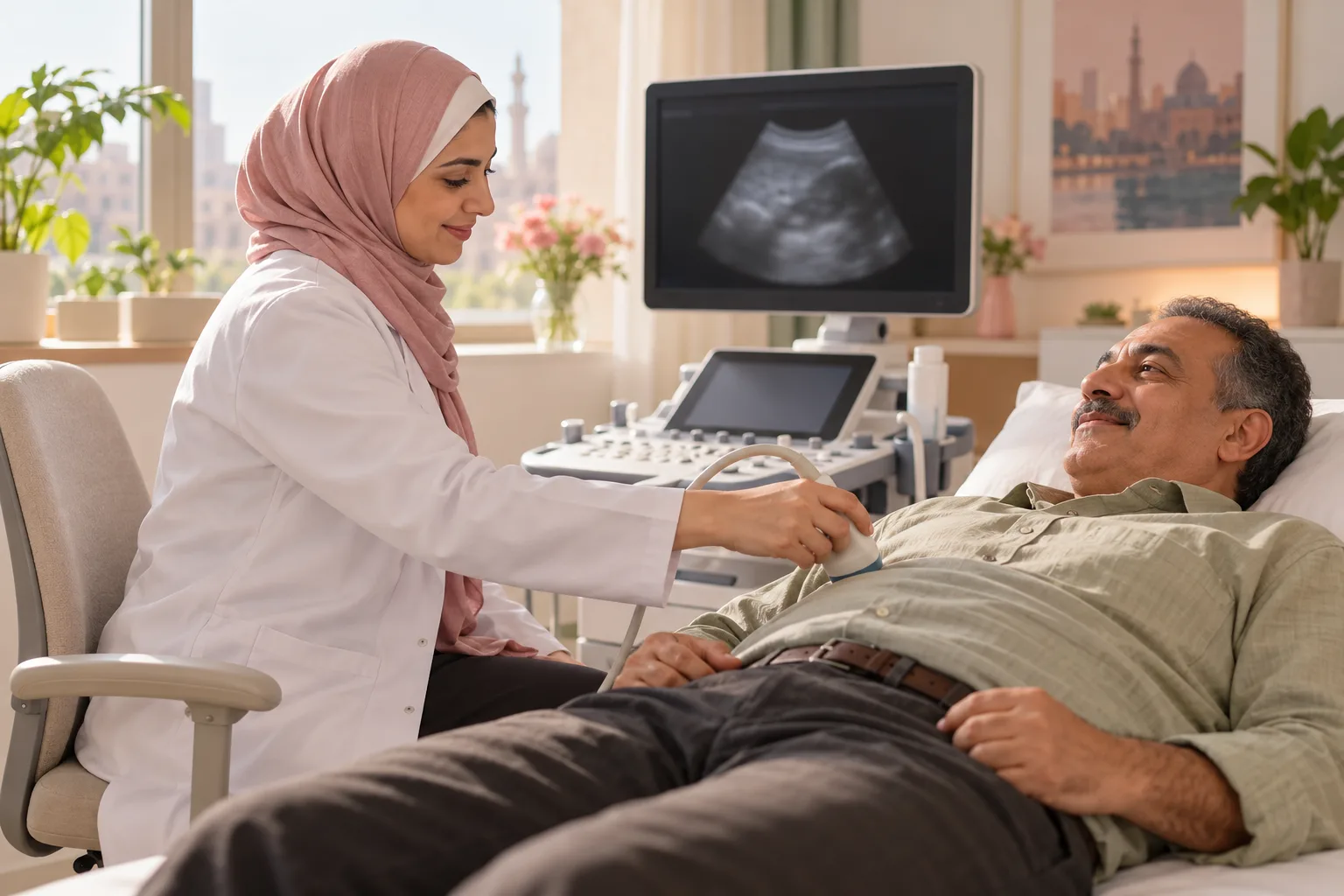
Wear comfortable clothing that makes the requested area accessible, and leave jewellery that may interfere at home. You will usually lie down while gel is applied and a probe moves over the abdomen; the examiner may ask you to change position or briefly hold your breath. Diagnostic ultrasound uses sound waves, not X-rays. The ultrasound uses sound waves page explains safety and limitations without expanding preparation here. Tell the examiner immediately if pressure over a tender area causes pain. [1, 3, 6, 8]
Plan to arrive early and allow for possible delays. If a delay affects blood glucose, a medicine dose or your ability to hold urine, contact reception rather than waiting until the situation becomes unsafe. Afterward, ask whether food, drink and medicines can resume immediately or another scheduled test requires preparation to continue. The facility's instructions for your day remain decisive. [3, 5, 6]
If preparation goes wrong or a warning sign appears
If the clinician's request and appointment message appear different, do not choose the most demanding instruction. Call the performing facility, read the request name exactly, and ask about food, water, bladder and medicines. Record the answer and date. Protocols vary, and the performing team knows its workflow. If you accidentally eat, use the toilet or cannot drink the requested amount, state what happened and when. The team decides whether to proceed or adjust the time. [2, 3, 6, 9, 10]
The card is for a routine appointment in a stable situation; it must not delay urgent care. Seek urgent help for sudden or severe abdominal pain, marked tenderness, vomiting blood or coffee-ground material, black sticky or bloody stool, inability to urinate, inability to pass stool or gas, breathing difficulty, chest pain, collapse or rapid deterioration. These signs should not wait for fasting or a routine scan. [13]
If you have diabetes and develop shaking, sweating, dizziness, intense hunger or confusion, check glucose if that is part of your plan and follow your team's hypo treatment. Severe hypoglycaemia or loss of consciousness is an emergency. Do not continue fasting at the expense of safety, and do not give food or drink to an unconscious person. Once the immediate risk is addressed, tell the facility that preparation changed. Worsening or persistent pain, unintentional weight loss or recurrent bleeding also needs medical review. [12, 13]
Review the card and take the next step calmly
Before the previous evening, review six points: examination name, arrival time, last food time, water and bladder directions, medicine plan, and records to bring. Tick every confirmed point and leave an unresolved question visible. On the morning, record what actually happened. Organised preparation can help the team obtain useful images, but it cannot guarantee a result or make ultrasound a comprehensive test for every problem. [1, 2, 3, 6]
After the examination, ask when the report will be available and who will review it with you. Keep the card, report and earlier images together. Do not independently stop medicine, start treatment or treat the result as a final diagnosis. If follow-up is recommended, ask about its purpose, timing and signs that mean returning sooner. [1, 5, 7, 8]
If you need assessment of stable abdominal symptoms or review of the ultrasound request and preparation, you can request a gastroenterology consultation at the clinic. Include the examination name, and mention diabetes or medicine that fasting could affect so the team can clarify the appropriate next step. Booking is not an alternative to emergency care, and final decisions about fasting, water and medicines must reflect your condition and the directions of your clinician or performing facility. [1, 3, 6]