What is the best diet for weight loss in Egypt? The short answer
If you are searching for the best diet for weight loss, the honest answer is that no single plan is better than all the others for everyone. Studies that compared popular diets found small differences between the named plans, and the factor that mattered most was whether people could keep going for months rather than weeks [4, 5]. In practice, the diet that works for you creates a sensible calorie gap, fits your food, your job, your timetable and your health conditions, and is something you can live with without feeling punished.
This page compares the main patterns: calorie reduction, low-carbohydrate and keto, the Mediterranean pattern, intermittent fasting, DASH and higher-protein eating. For each one we say what it offers, how strong the evidence is, and who should ask a doctor first. Then we translate it into real Egyptian food: bread, rice, foul, koshari, feteer, hawawshi and sugary tea, with a sample day you can adjust to your taste.
“Best” here is only a search phrase. We cannot give that title to one plan for everybody. A realistic target is gradual loss that you can hold, not a fast number on the scale that comes back later [1, 2].
Every successful diet works through the same door: a calorie gap
Whatever the name of the diet, real weight loss happens when the body takes in less energy than it uses. The difference between plans is how they get you to that gap: one cuts carbohydrates, one sets eating windows, one adds vegetables and pulses, one counts calories. According to the US National Institute of Diabetes and Digestive and Kidney Diseases, a safe programme includes a reduced-calorie eating plan, an activity plan suited to your health, habit support, regular monitoring and a plan for keeping the weight off [1].
A reasonable pace is about half a kilogram to one kilogram a week, which means the early weeks may look slower than the promises in adverts. The US Centers for Disease Control and Prevention say people who lose weight gradually are more likely to keep it off [2]. A common first goal is losing five to ten percent of starting weight over six months, which is enough to improve blood pressure and blood sugar for many people [1, 11].
Warning signs in any programme: a promise of a fixed number in a short time, a claim of losing fat from one body area, permission to eat anything without limits, or before-and-after photos with no detail [1]. If you see one of these, treat it as a warning rather than an attraction.
What did the trials find when diets were compared?
The best-known comparison is the DIETFITS trial, which enrolled 609 adults and compared a healthy low-fat diet with a healthy low-carbohydrate diet for 12 months. Average loss was 5.3 kg on the low-fat plan and 6.0 kg on the low-carbohydrate plan, a small difference that was not statistically meaningful. The researchers also examined genotype pattern and insulin secretion to see whether either could predict who would do better on which diet, and found no clear link [4].
A larger pooled analysis of 48 randomised trials found that low-carbohydrate and low-fat plans produced the largest losses at 6 and 12 months, but that differences between the named diets were small. Its practical conclusion was that a person can reasonably choose the diet they will stick with [5].
What this means for you: do not spend months hunting for a magic diet. Choose an understandable plan that suits you, start it, and watch whether you can keep it up. If after a few weeks it feels exhausting or creates a health or social problem, change it instead of fighting it, because staying power is the foundation.
Keto and low-carbohydrate diets: they can work, but for whom?
A pooled analysis of trials lasting a year or more found that a very-low-carbohydrate ketogenic diet gave slightly greater weight loss than a low-fat diet, by roughly one kilogram, with improvements in triglycerides and diastolic blood pressure. At the same time LDL cholesterol rose in many people [6]. So keto is neither a myth nor a miracle: it may help certain people, and it needs follow-up blood tests.
Before keto, ask a doctor if you have diabetes and take medicines, kidney, liver or pancreatic disease, are trying to conceive, or have a history of an eating disorder. Even with no medical barrier, a strict plan is hard at family gatherings, invitations and work meals, so many people drift back to old eating after a few months. Side effects and when to stop are covered in the keto diet evidence and risks guide.
A milder version of carbohydrate reduction is open to almost anyone: halve the plate of rice or bread and add vegetables and protein. That gives most of the benefit without going into ketosis [4, 6].
The Mediterranean pattern and DASH: eating for the heart more than a quick diet
The Mediterranean pattern is built on vegetables, fruit, pulses, whole grains, olive oil, nuts and fish, with little red meat and few sweets. The Spanish PREDIMED trial followed about 7,400 adults at high heart risk and found that those assigned to a Mediterranean diet with extra-virgin olive oil or nuts had fewer cardiovascular events than the low-fat comparison group [7]. An important note: the trial was about heart outcomes, not weight loss, so use it as evidence that this pattern is healthy, not as a promise of fast loss.
Egyptian food is already close to it: foul, lentils, chickpeas, salads, molokhia, grilled fish and olive oil. The adjustment is in quantities: do not pour extra oil because it is healthy, since calories are still calories.
DASH was designed for blood pressure. It stresses vegetables, fruit, low-fat dairy and pulses, and cuts salt and sugary drinks. The official site describes it as a flexible plan with no special foods [9]. If you have high blood pressure, this is a reasonable option to discuss with your doctor, and it matches the World Health Organization advice on vegetables, fruit, fibre and limiting sugar and salt [10].
Intermittent fasting: does it work?
Intermittent fasting means limiting the hours in which you eat, for example 16 hours of fasting and 8 of eating. The TREAT trial of 116 adults over 12 weeks compared eating within an eight-hour window with eating at regular times. Both groups lost weight, but the difference between them was not statistically significant, so limiting the clock alone was not better than ordinary calorie reduction [8].
That does not mean fasting is harmful or pointless. Some people find it easier because it removes decisions: no night snacks and no rushed breakfast. The point is that it is a route to a calorie gap, not a replacement for one. And on an open day do not compensate with extra food.
Who should ask a doctor first: people with diabetes on insulin or glucose-lowering tablets, pregnant or breastfeeding women, people with high blood pressure, anyone with a history of an eating disorder, older adults, and people on medicines timed around meals. A fuller explanation is in the question-and-answer on whether intermittent fasting is suitable for you [8].
Fast diets and fads: how to tell realistic from empty promises
Every so often a new diet appears promising so many kilograms in two weeks: detox plans, juice-only days, soup diets, blood-type diets, or hormone injections with very few calories. The practical rule is not memorising names but testing the promise itself. The NIDDK warns against any programme that promises a large number in a short time, loss with no effort, loss from one body area, or relies on exaggerated testimonials and photos [1].
A fast number on the scale is not what matters; holding it is. The CDC says people who lose gradually are more likely to keep the weight off [2]. If there is a medical reason to need faster loss, the plan should be under medical supervision, not a personal decision.
First questions to ask: could I live with this for six months? Does it give me every food group? Do I need to buy a supplement or unknown product to continue? If the answer is no, do not start [1, 3].
Egyptian food: small swaps that make a difference
You do not have to give up Egyptian food to lose weight. Usually the issue is quantity and cooking method, not the dish itself.
Bread: half a baladi loaf rather than a whole one, and baladi or brown rather than fino because it has more fibre. Rice: a quarter of the plate instead of half, completed with vegetables and salad. Foul: excellent protein and fibre, but a lot of oil turns it into calories; use less oil and add tomato and vegetables. Koshari: a heavy carbohydrate meal (rice, pasta, lentils, chickpeas); take a small plate and go easy on the fried onions and sauce. Feteer meshaltet: for occasions, not every day, because dough and ghee raise the calories; if you have it at breakfast, lighten the rest of the day. Hawawshi: meat in bread; choose a small one and finish with salad instead of chips.
Tea and drinks: tea with two or three spoons of sugar several times a day adds up. Try cutting one spoon each week until you adjust. Fizzy drinks and sweetened juice are the same story [10].
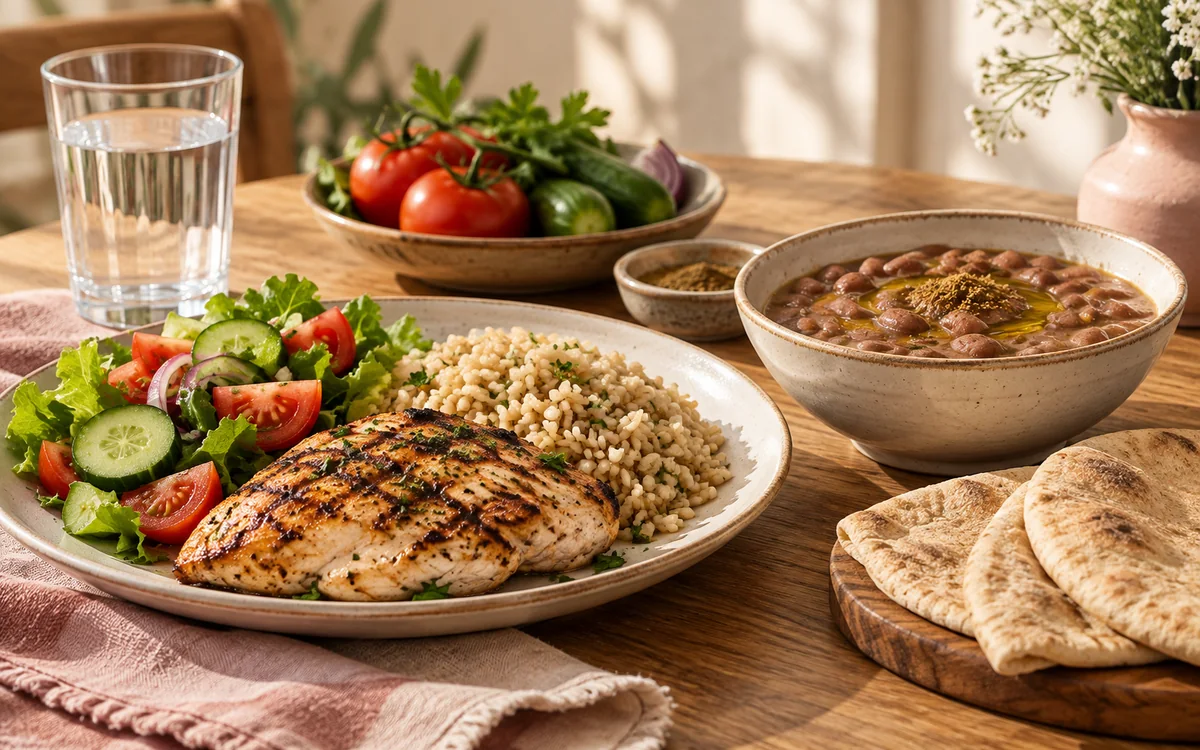
A sample day: breakfast of foul with little oil, tomato, cucumber, half a baladi loaf and an egg; a snack of fruit and a small handful of nuts; lunch of grilled fish or chicken with a plate of cooked vegetables, a quarter plate of rice and salad; a yoghurt snack; and a simple dinner such as cottage cheese with vegetables or lentil soup. If you want protein sources to help with fullness, see the high-protein foods for weight loss guide. [3, 10]
Who should speak to a doctor before starting any diet?
If the diet is a simple change in eating, you can start on your own. But in some cases you should be assessed first: diabetes, high blood pressure, heart, kidney or liver disease, pregnancy or breastfeeding, regular medicines, a history of an eating disorder, or a large amount of excess weight with symptoms. The NIDDK advises talking to your healthcare professional before a programme and asking which options fit you: a programme, a dietitian, weight-loss medicines or surgery [1].
On the kidneys: many people ask whether dieting harms them. A balanced diet is not usually the problem, but if you have kidney disease, protein is set according to your condition. The NIDDK kidney page explains that some people with kidney disease need moderate protein, and that a qualified dietitian sets the amount [12]. So if you have a kidney history or abnormal results, do not start a high-protein diet before reviewing it with your doctor.
To know whether you need medical follow-up, reduce guessing and review your measurements with the medical team. If you want to know how to choose the right doctor, see how to choose a good weight-loss doctor. Losing five to seven percent of starting weight lowers type 2 diabetes risk in people who are at risk [11].
Where can you start? La Rose in Maadi and Fifth Settlement
If you want to set up an eating plan that fits you with the medical team at La Rose, there is a Maadi branch and a Fifth Settlement branch. Maadi is at 14 El-Mokhtar Street, off El-Nasr Street, behind QNB, New Maadi, with appointments on Saturday, Monday and Tuesday from 2 to 8 pm. Fifth Settlement is at CMC Medical Mall, fourth floor, North 90th Street, behind the Air Force Specialized Hospital, with appointments on Wednesday from 3:30 to 8 pm. Confirm the day and time when booking.
Before the visit, prepare a description of your daily eating as if you were telling a friend, your medicines and supplements, recent test results if you have them, and previous attempts: what worked and what you could not keep up. That lets the plan be built on your real life rather than a generic table [1, 3].
To book or ask the team about consultation cost, call or WhatsApp 010 4066 1893. Book a consultation with the medical team and tell them which branch suits you. The plan you choose in the end must be one you can keep, not a quick promise [1, 2].