Protein Can Help, but It Is Not a Fat-Loss Switch
When you search for high-protein foods for weight loss, start by understanding what protein can and cannot do. Protein supports the building and renewal of body tissues, and including it in a meal may improve fullness for some people. Scientific reviews find that higher-protein meals or diets can enhance satiety, but results are not identical across studies or individuals [1, 2]. Eggs or beans do not directly burn body fat; they can, however, help form a satisfying meal that is easier to sustain.
Body fat falls when average energy intake remains below energy use for long enough. Adding chicken or cheese to an already large meal without considering the portion, oil, bread and sauce does not guarantee weight loss. Comparisons of higher-protein and standard-protein diets have found moderate benefits for body weight, fat and fat-free mass in some periods, but the longer-term advantage is small or inconsistent, and adherence to the whole eating pattern remains practically important [3].
The useful question is therefore not simply how to eat more protein. It is how to choose an appropriate source, prepare it sensibly and place it in a balanced meal you can repeat. If your main question is whether more protein is always better, our linked guide explains why needs are individual and why an arbitrary increase is not a goal by itself [1, 3, 4].
Before the List of Seven: Look at the Whole Meal
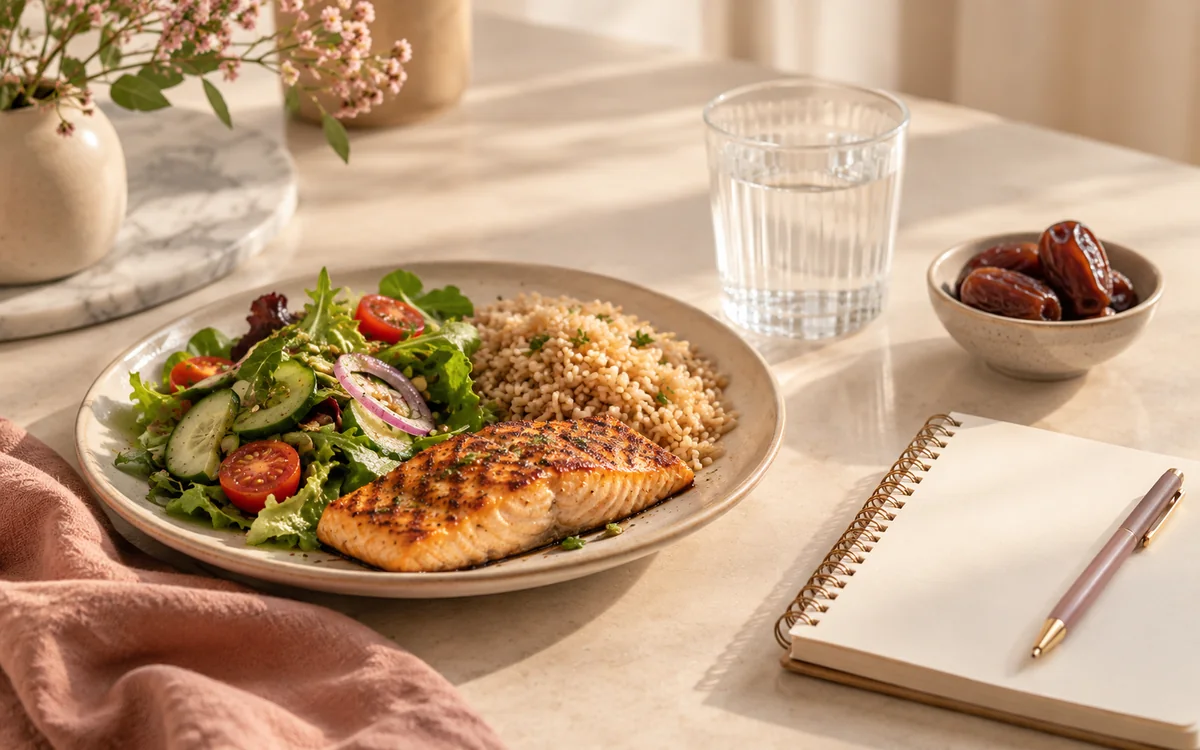
A protein source is never eaten in isolation. Grilled fish with vegetables and a suitable rice portion is different from the same fish fried and served with a large amount of sauce. Plain yoghurt with fruit is different from a heavily sweetened product with several energy-dense toppings. NIDDK weight-management guidance places lean meat, poultry, eggs, seafood, beans, peas, lentils, nuts, seeds and soy foods within a healthy pattern alongside vegetables, fruit, whole grains and suitable dairy foods [5]. A useful choice supports the whole plate rather than merely carrying the word protein.
Assess a choice with four practical questions. Does it provide a clear protein source? How much oil, ghee or frying has preparation added? How large are the sauce, cheese, bread, nut or seed additions? Does the meal also include vegetables, fruit or another fibre source that supports fullness and diet quality? Energy balance across days still matters; even nutritious foods can take intake above your needs when portions and additions stay large [5, 6].
There is no need to label every food as either a diet food or forbidden. Meat, fish, eggs, dairy foods and pulses each come in different food packages. Some animal sources are concentrated and convenient, while pulses provide fibre and carbohydrate as well as protein. A review of protein sources emphasizes that health effects relate to the entire food package and what it replaces in the dietary pattern, not to the protein molecule alone [10].
Seven Protein Choices from Everyday Food
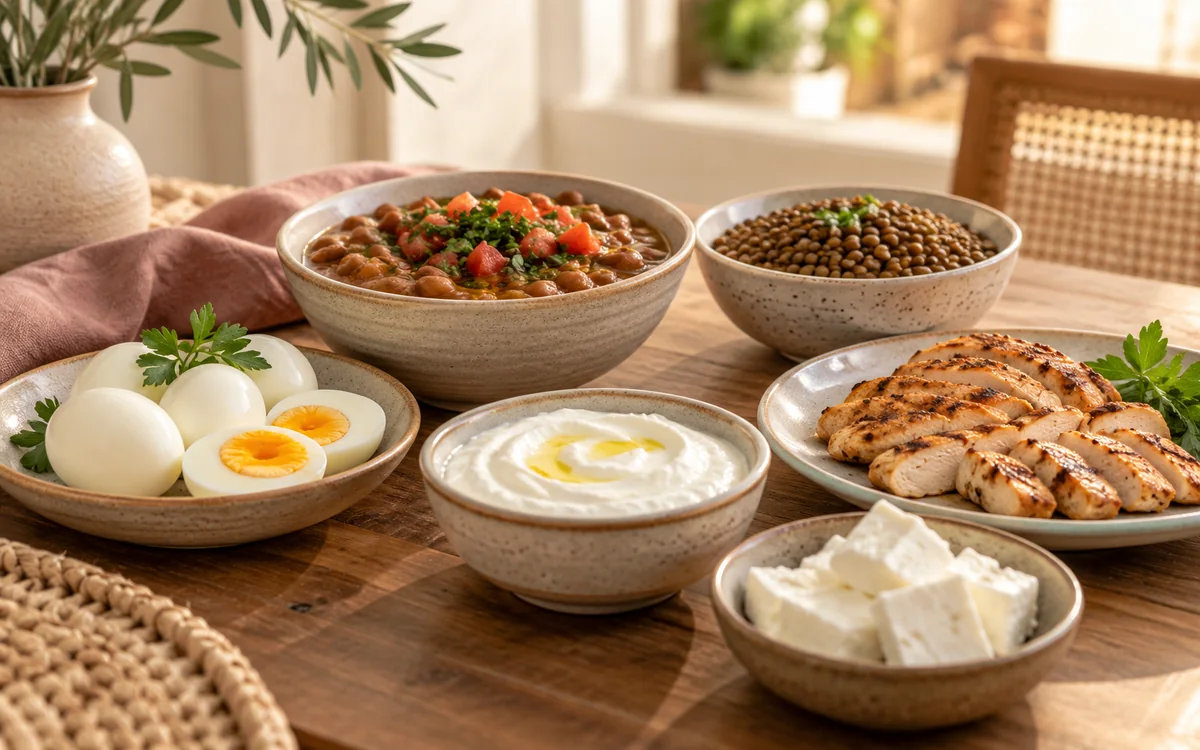
1) Eggs are practical at breakfast or dinner. Serve them boiled or cooked in a pan with a sensible amount of fat, alongside vegetables and a bread portion that fits your day. 2) Yoghurt and cottage-style cheese are convenient at breakfast or as a snack, but check added sugar, fat and salt because products differ substantially [5].
3) Fish provides protein, and some varieties also provide useful unsaturated fats. Grilling, baking or cooking it in a light casserole is different from frequent deep-frying. 4) Lean poultry can make a lighter plate when the skin is removed and it is grilled, boiled or baked rather than breaded and fried, although the portion and sauce still matter. 5) Lean meat can add variety when leaner cuts are chosen and processed meats are limited rather than treating all meat as equivalent [5, 10].
6) Beans are affordable choices combining plant protein with fibre. Consider the oil or ghee used and the amount of falafel or bread served alongside them when managing the meal's energy. 7) Lentils and chickpeas work in soup, salad or a main dish, making meat-free days and reduced reliance on meat easier. Research on pulses suggests potential benefits for satiety and weight management, but does not turn them into a magic food, and long-term evidence remains limited [7].
This is not a ranking from best to worst. The most useful option fits your health, budget and preferences and is prepared in a way that keeps the whole plate balanced. Yoghurt illustrates the need for precision: reviews suggest a possible modest weight-management benefit, but do not establish that simply adding yoghurt causes automatic weight loss [8].
Turn a Food List into a Genuinely Satisfying Plate
At breakfast, you might have eggs with vegetables and bread, plain yoghurt with fruit, or cottage-style cheese with tomato and cucumber. At lunch, place fish, poultry or lean meat beside cooked vegetables or salad and a suitable portion of a starchy food. On a meat-free day, beans, lentils or chickpeas with vegetables and grains can form a practical complete meal. The aim is not to ban carbohydrate; it is to make protein a clear part of a varied, enjoyable plate that also contains fibre [5, 9].
Preparation can change the meal more than the name of the protein source. Repeated spoonfuls of oil, frequent frying, or a thick layer of mayonnaise and cheese can raise the meal's energy quickly. The word healthy does not make additions unlimited: tahini, nuts and nut butters can be useful foods in the right context, but they are energy-dense. Use them as a considered part of the plate rather than a topping added freely to an already large meal [5, 6].
The appropriate portion is not identical for everyone. Start with a reasonable amount, eat slowly and observe fullness rather than turning the list into a challenge to consume the greatest possible quantity of protein. If you become hungry soon after a meal, consider whether it included enough protein, fibre and vegetable volume, and whether you ate quickly or skipped earlier meals. Our guide to why you feel hungry soon after eating explores these causes without assuming that more protein is always the answer [1, 2].
Spread Useful Choices Across the Day
If your day begins with tea and biscuits and most food is then concentrated at night, one enormous high-protein dinner may not solve the pattern. Spreading a practical protein source across meals can support fullness and reduce reliance on one meal. A simple example might be eggs or yoghurt at breakfast, beans or lentils at one meal, and fish or poultry at another. This is an illustration of organization, not a compulsory menu or a prescription for everyone [1, 2].
Protein matters during weight loss, but it is not the only signal that helps preserve muscle. A scientific review explains that adequate protein together with physical activity, especially suitable resistance exercise, supports muscle mass and function more effectively than chasing protein alone [4]. This article therefore does not provide a universal gram target or turn every meal into a calculation. Our guide to how to protect muscle while losing weight covers the wider picture of an appropriate energy deficit, movement, strength and follow-up [4].
If time is the main barrier, prepare a backup option: boiled eggs, plain yoghurt, cooked lentils or chickpeas, or a safely cooked and frozen portion of poultry or fish. Our guide to practical emergency protein portions explains the preparation idea without fixing one serving size for everyone. Keeping a simple option at home is often more useful than buying a product solely because its package says high protein [5].
Plant Protein and Budget: Variety Matters More Than Perfection
Beans, lentils and chickpeas are more than inexpensive substitutes for meat. They combine protein with fibre, minerals and varied plant compounds. A scientific review of vegetarian diets found that legumes, nuts and seeds can contribute to adequate adult protein intake when the overall diet is varied and sufficient, and that concern about an amino-acid shortfall in every individual meal is often overstated [9]. You do not need to calculate a perfect complementary pairing at every meal, although variety across the day still matters.
In practice, lentils with bread and vegetables, beans with salad and bread, or chickpeas in a meal containing vegetables and grains can widen your options and reduce reliance on meat. If you eat an entirely vegan diet, have a very restricted intake, a poor appetite, older age or intensive training demands, assessing adequacy and diet quality becomes more important than applying a general tip [9]. Our guide to protecting protein, iron and vitamin B12 in plant-based eating covers nutrients that cannot be reduced to the word protein alone.
For a limited budget, choose dried or canned pulses according to availability, rinse canned products when sodium is a concern, and cook a batch that can be portioned and stored safely. Eggs, yoghurt, beans and lentils can form a practical base across different days. Remember that fried falafel, ghee, generous oil and large amounts of tahini can substantially change meal energy even when the main source is plant-based [5, 7, 9, 11].
When Do You Need an Individual Plan Instead of a General List?
Protein needs vary with body size, age, activity, treatment goals, pregnancy and medical conditions, as well as whether someone already eats adequately or has a poor appetite. This list can help with food selection, but it cannot determine the right amount for every reader. Chronic kidney disease needs particular care: some people may need to adjust protein, while those receiving dialysis may have different needs because dialysis removes protein from the blood [11]. Do not copy another person's high-protein plan.
Studies in generally healthy adults have not found a clear difference in changes in kidney function between higher- and lower-protein diets over the durations studied, but that review concerned adults without known kidney disease [12]. It is not a declaration that every amount is safe, and it cannot be applied to someone with kidney disease. Ask a doctor or clinical dietitian for individual guidance if you have kidney or liver disease, are pregnant, have an eating disorder, live with a complex chronic condition, or are losing weight rapidly with weakness or declining strength. Severe appetite loss, persistent vomiting, swallowing difficulty, swelling or other concerning new symptoms call for medical assessment rather than a self-directed protein increase [4, 11].
Start with one simple step: choose a familiar protein source at each main meal, make it part of a balanced plate, and observe fullness, digestion and sustainability. If you need a plan tailored to your health, you can book a consultation with the medical team at La Rose in Maadi or Fifth Settlement. Online nutrition follow-up may suit some cases after deciding whether the concern requires an in-person examination [5, 11].