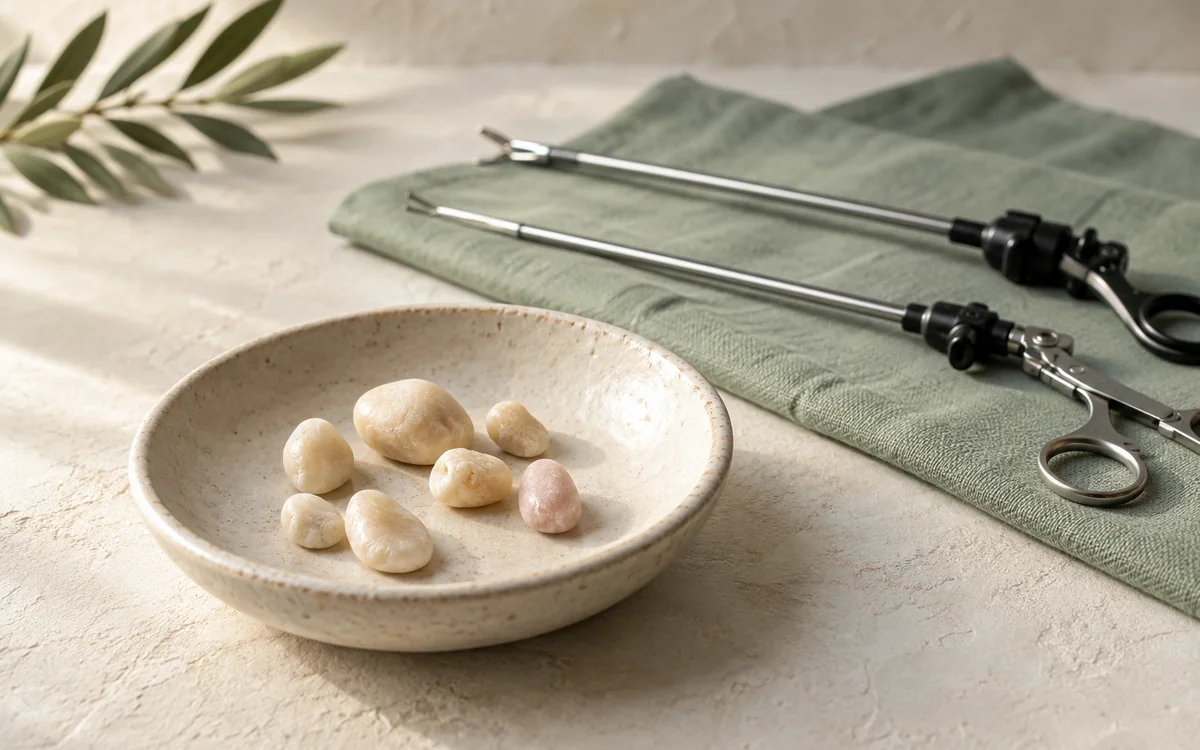
The first question is whether removal is needed at all
A gallstone on ultrasound does not automatically mean surgery is the next step. Many stones are found incidentally without symptoms, while clear pain attacks, inflammation or a duct problem can change the discussion. The clinician reviews the symptom pattern, ultrasound, laboratory results and examination before attributing the complaint to the gallbladder. If you are not yet sure the pain comes from the gallbladder, read about gallstone symptoms that need assessment. [1, 5]
When gallbladder removal is appropriate, the goal is to address the problem caused by the gallbladder, not simply remove an image showing a stone. Understanding why surgery is being recommended is part of the decision because it shapes timing, preparation and the questions to discuss with the surgeon. [1, 2]
Laparoscopic surgery: small openings and a camera-guided view
In laparoscopic gallbladder removal, the surgeon uses a camera and instruments through small openings in the abdomen to view the gallbladder and the surrounding area and remove it. This is the approach commonly used for planned surgery for symptomatic gallstones, but “commonly” matters: the choice remains tied to the safety of the individual case. [2, 3, 5]
Before surgery, the surgeon explains what to expect from the proposed approach, the general and individual risks, and when the plan may need to change during the operation. Comparing incisions or recovery photographs between people cannot promise the same experience because the reason for surgery, local inflammation and overall health all alter the details. [2, 6, 7]
After laparoscopic surgery, many people notice shoulder pain or bloating for the first few days because of the gas used to inflate the abdomen for a clearer view. This usually eases with walking and time, but if pain increases rather than settles, or comes with fever or vomiting, contact the team rather than assuming it is a normal part of keyhole surgery. [5, 6]
Open surgery does not mean the operation has failed
Open surgery uses a larger incision so the surgeon can reach the gallbladder and surrounding area more safely when the situation requires it. It may be planned from the outset in some circumstances, or the surgeon may change from laparoscopic to open surgery during the operation when visibility, inflammation or safety calls for it. [2, 4, 8]
Changing to an open approach is a safety decision, not a punishment or failure by the patient or surgeon. The priority is to use the method that allows the safest management of tissues and nearby ducts at that moment. The surgeon discusses this possibility beforehand so a change of plan is not a surprise. [2, 10]
After open surgery, the hospital stay is often somewhat longer, the wound needs more care and returning to heavy effort takes longer. That does not mean a worse outcome, but it does mean the recovery and follow-up plan should match the approach actually used rather than the one planned beforehand. [4, 8]
What determines the surgical route?
The degree of inflammation, infection or a duct concern, the appearance of the gallbladder and nearby area on imaging, previous abdominal operations and overall health can all influence the surgeon’s decision. Ultrasound and blood tests sometimes lead to additional investigation when there is a question about the bile ducts before the approach is set. [1, 2, 3]
The decision is not a personal choice between the labels “laparoscopic” and “open” detached from the details. At the surgical visit, ask why surgery is recommended, which options suit your situation, their risks and alternatives, and what could change the plan on the day. Answers become more precise after the surgeon reviews your images and results directly. [2, 5, 9]
If you have a long-term condition such as diabetes or heart disease, or take a blood-thinning medicine, mention it early, because it can affect preparation, the timing of surgery and follow-up afterwards. The team may ask for another specialty's opinion before setting a date; that is part of safety, not a delay. [1, 2, 5]
When to see a doctor
Arrange a general-surgery consultation when you have upper-abdominal pain attacks and have been told you have gallstones, or when an ultrasound report or blood results need explanation. Bring the ultrasound report, laboratory results and a list of medicines and supplements, and note the pain’s location, duration and relationship to food. The visit determines whether the gallbladder explains the problem, whether surgery is appropriate and which approach is safest. [1, 5]
Severe persistent pain with fever or chills, yellow eyes or skin, dark urine, repeated vomiting, marked dizziness or general deterioration need urgent assessment. Do not wait for a routine consultation if these signs are present; they may require a faster decision than simply discussing the type of operation. [1, 5, 7]
Consent and preparation are part of safety
Before surgery, ask why removal is proposed in your case, the expected benefit, alternatives and recognised risks, including anaesthesia, bleeding, infection, bile-duct injury and the possibility of conversion to an open approach. A general page cannot give an individual probability; the team estimates that after reviewing history and tests. [1, 2, 3]
Mention every medicine or supplement, allergy, previous operation, possible pregnancy or bleeding issue. Follow the fasting and medicine instructions your team gives, rather than substituting a generic timetable or stopping an important medicine yourself. To see how the day itself usually runs, read the gallbladder surgery day guide. [1, 4, 5]
Do not be surprised if more than one team member asks you the same questions on the day; the reason is explained in repeated safety questions before surgery.
Recovery needs a plan, not a date promise
Incision discomfort, tiredness, appetite change or bloating can be part of early recovery, but duration differs between people and between laparoscopic and open surgery. Follow your instructions for movement, wound care, food, showering and driving, and ask when work or exertion suits you rather than comparing your experience with someone else’s. [4, 5, 6]
Gallbladder removal does not guarantee that every abdominal pain or digestive symptom will disappear; some symptoms have another cause. If a symptom persists or changes, tell the team so surgery does not become an automatic explanation for everything afterwards. For what to expect in the first days, read about recovery after gallbladder surgery and its warning signs. [1, 2, 6]
Signs that need earlier contact after surgery
Seek earlier advice for fever or chills, escalating pain, wound redness or discharge, vomiting that prevents fluids, yellow eyes or skin, shortness of breath, leg pain or swelling, fainting or clear deterioration. These signs do not prove a specific problem online, but they deserve assessment according to severity and discharge instructions. [1, 4, 6, 7]
For an emergency, breathing difficulty, fainting or rapidly increasing severe pain, use the local emergency pathway instead of waiting for a routine reply. Keep discharge instructions and the operating team’s contact details available. [4, 6, 7]
If you need assessment somewhere other than the hospital where the operation took place, bring the operation report and medicine list, and say whether the surgery was laparoscopic or converted to open. That detail changes how symptoms are interpreted and which test is chosen, and it saves time for a clinician meeting you for the first time. [4, 6, 8]
Questions that make the surgical visit clearer
Write questions before the visit: what problem is surgery intended to treat? Why is laparoscopic or open surgery proposed in my case? What could change the approach? What are the alternatives? How should I prepare, what should I expect early in recovery, and whom should I contact if symptoms change? These questions support shared decisions; they do not replace examination. [1, 2, 3]
Bring the ultrasound report, blood-test results, medicines list and record of pain episodes. Connecting these details with examination can avoid repeating unhelpful tests or assuming that every symptom comes from the gallbladder. If the report contains wording you do not understand, read about what an abdominal ultrasound can show before the visit. [1, 2, 8]
A change of plan during surgery is not failure
A team may begin laparoscopically and choose an open approach if inflammation, scarring, bleeding or limited visibility makes continuing laparoscopically less safe. That is why consent includes the possibility of a change before surgery. The operating-room decision follows what the team actually finds, not a preference for a method that sounds more or less advanced. [2, 3, 9, 10]
After surgery, ask which approach was used, what was found, and whether instructions or follow-up changed because of it. Clear understanding helps you prepare for recovery and follow-up, but does not mean expecting another person’s outcome or ignoring signs that need earlier contact. It also gives the next clinician an accurate starting point if symptoms recur later, particularly when symptoms, medicines, or test results have also changed. [3, 5, 6] If you want to discuss these options with a doctor, you can book a clinic visit at La Rose.