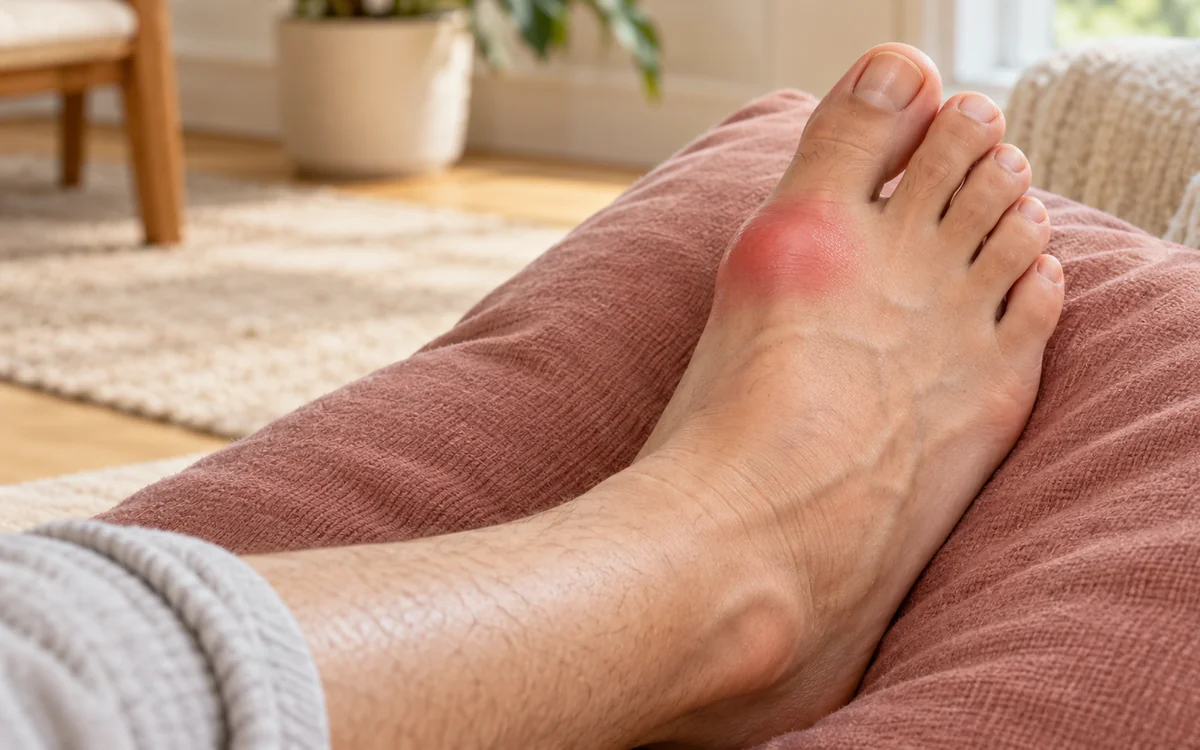
The flare has settled: why arrange a follow-up when pain is gone?
Relief after a gout flare is welcome, but the disappearance of pain does not show that accumulated urate crystals have disappeared. Medicine that calms the current flare treats inflammation; preventing recurrence requires a separate review of urate accumulation and a follow-up plan. If a joint is still very hot and swollen for the first time, or you have fever and feel markedly unwell, seek urgent assessment for possible joint infection. The gout flare treatment and urgent assessment guide covers that first decision; this article begins after the acute problem has been assessed and settled [1, 2].
At the post-flare visit, the clinician reviews how many attacks you have had, their timing, any tophi or joint damage, and serum urate after inflammation settles. Urate measured during a flare can be lower than usual; when gout remains likely despite a low result during the attack, a repeat test at least two weeks after it resolves may be needed [1]. The review also covers kidney stones, blood pressure, diabetes, kidney function, regular medicines, and how attacks affect walking, work and sleep. The decision should reflect the disease pattern and risks, not one joint image or laboratory number. Record attack dates and medicine names, and mention any previous rash or other reaction to treatment; these details can materially change the plan [1, 2, 9].
Who should discuss long-term urate-lowering treatment?
Urate-lowering therapy, or ULT, is not a painkiller for the current attack. Its purpose is to maintain a level at which crystals can gradually dissolve, reducing future attacks, tophi and damage over time. NICE recommends offering a treat-to-target plan to people with multiple or troublesome flares, tophi, chronic gouty arthritis, chronic kidney disease stages 3–5, or diuretic use. It also recommends discussing ULT after a first or later flare for people outside these groups, according to their preferences and circumstances [1].
The American College of Rheumatology makes strong recommendations for tophi, joint damage attributable to gout, or at least two flares a year. It is more cautious after a first attack, while opening a discussion in people with stage 3 or worse kidney disease, very high serum urate, or kidney stones. Differences in wording between guidelines do not mean everyone should start the same medicine in the same way; they make shared discussion of benefits and risks more important [2]. A high urate laboratory result without gout flares or tophi is a different situation and does not automatically call for preventive medication [2]. Describe the real number of attacks, including ones you managed at home. Mention if a single flare prevents work or movement for days, because that burden is not fully visible in a blood result [1, 8].
Before choosing a medicine: what belongs in the decision?
Ask about the diagnosis itself if it remains uncertain, particularly after a first hot joint. Then bring a full medicine list, including diuretics, blood-pressure treatment, prescribed aspirin, kidney medicines and supplements. Some medicines can raise urate or interact with gout treatment, but stopping heart, blood-pressure or aspirin treatment on your own can cause greater harm. ACR guidance discusses reviewing certain blood-pressure medicines when a suitable alternative exists and advises against stopping low-dose aspirin that has an appropriate medical indication solely to lower urate [2].
The team reviews kidney function, kidney-stone history, cardiovascular disease, liver problems, medicine allergy, and whether tests and follow-up are practical. These facts matter to medicine choice, dosing and monitoring; this article cannot select a treatment or dose for an individual. Kidney disease does not automatically rule out every urate-lowering medicine: ACR guidance prefers allopurinol initially for many people, including some with kidney disease, with a cautious start and adjustment guided by follow-up [2]. For more complex situations, such as advanced kidney disease or treatment that fails or is not tolerated, NICE advises considering rheumatology referral. Bring questions: What is my target? When is the next test? What should I do if a rash appears or a flare returns? A written answer is more reliable than trying to remember half the visit afterward [1, 8, 10].
What is a urate target, and is a normal-looking lab range enough?
Once you and the clinician agree on ULT, follow-up does not end merely because the result falls inside the laboratory's printed reference range. NICE and ACR recommend a target below 6 mg/dL, or below 360 micromol/L, for most people treated for gout. People with tophi, chronic gouty arthritis, or frequent flares despite reaching that target may need a discussion of a lower target below 5 mg/dL, or 300 micromol/L, according to the clinician [1, 2, 3]. This is a treatment and monitoring target, not a way to diagnose a new flare or permission to increase a dose on your own.
Above a certain urate concentration, crystals can continue to form; staying below target long enough helps existing deposits dissolve gradually. Flares therefore may not disappear as soon as one good result arrives. Long-standing crystal deposits take time. If the number improves but remains above target, ask for the next step rather than deciding that the medicine has failed or comparing your result with the range for someone without gout. Once the target is reached and symptoms settle, treatment is usually continued; after stability, the clinician may discuss annual urate monitoring [1]. The uric acid level and gout diet explanation distinguishes a blood result from a diagnosis and expands on food without replacing a treatment plan [1, 3].
Starting and monitoring: why a dose may change after repeat tests
The clinician usually begins ULT cautiously, then reviews urate, response and tolerance before adjusting it. NICE suggests measuring serum urate monthly while titrating treatment to target; ACR supports adjustment using serial results rather than one fixed standard dose for everyone [1, 2]. The first result after starting is not a final verdict. Ask when the next test is due and whether kidney function or other checks are needed for your medicine and circumstances. If no one has discussed a result with you, contact the team rather than changing a dose or ignoring the number.
Timing relative to a flare is not one universal rule. NICE generally favours starting two to four weeks after a flare settles, while allowing treatment during a flare when attacks are frequent. ACR allows starting during a flare when ULT is indicated, alongside treatment of the attack and a plan for early flare prevention [1, 2]. Thus neither 'urate medicine is always forbidden during a flare' nor 'you must start it today' is a safe blanket instruction. The clinician decides with you based on attack frequency, ability to return for follow-up, diagnostic certainty and preventive medicines. Keep copies of serial results and dose-change dates; the trend over months matters more than one isolated number. If a dose was missed or taken incorrectly, say so openly rather than letting an above-target result be mistaken for medicine failure [1, 2, 8].
Why can flares occur early, and how is prevention planned?
A flare soon after ULT begins can make someone think the medicine 'caused the disease.' As urate falls, mobilisation of older deposits can provoke attacks in the early months; that does not automatically mean the plan has failed. Over the longer term, remaining below the urate target reduces deposits and flares. In a randomised gout-care trial, education, follow-up and treatment titration to target achieved better target attainment and other outcomes than usual care; this does not predict any one person's course [2, 4].
Before starting or increasing treatment, ask for a temporary flare-prevention plan and instructions for a sudden flare. NICE recommends discussing benefits and harms of prophylaxis, often using colchicine when suitable; if it is unsuitable, the clinician may discuss alternatives. Colchicine is not safe for everyone: kidney or liver disease and some antibiotics, heart medicines or lipid medicines can alter its safety, and taking too much can be dangerous [1, 6]. Do not restart an old prescription or double a dose yourself. If a flare occurs while you are already on a continuing allopurinol plan, contact the clinician about flare treatment. Keep the immediate anti-inflammatory treatment distinct from medicine used to maintain a long-term urate target, and do not automatically abandon the long-term plan just because of a flare, unless a medicine-harm warning requires stopping it and urgent review [2, 5].
Allopurinol and febuxostat: which safety questions matter?
Allopurinol and febuxostat both reduce urate production, but the choice should not rest on the better-known name or a relative's experience. NICE includes both as first-line options according to comorbidities and favours allopurinol in people with major cardiovascular disease. ACR prefers allopurinol initially for most people, including many with kidney disease. The US febuxostat label also carries an important cardiovascular warning for gout patients with established cardiovascular disease; the clinician reviews heart history and alternatives rather than having patients switch medicine at home [1, 2, 7]. Differences among guidelines and regulatory settings call for individual assessment, not a claim that one drug suits everyone.
Any new rash with allopurinol calls for stopping it and contacting a clinician promptly. A rash with blisters or mouth sores, facial swelling, breathing difficulty, or pronounced illness with fever needs urgent help. Severe skin reactions are uncommon but important; they need prompt assessment rather than being ignored or followed by a self-directed rechallenge [5]. Also ask about medicines that might interact with ULT, the monitoring plan, and what to do if an unusual symptom appears. If an initial medicine is not tolerated or does not reach target, alternatives and specialist steps exist, but the choice depends on kidney and heart health and other medicines. Do not add a second treatment or stop a chronic medicine on your own [1, 2, 7].
Kidney, heart and blood-pressure conditions: how do they alter follow-up?
Gout often coexists with high blood pressure, kidney disease or cardiovascular risk factors. These conditions change medicine selection, test planning and symptom review. Mention past kidney stones, abnormal kidney results, heart attack or stroke, and bring your blood-pressure, diuretic, aspirin and over-the-counter medicine list. NICE recommends reviewing kidney disease and cardiovascular risks after a flare and considering specialist input when kidney disease is more advanced or treatment is unsuitable or ineffective [1, 10].
Do not treat lowering urate as a proven stand-alone therapy for heart or kidney disease. The established target here is gout control; blood pressure, diabetes and kidney health need their own follow-up. Some medicines for acute flares, including NSAIDs, require caution with kidney or stomach disease or blood-thinning drugs, so the future flare plan should also be reviewed with a clinician [1, 2]. Likewise, do not stop a diuretic or aspirin for the sake of gout without speaking to the prescriber; it may serve an important cardiovascular purpose. Ask who owns each follow-up: serum urate, kidney function, blood pressure and any needed referral. Clear responsibilities and dates help prevent each service waiting for another while attacks recur [1, 8, 10].
Food, weight and fluids: their real role and limits
Eating patterns and activity can support general health and reduce some triggers, but they are not a reliable replacement for ULT when that treatment is indicated. NICE says evidence is insufficient to show that any particular diet alone consistently prevents flares or lowers serum urate, and advises a balanced diet. It notes that excess weight and heavy alcohol use may worsen symptoms. ACR conditionally recommends limiting alcohol, certain purine sources and high-fructose drinks, and a suitable weight-management programme for people with overweight [1, 2]. This does not mean one serving of lentils or meat explains every flare, or that the patient is to blame. Genetics, kidney function and medicines also matter [2].
If you want to change food habits, start with changes you can sustain: reduce sweetened drinks and alcohol where relevant, choose balanced meals, and discuss weight without crash dieting or dehydration. Fluids matter, but if heart or kidney disease requires fluid restriction, ask what amount is suitable rather than following a generic online number. Supplements and folk remedies do not reliably replace reaching the urate target; ACR does not recommend adding vitamin C as a gout treatment. The uric acid level and gout diet explanation discusses food in greater detail; here the task is to fit it realistically into the medicine and follow-up plan, not turn it into a test of personal discipline [1, 2].
Leave with a written plan for future flares and long-term review
Ask the team for a short plan you can actually use: Will you start ULT now or after another review? What is your target? When is the next test, who will review it, and who will tell you whether treatment needs adjustment? Is temporary medicine to prevent early flares suitable? What should you do for a new flare, rash or unusual symptom? A useful plan keeps flare medicine separate from daily urate-lowering medicine and names whom to contact if doses are missed or a supply runs out. NICE says ULT is usually continued after reaching target and suggests discussing annual urate monitoring after stability; disappearance of pain alone is not a reason to stop it [1, 5].
If adherence is hard because of side effects, forgetting, costs or test access, say so early. NICE medicines-adherence guidance encourages a blame-free discussion of barriers and practical support tailored to the individual, while recognising the patient as a partner in decisions [8]. Keep a record of flare dates, urate results and medicines. Ask when earlier review is needed: repeat attacks despite target attainment, enlarging tophi, a treatment rash, or new kidney concerns. If you want to review your prevention plan with a rheumatologist, you can book a rheumatology consultation and bring your results and medicine list. If a joint again becomes hot with fever or severe deterioration, seek urgent assessment rather than waiting for a routine follow-up [1, 2].