Insulin resistance nutrition doctor in Maadi and Fifth Settlement: the direct answer
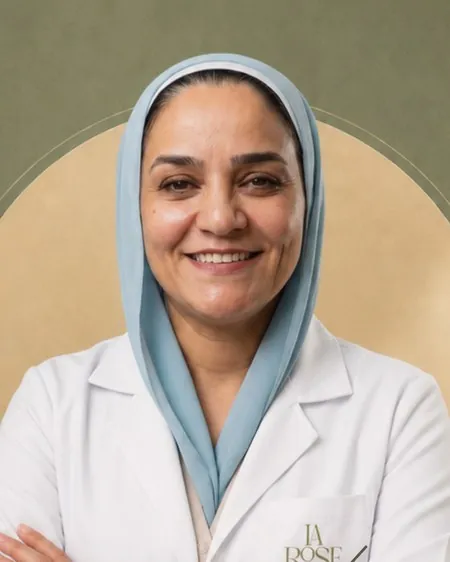
If you are looking for an insulin resistance nutrition doctor in Cairo, you can begin a clinical nutrition and weight-management consultation with Dr Shimaa Fouad at either the Maadi or the Fifth Settlement branch of La Rose, or with Dr Alyaa Said Abu Taleb at the Maadi branch. The consultation is never a generic pre-printed diet sheet or arbitrary carbohydrate elimination. The real goal is to review your daily eating habits, assess your body composition with the InBody system, and go over your blood glucose and lipid results to build a sustainable plan. Health authorities explain that insulin resistance means the cells in your muscles, fat and liver do not respond well to insulin, and that lifestyle changes with diet, activity and weight loss can help prevent or delay type 2 diabetes [1, 2, 10].
Clinical nutrition consultations are available at the Maadi branch at 14 El-Mokhtar Street, off El-Nasr Street, directly behind QNB Bank, New Maadi, on Saturday, Monday, and Tuesday from 2 to 8 pm (hours vary by doctor). Consultations are also held at the Fifth Settlement branch in CMC Medical Mall, fourth floor, North 90th Street, directly behind the Air Force Specialized Hospital, on Wednesdays from 3:30 to 8 pm. To book or inquire, you can call or message the team via WhatsApp on 010 4066 1893. Below, you will learn how clinical nutrition collaborates with internal medicine, what happens during your first visit, which lab tests to bring, how ongoing follow-up works, and how to reach both branches conveniently from nearby neighborhoods.
Read also: Book an insulin resistance consultation
Which doctor treats insulin resistance? Roles of clinical nutrition and internal medicine
Many patients ask: which specialist treats insulin resistance, and should follow-up be with an internal medicine doctor or a clinical nutrition specialist? Sound medical management of insulin resistance relies on interdisciplinary care because the condition stems from metabolic dysfunction that responds directly to dietary composition and physical activity [1, 3]. The clinical nutrition physician directly leads the lifestyle intervention by calculating individualized caloric, protein, and dietary fiber requirements, structuring meals to maintain steady blood glucose, and monitoring InBody scans to ensure fat loss while preserving skeletal muscle mass. To understand why weight can feel stubborn during insulin resistance and how your body responds, read our guide on insulin resistance and why weight feels stuck after this page.
Meanwhile, an internal medicine specialist evaluates systemic metabolic health, screens blood pressure, monitors liver enzymes to rule out metabolic dysfunction-associated steatotic liver disease, and reviews kidney function and serum triglycerides. At La Rose, internal medicine and gastroenterology consultations with Dr Mohab Ashraf Fouad are available exclusively at the Maadi branch, on Saturdays from 4 to 7 pm.
Decisions about starting, changing or stopping glucose-lowering medicines, such as metformin or hormonal therapies, belong to your treating physician or endocrinologist, and the nutrition clinic never changes a medicine dose. La Rose does not offer in-house endocrinology, cardiology, nephrology, gynaecology, dermatology or surgery. Nutrition care works alongside whatever your doctor prescribes; in the Diabetes Prevention Program, intensive lifestyle change reduced the risk of developing diabetes more than metformin alone [2].
Insulin resistance symptoms and red flags requiring urgent evaluation
Insulin resistance usually causes no obvious symptoms, so many people live with it undiagnosed, and it is not routinely tested for [1, 10]. Being overweight, having a large waist and being physically inactive raise the likelihood [1, 10]. Some people develop dark, thickened patches of skin in the neck folds, armpits or groin, known as acanthosis nigricans; it can be linked to insulin resistance or to other conditions, so a doctor needs to check it to find the cause [10, 12]. Having it is not a diagnosis on its own, and its absence does not rule out insulin resistance.
However, some symptoms need a doctor's review soon rather than waiting or relying on diet changes alone [11]. These include feeling very tired, passing urine more often than usual, feeling thirsty all the time, losing weight without trying, and blurred vision [11]. They can point to diabetes and need a blood glucose check with your doctor. If symptoms are severe or come on suddenly, go to your nearest emergency department.
What happens during the first insulin resistance nutrition consultation?
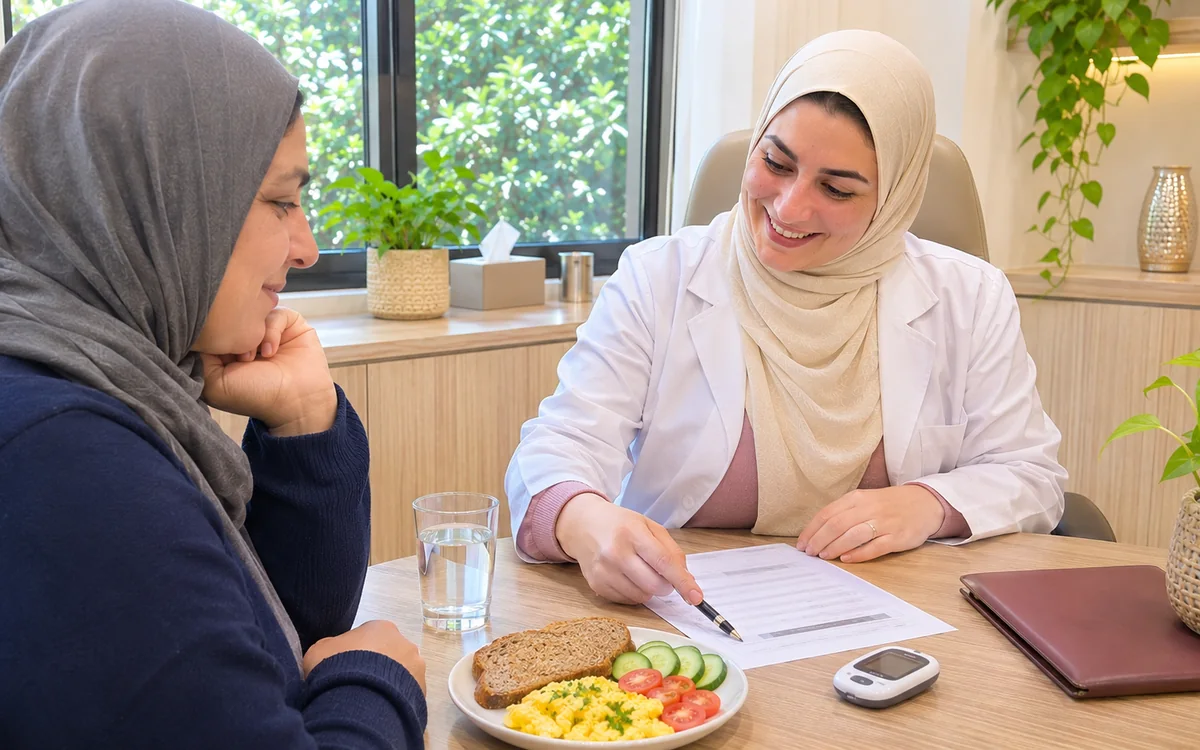
During your initial insulin resistance nutrition consultation at La Rose, your visit begins with an unhurried, detailed exploration of your medical and lifestyle history, free from rushed templates or personal blame. The clinical nutrition physician reviews your daily work schedule, sleep quality, meal preferences, previous dieting attempts, stress levels, and family history of diabetes, hypertension, and metabolic syndrome. The objective is to understand the true drivers of your lifestyle to construct practical, highly sustainable solutions tailored specifically to you.
The next core step is a body composition scan using the InBody device available in the clinic. The non-invasive scan relies on bioelectrical impedance analysis, a method used to estimate body composition [7], and produces a report showing total fat mass and body fat percentage, visceral fat level, muscle mass and its distribution across the arms, legs and trunk, and fluid balance. This is useful in insulin resistance because a standard scale cannot tell fat from muscle; fat may fall and muscle may rise while total weight stays the same. To prepare properly and understand your report, review our guide on your first InBody test before your visit.
By the conclusion of your consultation, you will receive an individualized, sustainable meal plan built around accessible Egyptian foods, clear physical activity goals, and an agreed follow-up schedule.
Read also: Your first InBody test
Recommended tests and reports to bring to your consultation
You do not need to arrange new tests before booking your first appointment; the physician can begin with a clinical assessment and decide what your case needs. However, if you have recent blood test results from the past 3 to 6 months, bring them with you. The most useful ones include fasting glucose, HbA1c, which reflects your average blood glucose over the previous 3 months [10], and a full lipid profile with total cholesterol, triglycerides, LDL and HDL cholesterol. These results help the doctor assess your overall metabolic picture.
It also helps to bring recent liver function tests such as ALT and AST, and any recent abdominal ultrasound report. Patients often ask about the HOMA-IR test, a calculation that uses fasting insulin and fasting glucose to estimate insulin resistance mathematically [4]. It may help in selected cases, but it is not a prerequisite for starting nutrition therapy; the plan is built on symptoms, waist circumference, InBody body composition and standard glucose and lipid results. To understand test interpretation and ranges, read our detailed guide on the HOMA-IR insulin resistance test.
Also bring a written list of all medicines and supplements as prescribed by your doctor so your nutrition plan takes them into account, and do not change any medicine on your own.
What does an insulin resistance patient eat? A balanced diet and physical activity
What does an insulin resistance patient eat? One of the most widespread misconceptions is that improving insulin sensitivity requires cutting out carbohydrates completely. International consensus recommendations note that there is no single ideal mix of nutrients for everyone, and that patterns such as the Mediterranean diet support people with diabetes or at risk of it [3]. In the PREDIMED-Reus trial of adults aged 55 to 80 at high cardiovascular risk, a Mediterranean diet reduced diabetes incidence by 52% compared with a low-fat diet [5]. In the clinic we turn this into a practical Egyptian plate: half fibre-rich vegetables, a quarter protein such as fish, poultry, eggs or legumes like lentils and fava beans, and a quarter complex carbohydrates such as whole grains, oats or freekeh, with unsaturated fats such as olive oil and nuts in moderation. For practical daily Egyptian meal options, explore our comprehensive guide on an insulin-resistance diet after this page.
Fibre and protein with meals help keep blood glucose steadier after eating. For physical activity, the World Health Organization recommends that adults do 150 to 300 minutes of moderate-intensity aerobic activity per week, such as brisk walking, plus muscle-strengthening activities on two or more days [8]. A systematic review also found that walking or exercising after a meal lowers the post-meal rise in blood glucose compared with staying inactive [6].
On the question of medical treatment, the Diabetes Prevention Program found that intensive lifestyle intervention with diet and exercise reduced the risk of developing diabetes by 58%, compared with 31% for metformin, in people at high risk [2]. Any decision about using a medicine rests with your treating doctor.
Read also: An insulin-resistance diet
Follow-up protocol and body composition tracking with InBody
Overcoming insulin resistance is not accomplished in a single visit; it requires regular follow-up. Guidance for managing type 2 diabetes recommends individualised, ongoing nutrition advice from a professional [9]. At La Rose's clinical nutrition clinics, your doctor sets the follow-up schedule according to your situation and goals. These visits let your physician review meal adherence, troubleshoot practical challenges in food choices, and adjust the plan as your activity and daily routine change.
At follow-up visits, your body composition can be re-checked with the InBody system to compare results. We track visceral fat level, fat distribution and muscle mass to check that weight loss comes from fat rather than muscle or water, which is why preserving muscle is a priority in our plan.
Follow-up also covers practical signs of progress: steadier energy through the day, a smaller waist circumference, and, where present, improvement of acanthosis nigricans patches [12]. Your doctor decides when to repeat blood tests such as HbA1c and lipid profiles, so you can see the change in your laboratory numbers.
Reaching the clinic and booking in Maadi and Fifth Settlement
You can begin your insulin resistance care pathway at either of La Rose's two clinics in Cairo, choosing the location most convenient for your home or workplace, because early lifestyle change with regular follow-up lowers the risk of progressing to type 2 diabetes [2].
Maadi Branch: Located at 14 El-Mokhtar Street, off El-Nasr Street, directly behind QNB Bank, New Maadi, Cairo. Clinical nutrition and weight-management appointments are available Saturday, Monday, and Tuesday from 2 to 8 pm (hours vary by doctor), with internal medicine consultations with Dr Mohab Ashraf Fouad also hosted at this branch on Saturdays from 4 to 7 pm. According to verified route measurements, the clinic is approximately 1.6 km from Maadi Grand Mall (about 5 minutes by car), 2.6 km from Degla Square (about 7 minutes), 3 km from Road 9 (about 8 minutes), 3.4 km from Old Maadi Metro Station (about 8 minutes), 3.5 km from El Basatin (about 10 minutes), 5.5 km from Corniche El Maadi (about 11 minutes), 6 km from Tora El-Balad (about 15 minutes), and 7 km from Zahraa El Maadi (about 11 minutes). Street parking is available in front of the building.
Fifth Settlement Branch: Located in CMC Medical Mall, 4th floor, North 90th Street, directly behind the Air Force Specialized Hospital, Fifth Settlement, New Cairo. The clinical nutrition and body-composition clinic runs on Wednesdays from 3:30 to 8 pm. The branch is about 5.2 km from Cairo Festival City (about 10 minutes by car via South 90th Street), 5 km from El Yasmeen (about 10 minutes), 6.5 km from Al Narges (about 12 minutes), 6.9 km from El Banafseg (about 10 minutes), 7.4 km from First Settlement (about 12 minutes), 8 km from Katameya Heights (about 12 minutes), and 9 km from Point 90 Mall and AUC Avenue (about 12 minutes). Enter CMC Medical Mall and take the elevator to the fourth floor under the La Rose name.
To schedule your consultation or confirm timings, call or message us on WhatsApp at 010 4066 1893. Book an insulin resistance consultation to begin a dedicated medical nutrition plan tailored to your health goals.