Before changing your food: insulin resistance is not diagnosed from one symptom or number
This food pattern is an implementation step after risk assessment or diagnosis, not a home test for insulin resistance. Hunger, sleepiness after meals, weight difficulty or darkened neck skin may justify a medical question, but none proves the condition alone. A fasting-insulin result or HOMA-IR number without clinical context is also not a licence to begin a harsh restrictive diet. If you first need the concept, read insulin resistance explained; if your question concerns symptoms and tests, insulin resistance symptoms and testing in adults is the more appropriate guide [1, 2].
Insulin resistance means that muscle, fat and liver cells respond less effectively to insulin. Prediabetes means glucose measurements meet defined diagnostic ranges, while diabetes has its own diagnostic and follow-up criteria. These conditions are related, but they are not interchangeable, and not everyone with insulin resistance has diabetes. A food plan therefore has to account for glucose results, medicines, pregnancy or breastfeeding, kidney or liver disease, eating-disorder concerns and everyday activity [1, 2].
The practical aim is not to chase the smallest possible rise after every bite or remove an entire food group. It is to build a repeatable pattern: better-quality carbohydrate in a suitable amount, protein, vegetables and unsaturated fat, arranged around your work, appetite and treatment. Medical guidance stresses that no single macronutrient split fits everyone and that an individual plan matters more than the name of a fashionable diet [3, 4].
The balanced Egyptian plate: vegetables, protein and higher-fibre carbohydrate
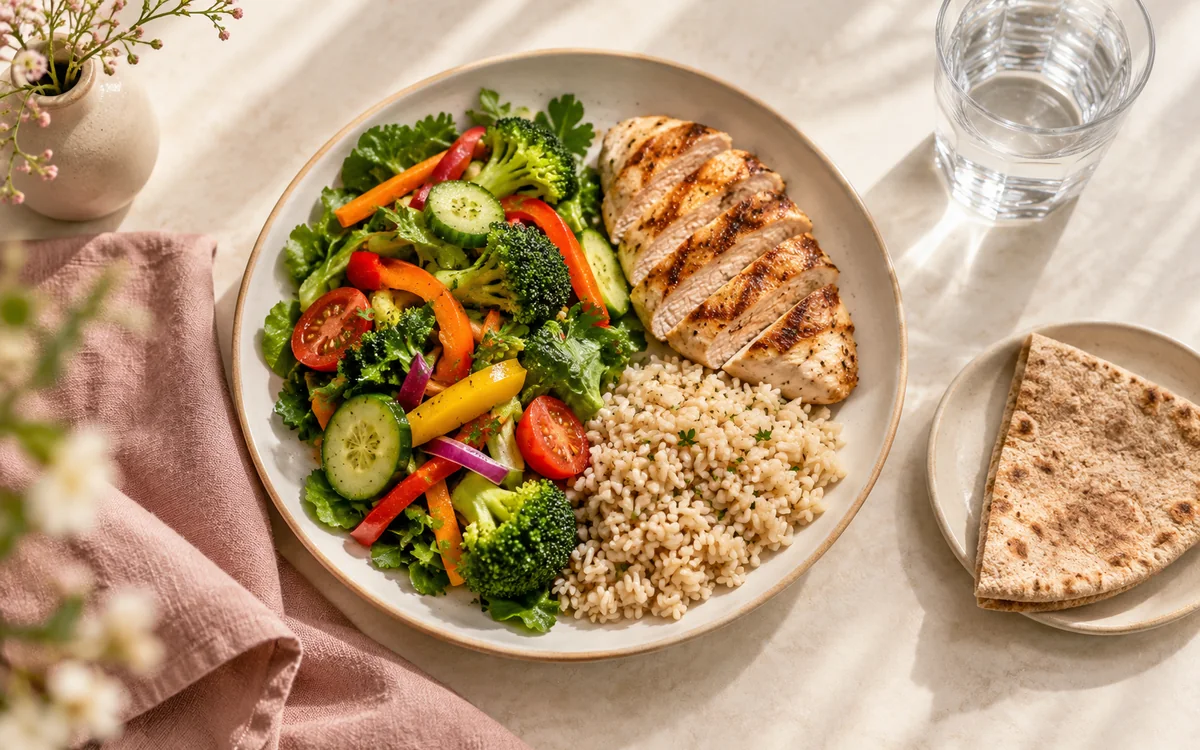
Start with the shape of the plate instead of a long permitted-and-forbidden list. A large share can be salad or cooked vegetables that are not swimming in ghee or sauce. Include protein such as beans, lentils, eggs, yoghurt, fish or chicken. Use the remaining space for a suitable carbohydrate such as higher-fibre baladi bread, rice, potatoes, bulgur or oats. Add a modest amount of unsaturated fat, such as olive oil, tahini or nuts, according to your needs and the rest of the meal [3, 4].
This is not a geometric rule that must be followed perfectly every time. It is a visual tool that helps prevent a meal from becoming a very large rice serving with a small piece of protein and token vegetables. Legumes are particularly useful because they combine carbohydrate, fibre and plant protein. Beans with salad and a suitable bread portion can form a complete meal. Lentils with vegetables and some bread or rice are different from a large lentil soup accompanied by abundant bread and fried side dishes [3, 4].
A Mediterranean-style pattern emphasises vegetables, legumes, whole grains, nuts, olive oil and fish while reducing processed meat, sugar-sweetened drinks and highly processed foods. Trials in people at high risk or with newly diagnosed diabetes have supported this pattern within wider care, but that does not turn olive oil or nuts into standalone treatments, and a group result never guarantees the same outcome for every individual [5, 10].
Bread, rice and potatoes are not banned: quality, amount and context matter
Carbohydrate raises glucose after eating, but that is not a reason to eliminate all carbohydrate. The body uses glucose for energy, and carbohydrate foods can supply fibre, vitamins and minerals. The practical difference comes from the type of food, the amount, whether it is eaten alone or with protein and vegetables, and the overall daily pattern. Nutrition guidance for diabetes and prediabetes allows several eating patterns and favours higher-fibre, less processed sources rather than a universal zero-carbohydrate rule [3, 4].
A breakfast of baladi bread with beans and salad is different from abundant bread with fried potatoes and a sweetened drink. Rice with vegetables and chicken or fish at lunch does not require throwing away the rice; it calls for reviewing how much plate space it occupies and choosing simpler cooking methods. Boiled or baked potatoes can be part of a meal, whereas a large fried serving combines starch with more fat and energy. The word brown on packaging is not enough; check ingredients and choose genuinely whole-grain options when available [3, 4].
Sweets are not medicine or a daily requirement, but neither are they a moral test. Amount, frequency and context matter: a small item after a balanced meal differs from a large sweet eaten alone with a sugary drink. Reducing soft drinks, sweetened juices, and heavily sweetened tea or coffee is often a clearer and more measurable step than fearing every grain of rice. If you use insulin or a medicine that can cause hypoglycaemia, do not make a sudden major carbohydrate reduction before discussing it with the prescribing clinician [3, 4].
Fruit, breakfast and snacks: practical choices without fearing natural sugar
Whole fruit is not banned simply because it contains natural sugar. It provides water, fibre and nutrients, while juice delivers sugar in a form that is easier and faster to drink; it is easy to consume the equivalent of several fruits without the same fullness. Choose whole fruit at a time that fits your day, and pair it with plain yoghurt or a small amount of nuts if that supports satiety. There is no scientific list requiring every person to ban mango, grapes or dates; the amount, clinical results and medicines determine individual adjustments [3, 4].
A suitable breakfast could be beans, salad and bread; eggs, vegetables and bread; or plain yoghurt with oats, fruit and an appropriate amount of nuts. When buying breakfast outside, a bean or egg sandwich with vegetables and water is often easier to balance than a large pastry and juice. Breakfast is not compulsory if your clinical and eating pattern is different, but if skipping it leaves you extremely hungry and eating quickly at lunch, a simple planned meal may work better than relying on willpower [3, 4].
A snack is not required between every two meals. Use one when there is genuine hunger, a long interval, or a medicine schedule that calls for it. Practical examples include whole fruit, plain yoghurt, cut vegetables or a small amount of nuts. Biscuits labelled diet, energy bars and natural juice can still be concentrated sources of carbohydrate or energy; a marketing term does not replace the ingredient list and amount [3, 4].
A flexible Egyptian day and eating out: assembly examples, not a fixed prescription
Treat these examples as ways to assemble food, not a schedule you must obey. Breakfast might be beans with tomato, cucumber and an amount of bread that suits you, or eggs with vegetables and bread. Lunch might be molokhia or another cooked vegetable with chicken or fish, a smaller-than-usual rice serving and salad, or lentils and beans with vegetables and bread. Dinner might be yoghurt, a lower-salt cheese, vegetables and bread, or lunch leftovers rearranged on a balanced plate. Water is the default drink [3, 4].
For koshari, avoid stacking rice, pasta, chickpeas, lentils and toasted bread into one very large serving; add salad when available and keep sauces and fried toppings modest. With grilled food, choose grilled protein, salad and vegetables with either bread or rice rather than large amounts of both. For a sandwich, a useful protein, vegetables and a suitable size matter more than calling it healthy. Order a drink without added sugar and eat slowly enough to notice fullness [3, 4].
Simple preparation reduces decisions when hungry: boil eggs, wash vegetables, cook lentils or beans for more than one meal, and store cooked protein safely. Do not turn preparation into a perfection contest. If one day becomes disorganised, the next meal is a chance to return to the balanced shape, not a reason for punitive fasting or carbohydrate elimination. A plan that fits your household, budget and culture is stronger than an ideal list that cannot be repeated [4, 5].
Movement, sleep and weight without blame: choose one repeatable habit
Food matters, but it is not the only factor. Muscles use glucose during movement, and regular activity supports metabolic health even when the scale does not change quickly. Begin with what suits your ability, joints and medical condition: walking, appropriate resistance exercise, or breaking up long sitting periods. Activity guidance encourages adults to move regularly and include strengthening work, but a gradual start matters more than attempting a large target in the first week [7].
One practical habit is a light walk after the hardest meal of your day when your condition allows. A meta-analysis of trials found that activity close to a meal lowers post-meal glucose more effectively than delaying it, but this does not mean walking erases the meal or replaces treatment. The guide to walking after your hardest meal explains the idea in detail; here, choose a safe route and a short repeatable period, and stop if you develop chest pain, marked dizziness or unusual breathlessness [6].
Sleep is also neither a luxury nor a discipline test. A review of randomised trials found that sleep restriction reduces insulin sensitivity, but improving sleep is not a standalone treatment and not every sleep disorder responds to general advice. Discuss medical assessment if loud snoring, choking during sleep or sleepiness interferes with driving or work. Weight improvement can also happen without self-blame: genetics, medicines, sleep, environment and income all matter, and a good plan addresses them rather than blaming you [1, 8].
Medicines, monitoring and the next step: do not change treatment yourself
If you have prediabetes or diabetes, food helps but does not automatically replace medicine. Do not stop metformin, insulin or any treatment, and do not change its dose or timing because you are eating less or moving more, unless the prescribing clinician directs it. Some medicines can cause hypoglycaemia, and a sudden change in carbohydrate intake or activity can alter monitoring needs. If you want to understand average glucose, the HbA1c test guide explains what the result can and cannot tell you [2, 4].
Follow agreed indicators instead of examining your body after every meal: glucose checks required for your condition, blood pressure, lipids, weight or waist when relevant, and whether you can repeat the plan. A whole-health diabetes review matters once diabetes is diagnosed because follow-up includes kidneys, eyes, nerves, feet and cardiovascular health, not glucose alone. Seek urgent care for marked thirst and urination with clear deterioration, vomiting that prevents fluids, confusion, fainting, chest pain, breathing difficulty or severe hypoglycaemia symptoms; home food changes are not emergency treatment [1, 2].
Medical assessment for glucose and metabolic concerns is available with internal medicine at the Maadi branch. Medical nutrition follow-up is available in Maadi and Fifth Settlement, with online nutrition when suitable. Youssef Hagag is a content writer and medical researcher, not a clinic doctor available for booking. If you need a plan fitted to your results, medicines and routine, you can book a consultation with the medical team at La Rose. Bring recent results, a medicine and supplement list, and simple notes on meals and movement instead of starting a test panel or forbidden-food list yourself [1, 4, 9].