PCOS weight loss doctor in Fifth Settlement: the direct answer
If you are looking for a PCOS weight loss doctor in Fifth Settlement, the clinical nutrition and medical weight management team at La Rose Clinics, led by Dr Alyaa Abu Taleb, sees patients at the Fifth Settlement branch in CMC Medical Mall, 4th floor, North 90th Street, behind the Air Force Specialized Hospital, every Wednesday from 3:30 pm to 8:00 pm. You can book by phone or WhatsApp on 010 4066 1893. Polycystic ovary syndrome (PCOS) is not simply excess weight. It is a hormonal and metabolic condition, and the World Health Organization estimates that it affects 10% to 13% of women of reproductive age, with up to 70% of affected women undiagnosed worldwide [1]. Insulin resistance is common in PCOS and raises the long-term risk of type 2 diabetes, which is why the metabolic side deserves attention alongside the periods and the weight [4, 8]. At the Fifth Settlement branch the visit is built around the nutrition and weight side of PCOS: your history, your reports, an InBody body composition scan, and a food and activity plan that fits your week. The international guideline places lifestyle care at the centre of PCOS management, while also noting that the evidence behind specific lifestyle programmes is still limited, so a plan is reviewed and adjusted rather than copied from a template [2, 12]. La Rose Clinics does not have in-house gynecology or endocrinology, so confirming the diagnosis, the pelvic ultrasound and any hormonal treatment stay with your own gynecologist or endocrinologist, and our team works from their reports [3, 6]. Come with your latest results and we start from there.
Read also: book an appointment
Coordinating specialties: clinical nutrition alongside gynecology and endocrinology
Good PCOS care depends on clear roles, so you do not lose time repeating tests or waiting on the wrong clinic. The Endocrine Society guideline suggests the Rotterdam criteria for diagnosis, which means two of three features: irregular or absent ovulation, signs of excess androgens, and polycystic ovaries, after other androgen-excess conditions have been excluded [3]. The World Health Organization describes the diagnosis the same way, and notes that PCOS is often missed [1]. MedlinePlus adds that there is no single test, and the diagnosis rests on the history, a physical exam, blood tests and often a pelvic ultrasound [6]. At La Rose Clinics we do not provide gynecology, endocrinology or surgery. Confirming the diagnosis, the pelvic ultrasound, assessment of the uterine lining and any hormonal or fertility treatment remain with your own gynecologist or endocrinologist [3, 6]. The role of our clinical nutrition team starts once you have that picture. We read your previous reports and build a food plan that takes insulin resistance into account, since insulin resistance is part of the metabolic picture in PCOS and is linked to higher blood sugar and diabetes risk [4, 8, 10]. The Endocrine Society guideline also asks doctors to look for risk factors such as diabetes, sleep apnea, mood problems and endometrial cancer risk in every person with PCOS, which is another reason the work is shared between specialists [3]. If you want the longer explanation of how PCOS and body weight affect each other, read our PCOS and weight guide, which goes through the metabolic pathway in more detail [7, 10].
Tests and medical reports to bring to your first Fifth Settlement visit
To get the most from the first visit at the Fifth Settlement branch, bring every report and test you already have, so recent results are not repeated for no reason. Because there is no single test for PCOS, the diagnosis usually rests on several pieces together, and your file is how we see them [6]. Bring your pelvic ultrasound report if you have one, and the hormone tests your gynecologist requested. The NHS notes that the blood tests used in PCOS look at hormone levels and can also check for insulin resistance, and that an ultrasound scan of the ovaries may be done [5]. Bring whatever your doctor has already done rather than asking for a list of new tests from us. On the metabolic side, bring any blood sugar results, HbA1c, and cholesterol and fat tests. The CDC explains that PCOS is linked with insulin resistance, with unhealthy cholesterol levels, and with a high chance of developing type 2 diabetes later in life, so these are the numbers worth tracking over time [8]. Also bring a list of the medicines and supplements you take now, including any treatment for periods or for blood sugar prescribed by your doctor. We never change a prescribed medicine; we only need to know about it so the food plan fits your treatment [4, 7]. Reviewing these records at the start lets the doctor see where your metabolic health stands, avoid advice that conflicts with your treatment, and decide whether to ask your own doctor for anything further. The same results then become a baseline for comparison at later follow-up visits [5, 8].
Your first visit at the Fifth Settlement branch: InBody analysis and nutrition planning
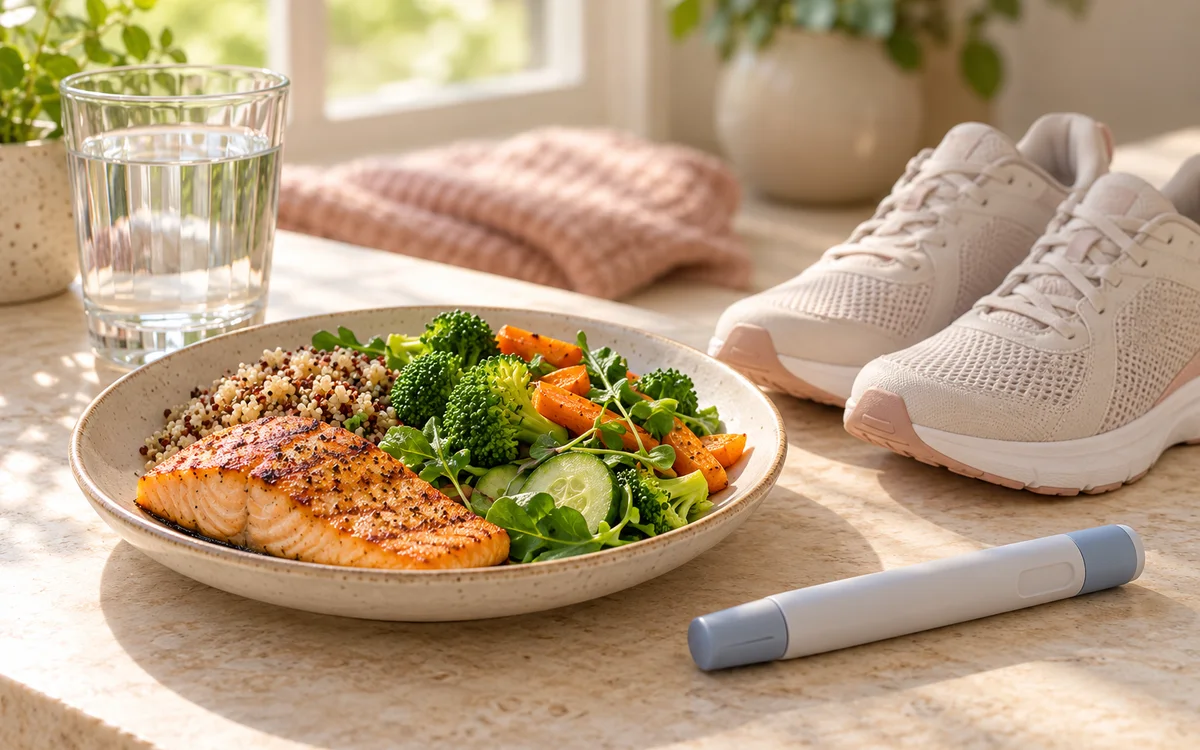
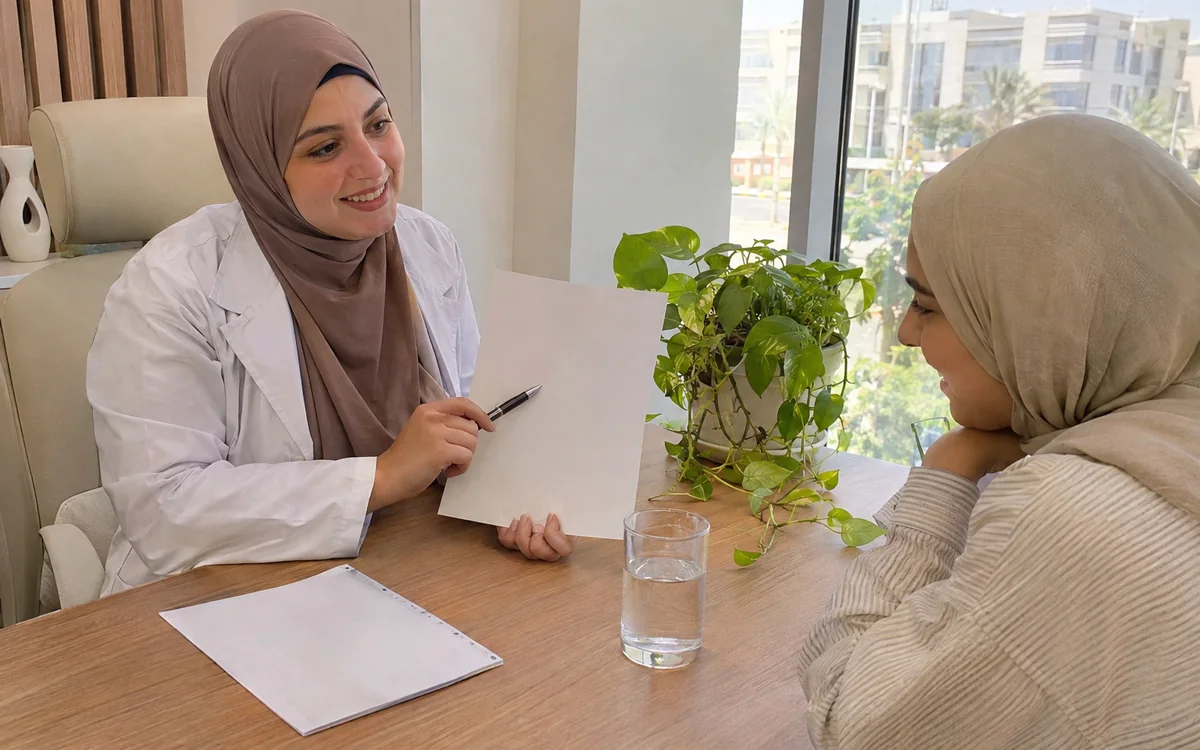
The first consultation starts with a conversation about your medical history, earlier diet attempts, meal timing, sleep, stress and daily activity. Lifestyle factors matter in PCOS, and the international guideline treats lifestyle care as the first-line approach [2, 12]. We then do a body composition scan on the InBody analyzer available at the clinic. It estimates fat mass, skeletal muscle mass and body water, and gives a visceral fat estimate, so progress can be read beyond what the bathroom scale shows. This is useful in PCOS because body weight alone can hide changes in fat and muscle, and because abdominal fat is part of the insulin resistance picture [8, 10]. From your InBody result and your reports, the doctor sets up a food plan that you can keep following. Hypocaloric eating is the lifestyle approach most often recommended in the research on PCOS, though the same review warns that the quality of the evidence is poor and the trials differ a lot, so we treat any plan as something to review and adjust with you rather than a promise of a fixed result [12]. A Cochrane review of lifestyle programmes found that they may modestly reduce weight and body mass index and may improve a hormone measure called the free androgen index, again with low-quality evidence [11]. Movement is part of the plan too, built around what you can realistically do, and the follow-up schedule tracks measurements and body composition over time [2, 11]. To prepare for the scan, read our InBody first-visit guide, which explains what to do before you step on the device [11, 12].
Realistic weight-loss targets: how 5% to 10% changes PCOS symptoms
A common mistake in PCOS is setting an extreme weight target. The sources do not ask for an ideal textbook weight. The Saudi Ministry of Health says that losing about 5% of body weight can meaningfully improve PCOS symptoms [9], and the Office on Women's Health says that losing around 10% of body weight can help make periods more regular [7]. So a modest, steady loss is a realistic first goal, and the exact amount that helps differs from person to person. The Endocrine Society guideline is more cautious, stating that the role of weight loss in improving PCOS itself is uncertain, while lifestyle intervention is still beneficial in people who are overweight or obese for their wider health [3]. The Cochrane review also found only small average changes with low-quality evidence [11]. For that reason we talk about direction and sustainability rather than a number we can guarantee. Weight management also matters for long-term health. The CDC notes that people with PCOS have a higher chance of developing type 2 diabetes, and that losing weight can lower the risk of diabetes [8]. The NHS lists type 2 diabetes among the long-term risks of PCOS [5]. If lifestyle changes alone are not enough, medicines are a decision for your own treating doctor, who weighs your pregnancy plans and your individual safety. The Saudi Ministry of Health page lists metformin and birth control among PCOS treatments [9]. We do not change or prescribe your medicines at La Rose. If you want to read about the injection treatments people ask about, see our article on weight loss injections for PCOS, which explains the medical questions around them [2, 3].
Red flags that require urgent specialist medical care before dieting
Weight is an understandable priority, but some symptoms need a doctor before any diet change. Please contact your gynecologist or physician promptly for the following. Periods that stop for several months. The Endocrine Society guideline asks doctors to look for endometrial cancer risk in PCOS [3], MedlinePlus lists endometrial hyperplasia, a thickening of the uterine lining, among possible complications [6], and the Office on Women's Health names endometrial cancer risk as well [7]. Your own doctor should review the lining and the cycle pattern. Symptoms of high blood sugar such as strong thirst, frequent urination and unexplained weight change need a blood test soon, because PCOS goes with a higher chance of type 2 diabetes and prediabetes [5, 8]. Loud snoring with pauses in breathing during sleep can point to sleep apnea, which MedlinePlus and the Office on Women's Health both list as more common in PCOS [6, 7]. Low mood, anxiety or a difficult relationship with food also deserve proper attention. The Office on Women's Health lists depression and anxiety among the possible effects of PCOS [7]. Sudden severe pelvic pain, very heavy bleeding, or rapid new male-pattern hair growth with a deepening voice are not routine PCOS features, so they need urgent medical assessment rather than a diet plan [3]. Sorting these out first keeps the weight plan safe and avoids missing something that needs a different treatment [3, 6].
Location of the Fifth Settlement branch at CMC Mall and clinic hours
La Rose Clinics Fifth Settlement branch is conveniently located in New Cairo within CMC Medical Mall, 4th floor, North 90th Street, directly behind the Air Force Specialized Hospital. The clinical nutrition and weight management clinic at the Fifth Settlement branch operates every Wednesday from 3:30 pm to 8:00 pm, receiving patients by prior appointment to ensure adequate consultation time for clinical evaluation, InBody testing, and dietary planning. Bring your pelvic ultrasound and blood test reports with you, since there is no single test for PCOS and your file helps the doctor [6]. For visitors coming from Cairo Festival City, head towards 90th Street and proceed to North 90th Street until reaching CMC Medical Mall, a distance of approximately 5.2 km taking about 10 minutes by car. Residents of El Yasmeen are roughly 5 km away (around 10 minutes) via North 90th Street or Moustafa Kamel Axis, while the drive from Al Narges takes about 12 minutes covering 6.5 km via South 90th Street. Coming from El Banafseg is about 6.9 km (10 minutes by car), from First Settlement approximately 7.4 km (12 minutes) via Moustafa Kamel Axis, from Katameya Heights about 8 km (12 minutes) via South 90th Street, and from Point 90 Mall and AUC Avenue approximately 9 km (12 minutes). If you live closer to Maadi, our PCOS weight-loss doctor in Maadi guide covers the Maadi branch schedule, or you can book an appointment to confirm your visit at the Fifth Settlement clinic.