In Early Pregnancy, Variety Matters More Than a Miracle Food
When people ask about the best foods for the first months of pregnancy, the accurate answer is not one ingredient. The mother and fetus need a varied pattern that includes vegetables, fruit, grains, protein foods, and dairy or suitable alternatives. Good food supports maternal health and fetal growth, but it cannot guarantee a particular outcome and does not replace obstetric care. “Eating for two” also does not mean doubling food intake; food quality, appetite, stage of pregnancy, and individual needs matter more [1, 6, 11].
Folic acid is especially important early because the neural tube forms very early, sometimes before pregnancy is recognised. Legumes, leafy vegetables and fortified grains add food folate, but official guidance explains that food alone may not provide the intended protection, so an appropriate prenatal supplement should be agreed with the pregnancy-care team [1, 7, 10]. Iron supports blood formation and oxygen transport; iodine, choline and omega-3 fats have roles in brain and nervous-system development; and calcium and vitamin D support bones and teeth. Rather than chasing a “superfood,” distribute these nutrients across simple, repeated meals [1, 7].
Needs are not identical for every mother. Twin pregnancy, anaemia, severe vomiting, diabetes, thyroid or kidney disease, vegetarian eating, and previous bariatric surgery can all change the plan. This guide is therefore a practical selection checklist, not a fixed menu or treatment prescription. If gestational diabetes develops, readings and an individual plan are needed; our gestational diabetes food guide explains that pathway without banning carbohydrate completely [1, 11].
10 Useful Egyptian Food Choices for Pregnancy
This list is not ranked from best to worst, and every item does not need to appear in one day. Each group fills a different part of the nutritional picture [1, 6, 11]:
First, lentils, fava beans, other beans and chickpeas are affordable sources of plant protein, folate, iron and fibre. Adding tomato, pepper or lemon provides vitamin C, which supports absorption of plant iron [1]. Second, fully cooked eggs combine protein, choline and other nutrients in an easy food. Safety depends on thorough cooking with no raw white or yolk unless reliable local guidance applies to a specific pasteurised product [1, 3, 5]. Third, pasteurised milk, yoghurt and cheese provide protein, calcium and iodine. Check the package for “pasteurised,” because unpasteurised milk and dairy can carry harmful germs during pregnancy [1, 3, 5]. Fourth, fully cooked, lower-mercury fish, such as salmon, sardines, tilapia and shrimp when consistent with local safety lists, supplies protein, omega-3 fats and micronutrients. Choosing a variety matters more than avoiding all fish [1, 4]. Fifth, thoroughly cooked lean poultry or meat provides protein, iron and vitamin B12. Raw or undercooked meat is unsuitable during pregnancy and should be kept separate from ready-to-eat food during preparation [1, 3, 5].
Sixth, whole grains, such as whole-grain bread, oats, bulgur or brown rice, can provide energy, fibre and vitamins, particularly alongside legumes and vegetables. Bread and rice do not need to be banned in an uncomplicated pregnancy; amount and distribution change if gestational diabetes or severe nausea is present [6]. Seventh, leafy vegetables, including molokhia, spinach, rocket, lettuce and other greens, contribute folate, fibre and varied nutrients. Washing carefully under running water matters even when produce looks clean [3, 12]. Eighth, vegetables of different colours, such as tomato, pepper, carrot, courgette, broccoli and okra, widen the range of fibre and vitamins. Carrots and orange vegetables are not equivalent to vitamin A supplements containing retinol; the concern particularly involves liver and excessive retinol-containing supplements [5, 7]. Ninth, washed whole fruit, including oranges, guava, apples, bananas, pears, strawberries and mango, can fit according to season and tolerance. Variety is more useful than claims that one fruit “stabilises pregnancy” or creates fetal intelligence. Whole fruit generally retains more fibre than juice [6]. Tenth, unsalted nuts and seeds, such as peanuts, almonds, walnuts, sesame or tahini in meal-appropriate amounts, provide unsaturated fats, protein and some minerals. There is no general rule to avoid peanuts during pregnancy unless an allergy or specific medical advice applies [1, 6].
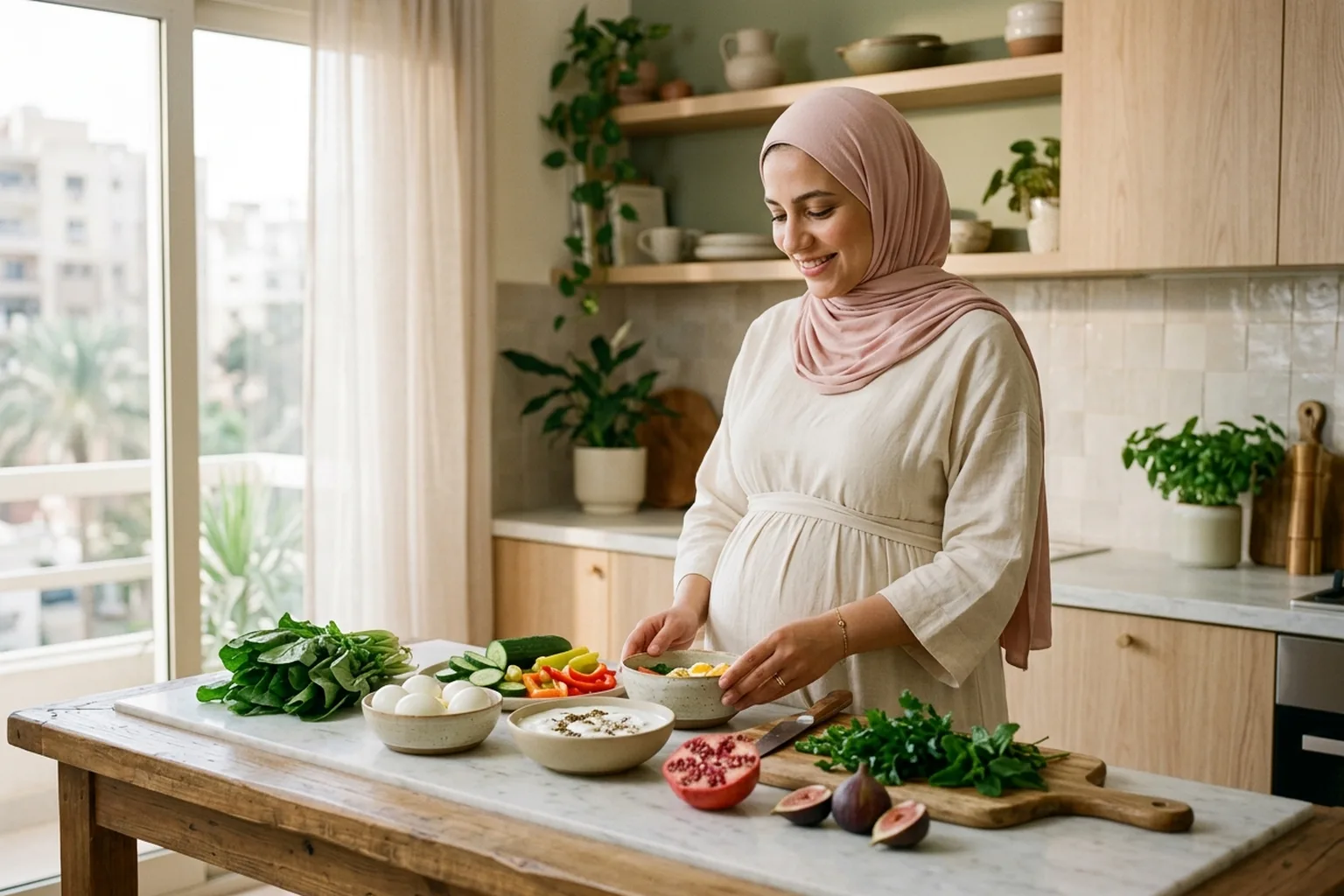
A practical plate might combine lentils or fava beans with bread and vegetables; a fully cooked egg with pasteurised yoghurt and vegetables; or cooked fish with rice and a carefully washed salad. The goal is not a “perfect meal,” but a varied pattern that can be repeated without anxiety or unnecessary complication [1, 6, 11].
Which Foods Support Fetal Brain Development?
The fetal brain does not depend on one fruit or recipe. Iodine is needed for thyroid function and neurodevelopment; choline participates in brain and spinal-cord development; and omega-3 fats from fish have roles in brain and eye development. Eggs, pasteurised dairy, lower-mercury fish, meat, legumes, nuts and whole grains help create a pattern containing these nutrients, but no food can honestly be promised to make a child more intelligent [1, 4].
Folate shows why pregnancy nutrition cannot be reduced to food alone. Leafy vegetables, legumes, citrus fruit and fortified grains are useful, but folic acid taken at the right time has an established role in reducing neural tube defects. Official sources therefore recommend an appropriate supplement before and during early pregnancy. The pregnancy-care team should select the product and decide whether a different amount is needed, especially with certain medicines or a previous pregnancy affected by a neural tube defect [1, 7, 10].
For the question “Which fruit is best in pregnancy?”, there is no single fruit required for everyone. Oranges and guava add vitamin C, bananas may be tolerated during nausea, and whole fruit contributes fibre, fluid and varied nutrients. Choice depends on tolerance, season and medical context. If gestational diabetes develops, fruit type, amount and timing belong within the individual plan and glucose readings, not a universal prohibition list [6].
Foods to Avoid in Pregnancy: Focus on the Real Risks
The genuine avoidance list is shorter and clearer than many social-media lists. Avoid unpasteurised milk and dairy, raw or undercooked eggs, meat, poultry and fish, and unwashed fruit and vegetables. Keep raw food separate from ready-to-eat food, wash hands, surfaces and cutting tools, refrigerate perishable food, and do not leave it at room temperature. Cooking and pasteurisation reduce important infection risks such as Listeria, but they do not replace clean preparation and storage [3, 5, 12].
Liver, liver products and vitamin A supplements containing retinol need particular caution because excess preformed vitamin A can harm fetal development. This warning does not mean avoiding carrots, sweet potato or orange vegetables. Do not start a herb, mixture or supplement merely because the label says “natural”; natural does not mean safe in pregnancy, and prenatal products themselves should be reviewed by the obstetric clinician or pharmacist. Our guide explaining why dietary supplements should be targeted shows why each product needs a clear purpose [5, 7].
If the mother eats an item from an avoidance list once and does not become ill, that does not automatically mean harm occurred. However, if a recalled Listeria-linked product was eaten, or fever, chills, muscle aches, vomiting or diarrhoea follows suspect food, contact the pregnancy-care team promptly so they can decide whether assessment or testing is needed. The absence of symptoms changes management, so self-treatment or taking an antibiotic without assessment is inappropriate [5, 12].
Are Eggs and Fish Safe During Pregnancy?
Eggs can be a useful part of pregnancy eating because they provide protein and choline. The practical rule is thorough cooking and following reliable local product guidance. Raw egg can appear in foods where it is less obvious, including some sauces and homemade desserts. If a product is made with pasteurised egg, check its label and storage instructions; the mere presence of egg in a recipe is not a reason to ban the dish [1, 3, 5].
Fish is not universally prohibited either. The FDA and EPA advise choosing a variety of lower-mercury fish from the “Best Choices” category because fish supplies protein, useful fats and micronutrients, while avoiding species highest in mercury. Common names, national lists and catch sources differ, so check official local advice when a species is unclear. Cooking does not remove mercury from fish tissue; safety here comes from choosing the appropriate fish, not from seasoning or cooking method [4].
Fish and shellfish should still be thoroughly cooked rather than raw or undercooked. Refrigerated smoked fish and some ready-to-eat seafood have specific Listeria-related rules, so words such as “smoked” or “canned” cannot be treated as automatically safe in every context. Read the package and follow guidance for the country of residence and the pregnancy-care team. A fish allergy, kidney disease or specific medical instruction takes priority over any general list [3, 4, 5, 12].
How Can Meals Be Adjusted for Nausea, Constipation and Heartburn?
With early-pregnancy nausea, the immediate goal may be keeping fluids down and tolerating simple food rather than producing a perfect plate. Small frequent meals, dry crackers or toast, and fruit, nuts or pasteurised yoghurt according to tolerance may be easier than a large meal. Smells and fatty foods can worsen nausea for some mothers. If vomiting prevents fluids from staying down, urine becomes scant and dark, or dizziness or fainting occurs on standing, contact the pregnancy-care team promptly because dietary adjustment alone is not enough [8].
For constipation, gradually increasing fibre from legumes, vegetables, whole fruit and whole grains, together with fluids and pregnancy-appropriate movement approved by the care team, may help. A sudden fibre increase without adequate fluid can worsen bloating. If an iron supplement contributes to symptoms, do not stop it automatically; the obstetric clinician should review the product, need and alternatives [6, 7].
For heartburn, smaller meals, avoiding marked fullness, not eating shortly before bed, and sitting upright after meals may reduce symptoms. Not every mother needs to avoid tomato, spices or milk; identify personal triggers instead. Severe or persistent upper-abdominal pain should not be assumed to be heartburn without assessment. Our heartburn in pregnancy guide explains distinctions and warning signs, while gallbladder pain in pregnancy has a separate assessment pathway [9].
Supplements Complement Food, and Pregnancy Care Remains Essential
A prenatal vitamin does not replace meals, and a varied diet is not a reason to cancel a prescribed supplement. Folic acid and other supplements are selected according to pregnancy stage, test results, dietary pattern, medicines and medical history. Some products do not contain every expected nutrient, while others duplicate the same ingredient across several packages. Put all medicines, supplements and herbs on one list for the obstetric clinician or pharmacist to review, without adding doses independently [1, 7, 11].
Clinical nutrition can help organise meals when appetite is poor, eating is vegetarian, or gestational diabetes, anaemia or another need is present. It cannot diagnose persistent vomiting and does not replace pregnancy care. Fainting, fever with infection symptoms, vomiting that prevents fluids from staying down, or any concerning new symptom needs prompt direction from the obstetric team or emergency care according to severity [8, 12].
For nutrition questions, the medical team at La Rose is available in Maadi or Fifth Settlement, and online nutrition follow-up is available when suitable. The author is a content contributor, not a clinician available for booking. Pregnancy care and urgent symptoms remain with the obstetric team, while a nutrition consultation can translate general guidance into choices that fit the individual context. You can book a consultation with the medical team at La Rose to review food and supplements in coordination with the pregnancy clinician [1, 7].