The short answer: what a sports nutrition plan in Maadi should contain
If you train regularly, in a gym, a club, a running group or for a race, a sports nutrition plan is not a list of "healthy foods" and a tub of protein. It is a set of numbers and habits fitted to you: enough total energy, protein in grams per kilogram of body weight spread across the day, carbohydrate matched to how hard you train, fluids matched to how much you sweat, and a clear view of supplements. The joint position of the Academy of Nutrition and Dietetics, Dietitians of Canada and the American College of Sports Medicine says performance nutrition should be individual, built on adequate energy intake, and guided by a qualified nutrition professional [1].
La Rose does not run a separate clinic called "sports nutrition". What the Maadi branch offers is a clinical-nutrition clinic, where Dr Alyaa Said Abu Taleb, a physician specialised in clinical and therapeutic nutrition, builds plans for active people after reviewing your health, your medicines and your body composition. That matters because most "athlete diets" online ignore the medical side and give one number to everyone.
This guide walks through the pieces in order: enough energy and the risk of too little, protein in grams per kilogram, carbohydrate and fluids around training, supplements without doses, body-composition testing, who should see a doctor first, and what the visit looks like. If you want the wider picture of the branch, read the [Maadi nutrition clinic guide](../articles/nutrition-clinic-maadi.html).
Eat enough first: energy availability and relative energy deficiency (REDs)
Energy availability is the energy left for your body's basic functions after training is paid for: what you eat minus what you burn in exercise, usually expressed per kilogram of fat-free mass. When it stays too low for long, the body saves energy by quietly turning down things you do not feel switching off: hormones, bone building, menstrual function, immunity and recovery. The International Olympic Committee consensus statement of 2023 calls the resulting pattern Relative Energy Deficiency in Sport (REDs), says it affects female and male athletes, and notes that low carbohydrate availability and mental health are part of the picture [4].
The key point is that low energy availability is not an on-or-off label. The statement treats it as a spectrum, sometimes adaptive and sometimes harmful depending on the person, and gives clinicians the REDs Clinical Assessment Tool, version 2, which sorts people by symptom severity and risk and shapes training advice [4]. So you cannot diagnose it from the scale.
For female athletes, the International Society of Sports Nutrition (ISSN) position stand says adequate energy is the primary nutritional priority and that energy status is the biggest driver of training adaptation, performance and health. Research uses about 45 kcal per kg of fat-free mass per day as an optimal level, and finds that levels at or below about 30 can suppress metabolic hormones within days; oral contraceptives can also mask the early signs [5]. These are research thresholds. Working them out needs a fat-free mass measurement and a log of training energy, which is why they belong with a clinician and not with an app's guess.
Signs that should make you think about this: constant tiredness, repeated injuries or stress fractures, frequent illness, missed or irregular periods, feeling cold, poor sleep, heavy preoccupation with food and weight, and performance stalling despite harder training [4]. The fix is never to cut food further. It is usually the opposite.
Protein: how many grams per kilogram, and from which foods
The ISSN position stand on protein and exercise says 1.4 to 2.0 g of protein per kilogram of body weight per day is sufficient for most people who train, to build and maintain muscle [2]. MedlinePlus quotes about 1.2 to 2.0 g per kilogram for athletes [7]. The gap at the low end is small, and it is one reason a plan has to be individual. A worked example: a 70 kg person on the ISSN range lands at roughly 98 to 140 g of protein a day.
In one situation the number goes up: people who lift weights while in a calorie deficit to lose fat may need 2.3 to 3.1 g per kilogram to hold on to lean mass [2]. That is not for everyone walking into a gym; it is for someone genuinely cutting. If that is your goal, see [protecting muscle while losing weight](../articles/protecting-muscle-while-losing-weight.html).
Distribution matters as much as the total. A single dose is about 0.25 g per kilogram, or 20 to 40 g, every 3 to 4 hours across the day [2]. The ISSN nutrient timing stand agrees that roughly 10 g of essential amino acids, or a 20 to 40 g protein dose, maximally stimulates muscle protein synthesis, suggests spreading protein about every three hours, and notes that protein before sleep may help overnight [3].
From which foods? Food first: eggs, chicken, fish and tuna, milk, yogurt, labneh and cottage cheese, lentils, fava beans and chickpeas. A varied diet usually covers your needs, and nidirect warns that leaning on protein supplements adds energy you may not burn, which can show up as weight gain, possibly fat rather than muscle [8]. Protein alone does not build muscle without resistance training, and more than you need does not improve performance and can bring problems such as dehydration and extra strain on the kidneys [7]. If you have kidney disease, do not raise your protein without your doctor's view.
Carbohydrate and fluids around training
Carbohydrate is the main fuel for exercise, and the amount you need rises with the type, intensity, duration and frequency of training [8]. MedlinePlus gives ranges by load: 3 to 5 g per kilogram a day for low-intensity activity, 5 to 7 for high-intensity, 6 to 10 for endurance and 8 to 12 for ultra-endurance [7]. Most gym-goers sit near the lower figures; a footballer or runner training hard sits nearer the middle. Eat carbohydrate before sessions longer than an hour, and after sessions longer than 90 minutes eat or drink carbohydrate, possibly with protein, about two hours later [7].
During exercise, the ISSN nutrient timing stand says hard exercise lasting longer than about an hour benefits from roughly 30 to 60 g of carbohydrate per hour, from a sports drink or food [3]. Under an hour you do not need it, and nidirect notes that most people with a balanced diet do not need sports or energy drinks [8]. A banana or dates do the job.
On keto: the ISSN position stand on ketogenic diets concludes the effect on athletic performance is largely neutral or detrimental compared with higher-carbohydrate diets, that every study of elite endurance athletes showed a decline, and that strength is broadly similar [9]. Low carbohydrate availability is also part of REDs [4]. For meal examples before and after sessions, see [pre and post workout meals](../articles/pre-post-workout-meals.html).
Fluids: the American College of Sports Medicine position stand says start well hydrated, aim to avoid losing more than 2% of body weight during exercise, accept that sweat rates differ from person to person so plans are individual, and estimate your own from body weight before and after a session [6]. Example: 2% of 70 kg is 1.4 kg. Weigh yourself before and after a normal session in a Cairo summer and you will see your own number. MedlinePlus suggests about 600 mL one to two hours before, 120 to 240 mL every 15 to 20 minutes during, and pale urine as a sign of good hydration [7]. If you have diabetes, heart or kidney disease, or take diuretics, ask your doctor about fluids before changing anything.
Supplements: what has evidence, and why a doctor should see the list
The right order is food first, then a supplement if there is a reason. There are no doses in this article, because doses are set with a doctor according to your condition. Product-by-product grading lives in [the sports supplements evidence guide](../articles/sports-supplements-evidence.html), so only the general line is drawn here.
The ISSN position stand on female athletes says caffeine, iron and creatine have the strongest evidence in women, that iron may work better in the follicular phase than the luteal phase, and that women using oral contraceptives should not start iron without medical advice [5]. MedlinePlus advises athletes to watch iron, calcium and vitamin D, and notes that iron deficiency can reduce muscle function and performance [7]. In other words, test first rather than guess.
Energy drinks and shots: the ISSN position stand says their effect depends largely on caffeine and carbohydrate, and that the added benefit of other ingredients is not established. It says they are not recommended for children aged 2 to 12, in pregnancy or breastfeeding, or for people sensitive to caffeine, that adolescents should be cautious, and that people with diabetes or cardiovascular, metabolic, liver, kidney or neurologic conditions, especially on medicines, should consult a physician first [10]. So any stimulant-heavy "pre-workout" should be shown to a doctor before you start.
The rule: show your doctor every product you take, even natural ones, before you start and after any new medicine. And a product with no evidence or an unclear ingredient list should stay on the shelf.
Body composition and InBody: measuring what actually changes
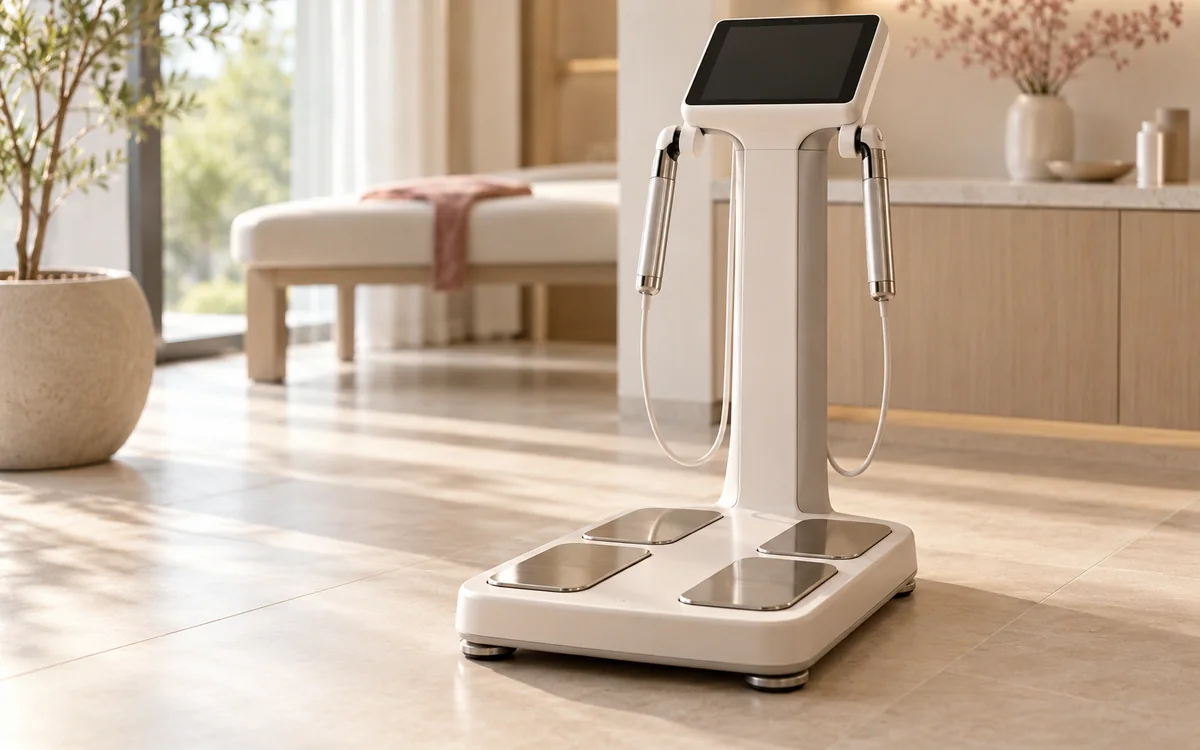
Weight alone is misleading. When you change your training and your food, muscle and fat can move in opposite directions while the scale stays put, and you conclude nothing is happening. InBody measures by bioelectrical impedance and splits the body into muscle, fat and water. At La Rose it is done in the clinic, and the details are in the [InBody test in Maadi](../articles/inbody-test-maadi.html) guide.
The IOC consensus statement includes guidelines for body-composition assessment designed to help prevent REDs [4]. So measurement here is protection, not pressure to get leaner. And working out energy availability itself needs fat-free mass [5], which makes the scan a step in the plan rather than a luxury.
Practical tips: measure under similar conditions (same time of day, not straight after a heavy session or a lot of drinking), because hydration shifts the reading. Look at the trend over weeks rather than a single reading. Do not chase a body-fat number you saw online, because the right target differs by sport and by person. Your plan is reviewed against repeat scans: if muscle drops, food or protein goes up; if fat stays flat, adjustments are made carefully.
Who should see a doctor first, and when to stop and get help
See a doctor before changing your diet or training intensity if you have diabetes, especially on glucose-lowering medicines, if you have blood pressure or heart disease, kidney or liver disease, thyroid disease, PCOS or irregular periods, anaemia, if you are pregnant or breastfeeding, if you take regular medicines, if you have ever fainted during sport, or if you have had an eating disorder. MedlinePlus says anyone should consult a health care professional about a diet suited to their sport, age, sex and training, and that young athletes should work with a registered dietitian [7].
One more note: sometimes a sports goal or a body-image goal turns into restriction. Intense fear of weight gain, rigid food rules, skipping meals, extra exercise to make up for eating, or vomiting or laxatives after meals are all warning signs of an eating disorder [11]. In that case the advice is specialist medical and mental-health help, not a stricter plan [12]. The clinic treats your case through clinical nutrition, but an eating disorder itself needs a specialist team.
In an emergency do not wait for an appointment: chest pain, fainting, severe breathlessness out of proportion to effort, a racing heartbeat that will not settle, or confusion with a hot body in gym or running heat. Go to the nearest emergency department.
What happens at the Maadi visit with Dr Alyaa
Dr Alyaa Said Abu Taleb is a physician specialised in clinical and therapeutic nutrition, a graduate of the National Nutrition Institute, with more than seven years of work in Maadi. The visit starts with questions: your type of training, days and duration; your goal (performance, fat loss, muscle gain or a competition date); your medical history, medicines and supplement list; your sleep; your cycle if you are a woman; and a normal day of eating, in our food, not an ideal one.
Next comes a body-composition scan with InBody, and blood tests if the history suggests they are useful, such as iron if you are exhausted. Then a written plan: protein in grams per kilogram, carbohydrate matched to training days and rest days, fluids matched to sweat, a frank verdict on supplements, and follow-up with repeat measurements. This follows the joint position's idea that the plan is individual and built on adequate energy [1].
To be clear: the plan is coordinated with your coach and does not replace one. The clinic is not the medical team of a national squad or a club; it works with active people, amateurs and gym-goers. And if there are signs of low energy availability, follow-up takes the form of the medical REDs approach [4]. For more about the branch, see the [Maadi nutrition clinic guide](../articles/nutrition-clinic-maadi.html).
Location, hours and booking at the Maadi branch
The address is 14 El-Mokhtar St, behind QNB, New Maadi, Cairo. The branch opens Saturday, Monday and Tuesday from 2 to 8 pm, and Dr Alyaa is in on Saturday and Monday from 2 to 7 pm. [Book at the Maadi branch](../patients/booking.html), or call or WhatsApp 010 4066 1893, and confirm before travelling because schedules may change. For the cost, ask on WhatsApp and the team will tell you before you book.
Driving distances from areas around the branch: Maadi Grand Mall 1.5 to 1.7 km and about 4 to 5 minutes, Degla 2.6 to 3.6 km and 7 to 8 minutes, Road 9 about 2.9 to 3.1 km and about 8 minutes, Old Maadi 3.4 to 4.1 km and 8 to 11 minutes, El Basatin 3.5 to 3.8 km and 9 to 10 minutes, Corniche El Maadi 5.5 to 5.7 km and about 11 minutes, Tora El-Balad 5.8 to 6.8 km and 14 to 15 minutes, and Zahraa El Maadi 6.8 to 7.3 km and about 11 minutes. These are typical times, not guarantees, so check live directions and traffic when you leave.
Bring your weekly training schedule, photos of the labels of any supplements you take, your medicine list, recent tests if you have them, and your written questions. A week of food and sleep notes helps if you can manage it. Do not start any diet or new product to prepare for the visit; the detailed plan will be built around adequate energy [4].