Where can you have an InBody test in Fifth Settlement?
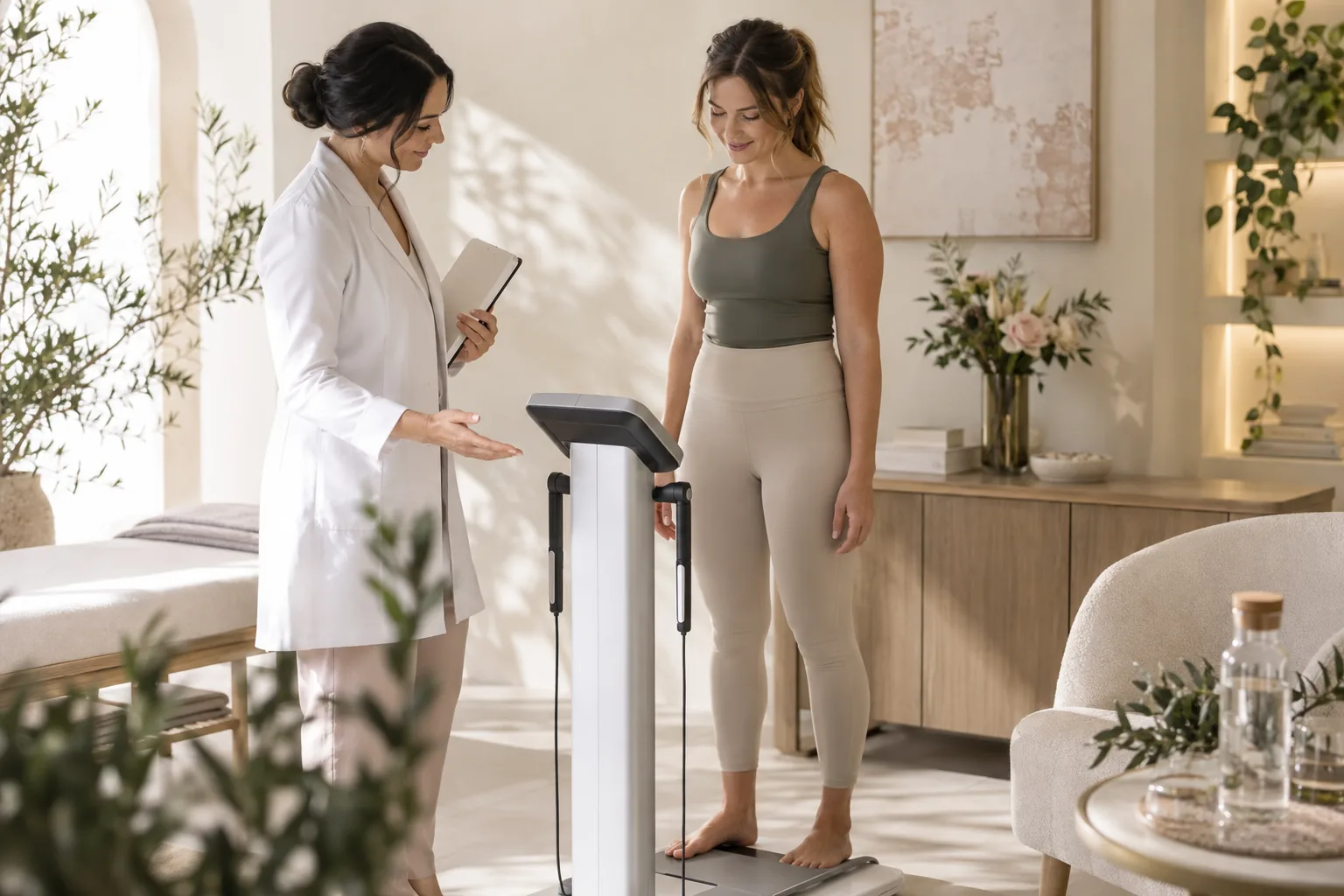
If you are looking for an InBody test in Fifth Settlement to track fat and muscle during gym training or a weight-loss plan, you can book at La Rose in CMC Medical Mall, fourth floor, North 90th Street, behind the Air Force Specialized Hospital. The Fifth Settlement branch runs on Wednesday from 3:30 to 8 pm with Dr Shimaa Fouad. The visit includes an InBody measurement, review of your tests, medicines and medical history, and a clinical-nutrition consultation followed by a plan suited to your goal rather than a printout with no interpretation.
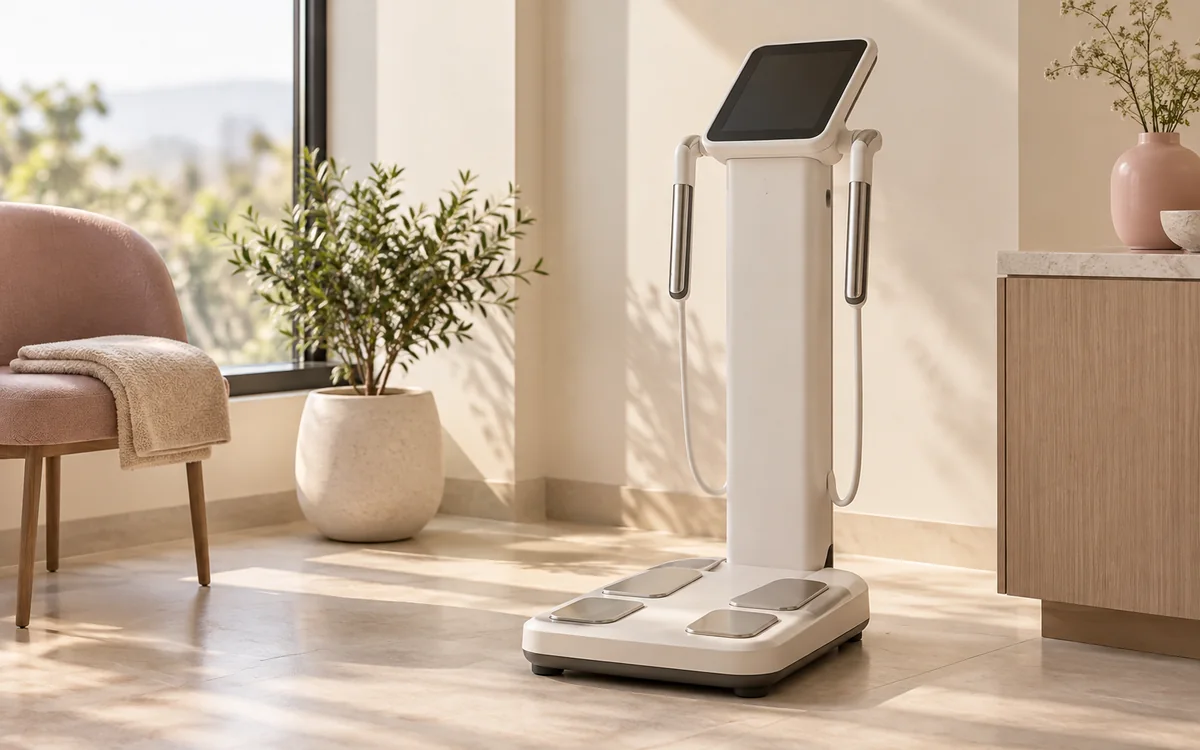
InBody uses bioelectrical impedance analysis (BIA). A very low electrical current passes through the body, and resistance related to body water is used to estimate fat, fat-free mass and body water. The result is therefore a useful estimate for follow-up, not a direct image of muscle or a diagnosis by itself [1, 2]. This guide focuses on the question many local pages skip: how a gym-goer or someone pursuing body recomposition can separate a meaningful fat or muscle trend from a short-term change caused by fluid or test timing.
Who benefits from fat and muscle tracking in New Cairo?
Testing can help when your goal is to lose fat while preserving muscle, gain muscle without treating every scale increase as fat, or follow a nutrition-and-training plan over months. It can also provide a practical baseline when scale weight is stable but waist size or gym strength is changing. Its main value comes from comparing a repeated trend on the same device under similar conditions and relating it to waist circumference, consistent clothing measurements or photographs, and training performance, rather than chasing one InBody Score or body-fat percentage [2, 3, 5].
Not everyone needs InBody, and not every sporting goal should become a body-composition target. If your main goal is running speed, squat strength or sleep quality, record that outcome too; the device does not measure strength, fitness or recovery. If you have swelling, dehydration, acute illness, rapid unexplained weight change or a major eating concern, clinical assessment comes first because illness or fluid shifts can alter the reading and may require treatment of the cause [1, 4, 5].
A person with an implanted electrical device such as a pacemaker or defibrillator should not take the test. During pregnancy, body composition and fluid distribution change, and the device manual does not recommend testing; follow-up should be selected with the clinician using a method appropriate to the situation [11].
Fat, muscle and water: what the report can and cannot tell you
An InBody report presents weight alongside estimates such as fat mass, body-fat percentage, fat-free mass, skeletal muscle and body water, and it may show distribution across the limbs and trunk. Fat-free mass is not a pure synonym for muscle: it includes water and other tissues. A higher muscle estimate after a hard workout or a different meal does not prove that new muscle was built within hours, and a lower value after heavy sweating does not mean that muscle tissue suddenly disappeared [1, 4, 7].
For a calm explanation of every field, read InBody results explained; that guide separates printed outputs from their clinical meaning. The practical sports rule here is to read fat, muscle and water together. A falling fat estimate across several well-spaced measurements, with a stable or improving fat-free-mass trend and better waist or performance measures, is stronger evidence than one exciting reading. Likewise, do not treat an estimated metabolic rate as a promise of a fixed calorie need; actual needs vary with movement, training and health [1, 2].
BIA and DXA are not interchangeable scales. A systematic review in athletes found differences and wide limits of agreement for fat-free-mass estimates, so if you begin an InBody series, keep the same device and method for comparison and do not interpret a difference between devices as a change in your body [6].
How should gym-goers track body recomposition?
Body recomposition means that fat and fat-free-mass trends improve even when scale weight changes little. To track it without overclaiming, keep a simple dashboard with five items: average weight across several days, waist circumference measured consistently, an InBody trend under similar conditions, a strength or repetition log for key exercises, and notes on sleep, food intake and recovery. Electrical impedance supplies one part of the picture; performance, measurements and context complete it [2, 3, 9].
If weight is stable while estimated fat falls gradually and strength improves, that may be a useful trend. If the device says muscle rose but the test followed a workout, muscle pump and different drinking, wait for a repeated standardized test before changing the plan. If weight is falling quickly alongside clear performance loss, fatigue or very restricted eating, do not treat every decrease as success; review the plan with a professional because the goal is sustainable health and performance, not the smallest possible number [3, 4, 8].
Protein and resistance training can support gains in fat-free mass and strength, but no single amount or supplement fits everyone. A large systematic review found a modest additional benefit from protein supplementation during resistance training; that does not replace assessment of overall food intake or individual needs, and it does not make a supplement compulsory [8].
How should an active person prepare for InBody?
The goal is not to create a perfect day; it is to create conditions you can repeat. Choose roughly the same time of day for each test, keep your usual fluid intake the day before instead of deliberately dehydrating or water loading, and use the bathroom before measurement. Do not test immediately after eating or arrive straight from a workout or sauna. Manufacturer guidance advises waiting after a meal and avoiding exercise until recovered because food, sweat, blood flow and fluid distribution can alter fat or muscle estimates [4, 10].
Wear similar light clothing, remove heavy accessories, and avoid lotion on hands and feet so the electrodes make good contact. If you have come from intense heat or cold, allow your body to return to a comfortable temperature. Record anything unusual: hard training the day before, illness, swelling, fasting, travel, or a large change in carbohydrate and fluid intake. That information helps the clinician interpret the result in context instead of changing your plan because of temporary noise [5, 10].
For a step-by-step checklist, read preparing for reliable InBody follow-up. If this is your first test, the first-visit InBody guide explains what happens and what to bring. Do not stop medicine or manipulate food or fluid in a harmful way to obtain a better number; a useful measurement represents a routine you can repeat.
How often should you repeat testing, and when is a change convincing?
There is no magic interval that suits everyone. Frequency depends on the goal, the expected pace of change and whether you can reproduce similar conditions. Testing every few days will often show fluid movement more than tissue change, especially during training. Agree with the clinician on a baseline and a review point that makes sense for the plan, then stay flexible: postpone when you are acutely unwell, recently trained very hard or have clearly different fluid conditions [4, 5, 10].
For a cleaner comparison, use the same device, roughly the same time of day, and the same food, fluid and exercise protocol. Athlete studies suggest BIA can support follow-up, but individual accuracy depends on device type, equations and hydration, and its numbers should not be swapped with DXA as if the methods were identical [2, 5, 6]. A large real-world study found high retest reliability but only moderate agreement with laboratory methods, with some outputs, particularly visceral adipose tissue, performing less well. Reliability is therefore not the same as absolute truth [7].
Before changing calories or training, ask whether the change is larger than normal fluctuation, whether it repeated, whether waist or performance moved in the same direction, and whether testing conditions were similar. A decision based on a trend is better than a reaction to one printout.
What happens during an InBody visit at the Fifth Settlement branch?
At La Rose Fifth Settlement, measurement is part of a clinical-nutrition consultation rather than a stand-alone printout service. The team asks about your goal: fat loss, muscle gain, stable weight with better measurements, or weight-treatment follow-up. Bring previous InBody results, a simple training record, a medicine and supplement list, and any recent test results you already have. Dr Shimaa Fouad reviews medical history, tests and medicines, then relates the measurement to food, activity and symptoms before setting a plan.
The visit includes InBody and body-contouring measurements with review of trends. The device estimates composition from impedance and body water, but the decision does not depend on one field: weight, fat and fat-free mass are considered with waist, your goal and your ability to train [1, 2]. If abdominal fat is your main concern, read visceral fat score and waist measurement; that guide explains why the device field and waist circumference are not the same and why both require context [12].
By the end of the visit, you should know what will be followed: selected measurements, a workable nutrition behaviour, and an activity or performance outcome suited to you. If a result looks strange, the first step is to review testing conditions and symptoms, not to punish yourself with a harsher diet or more training.
How should you choose an InBody service in New Cairo?
Search for “InBody in Fifth Settlement” and you will find gyms, clinics and radiology centres. The right setting depends on the question. For simple sports tracking, look for a consistent protocol, an identified device and stored results. If weight change sits alongside chronic illness, medicines, symptoms, swelling or a therapeutic nutrition goal, choose a service with medical assessment that can place the number within the whole picture. If a different reference measurement is needed for a medical or research reason, the clinician decides whether a method such as DXA is appropriate; InBody and DXA results are not numerically interchangeable [1, 6].
Use a short checklist. Does the operator explain that the output is an estimate? Do they ask about food, fluid, exercise and illness before testing? Do they use the same protocol and retain results for comparison? Do they relate the result to waist, performance and symptoms? Is there a route to clinical review if something looks abnormal? High retest reliability does not remove differences from reference methods, so honest discussion of limits is a quality marker, not a weakness [6, 7].
Practical options in order are: 1) La Rose in CMC when you want measurement alongside a nutrition consultation, review of tests and medicines, and a plan; 2) a hospital-based nutrition or sports-medicine clinic when several specialties are needed; 3) a radiology centre if a clinician requests a particular imaging method. Avoid any service that guarantees a rapid transformation or changes your plan from one reading.
Getting to and booking an InBody test in Fifth Settlement
The address is CMC Medical Mall, fourth floor, North 90th Street, behind the Air Force Specialized Hospital, Fifth Settlement, New Cairo. Appointments are on Wednesday from 3:30 to 8 pm. Schedules can change, so confirm the day and time when booking. Call or use WhatsApp on 010 4066 1893, and the team will tell you the amount before you book. Book at the Fifth Settlement branch when you want measurement with interpretation and a plan rather than a printout alone.
According to the branch's verified road measurements, Cairo Festival City is about 5.2 km and 10 minutes by car; El Yasmeen is about 4.9–5.6 km and 9–10 minutes; Al Narges about 6.5 km and 12 minutes; and El Banafseg about 6.9 km and 10 minutes. First Settlement is about 7.4 km and 12 minutes, Katameya Heights about 8 km and 12 minutes, and Point 90/AUC Avenue about 8.9–9.4 km and 11–12 minutes. These are approximate times and vary with traffic.
If you have unintentional weight loss with other symptoms, new or severe swelling, breathlessness, chest pain, fainting or acute deterioration, do not wait for an InBody appointment; seek urgent medical assessment according to symptom severity [13, 14]. Measurement is a follow-up tool, not a substitute for care during illness.