Two complementary jobs, not two sides in a battle
The division of responsibility at a child's meal is straightforward: you, as the caregiver, decide what suitable food is offered, when the eating opportunity happens and where everyone sits; the child decides whether to eat from what is available and how much. This does not give either side unlimited control. It separates family decisions from the child's internal experience of hunger and fullness. You are responsible for the environment, choices and safety; the child is responsible for their body and the amount they can manage at that moment [1, 3, 5].
This is not an obedience test, and it does not mean the child orders any food at any time. It is a form of responsive feeding: notice the child's cues, provide age-appropriate help and keep a clear structure around the day. Pressure, threats and bribes can associate the table with stress, while having no schedule or limits can encourage all-day grazing and reduce appetite at meals. Research on controlling practices and eating behaviour is complex and the relationship may run in both directions, so this framework is not promised as a cure for every selective eater. Its practical purpose is to reduce conflict and make appetite easier to observe [5, 8].
If your child is just starting solids, responsive complementary feeding explains hunger and fullness cues alongside developmentally suitable textures. This guide has a narrower focus: who makes which everyday mealtime decision, and how boundaries can remain without force [4, 5].
The adult's job: what, when and where
The decision about 'what' means choosing food that suits the child's age and health, using family food where appropriate and building variety across days. Every plate does not need to be perfect, but a child should not carry responsibility for nutrition planning or face the open question, 'What do you want to eat?' every time. You can offer a limited choice within the structure, such as one of two fruits, and include a familiar item with the rest so there is something approachable without cooking a separate meal after refusal [2, 3, 4].
The decision about 'when' means predictable opportunities for meals and snacks instead of continuous eating and sipping. Times need not be exact to the minute, but they should be understandable and fit sleep, nursery or school, and treatment when relevant. Water can remain available, while large amounts of drinks or milk close to meals may affect appetite in some children, especially when growth is a concern; those details should be reviewed individually with the clinician [1, 6].
The decision about 'where' means a safe, stable place whenever possible: the child is seated appropriately, family members are nearby and screens and distractions are limited. You are also responsible for hand hygiene, food safety, and a texture and shape suited to the child's ability. Your job is not to prescribe how many spoonfuls must enter the child's mouth or score every bite. Clear boundaries with a calm atmosphere are the foundation, not control over the child's body [1, 5, 12].
The child's job: whether and how much to eat
A child's appetite is not identical from one meal to the next. They may eat a substantial breakfast and a small lunch, or eat less on a tired day or after a larger meal. When suitable food is available within a regular structure, let the child choose from it and stop when full. Do not demand a clean plate or treat a small amount as rejection of your effort. The goal is for the child to notice their body, not to satisfy the adult with a prescribed number of bites [1, 3, 5].
Hunger and fullness cues vary with age. A younger child may lean forward or open the mouth when ready, then turn away or close the mouth when satisfied. An older child can say they are full, while still needing behavioural boundaries: sit safely, do not throw food and understand that the next opportunity has a time. Respecting 'no more' is not the same as opening the snack cupboard two minutes later; responsiveness and structure need to work together [1, 4, 5].
Do not judge nutrition by one meal. Look across days, consider whether foods from different groups appear, and notice energy, activity and the direction of growth. If the child is active, appears well and follows their growth trajectory, day-to-day variation is usually less concerning than one plate suggests. If there is a genuine concern, useful information includes the timing of food and drinks, duration, symptoms and serial measurements, not forcing the child to finish so the adult feels reassured in the moment [6, 7, 9].
Put it into practice: a simple meal plan and script
Before the meal, choose family food that is suitable for the child and serve a small amount, with more available. Include a familiar item, but do not build the entire plate around a last-minute request. Use a short sentence: 'This is what we have now; you can choose what suits you from it.' If the child says they are not hungry, calmly reply, 'That's okay; the meal will end, and snack is at its usual time.' Short scripts close negotiation without a threat [1, 3, 7].
During the meal, eat together when possible and talk about the day instead of watching the child's mouth. Model eating from the available variety, and let the child touch or smell a new food without repeated requests to taste. If they ask for more of an available item, decide whether a suitable amount remains and offer it without saying, 'Finish the vegetables first.' If they refuse, do not rush to cook a replacement; a familiar item was present from the start, and the next eating opportunity is known [2, 3].
Afterwards, clear the meal calmly without a lecture about leftovers. Do not use dessert as payment for a bite or remove a loved activity as punishment for intake. If your main question is severe selectivity, What to do about fussy eating summarises the difference between pressure and leaving the day open to snacks. Here, focus for a week or two on consistent roles and language; the first change you notice may be a calmer table before the food list widens [2, 3, 7, 8].
What commonly gets in the way?
The first obstacle is pressure disguised as encouragement: 'one spoon for me', 'show me what a good child you are', or counting bites aloud. A child may eat more to stop the prompting or refuse more strongly to regain a sense of control. Praise neutral behaviour, such as sitting calmly or helping the family, rather than the amount that entered the child's body. Longitudinal research suggests that child behaviour and caregiver practices influence one another in complex ways, so blaming either party is unhelpful; change the loop one step at a time [3, 8].
The second obstacle is bribery. When dessert becomes payment for vegetables, the implied lesson is that dessert is the prize and vegetables are the task to endure. Offer foods within the family plan without negotiating every bite. The third is grazing: biscuits, juice, milk or small bites appearing repeatedly. Even when each amount is small, the sequence may blur hunger by mealtime. Planned snacks are not deprivation; they are part of the adult's responsibility for timing [1, 3, 7].
Screens can also silence refusal, but they pull attention away from food and body cues. Reduce them gradually if they have become a condition for every meal, and expect some initial protest. Keep the message consistent among the adults who feed the child, because different rules between parents, grandparents or nursery make expectations unclear. Calm consistency matters more than perfect execution every day [1, 5].
Adapt the framework to age, safety and individual needs
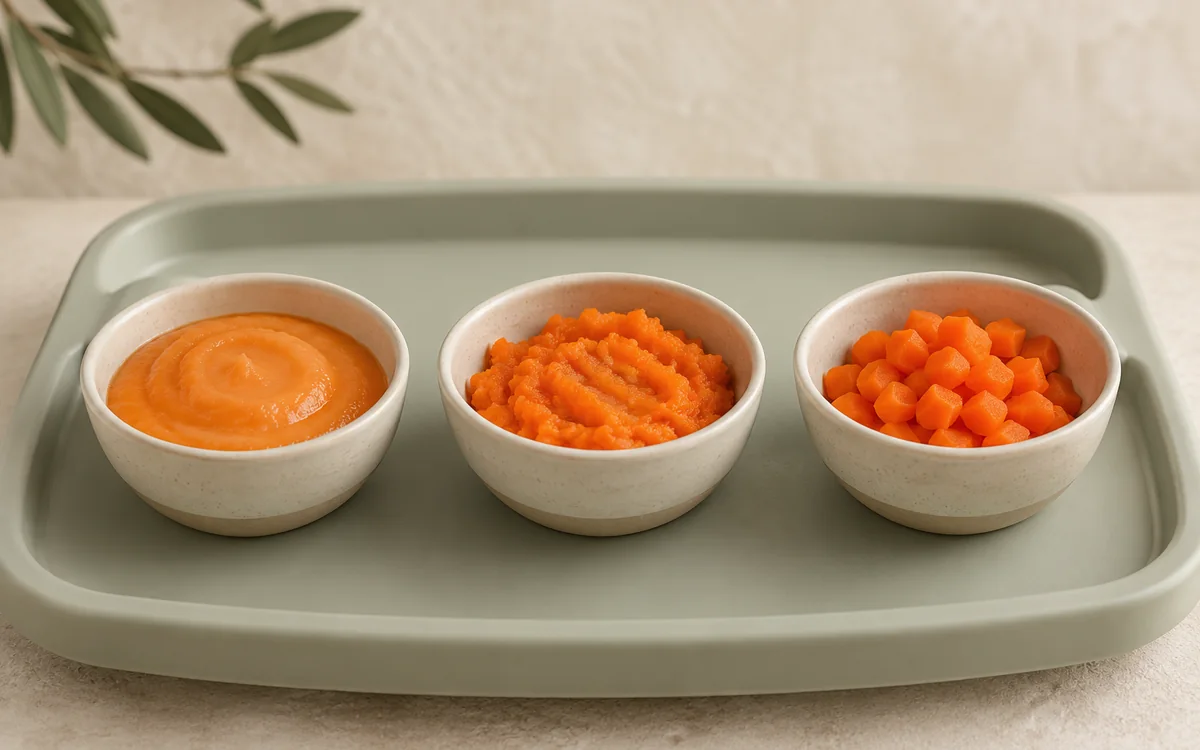
Sharing responsibility does not replace age-appropriate texture. A baby or young child needs food softened, cut or mashed for their development, an upright seated position and continuous supervision. Small, round, firm or sticky foods can create a choking hazard when prepared incorrectly. Do not let a child eat while running, lying down or travelling in a car, and do not confuse autonomy over quantity with independence from supervision [4, 11].
Food safety is also part of your role: wash hands, separate raw food from ready-to-eat food, cook meat and eggs thoroughly, and avoid unpasteurised milk or cheese for young children. If an allergy is confirmed, choices must follow the avoidance and emergency plan provided by the clinician; the allergen should not be placed on the table in the name of gentle exposure. Widespread hives with swelling, wheeze or breathing difficulty after food is managed as a possible allergic reaction according to the emergency plan, not as behavioural refusal [12, 13].
Some children have sensory or motor differences or difficulty chewing and swallowing, and 'let them choose' is not treatment by itself. Recurrent coughing or choking, pocketing food, a wet voice after swallowing, extremely long meals or accepting only one texture may require a team that includes a paediatrician, dietitian or swallowing professional as appropriate [10]. If the issue is movement between similar textures without warning signs, Build a bridge between textures offers a small step from familiar to new; any concern about swallowing should pause home experiments until assessment [2, 10, 11].
When should you pause home changes and seek assessment?
Seek clinical assessment when food refusal is accompanied by weight loss, clearly stalled growth, lethargy or pallor, recurrent pain, persistent vomiting, severe diarrhoea or constipation, or a food list that is rapidly narrowing and excluding whole groups. Growth is interpreted from accurate serial measurements on an appropriate chart alongside history and examination, not from one photograph or comparison with a sibling. For several days, record what was offered, roughly what was eaten, milk and drink timing, meal duration and symptoms; this helps the clinician see the pattern without asking the child to perform differently for the visit [6, 9, 10].
Recurrent coughing or choking, trouble chewing or swallowing, altered breathing during food, or a wet voice afterwards needs timely assessment. True choking, breathing difficulty or blue colour is an immediate emergency. Sudden swelling of the face or tongue, severe wheeze, faintness or collapse after food may be a serious allergic reaction; follow the child's prescribed emergency plan and seek urgent care [10, 11, 13]. Do not reintroduce a suspected food at home to test the reaction.
If there is no emergency but the table has become a daily battle, or you cannot tell whether the issue is behavioural or medical, you can request a child nutrition and growth consultation at the clinic. The team can review the growth curve, symptoms, eating skills and home routine, then decide whether practical changes, targeted tests or referral to another professional are appropriate. Individual decisions remain with the treating clinician; the goal is a plan that fits the child and family without quick promises or force [6, 10].