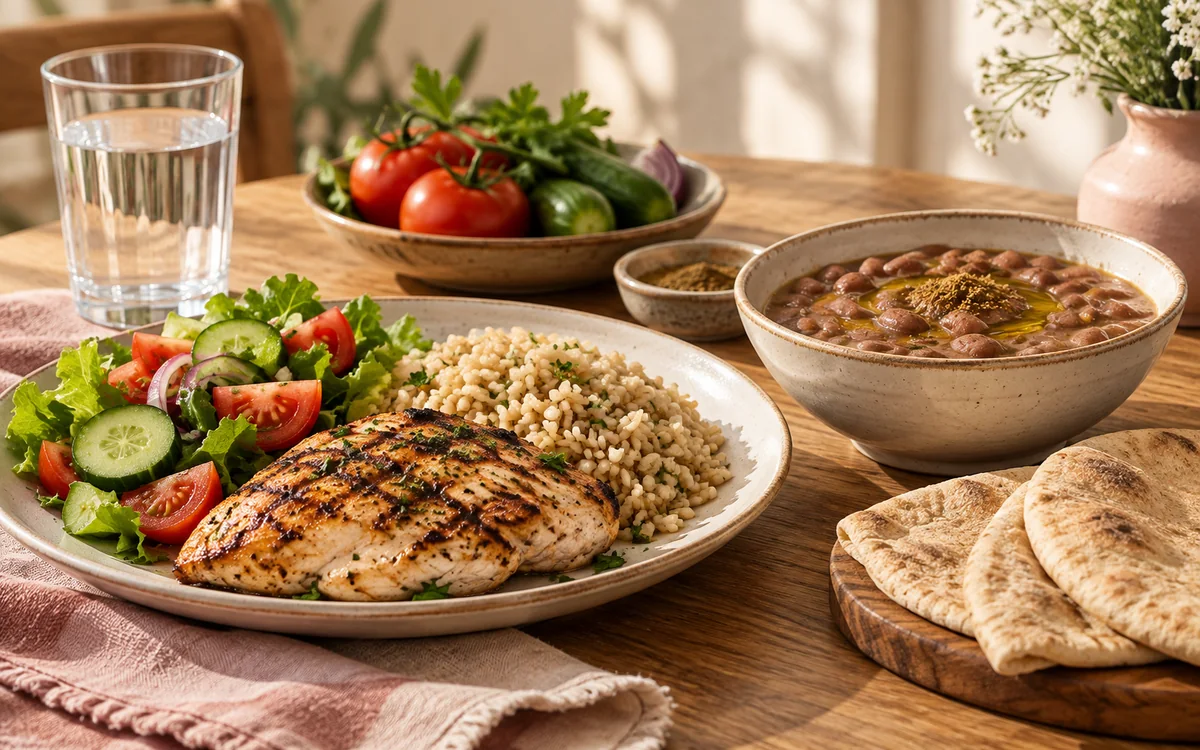
Why specifically attach your walk to your heaviest meal?
Many people start their day with high energy, but the moment they finish their heaviest meal (whether a late lunch packed with carbohydrates or a substantial dinner after a long workday) they suddenly experience heavy fatigue, sluggishness, and intense cravings for sweets within 30 to 45 minutes. This post-meal crash is not a lack of willpower; it is a clear biological reaction occurring when a dense load of carbohydrates enters the digestive tract, causing rapid spikes in blood glucose and prompting the pancreas to secrete surges of insulin to manage the influx. [1, 5]
This is where the practical clinical strategy comes in: instead of hunting for an elusive 45-minute window in a hectic schedule and postponing exercise indefinitely, attach movement directly to the meal that causes the greatest metabolic strain. Clinical research consistently confirms the power of this timing. A randomized crossover trial by Reynolds and colleagues published in Diabetologia compared advising adults with type 2 diabetes to walk for 30 minutes at any chosen time of day versus walking for just 10 minutes after each main meal. The results demonstrated that post-meal walking significantly blunted postprandial glucose excursions compared with walking at an unspecified time, with the most pronounced benefit observed after the evening meal (where the post-dinner glucose rise was about 22% lower) because that meal contained the highest carbohydrate content and was followed by the longest sedentary screen time. [1]
Furthermore, a systematic review by Borror and colleagues in Sports Medicine highlighted that focusing physical expenditure specifically after the largest meal of the day is a highly effective approach to curtail 24-hour hyperglycemia. When you move shortly after a heavy meal, working muscles take up part of the glucose entering the blood and use it. This fits squarely into the broader benefits of movement beyond the scale, shifting the focus from simply burning immediate calories to helping your body handle the glucose rise after meals. [1, 5]
How light walking clears blood glucose without straining the pancreas
To appreciate why post-meal walking is so remarkably effective, we must look at what happens inside skeletal muscle cells at the molecular level. In a resting state, such as sitting comfortably on the sofa after a meal, muscle cells cannot readily absorb circulating glucose without insulin. Insulin must bind to its surface receptor, triggering an intracellular signaling cascade that prompts glucose transporter type 4 (GLUT4) proteins to move from internal storage depots to the cell membrane. However, when an individual has impaired insulin sensitivity, these receptors do not respond efficiently, allowing glucose and insulin to remain elevated simultaneously and placing ongoing stress on pancreatic beta cells. [2, 6]
The fascinating physiological insight detailed by Richter and Hargreaves in Physiological Reviews is that skeletal muscle contraction activates an alternative pathway that is partly independent of insulin. When the large muscles of the thighs, calves, and glutes contract during a gentle walk, the mechanical tension, calcium influx, and activation of AMP-activated protein kinase (AMPK) stimulate GLUT4 translocation directly to the cell membrane. In essence, muscular contraction creates a bypass mechanism, pulling glucose straight out of the bloodstream to be used as immediate fuel with less reliance on insulin. This can ease part of the post-meal load on the pancreas. [2, 6]
Importantly, these cellular benefits do not require high fitness levels or vigorous sweating. A comprehensive systematic review and meta-analysis led by Buffey and colleagues published in Sports Medicine in 2022 synthesized randomized crossover trials comparing prolonged sitting to interruptions with standing or light walking. Light-intensity walking outperformed standing, reducing both postprandial glucose and insulin responses. Similarly, a 2023 meta-analysis by Engeroff and colleagues demonstrated that physical activity undertaken shortly after meal ingestion reduced the post-meal glucose rise more than exercise performed before eating. Understanding this mechanism is vital to understanding insulin resistance and managing it through manageable daily habits. [2, 4, 6]
Effects on digestion, gastric emptying, and blunting sweet cravings
The second major benefit people notice immediately is marked digestive comfort. When we sit slouched in a chair or recline on a couch following a heavy meal, abdominal pressure increases against the stomach and diaphragm, and gut motility slows down. Food sits stagnant in the gastric lumen longer, promoting uncomfortable upper abdominal distension, fullness, and acid reflux. In contrast, upright light walking encourages normal gastrointestinal peristalsis, and staying upright keeps gravity on your side compared with lying down or slumping. [7, 11]
A controlled clinical investigation conducted by Franke and colleagues in the Journal of Gastrointestinal and Liver Diseases used ultrasonography to evaluate gastric emptying after a standardized meal, comparing slow treadmill walking at 4 km/h with water alone, traditional digestif beverages, and espresso. The study found that light postprandial walking significantly accelerated gastric half-emptying time, (from about 123 to 107 minutes), whereas alcoholic digestifs and espresso did not change emptying. Note that this was a small study of 10 healthy men, and fullness and bloating scores did not change. [7]
Some people notice that a post-meal walk eases their sweet cravings afterwards. When you consume a carbohydrate-rich meal and remain seated, circulating glucose spikes rapidly, and in some people the large insulin response can be followed by a quick fall in blood sugar a few hours later (reactive hypoglycemia). That dip can feel like hunger or a craving for something sweet, even with a full stomach. Light walking lowers the initial peak, which may soften the swing that follows in some people. For deeper insight into this pattern, reviewing why you might experience feeling hungry shortly after a meal helps distinguish true physiological hunger from reactive hormonal dips. [1, 11]
Timing, duration, and intensity: when to start and how long to walk
One of the most critical factors governing the success of this habit is setting the timing, duration, and intensity correctly. It is best to start walking soon after eating, for example within 15 to 30 minutes. This timing is biologically strategic because circulating blood glucose begins its ascent shortly after ingestion, typically peaking within the first hour. By initiating light movement during this window, contracting muscles absorb glucose as it enters circulation, lowering the peak. The Engeroff meta-analysis also found that a shorter gap between meal and exercise was linked with a larger effect. [4, 11]
Regarding duration, evidence demonstrates that you do not need hours of sustained exertion. A controlled trial by DiPietro and colleagues published in Diabetes Care found that three 15-minute bouts of postprandial walking in older adults at risk of impaired glucose tolerance were more effective at lowering glucose in the 3 hours after dinner than a single continuous 45-minute walk in the morning or afternoon. The Reynolds trial used just 10 minutes after each main meal, so a 10-minute target is a realistic place to start. [1, 3]
Regarding intensity, the emphasis must remain strictly on gentle to moderate pacing, not strenuous cardio or interval running. Vigorous exercise immediately following a heavy meal creates acute physiological competition: blood flow required by the splanchnic circulation for gastric digestion is suddenly shunted outward to working muscles and skin, which can cause cramping, nausea or reflux in some people. Guidance from the World Health Organization and clinicians at Cleveland Clinic highlights that gentle, comfortable ambulation is a comfortable, suitable choice for most people after a meal. [3, 11, 13]
The science of habit formation: making walking automatic without willpower battles
The most common reason people struggle to sustain physical activity is over-relying on conscious willpower while waiting for the perfect free hour. Telling yourself that you will go to the gym for an hour whenever free time appears introduces substantial mental friction: finding workout clothes, packing a bag, commuting, and navigating fatigue after a demanding day. Behavioral science reveals that enduring health habits are built not through heroic motivation, but by lowering friction and anchoring new actions to established daily routines. [8, 10]
A definitive review on habit formation in general practice by Gardner and colleagues in the British Journal of General Practice explains that behaviors become automatic through repetition within consistent contextual cues. When you anchor a walk directly to an established daily event (such as finishing your main meal) you eliminate decision fatigue and internal debate. The meal serves as an unshakeable environmental cue: you do not need to decide if or when you will walk; finishing the meal simply triggers the shoes and the door. [8]
To make this seamless within your home or workplace, apply proven friction-reduction tactics: 1. Place comfortable walking shoes right by the dining table or kitchen entrance before eating, ensuring they are immediately visible as you stand up. 2. Skip changing into specialized athletic gear; a gentle 10-minute walk requires no technical apparel and will not induce heavy perspiration. 3. Choose a fixed, familiar route: a short block around your neighbourhood, a couple of stair flights, or pacing along an office hallway or indoor corridor. 4. Guidance from the UK National Health Service (NHS) describes walking as one of the simplest ways to be more active, with no gym membership or special equipment needed. [8, 10]
Clinical considerations for diabetes, reflux, and warning signs
While postprandial walking is a safe and beneficial intervention for the vast majority of individuals, key clinical considerations apply to specific patient groups to stay safe. For individuals living with diabetes who take insulin secretagogues (such as sulfonylureas) or rapid-acting mealtime insulin, post-meal muscle contractions accelerate glucose disposal on top of medication action, potentially predisposing them to hypoglycemia. The American Diabetes Association (ADA) position statement on physical activity emphasizes the importance of routine glucose monitoring and close coordination with the treating physician, who may need to adjust mealtime doses as daily physical activity becomes regular. [9, 10]
For individuals suffering from gastroesophageal reflux disease (GERD) or hiatus hernia, the golden rule is maintaining an upright posture and avoiding sudden bending or bounding steps. Upright, gentle walking keeps the esophagus elevated above the stomach, keeping gravity on your side, whereas hasty walking or jogging can mechanically jostle stomach contents and provoke distressing acid regurgitation. [9, 11]
From a general medical perspective, it is vital to distinguish benign post-meal satiety from red-flag symptoms that demand immediate cessation of exercise and urgent medical evaluation. If you experience tight, crushing, or squeezing chest discomfort during a walk, pain radiating to the left shoulder, arm, neck, or jaw, acute breathlessness, or dizziness accompanied by diaphoresis (cold clammy sweating), you must stop immediately and seek emergency medical care. In clinical practice, acute exertion-related chest symptoms must never be casually dismissed as simple indigestion or heartburn, because myocardial ischemia can first unmask itself during physical exertion following a heavy meal. [9, 10]
When to seek comprehensive metabolic evaluation at the clinic
Taking a 10-minute light walk after your heaviest meal is an accessible, scientifically grounded habit that helps restore metabolic balance without overwhelming your schedule. Nevertheless, if you continue to struggle with overwhelming post-meal fatigue, persistent weight-loss plateaus despite conscientious dietary efforts, expanding abdominal girth, or a strong family history of type 2 diabetes and dyslipidemia, these signals often indicate a deeper metabolic disturbance. Underlying conditions such as advanced insulin resistance, subclinical thyroid dysfunction, or metabolic syndrome require rigorous laboratory testing and an integrated medical plan. [10, 12, 13]
At La Rose Clinics, you are evaluated by a specialized clinical team in medical weight management and clinical nutrition. During your first medical weight management visit, clinicians carry out an in-depth clinical history, a body composition assessment, and targeted laboratory testing of lipid panels, liver function, and glycemic markers. [12, 13]
Based on your objective findings, our physicians formulate a personalized management program tailored to your daily life, incorporating therapeutic nutrition, progressive physical activity prescriptions, and structured clinical follow-up to achieve sustainable metabolic health while preserving lean tissue. If you are struggling with persistent weight challenges or unexplained post-meal fatigue, take your next step by choosing to book a clinical consultation with our medical team for a thorough evaluation and an individualized care plan. [10, 12, 13]