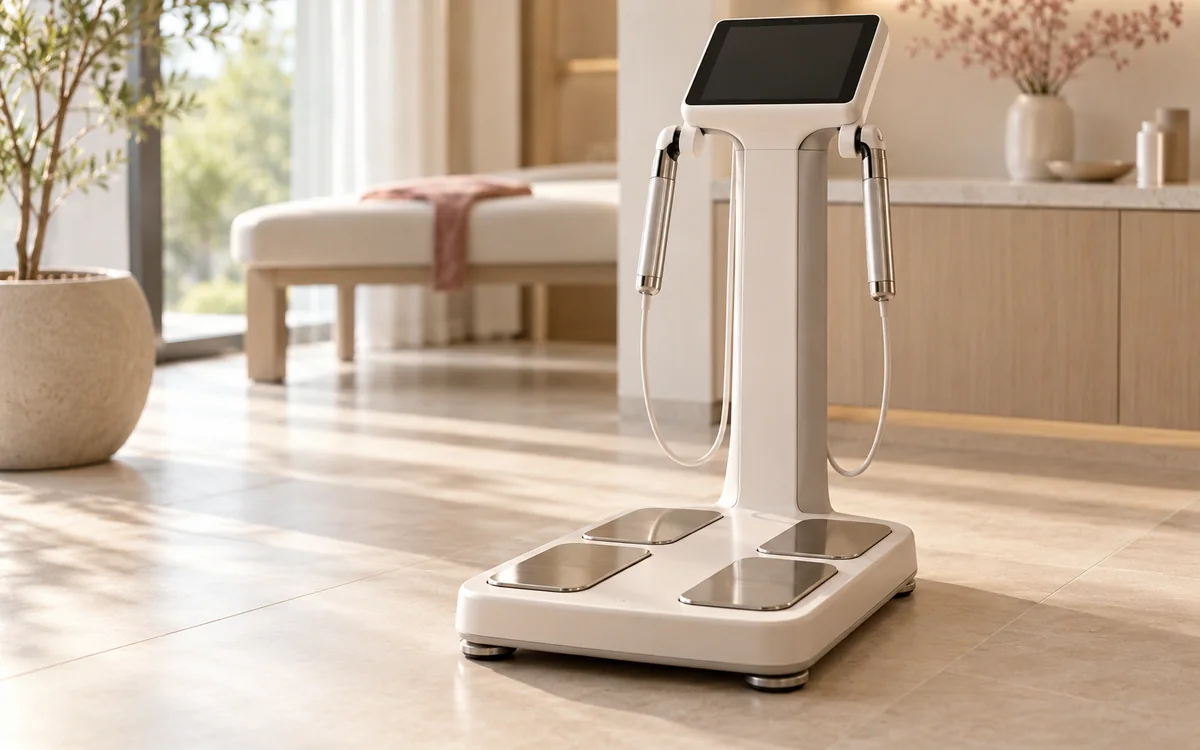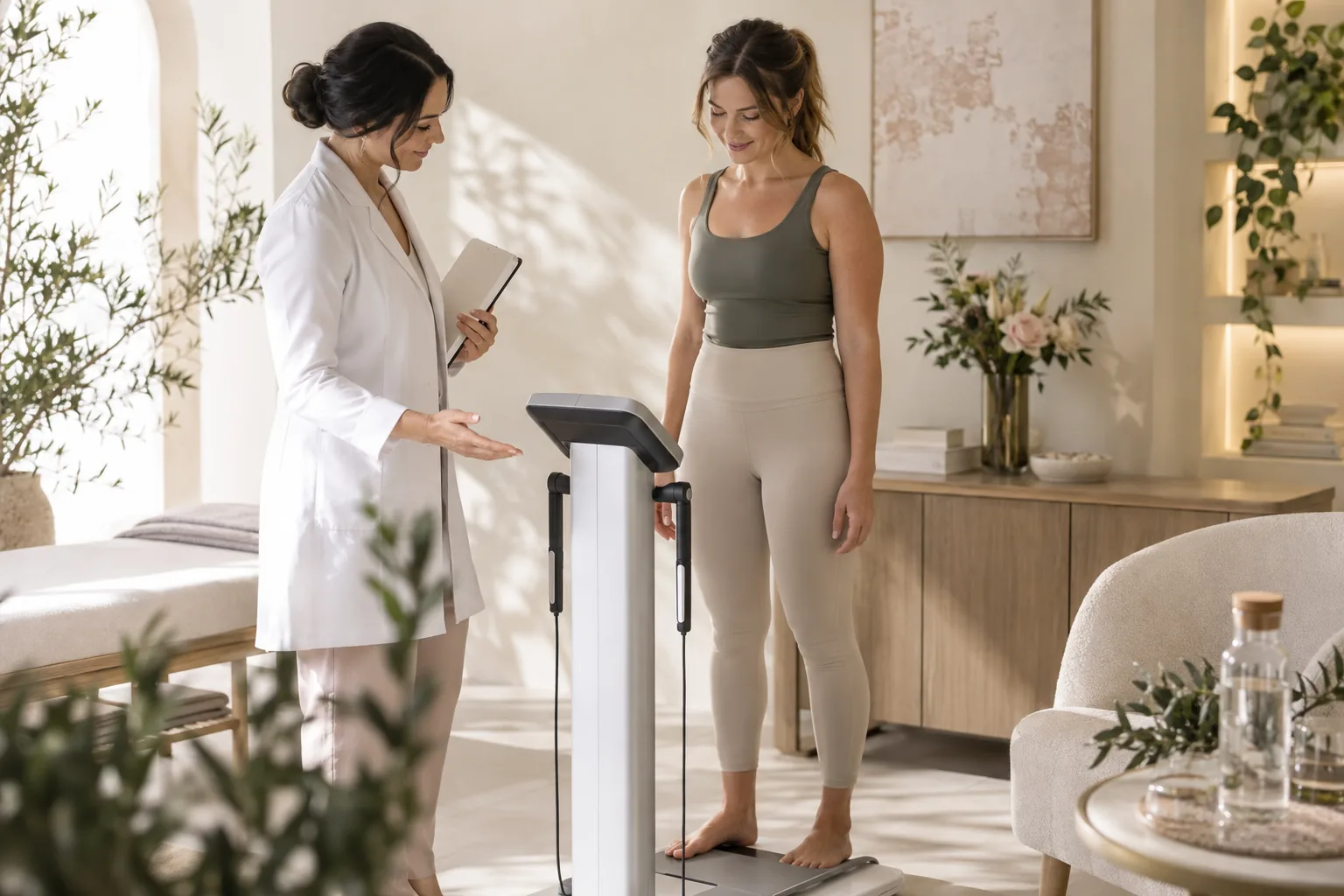
A number is an estimate for a defined question
A body-composition report may show weight, fat mass, fat-free mass, body water or an estimate related to abdominal fat. Those are not interchangeable measurements or stand-alone diagnoses. Bioelectrical impedance analysis (BIA), DXA and tape measurements obtain or estimate numbers differently, so two readings should not be compared as if they mean exactly the same thing. [3, 4, 5]
BMI and waist circumference can help frame health risk at a population level or during follow-up, but neither tells us precisely how much fat surrounds each organ or explains health on its own. No home reading by itself proves that a person does or does not have visceral fat. [1, 2, 6]
Start with the question being followed. It might be whether a nutrition and movement plan is preserving lean mass, whether weight is changing, or how waist measurement fits alongside blood pressure and glucose. The question (not the appeal of a number in an app) determines whether a measurement is useful. [2, 7]
In plain terms, a ‘measurement’ here does not mean the device directly saw fat or muscle. Most devices measure a physical property, such as resistance to a small current, then convert it into an estimate using an equation developed in a reference group. Two devices can therefore give different values for the same person on the same day. That does not automatically mean one is broken; it means the trend should stay within one system and remain tied to the original health question. [3, 4, 5]
Compare like with like
For a fair comparison, use the same device where possible, at a similar time of day and with the preparation instructions given by the centre. Recent food, drinks, exercise, menstrual-cycle timing and fluid shifts can affect some methods, especially BIA, which uses a small electrical current and body-water assumptions in its estimates. That does not make a device useless; it sets the caution needed when reading a small difference. [4, 5, 8]
A different result one or two days later does not mean fat suddenly increased or muscle disappeared. Before changing food, exercise or treatment because of one value, check the measurement conditions, the direction across several points, and whether weight, symptoms or function support the change. Repeated measurement without a plan can increase anxiety more than understanding. [4, 7]
If comparison between two devices or centres is unavoidable, record the method, date and conditions instead of merging the series into one graph. That protects the value of follow-up without claiming precision the measurement cannot provide. [3, 4]
Use a simple pre-measurement rule: the same device, a similar time, comparable clothing, and after using the toilet if that is part of the centre’s instructions. Record any hard exercise, large meal, travel, short illness or swelling because these can explain why one reading moves. Laboratory-perfect conditions are not required, but knowing what changed makes the comparison more honest. [3, 4, 8]
Waist size is risk context, not a fat map
Waist circumference is a simple and useful measure when taken the same way each time, but it is not an image of visceral fat. A clinician may read it with weight, blood pressure, glucose, blood lipids and health history to discuss risk and next steps. Interpretive thresholds vary by sex, population background and guidance, so one cut-off should not be treated as a universal verdict on an individual. [2, 6, 7]
Measure at an agreed site with a non-stretched tape and record the date. Do not compare it with an old photograph or a measurement taken differently. If waist size changes materially or new symptoms appear, the clinical question matters more than guessing the kind of fat from abdominal shape. [2, 6]
Ultrasound can answer a defined question, such as liver appearance or a cause of abdominal symptoms, but it is not a routine survey of visceral-fat quantity. Imaging should follow a question that would change care. [7, 9]
Lean mass needs context too
A lean-mass estimate should not be used to promise that a programme built muscle or to judge a body after a small change. Fat-free mass is affected by water, and short-interval differences can reflect fluid shifts or method variation more than a tissue change. Meaning comes from reading the result with strength, function, sleep, food intake and the treatment goal. [3, 4, 5]
During intentional weight loss, a team may consider pace, protein intake, suitable exercise and medical context, not an ideal body-fat percentage found online. With unintentional weight loss, weakness, fatigue or appetite change, the answer is not simply trying to raise a device number; the cause needs assessment. [7, 10]
Clinical nutrition can turn a report into a practical question: which safe change should be tried, when should measurement be repeated, and what other markers matter? That is more useful than adding many supplements or restrictions because of one report. [7, 10]
A stable body weight does not mean nothing changed, but it also does not prove that fat and muscle were redistributed. Strength, waist size, exercise capacity, consistent food intake and repeated measurements together provide a clearer picture. Resistance exercise during weight loss can help preserve fat-free mass, but its type and intensity need to suit the person’s health, ability and clinician-led plan. [6, 7, 11]
Choose a tool according to the decision
There is no single best device for every situation. Weight and waist follow-up may be enough for a routine plan, BIA may be useful for trends when conditions are consistent, and a specialist may select DXA or another assessment for a different question. Accuracy, availability, radiation exposure and repeatability all belong in the decision; this is not a competition for the most detailed-looking report. [3, 4, 5]
Do not assume a more precise test always produces a better plan. If a number would not change advice, follow-up or a testing decision, it may have little practical value. Before an appointment, it is reasonable to ask what this measurement could change, how accurate it is, and whether preparation or a reason to postpone applies. [3, 7]
This article cannot choose an individual test. Pregnancy, implanted devices, kidney or heart conditions, medicines, age and the medical goal can change what is appropriate. [3, 4]
Build a trend that can be used
Set a follow-up schedule that fits the goal rather than weighing or scanning every day. Record the date, method, conditions, weight or waist if they are part of the plan, and what changed in activity, food, sleep and symptoms. After several points, a trend can be discussed instead of reacting to a passing number. [2, 4, 7]
Define in advance what would trigger a review. That might be an unexpected plateau, fatigue, dizziness, unintentional loss, distress around eating or a change in laboratory results. This makes follow-up a care tool rather than body surveillance. [7, 10]
If a report is increasing anxiety or driving food restriction or avoidance of movement, tell the team. A number that harms a relationship with food or body needs a different use (or a pause) not more measurement. [7, 10]
Agree on a sensible review interval instead of asking the device for an answer every day. There is no single interval for everyone; it depends on the goal, the method, the expected pace of change and whether the result would alter a decision. If differences are smaller than the device’s usual variation or were obtained under different conditions, treat them as possible noise until the direction repeats. [3, 4, 7]
When does a number need broader medical context?
Do not interpret a body-composition change apart from the rest of health. Fluid retention or new swelling, marked weakness, appetite loss, unusual fatigue or rapid unintentional weight change are not problems a report or an app can solve. They may need history, examination and targeted tests because meaning depends on cause, medicines and medical context, not one percentage. [7, 10]
Likewise, a reassuring-looking reading should not delay discussion of a new symptom. Blood pressure, glucose, blood lipids, abdominal pain and breathlessness each have their own assessment paths. A measurement can be part of follow-up, but it does not replace clinical assessment or determine how urgent care is. [2, 7, 10]
Used with a care team, a report can become a calmer, more precise tool: notice a trend, test a reasonable change, then review its effect on daily life and health rather than judging a body. [4, 7]
Bring clear questions to follow-up
Bring earlier reports if available, but do not assume every number should improve in the same direction. Ask: which health goal are we following, were results compared with the same method, what size of change deserves attention, and what happens if the goal is not met? Those questions connect a report to an actionable decision. [3, 4, 7]
Seek earlier assessment for severe pain, a new worrying symptom, fainting, dehydration or continuing unintentional weight loss; a body-composition report does not explain those symptoms. Good follow-up leaves a clear next step and identifies when symptoms need care rather than waiting for the next measurement. [7, 10]
The purpose is not an ideal percentage or one appearance. It is a realistic, health-centred goal that can be reviewed: support function, reduce risk in context, and avoid promises no device can confirm. [1, 2, 7]
If you need to connect the numbers to a health goal and a reviewable next step, you can book an appointment to review body-composition measurements. At the clinic, the decision starts with health history, symptoms and the goal; only then can the team decide whether the current measurement is useful, when to repeat it and which other markers matter. This is not a promise of a particular result, and individual decisions remain with the treating clinician. [7, 10, 12]