The goal is more than preserving a muscle number
Muscle helps you rise from a chair, walk, climb stairs, carry everyday items and maintain independence. It is also active tissue involved in glucose and energy use. During weight loss, the body usually does not lose fat alone. Some change may come from water and fat-free mass, which includes muscle but is not exactly the same thing. A rapid fall on the scale therefore does not prove that the result is better. [1, 11]
The ESPEN and EASO consensus defines sarcopenic obesity as excess fat alongside low muscle mass and impaired muscle function. Assessment starts with function, followed by body composition when indicated, so strength and movement matter alongside any report value. This explains why someone may genuinely lose weight yet need a plan adjustment if strength falls or ordinary activities become harder. [1, 9]
Protecting muscle does not mean preventing weight loss or becoming an athlete. It means setting the energy deficit, movement and follow-up so the direction supports health and capability rather than the scale alone. Notice whether stairs feel easier, whether you can repeat the same exercise, and whether fatigue and hunger remain manageable. Useful change may appear in measurements, strength and health even when scale weight moves gradually. [2, 3]
Read the trend from several indicators
A scale combines fat, muscle, bone, organs and water into one number. Bioelectrical impedance tools such as InBody separate estimates of fat, fat-free mass and water, but they do not see muscle directly. Hydration, food, exercise and measurement timing can affect the result. For a cleaner comparison, use the same device under similar conditions, and do not manipulate food or fluid intake to produce a better-looking report. [11, 12]
The guide Body composition is not the scale explains these limitations in detail. The central point here is that one reading cannot prove muscle loss, while stable weight can occur as fat falls and fat-free mass is maintained. Follow the trend over a suitable interval and combine it with an agreed circumference, exercise performance, ease of movement, energy, appetite and symptoms. If every indicator points in a different direction from the device, do not make a major decision from one field. [11, 12]
When there is a genuine concern about weakness, Muscle assessment in nutrition care explains the difference between screening, measurement and diagnosis. European consensus places muscle strength first, using muscle quantity or quality to confirm diagnosis and performance to grade severity. New difficulty rising from a chair or a clear slowing of walking therefore matters more than chasing an ideal percentage found online. Clinical assessment connects the number with function and health. [1, 9]
Use an appropriate deficit, not starvation
Weight loss requires a difference between energy intake and use, but a larger deficit is not always better. When intake is cut harshly, protein, vitamins, minerals and fluid may become inadequate, while movement and performance can fall. An early rapid drop can include water and digestive contents, so it does not show that fat alone disappeared. NICE recommends a nutritionally balanced, individual plan and restricts very-low-energy diets to specialist services with defined indications and support. [2]
A suitable pace is not one number for everyone. The CDC notes that gradual, steady loss is generally more sustainable than faster loss, but age, starting weight, illness, medicines, eating-disorder history, pregnancy and breastfeeding all change the decision. An older adult with weakness or someone recovering from illness needs a different approach from a younger adult in stable health. Do not copy another person's deficit or schedule. [3, 9]
Signs that the plan needs review include severe daily hunger, recurrent dizziness, unusual fatigue, new weakness, persistent cold, worsening exercise performance, severe constipation or managing only very small amounts of food for an extended period. These are not successes simply because weight fell. Record symptoms and actual intake, then ask the treating clinician whether food amount, meal distribution or medicine needs adjustment, or whether another medical cause should be investigated. [2, 3]
Make protein suitable, distributed and practical
Protein supplies amino acids used to maintain and build tissue, but it is not a magic switch that preserves muscle without movement or adequate energy. A systematic review in adults with overweight or obesity pursuing weight loss found that enhanced protein intake helped limit muscle-mass decline, although effects on strength and physical function were less clear. Another meta-analysis in resistance-trained healthy adults found that added benefit from protein supplementation diminished beyond a total intake of about 1.6 grams per kilogram per day. That figure is not a universal prescription. [4, 5]
The suitable amount depends on body size and composition, age, activity, total intake, ability to chew and digest, kidney and liver health, and acute illness. Calculating from a very high current body weight can sometimes produce an impractical amount, so a clinician may use a reference weight or another target. If you have kidney disease or medical instructions limiting protein, do not increase it independently. The goal is an amount suitable for your condition, not the largest number you can reach. [2, 4]
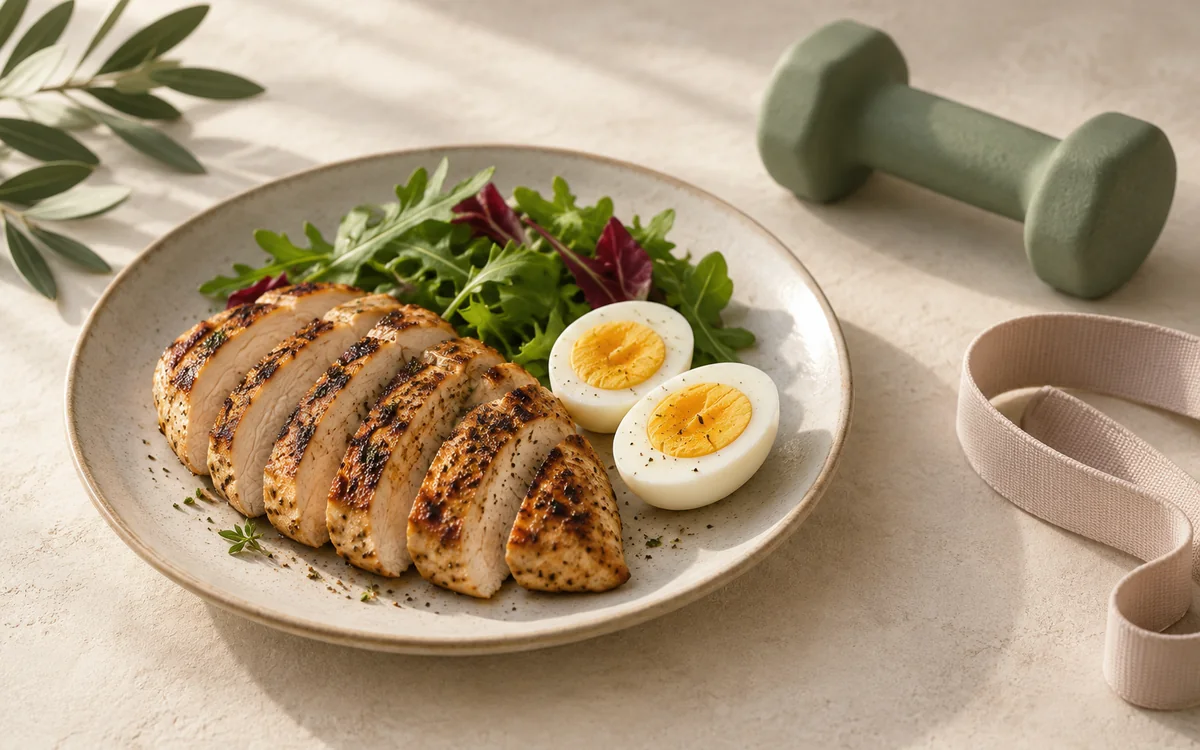
In practice, include a clear source at meals: eggs or dairy, fish, poultry or meat, or pulses and soy foods according to health and preference. Distributing sources through the day is often easier than trying to compensate in one meal. Suitable vegetables, fruit, carbohydrate and fats complete the meal and do not cancel the protein. When appetite is low, start with the nourishing part and agree smaller meals instead of forcing one large plate. [4, 5]
Give muscle a reason to stay
Resistance exercise signals that muscle is needed. A recent systematic review compared dietary restriction alone with dietary restriction plus resistance exercise in adults with overweight or obesity. Adding resistance exercise better protected fat-free mass, increased fat loss and improved strength, even when the difference in total body-weight change between groups was small. That matters because the scale may not immediately reward exercise while body composition and strength improve. [6]
The starting point does not have to be a gym or heavy weights. Body-weight movements, resistance bands, machines or free weights can all work when the movement is suitable and safe. WHO and NHS guidance recommends muscle-strengthening activity for all major muscle groups on at least two days each week, alongside aerobic activity. This is a general target to build towards, not a test to pass in the first week. Walking is excellent for cardiovascular health, movement and consistency, but it may not provide the same strengthening stimulus to every muscle. [7, 8]
Begin with movements you can control without sharp pain and allow recovery time. Increase repetitions, resistance or movement difficulty gradually rather than changing everything at once. Sleep, adequate food and rest are part of the response; an aggressive programme combined with a severe deficit can reduce performance rather than build strength. Seek suitable guidance before starting if you have heart disease, uncontrolled blood pressure, an injury, joint problems, dizziness or a long break from exercise. [7, 8]
With weight-loss medicine, monitor intake and strength
Weight-management medicines can reduce hunger and increase fullness in a suitable person, making a plan easier to follow. If fullness leaves you managing only a few bites all day, or vomiting, constipation and fatigue reduce food and movement, protein, fluid and micronutrients may become inadequate. A higher dose is not an achievement when nourishment and function are suffering. Do not change the dose, stop treatment or restart it independently. [2, 10]
Studies of GLP-1 medicines and body composition show that lost weight can include both fat and fat-free mass in varying proportions. Fat-free mass is not all skeletal muscle, while the measurement method, hydration and the scale of fat loss affect interpretation. Scientific reviews call for better assessment of strength and function rather than turning one trial percentage into a rule for every user. The practical message is that medicine does not remove the need for nourishment, resistance exercise and follow-up. [10, 11]
The GLP-1 medicines guide covers selection, side effects and follow-up in detail, so focus here on muscle-related clues. Has exercise capacity fallen? Is rising from a chair harder? Are you regularly missing meals or unable to keep fluids down? Record food, drink and symptoms, and contact the prescriber early if intake is very low or weakness is increasing. Persistent vomiting, severe abdominal pain or inability to retain fluids needs urgent medical advice according to severity. [2, 10]
When do you need faster review?
Mild soreness after a new exercise is different from weakness that worsens each week or prevents ordinary tasks. Arrange medical review for unintentional weight loss, persistent loss of appetite, falls, new difficulty rising from a chair or walking, swelling, palpitations, or severe fatigue out of proportion to the day. Causes can include inadequate intake, a medicine effect, anaemia, a hormonal problem, infection or another illness; body-composition analysis cannot identify the cause. [1, 9]
Seek urgent care for sudden weakness, especially on one side, or weakness with speech difficulty, confusion, fainting, chest pain or severe breathlessness. With weight-loss medicine, inability to keep fluids down, persistent vomiting or severe abdominal pain also needs urgent assessment according to severity. Do not wait for another measurement appointment or try to correct the symptom with a supplement or harder exercise on your own. [8, 10]
Some situations need a more precise plan than a general article can provide: older age, kidney or liver disease, pregnancy or breastfeeding, surgical recovery, an eating disorder, or muscle loss that existed before the plan began. Weight goals, pace, protein amount and activity then belong with the treating team. Decisions such as starting a supplement, raising protein or changing medicine should wait for individual assessment because what protects one person's muscle may not suit another. [2, 4, 9]
Turn the advice into a plan you can review
Start with four simple fields for one or two weeks: meals and protein sources, resistance exercise or movement, symptoms, and one functional marker such as ease of climbing stairs or controlled chair rises. You do not need a perfect day; an honest record shows where the problem lies. If hunger is severe or performance is falling, that information matters more than hiding it to make the scale look good. [2, 3]
The page A first weight-management visit explains what is reviewed at the start and what to bring. Prepare a medicine and supplement list, recent test results, earlier body-composition reports if available, and a description of an ordinary day of food, sleep and movement. Agree a reviewable goal with the clinician: a suitable weight trend, a practical minimum protein plan, resistance work that fits you, and clear signs that should trigger adjustment. Do not change food, exercise or medicine because of one isolated reading without review. [2, 9, 12]
If you need to connect weight change with strength, food and symptoms in an individual assessment, you can start at the book an appointment page for the clinic. The clinic is mentioned only as a general practical step, not a promise of a result. The treating doctor or nutrition clinician decides whether you need a food adjustment, investigation of weakness, a medicine change or referral for therapeutic exercise. Success means losing weight in a way that supports health while remaining able to live your day, not reaching the lowest number by any means. [1, 2]