Nutrition doctor near Zahraa El Maadi: where should you start?
If you are looking for a nutrition doctor near Zahraa El Maadi, you can start with a clinical-nutrition assessment at La Rose's New Maadi branch: 14 El-Mokhtar Street, off El-Nasr Street, behind QNB Bank. Dr Alyaa Said Abu Taleb is a physician and a specialist in clinical, therapeutic nutrition and weight management at the National Nutrition Institute. She sees patients at the Maadi branch on Saturday and Monday from 2 to 7 pm. The visit is more than collecting a printed meal sheet: it starts with your goal, health history, medicines and supplements, symptoms, eating and activity patterns, and available results before a suitable plan is built.
Clinical nutrition is broader than weight loss. Professional definitions place undernutrition, overweight, obesity and disease-related nutrition within the field, while the shape of a healthy diet still has to reflect age, health, activity, culture and locally available food [1, 2]. The useful question is therefore not who promises the fastest result. It is who can assess you clearly, explain the limits of their role and recognise when another specialty is needed.
Clinical nutrition is not only weight loss: who may benefit?
You may book because of weight gain, but medical assessment can also matter for insulin resistance or prediabetes, PCOS-related weight concerns, fatty-liver nutrition, underweight or unintentional weight loss, and nutrition during pregnancy or breastfeeding. Children may need growth and appetite review, while active people may need to balance performance and recovery with health instead of using supplements indiscriminately. Guidance approaches insulin resistance through healthy living and weight planning with the health-care team when needed. PCOS guidance emphasises lifestyle, quality of life and avoidance of weight stigma, while nutrition for fatty liver centres on a healthy, gradual and case-appropriate plan [4, 5, 6].
Not everyone who attends wants to lose kilograms. If weight is falling without trying, appetite has disappeared or weakness persists, the medical cause should be assessed before calories or supplements are added at random [9, 10]. Persistent abdominal pain, repeated vomiting, difficulty swallowing, an eating disorder, complex kidney or liver disease, or clear endocrine symptoms may require coordinated care with internal medicine, paediatrics, gynaecology or another specialty. A nutrition physician should define what can be managed in nutrition care and what needs referral. That boundary is a key difference between clinical care and a generic app plan.
Nutrition physician or diet coach: how do you tell the difference?
A social-media account name is not a professional credential. Before booking, ask directly: Is the provider a physician? What training do they have in clinical nutrition? Do they review conditions, medicines and test results? Is there a referral route if the problem sits outside their scope? A non-medical coach may help a healthy person organise habits within their training, but should not diagnose insulin resistance, PCOS or liver disease, or alter diabetes or thyroid treatment. Conversely, the word doctor is not enough without relevant training and a clear follow-up process.
Choose a provider who asks about health and food together and does not turn every visit into a product or supplement sale. A sound programme has realistic goals, food that fits your culture and day, activity suited to your ability, support for barriers and a maintenance plan. Promises of rapid or spot weight loss without habit change are warning signs [3]. Evidence on individual dietetic counselling supports the value of structured care, although outcomes vary and the review itself identified areas needing stronger evidence; there is no basis for guaranteeing one result to everyone [11].
When comparing review pages, consider quality rather than only the count. Do comments indicate clear explanations, a workable plan and regular follow-up? Reviews can help create a shortlist, but they do not verify qualifications and cannot replace direct questions about training, registration and service boundaries.
What happens at the first visit, and should you test beforehand?
The first visit should turn a broad request such as “I want to improve my eating” into a health goal that can be followed. The physician asks why you came, how weight and appetite have changed, medical and surgical history, family history, medicines and supplements, allergies or digestive symptoms, sleep, stress, activity, work, meal timing, and foods you like and can obtain. Appropriate measurements and recent tests or reports are then reviewed and priorities agreed. A structured nutrition-care process moves from assessment to defining the problem, intervention, monitoring and reassessment; it is not one fixed sheet for everyone [2, 11].
Do not buy a large test package merely because an advertisement says everyone needs it. There is no universal panel. If altered glucose is a concern, the clinician may choose appropriate glucose tests. Symptoms and history suggesting lipid, liver, thyroid or nutrient problems lead to different choices. NIDDK explains that established blood-glucose tests are used to identify prediabetes, while insulin-resistance testing itself is not a routine stand-alone screen for everyone [4]. Bring recent results, a list of medicines and supplements with the doses shown on their packaging, and a simple record of food and symptoms for a few days. The clinician can decide what adds value and what does not need repeating.
By the end, you should understand the first-stage goal, the practical meal structure, what will be reviewed and when contact is important. A good plan adapts to work and household food. It is not an obedience test built around a long forbidden-food list.
Different needs, different plans: metabolic, child, underweight and sports care
For insulin resistance or prediabetes, the plan connects food, activity, sleep and weight with test results and medicines instead of banning all carbohydrate. With PCOS, goals reflect menstrual and fertility concerns, metabolic risk and quality of life; not everyone needs the same diet and weight is not the only feature [4, 5]. With fatty liver, gradual dietary change and weight management when appropriate are part of care, but a meal sheet alone cannot diagnose or monitor liver disease [6]. The linked insulin-resistance diet gives detailed food application; this page remains focused on choosing care.
For children, weight and height are interpreted on age- and sex-appropriate growth charts and across time. A single number is not a diagnosis. CDC guidance describes growth charts as tools for tracking patterns and specifies different references by age [7]. When poor appetite or growth is the main question, the child nutrition doctor in Maadi guide explains that pathway without duplicating it here. A harsh diet, hurtful body comments or an unevaluated supplement is not an appropriate starting point for a child.
For underweight, the aim is not to “gain any weight.” The clinician first asks whether loss was intended and whether digestive, endocrine, infectious, psychological or medicine-related factors may be present, then builds food support for suitable energy, protein and nutrients [9, 10]. Sports needs vary with the type and duration of training, health and goal. The joint sports-nutrition position supports personalised food, fluid, timing and recovery strategies rather than choosing supplements because they are popular [8].
InBody and follow-up: use the trend, not one reading
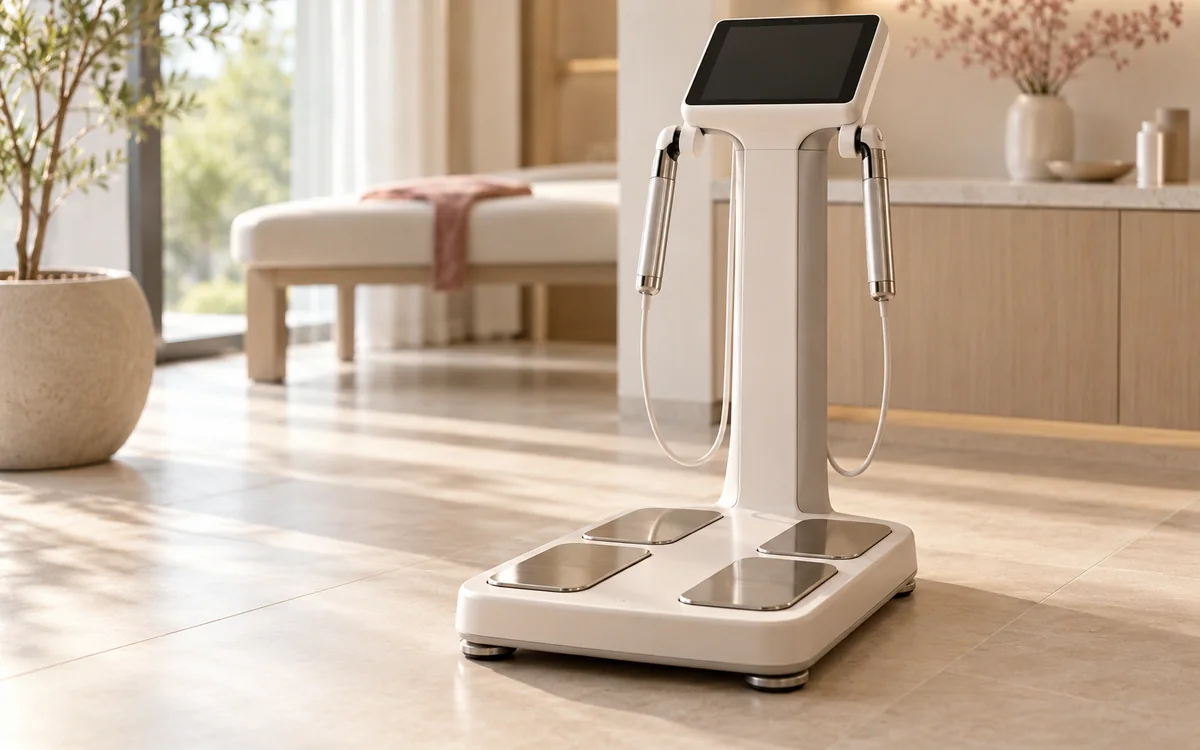
InBody analysis is available at the Maadi branch as part of assessment and follow-up. It estimates fat, fat-free mass and body water through bioelectrical impedance analysis (BIA), but it does not see fat and muscle directly and cannot diagnose disease on its own. The estimate is affected by the device, equations, measurement conditions and hydration. A critical review stresses standardised protocols and an understanding of the method's limitations [12]. Read InBody results explained if you want the fields unpacked, but plan decisions should combine the reading with history, symptoms, tests and everyday function.
Useful follow-up asks more than “How much did the scale fall?” Depending on the goal, it reviews adherence without blame, hunger and fullness, digestive symptoms, energy, sleep, ability to move or train, appetite changes, glucose or blood-pressure measures when relevant, weight, waist and body-composition trends, and whether the plan works at home and work. Regular support and adjustment are features of sound programmes, and may be delivered in person or online when the condition is stable and no direct examination is needed [3].
During busy weeks, online follow-up can review food and symptom records, results and small plan adjustments. It is not a permanent substitute for measurement or examination when new symptoms appear, unintentional weight loss occurs, relevant medicines change, or a child needs accurate growth measurements. Agree from the start when online review is enough and when an in-person visit is needed.
How do you choose a nutrition clinic near Zahraa El Maadi?
Start with a short checklist: clear qualifications, health assessment before a plan, medicine and supplement review, appropriate measurements, tests chosen for a reason rather than a fixed bundle, measurable goals, regular follow-up and referral when required. Ask whether the plan uses food you can find and sustain, and whether there is a contact route if symptoms appear or implementation becomes difficult. Safe programmes explain risks and limits and do not depend on dramatic before-and-after pictures or exaggerated promises [3].
Order the options this way. First, La Rose's Maadi branch with Dr Alyaa Said Abu Taleb for clinical and family nutrition; it is a nearby option for Zahraa El Maadi residents with online follow-up for busy weeks. The nutrition clinic in Maadi page gives general service details, while this guide helps you choose by condition and location. Second, consider a nutrition or obesity clinic within a hospital if you need hospital investigations or several specialties. Third, a university-hospital outpatient clinic may suit a complex case needing a wider referral pathway. A child, a pregnant patient, or someone with complex kidney or liver disease may need their relevant specialist team from the outset.
Avoid any service that guarantees a scale result, sells an unlabelled product, tells you to stop prescribed medicine, imposes a supplement list before taking a history, or treats every plateau as lack of willpower. Do not choose only because a device is present either. A device is a tool; assessment, explanation and follow-up determine the quality of care [3, 12].
Before the appointment: what should you prepare?
Write your goal in one realistic sentence: improve glucose management, understand unintentional weight loss, support a child's eating, fuel training, or build a PCOS-appropriate plan, for example. Bring recent tests and reports instead of automatically repeating them, photograph medicine and supplement labels, and record food, drinks and symptoms for two or three ordinary days without making the record look “perfect.” Note work, sleep and training times, who cooks at home, unavailable foods and foods that trigger symptoms. These details make a plan implementable [3, 11].
Prepare direct questions. Why was this goal chosen? What will we monitor besides weight? Would the proposed test change a decision? When will the plan be reviewed? How do I make contact if symptoms develop? Is online follow-up suitable between visits? Be cautious if answers are vague or every solution requires buying one product. A food plan should change when new information calls for change, not every week merely to create novelty.
Do not begin severe restriction before the consultation, and do not stop a prescribed medicine or supplement on your own. Mention persistent vomiting, difficulty swallowing, ongoing unintentional weight loss, marked weakness or clear symptoms of altered glucose when booking so the team can direct you to suitable medical care promptly [4, 9, 10].
From Zahraa El Maadi to the clinic: route, booking and next step
The measured driving distance from Zahraa El Maadi to La Rose's Maadi branch is about 6.8–7.3 km, with a typical drive of about 11 minutes; traffic can change the time. The address is 14 El-Mokhtar Street, off El-Nasr Street, behind QNB Bank, New Maadi, Cairo. Dr Alyaa Said Abu Taleb sees patients on Saturday and Monday from 2 to 7 pm. Call or use WhatsApp on 010 4066 1893, and confirm the day and time when booking because schedules can change. If you need the current consultation cost, ask on WhatsApp and the team will tell you before you book.
Book at the Maadi branch, mention that you are coming from Zahraa El Maadi, and briefly tell the team why you are attending and about any important symptom so they can direct you appropriately. Bring results, medicine names and a food record instead of starting random tests or supplements. Online follow-up can support stable care between visits, but an in-person assessment matters when examination or direct measurements are needed [3].
Do not wait for a nutrition appointment if there is fainting, severe confusion, breathing difficulty, chest pain, persistent vomiting with inability to drink, or signs of severe low blood glucose; seek emergency care. Ongoing unintentional weight loss, difficulty swallowing or increasing weakness needs prompt medical assessment rather than a self-directed weight-gain plan [9, 10].