Body contouring or weight loss first: the direct answer
If you are deciding whether to start with body contouring or weight loss first, the direct clinical rule depends on your body mass index, your fat distribution, and your general metabolic health. If your body mass index is 30 kg/m² or higher, or if you have generalized weight to lose across your entire body, the medically appropriate step is to start with a structured clinical weight-loss programme before considering localized contouring [1, 2]. Conversely, if you are already close to your stable target weight, your body mass index falls within the approved regulatory clearance range for contouring devices, and your concern is stubborn localized fat deposits that resist diet and exercise, non-surgical body contouring can begin immediately or run alongside your weight-maintenance plan [1, 6]. At La Rose Clinics, the clinical nutrition and weight-management team assesses your body composition, fat distribution, and metabolic markers to establish the safest starting point at our Maadi branch and Fifth Settlement branch, and you can arrange your consultation directly through book an appointment at La Rose [1]. For a detailed physiological comparison between shrinking fat cells throughout the entire body and eliminating them in targeted deposits, read our guide on the difference between body contouring and weight loss [1].
When must you start with weight loss first?
Starting with clinical weight loss first is a clinical necessity rather than a personal preference under specific medical criteria. The primary indication is generalized obesity or significant overweight, defined by World Health Organization and clinical guidelines as a body mass index of 30 kg/m² or higher, or 27 kg/m² and above when accompanied by metabolic complications such as hypertension, insulin resistance, or dyslipidemia [2, 3]. Internationally regulated non-surgical body contouring devices, including cryolipolysis, radiofrequency, and ultrasound modalities, hold regulatory clearance strictly for individuals with a body mass index not exceeding 30 kg/m² (or 25 to 30 kg/m² depending on anatomical applicator design), and are explicitly not approved or intended as treatments for obesity or substitutes for comprehensive weight reduction [1, 6].
Another fundamental clinical consideration is the biological distinction between fat compartments. Non-surgical contouring technologies act exclusively on superficial subcutaneous adipose tissue located directly beneath the skin. In contrast, generalized weight gain and increased abdominal circumference are heavily driven by deep visceral fat surrounding internal organs within the abdominal cavity. Visceral fat cannot be reached or reduced by any external cooling or thermal energy; it responds exclusively to a sustained negative caloric balance achieved through evidence-based medical nutrition and regular physical activity [2, 4]. Undergoing contouring sessions while experiencing significant excess weight or an upward fluctuating weight trajectory is counterproductive, because ongoing positive caloric balance leads to expansion of remaining adipocytes, obscuring any localized contour refinement [3, 4].
When can contouring come first or alongside your plan?
Non-surgical body contouring becomes an outstanding clinical option either as an initial intervention or alongside weight-maintenance planning under well-defined circumstances. The primary prerequisite is that your body weight is already close to your realistic target, with a body mass index comfortably within device clearance thresholds (below 30 kg/m², typically within 5 to 10 kilograms of your ultimate goal) [1, 6]. A second essential criterion is documented weight stability for at least 3 consecutive months, ensuring metabolic equilibrium and reducing the probability of post-procedure weight gain that could mask contour improvements [6, 8].
At this stable stage, stubborn localized subcutaneous fat pockets become clearly demarcated. These deposits—commonly located in the lower abdomen, flanks, inner thighs, upper arms, or submental region—are strongly dictated by genetic cellular receptor distribution and frequently persist despite rigorous dieting and structured exercise [8, 9]. Here, non-surgical body contouring provides targeted circumferential reduction and refined contours that systemic weight loss cannot specifically isolate [6, 9]. Furthermore, contouring sessions can be integrated alongside a structured nutritional maintenance protocol, where tailored dietary macronutrients protect skeletal muscle mass and stabilize hydration while energy-based modalities reshape targeted zones [10, 11]. To understand the technical distinctions between cryolipolysis, radiofrequency, and ultrasound modalities, explore our comparative guide on comparison of non-surgical body contouring technologies [8, 10].
Where does fat go: the physiology of weight loss versus contouring
Patients frequently ask an important scientific question: where does fat actually go during weight loss, and how does that process differ from non-surgical body contouring? The precise biochemical mechanism was comprehensively demonstrated in a landmark paper published in the British Medical Journal by Ruben Meerman and Andrew J. Brown [7]. When the human body metabolizes stored fat under conditions of caloric deficit, triglyceride molecules undergo enzymatic lipolysis and oxidation into carbon dioxide, water, and usable energy. Meerman and Brown calculated that when exactly 10 kg of human fat are oxidized, 8.4 kg (representing 84% of the lost fat mass) is exhaled through the lungs as carbon dioxide, while 1.6 kg (representing 16%) becomes water excreted through urine, perspiration, breath, and other bodily fluids [7]. In systemic weight loss, the total number of adipocytes in adults remains relatively constant; the individual fat cells merely shrink in volume as their lipid stores are depleted [2, 7].
In contrast, non-surgical body contouring operates through a completely different localized cellular pathway. Technologies such as cryolipolysis or thermal radiofrequency deliver targeted physical energy that induces controlled apoptosis (programmed cell death) within localized subcutaneous adipocytes [1, 8]. Over subsequent weeks, the immune system detects these apoptotic cells, triggering tissue macrophages to engulf cellular debris and lipid fragments, which are gradually transported through the lymphatic vasculature to the liver [8, 12]. In the liver, these lipids are processed through normal physiological pathways identical to dietary fats, without inducing elevations in circulating blood cholesterol or straining hepatic function in healthy individuals [8, 12]. This biological clearance process requires 4 to 12 weeks to complete, resulting in a permanent reduction in the number of localized adipocytes. Because the total mass removed amounts to only a few hundred grams, circumferential centimetre measurements improve noticeably while bathroom scale readings remain practically unchanged [1, 6].
When do you need urgent medical evaluation before any procedure? (Red flags)
Before considering aesthetic contouring procedures or embarking on an intensive dietary regimen, it is vital to recognize clinical warning signs that indicate an underlying medical condition requiring specialist internal medicine evaluation [2, 4]. The foremost red flag is rapid, unexplained weight gain occurring over a few weeks without significant dietary changes, or conversely, abrupt unintended weight loss; both presentations necessitate thorough medical evaluation to rule out neuroendocrine or systemic metabolic disorders [4, 5].
A second critical sign is significant fluid retention and peripheral edema. Bilateral swelling of the lower legs or ankles, persistent facial puffiness, or unexplained abdominal distension accompanied by shortness of breath on mild exertion can signal underlying cardiovascular, renal, or hepatic impairment. In such circumstances, non-surgical contouring sessions and aggressive diets are contraindicated until the underlying medical etiology is identified and managed [4, 5]. A third category comprises pronounced endocrine symptoms, such as severe chronic fatigue accompanied by bradycardia, dry skin, and profound cold intolerance pointing toward hypothyroidism, or rapid central adiposity accompanied by a cervical fat pad, wide violaceous striae, and hypertension suggesting hypercortisolism or Cushing syndrome [5]. Furthermore, active skin infections, open dermatitis, or abdominal wall hernias directly over the target site preclude energy applicator placement [1, 12]. We always clarify to La Rose patients that internal medicine consultation with Dr Mohab Ashraf Fouad is available exclusively at the Maadi branch, whereas outside specialties such as cardiology, endocrinology, nephrology, and surgical care are external to the clinic, with referrals provided when clinically indicated [2, 4].
What to expect during your first visit and how to prepare
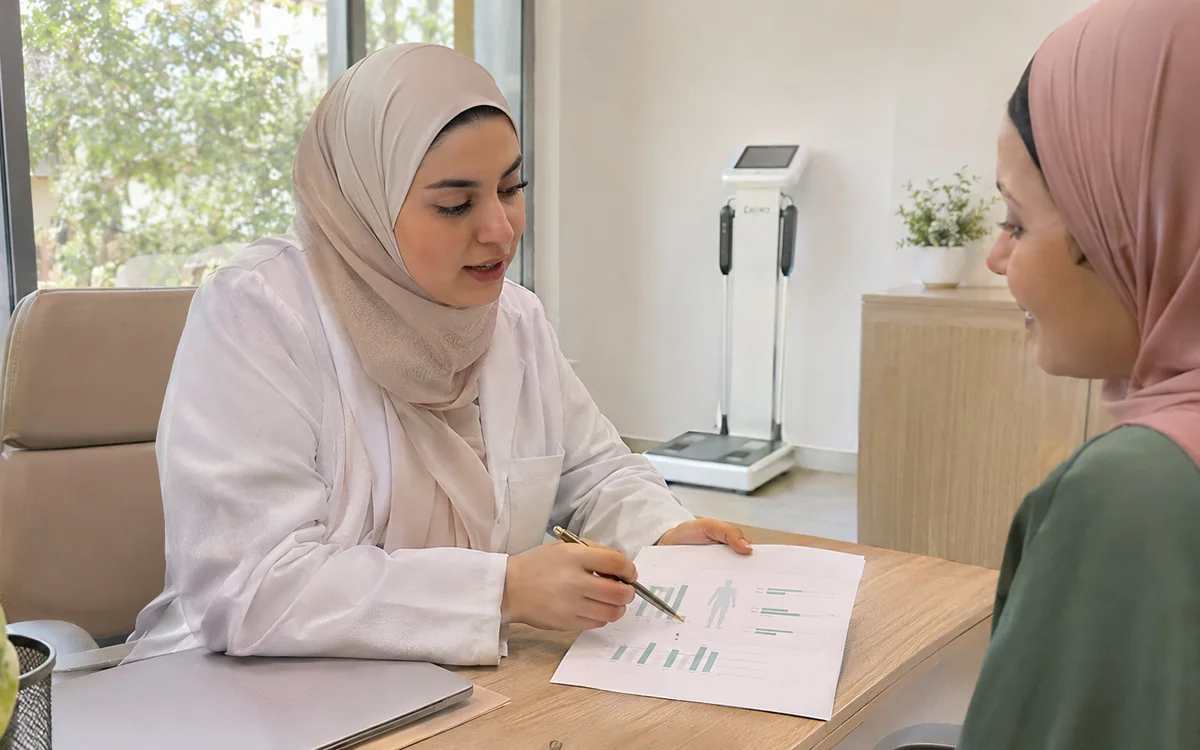
The first consultation with the clinical nutrition and weight-management team at La Rose is a thorough diagnostic assessment designed to formulate a personalized, safe strategy rather than a brief sales appointment. The visit commences with a detailed medical history review, evaluating chronic health conditions, past weight fluctuations, previous surgical interventions, and current prescription medications to identify contraindications [3, 5]. Following this, the patient undergoes advanced body composition analysis using clinical InBody bioelectrical impedance technology, which objectively quantifies skeletal muscle mass, total body fat mass, visceral fat level, and intracellular versus extracellular water ratios, allowing clinicians to distinguish whether weight is driven by adipose tissue, fluid retention, or lean muscle [11].
Next, the clinician performs a targeted physical examination to assess localized subcutaneous fat thickness, pinchable tissue volume, skin elasticity and retraction capacity, and palpates to exclude abdominal wall hernias [1, 6]. To optimize your first consultation, we recommend bringing recent laboratory test results from the past 3 to 6 months if available: fasting blood glucose and glycated hemoglobin (HbA1c), a complete fasting lipid profile (total cholesterol, LDL, HDL, and triglycerides), thyroid-stimulating hormone (TSH), and recent renal and liver function panels [3, 5]. We also advise wearing comfortable two-piece clothing for ease of examination, and avoiding heavy meals or high caffeine intake for 2 hours prior to InBody testing to ensure optimal hydration reading accuracy [11].
Follow-up plan, safety standards and realistic expectations
Establishing realistic clinical expectations and adhering to a structured follow-up schedule are vital for long-term satisfaction and patient safety. Non-surgical body contouring requires biological time for tissue remodeling; intervals of 4 to 8 weeks between sessions are necessary to permit the immune system to phagocytose and metabolize treated adipocyte remnants, with visible circumferential changes appearing progressively between weeks 4 and 12 post-procedure [1, 8]. Concurrently, nutritional check-ins are scheduled bi-weekly or monthly to monitor weight stability, verify skeletal muscle preservation using periodic InBody scans, and fine-tune macronutrients to prevent weight gain that could compromise contouring results [3, 11].
Regarding safety profiles, non-surgical modalities offer high safety margins and minimal recovery periods compared to surgical interventions, yet transient localized reactions are common, including mild erythema, localized edema, transient numbness or tingling, and superficial bruising that resolve spontaneously within days to a couple of weeks [1, 12]. A very rare adverse event documented with cryolipolysis is Paradoxical Adipose Hyperplasia (PAH), in which treated fat tissue enlarges rather than shrinks, necessitating independent surgical evaluation [12]. With strict clinical transparency, La Rose never promises uniform numerical reductions or guaranteed session counts, and does not perform surgical procedures such as surgical liposuction or abdominoplasty in-house, as surgical interventions remain an external specialty requiring hospital referral when indicated [1, 6]. For comprehensive details regarding contraindications and medical precautions, consult our specialized guide on safety of non-surgical body contouring [1, 12].
Where to get assessed at La Rose branches and how to arrive
Clinical assessments for clinical nutrition, weight management, and body contouring are conducted across two fully equipped La Rose Clinic locations in Cairo, operating strictly according to verified clinic schedules [1, 3]:
1. Maadi Branch: Located at 14 El-Mokhtar St, off El-Nasr St, behind QNB Bank, New Maadi, Cairo. Consultation hours are Saturday, Monday, Tuesday from 2 to 8 pm (times vary by doctor). The nearest landmark is directly behind QNB Bank; turning from El-Nasr Street into El-Mokhtar Street, the clinic is on your right, with street parking available in front of the building. Driving distances include about 1.6 km (about 5 minutes by car) from Maadi Grand Mall, about 2.6 km (about 7 minutes) from Degla Square, about 3 km (about 8 minutes) from Road 9 Maadi, about 3.4 km from Old Maadi metro station, and about 7 km from Zahraa El Maadi. Note that specialized internal medicine consultation with Dr Mohab Ashraf Fouad is available exclusively at the Maadi branch. For local care details, explore our guide on body contouring in Maadi [1].
2. Fifth Settlement Branch: Located at CMC Medical Mall, 4th floor, North 90th Street, behind the Air Force Specialized Hospital, Fifth Settlement, New Cairo. Consultation hours are Wednesday, 3:30 to 8 pm (currently one day a week; times vary by doctor). The nearest landmark is behind the Air Force Specialized Hospital on North 90th Street, with the medical mall situated directly behind it. Accessible within about 5.2 km (about 10 minutes by car via South 90th Street) from Cairo Festival City and the Ring Road, about 5 km (about 10 minutes via North 90th Street or Moustafa Kamel Axis) from El Yasmeen, and about 6.5 km from Al Narges. Enter CMC Medical Mall and proceed to the fourth floor under the La Rose name. For treatment options in New Cairo, read our guide on body contouring in the Fifth Settlement [1].
You can easily book an appointment at La Rose on WhatsApp to secure your preferred branch and consultation time [1].