Blood pressure doctor in Maadi: direct answer and clinic location
If you are looking for a specialist to evaluate and manage high blood pressure in Maadi, you can start your care with Dr Mohab Ashraf Fouad, specialist in internal medicine, diabetes, gastroenterology, and hepatology at La Rose Clinics Maadi branch, supported by our clinical nutrition team [2, 3, 10]. The clinic is located at 14 El-Mokhtar Street, off El-Nasr Street, directly behind QNB Bank in New Maadi. Dr Mohab Ashraf evaluates patients every Saturday from 4 to 7 pm; please check the current schedule when booking [1, 4].
The purpose of an internal medicine consultation is not simply taking a single reading or writing a routine prescription. Thorough clinical assessment distinguishes between primary essential hypertension and secondary causes linked to renal or endocrine conditions [1, 8, 10]. The visit combines a comprehensive physical examination, a careful review of your home monitoring log, in-house abdominal ultrasound to examine the kidneys and aorta, and a tailored lifestyle and medical plan to protect your cardiovascular health [2, 6, 10]. You can book an appointment through the appointment booking page or by reaching our reception team on phone and WhatsApp.
Which doctor treats blood pressure? Internist or cardiologist?
Many patients wonder whether to consult an internist or a cardiologist for elevated blood pressure. International clinical guidelines confirm that an internal medicine doctor is the primary specialist responsible for diagnosing, evaluating, and managing the vast majority of essential hypertension cases in adults [1, 2, 10]. An internist looks at the whole metabolic picture: assessing kidney function, blood glucose, lipid profile, insulin resistance, and fatty liver, while ruling out secondary causes before initiating and adjusting treatment [4, 8, 10]. If you would like a broader view of our general medical services, read our guide on internal medicine doctor and ultrasound in Maadi.
A cardiologist is specifically needed when there are cardiac complications or structural issues: suspected coronary artery disease, angina, heart failure, arrhythmias, valvular disorders, or distinct abnormalities on an electrocardiogram [3, 10]. La Rose provides internal medicine consultations and abdominal ultrasound in-house at the Maadi branch; there is no in-house cardiology clinic. When advanced cardiac investigations such as echocardiography or specialized cardiology consultations are needed, Dr Mohab coordinates external referrals and continues integrated medical follow-up [1, 4, 10].
When is high blood pressure an emergency? Red flags to know
High blood pressure is clinically known as the silent killer because in most individuals it causes no noticeable symptoms, and rarely causes mild headaches or passing dizziness as commonly assumed [2, 3, 5]. Relying on physical sensations or headaches to judge your blood pressure is medically inaccurate; regular objective measurement is the only reliable way to detect it [1, 6, 10]. However, severe acute blood pressure spikes become life-threatening medical emergencies when accompanied by signs of acute target-organ damage [1, 2, 10].
A hypertensive emergency occurs when clinic or home readings reach a systolic pressure of 180 mmHg or higher, or a diastolic pressure of 120 mmHg or higher, accompanied by red flag symptoms: severe chest pain or pressure, acute shortness of breath, sudden severe back pain, sudden weakness or numbness on one side of the body or face, difficulty speaking, acute vision changes, or confusion [1, 3, 5, 10]. If any of these warning signs occur, you must seek emergency medical care at an emergency room immediately rather than waiting for a scheduled outpatient clinic appointment or experimenting with unprescribed medications at home [2, 4, 10].
Home blood pressure monitoring protocol: rules and exact thresholds
Relying on a single reading taken in a pharmacy or doctor's office is a frequent pitfall. Transient anxiety often creates white-coat hypertension, leading to inaccurate diagnostic conclusions [1, 8, 10]. Accurate diagnosis requires establishing a consistent pattern of readings recorded under standardized conditions [1, 6, 10]. For a detailed summary of reading patterns, review our scientific update on blood pressure reading patterns after completing this section.
According to clinical recommendations from the National Institute for Health and Care Excellence and the European Society of Hypertension, accurate home blood pressure monitoring requires validated equipment: an upper-arm automated monitor with an appropriately sized cuff (wrist devices are not recommended for diagnostic verification) [1, 6, 10]. Sit quietly for at least 5 minutes in a comfortable, quiet room before measuring, with your back supported, feet resting flat on the floor, and your arm supported at heart level [6, 8, 10]. Avoid caffeine, smoking, physical exercise, and heavy meals for 30 minutes beforehand, and ensure your bladder is empty [1, 6]. Take 2 consecutive readings 1 minute apart every morning and evening for 4 to 7 consecutive days (ideally 7 days) [1, 10]. Discard the first day's numbers and calculate the average of the remaining days [1].
The diagnostic thresholds are specific: in the clinic, hypertension is defined as a reading of 140/90 mmHg or higher; at home (or on daytime ambulatory monitoring), the threshold is 135/85 mmHg or higher [1, 2, 10]. Stage 2 hypertension corresponds to 160/100 mmHg or higher in the clinic, or a home average of 150/95 mmHg or higher [1, 10].
What does the first internal medicine visit for hypertension include?
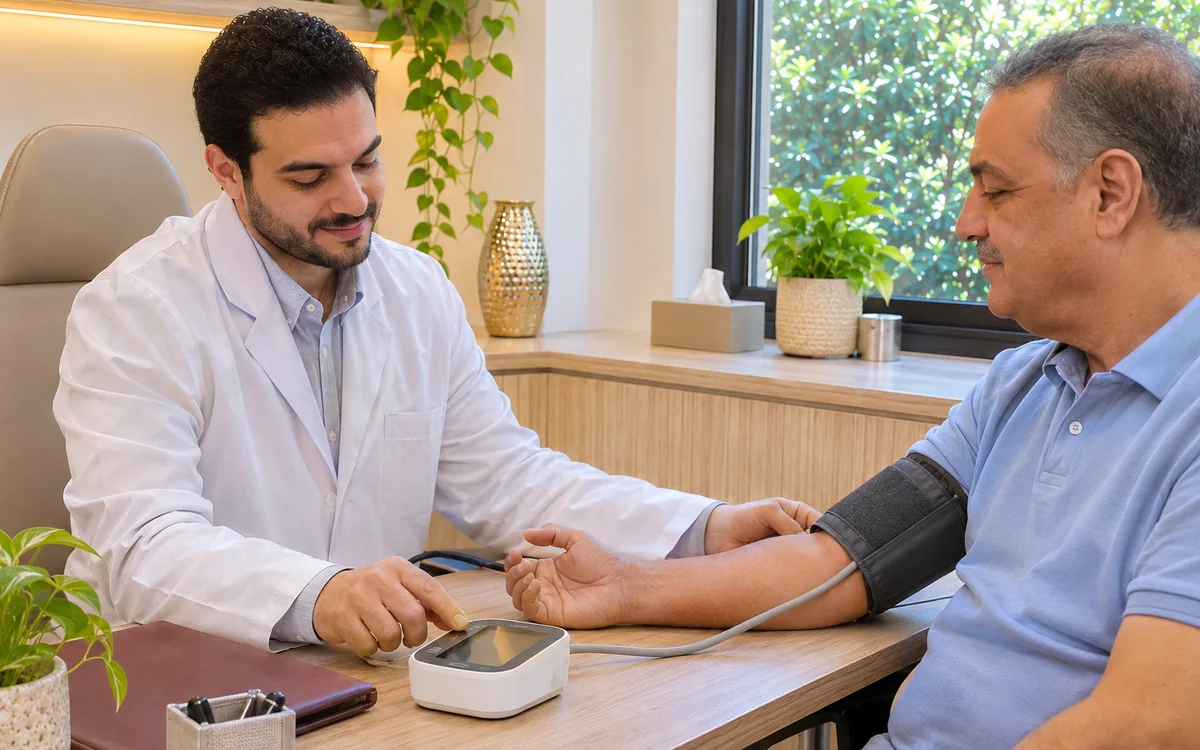
Your initial consultation with Dr Mohab Ashraf at the Maadi branch begins with a detailed medical and family history. The doctor asks about any early occurrences of heart disease, stroke, or kidney disorders in family members, and reviews your daily routine, stress levels, smoking habits, and sleep quality [1, 2, 10]. Blood pressure is measured in both arms during the initial examination to identify any inter-arm difference and ensure subsequent follow-up readings use the arm with the higher value [1, 10].
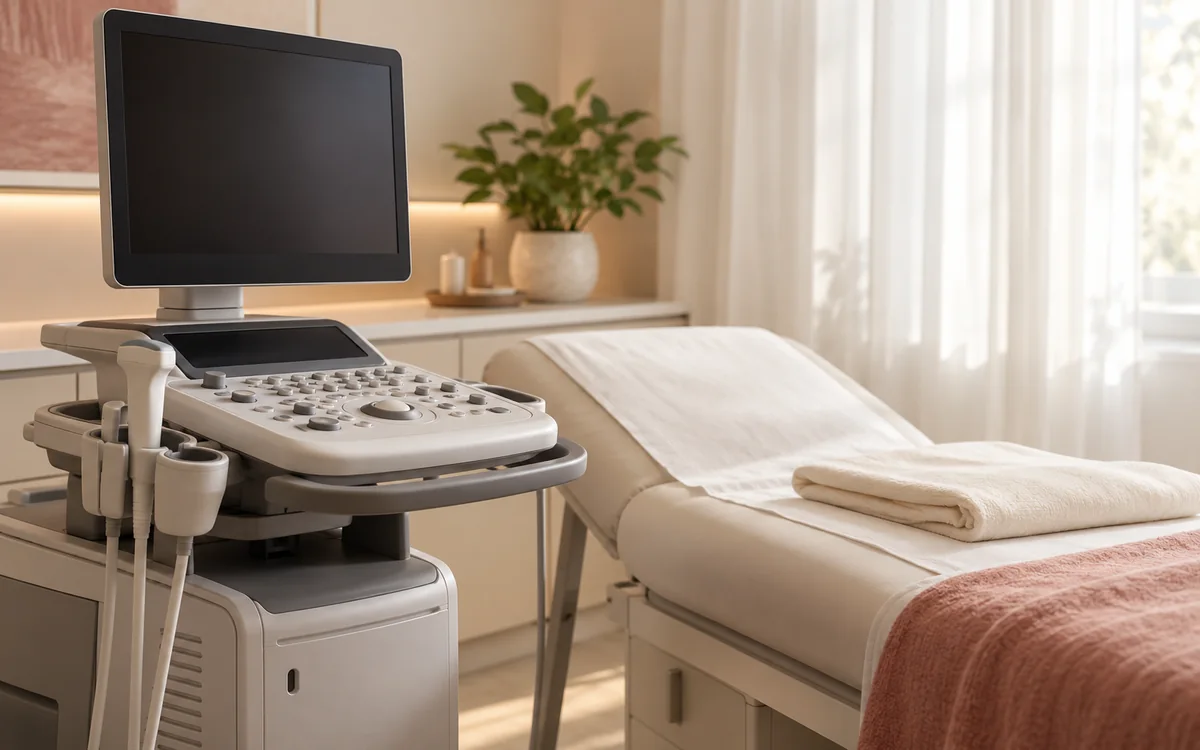
The physical examination includes auscultation of the heart and lungs, evaluation of peripheral pulses, abdominal palpation, and checking the ankles and lower legs for fluid retention or swelling [3, 8, 10]. La Rose Maadi is equipped with an in-house abdominal and pelvic ultrasound system. This enables Dr Mohab to inspect kidney size, assess renal parenchymal thickness, exclude polycystic kidney disease or renal masses, and examine the abdominal aorta and liver parenchyma during the same consultation [1, 4, 10]. It is important to emphasize that abdominal ultrasound evaluates abdominal organs and kidneys, but is not an echocardiogram; because cardiology is external, patients requiring cardiac imaging are referred externally [1, 10]. Dr Mohab also screens for clinical signs of secondary hypertension, such as obstructive sleep apnea or adrenal and thyroid dysfunction [8, 10].
Recommended tests and reports: what to bring to the clinic
To gain the greatest clinical benefit from your initial visit, we encourage patients to bring their existing medical records rather than ordering unguided, costly laboratory panels before seeing the doctor [1, 4, 10]. The most valuable documentation to bring is a completed 7-day home blood pressure log, alongside all current medication packages, including chronic prescriptions, over-the-counter anti-inflammatory painkillers, nasal decongestant sprays, and herbal supplements [1, 6, 10].
International guidelines from NICE and the European Society of Hypertension specify essential baseline investigations for every patient evaluated for hypertension: serum creatinine and estimated glomerular filtration rate, accompanied by serum electrolytes including sodium and potassium [1, 10]. Testing also includes a urine albumin-to-creatinine ratio to detect early renal endothelial stress, fasting plasma glucose or glycated hemoglobin, and a complete lipid profile measuring total cholesterol, HDL, LDL, and triglycerides [1, 2, 10]. A standard 12-lead electrocardiogram is essential to evaluate left ventricular hypertrophy and rhythm regularity [1, 10]. If you have had any of these tests performed in the past 6 to 12 months, bring those reports with you for thorough clinical review [4, 10].
Lifestyle, DASH nutrition, and weight review with blood pressure care
Lifestyle modification and clinical nutrition are not merely optional recommendations; they represent evidence-based cornerstones of hypertension management that enhance blood pressure control and minimize medication escalation [2, 7, 10]. La Rose provides dedicated nutritional guidance through our clinical nutrition team, utilizing medical InBody body-composition analysis at our Maadi branch and our Fifth Settlement branch at CMC Medical Mall [2, 13]. The DASH dietary pattern has been proven in clinical trials to achieve substantial systolic blood pressure reductions by restricting daily sodium to less than 2000 mg (under 5 grams of table salt) while emphasizing vegetables, fruits, legumes, and whole grains rich in potassium and magnesium [9, 11, 12]. To explore a practical eating guide adapted for Egypt, read DASH diet for high blood pressure in Egypt.
Intentional weight loss exerts a powerful therapeutic effect on blood pressure; clinical meta-analyses demonstrate that each kilogram of excess weight lost reduces systolic blood pressure by approximately 1 mmHg [13]. For detailed medical strategies, explore our guide on safe weight-loss plan with high blood pressure. Furthermore, patients treated with modern metabolic medications such as Mounjaro frequently experience meaningful blood pressure drops as body weight falls, which necessitates structured physician review to adjust antihypertensive dosages and avoid symptomatic hypotension or dizziness [4, 10]. A thorough discussion appears in reviewing blood pressure medicines with Mounjaro and weight loss. A critical medical rule must be emphasized: never discontinue any medication or adjust dosages independently; all medication modifications must be executed under direct physician supervision [1, 4, 10].
Follow-up schedule, reaching the branch, and how to book
Hypertension care is never a single visit; it requires a structured rhythm of follow-up to ensure clinical targets are achieved and maintained over the long term [1, 4, 10]. Following initiation of a new medication or dose titration, a follow-up consultation is scheduled within 2 to 4 weeks to evaluate therapeutic response, review home blood pressure logs, and recheck renal parameters and electrolytes if indicated [1, 10]. Once blood pressure is safely controlled within target ranges, routine follow-up visits take place every 3 to 6 months, alongside annual reviews of baseline investigations [1, 4, 10].
Our Maadi clinic is located at 14 El-Mokhtar Street, off El-Nasr Street, behind QNB Bank, New Maadi, Cairo. The primary landmark is QNB Bank, with the clinic located directly behind it on El-Mokhtar Street. Turning off El-Nasr Street into El-Mokhtar Street brings you to the clinic entrance on your right; street parking is available in front of the building. Approximate driving distances from surrounding Maadi neighborhoods include: Maadi Grand Mall about 1.6 km (5 minutes by car), Degla Square about 2.6 km (7 minutes), Road 9 about 3 km (8 minutes), Old Maadi metro station about 3.4 km (8 minutes), El Basatin about 3.5 km (10 minutes), Corniche El Maadi about 5.5 km (11 minutes), Tora El-Balad about 6 km (15 minutes), and Zahraa El Maadi about 7 km (11 minutes by car).
Internal medicine clinics with Dr Mohab Ashraf in Maadi run on Saturdays from 4 to 7 pm (please confirm the current schedule when booking); the Maadi branch is open Saturday, Monday, and Tuesday from 2 to 8 pm. The Fifth Settlement branch provides clinical nutrition on Wednesdays from 3:30 pm at CMC Medical Mall and does not offer internal medicine consultations. You can arrange your appointment by calling 010 4066 1893, messaging on WhatsApp at 201040661893, or visiting our appointment booking page.