Iron-Rich Foods: The Short Answer
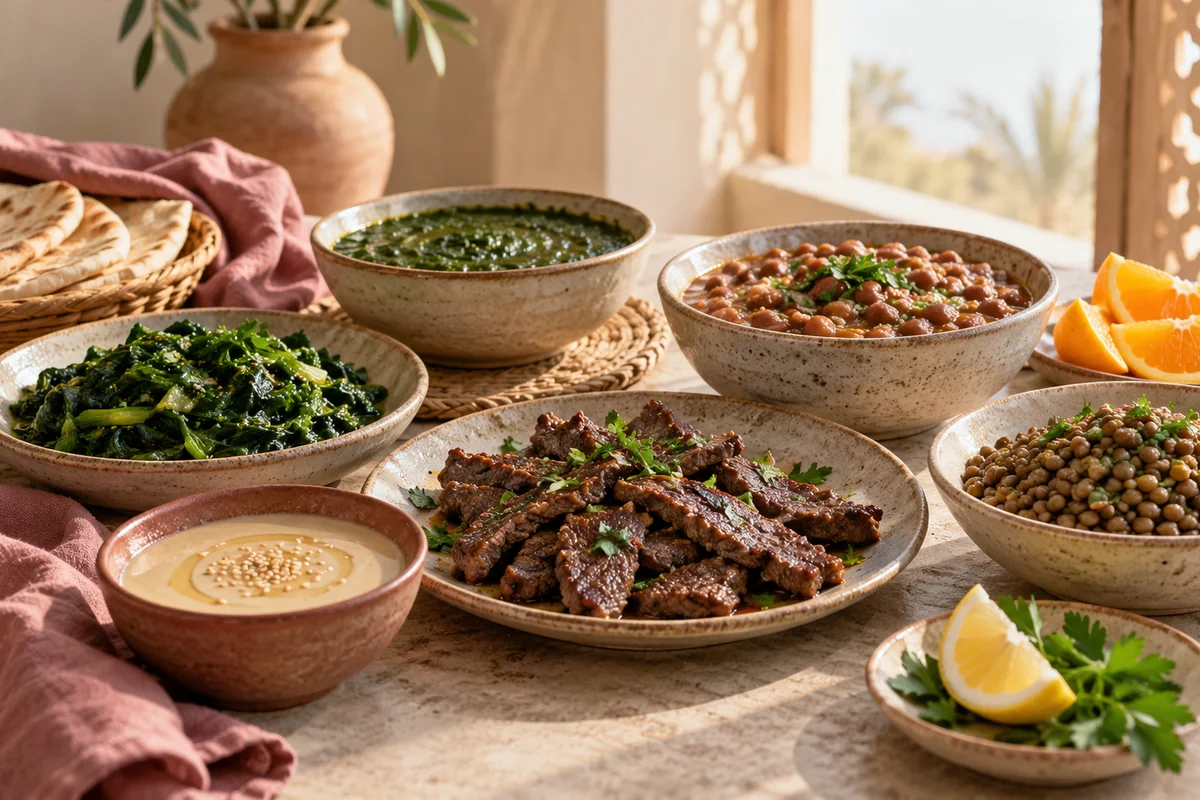
The short answer is that a useful plate contains an animal or plant iron source, a vitamin C source, and keeps tea, coffee and milk away from the same meal [1, 4, 8]. Liver, red meat, chicken, fish and sardines are animal sources; ful, lentils, chickpeas, tahini, spinach and molokhia are plant sources [3, 8, 11]. The aim is to repeat that pattern in a way you can sustain, not to crowd every iron food into one meal.
Food supports iron stores, but it is not a diagnosis and not a substitute for testing. If you have persistent tiredness, breathlessness, palpitations, pallor, dizziness or fatigue on mild exertion, start with a full blood count and ferritin through a clinician [3, 7]. Seek urgent care for chest pain, severe breathlessness at rest, fainting, blood in vomit or stool, or heavy bleeding [3, 7]. This article is for adults; children have a separate guide.
Two Types of Iron: Animal and Plant
Iron in food comes in two forms. Animal iron is found in red meat, liver, chicken and fish; it is absorbed better and can reach about 30% in some situations. Plant iron is found in legumes, grains and leafy greens; it is absorbed less well, usually between 2% and 10% [4, 9, 11]. Those figures do not mean plant iron is worthless. They mean you need to handle it differently.
The body adjusts absorption according to its stores: absorption rises when stores fall and falls when stores are full [4, 9]. That is why not everyone needs the same amount, and why eating more does not automatically mean storing more. If you are vegetarian, your need may be around 1.8 times higher, and you need to focus on legumes and leafy greens with vitamin C [4]. Combining animal and plant iron in the same meal improves absorption [11]. The useful comparison is not 100 g of liver versus 100 g of spinach; it is the whole meal, its timing and what comes with it.
One point confuses many people: animal iron is not always better in every way. If meat is expensive or unsuitable, legumes with vitamin C can be a good daily plan. The difference is that you need a larger amount and more variety, and you do not need to feel that meat must appear every day [4, 8]. Look at the whole week: how often there is an animal source, how often legumes, and how often leafy greens, rather than judging from one meal.
Egyptian Iron Sources: From Liver to Ful and Tahini
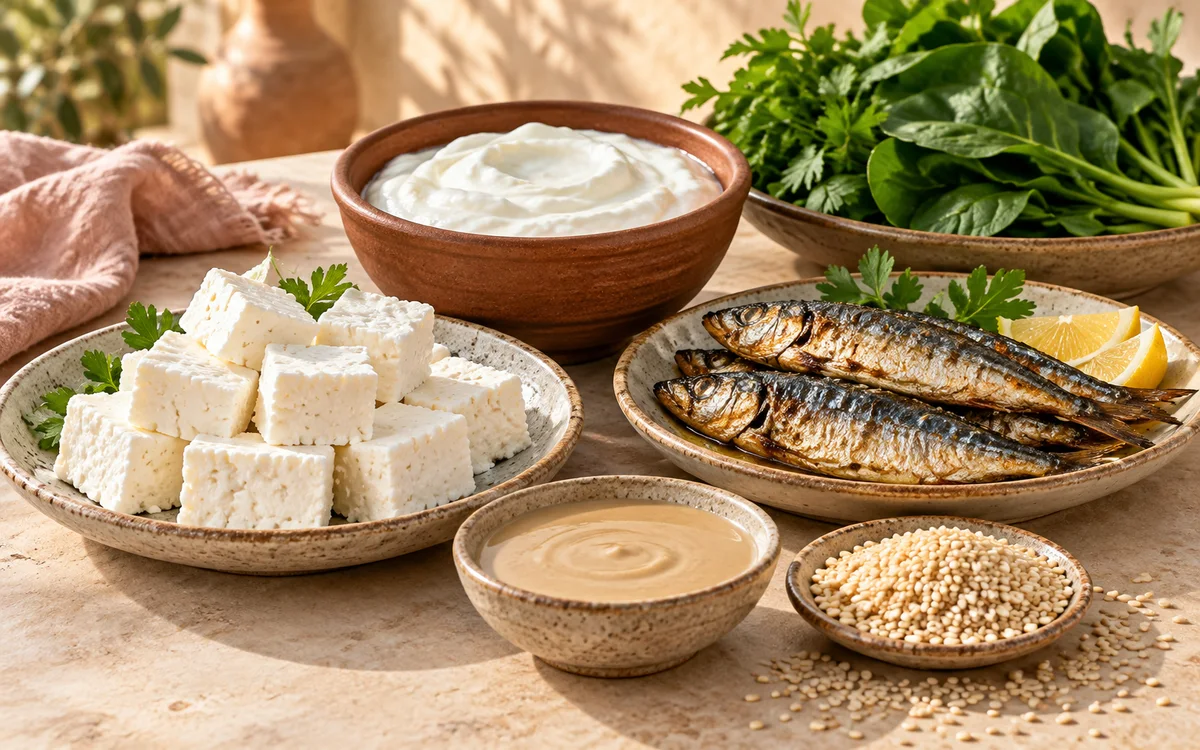
Egyptian animal sources are straightforward: liver, red meat, chicken, fish, sardines, tuna and eggs. Liver is very concentrated, and a small portion gives more iron than a similar-sized piece of meat, so it does not need to be a daily meal. It is best not to have it more than once a week, because liver is high in vitamin A [2]. The British Dietetic Association (BDA) advises keeping red and processed meat to about 70 g a day [8]. The point is to spread sources across the week, not to eat liver every day.
Plant sources are strong when used well: ful, lentils, chickpeas, tahini, sesame, spinach, molokhia, parsley, dates and dried figs. Ful and lentils are the cheapest and easiest daily source; tahini adds iron and calcium; molokhia is a dark leafy green. Spinach contains iron but absorption is limited by oxalates, so do not rely on it alone [4, 9]. If you are looking for children, the separate guide is iron-rich foods for children.
Vitamin C: The Cheapest Way to Improve Absorption
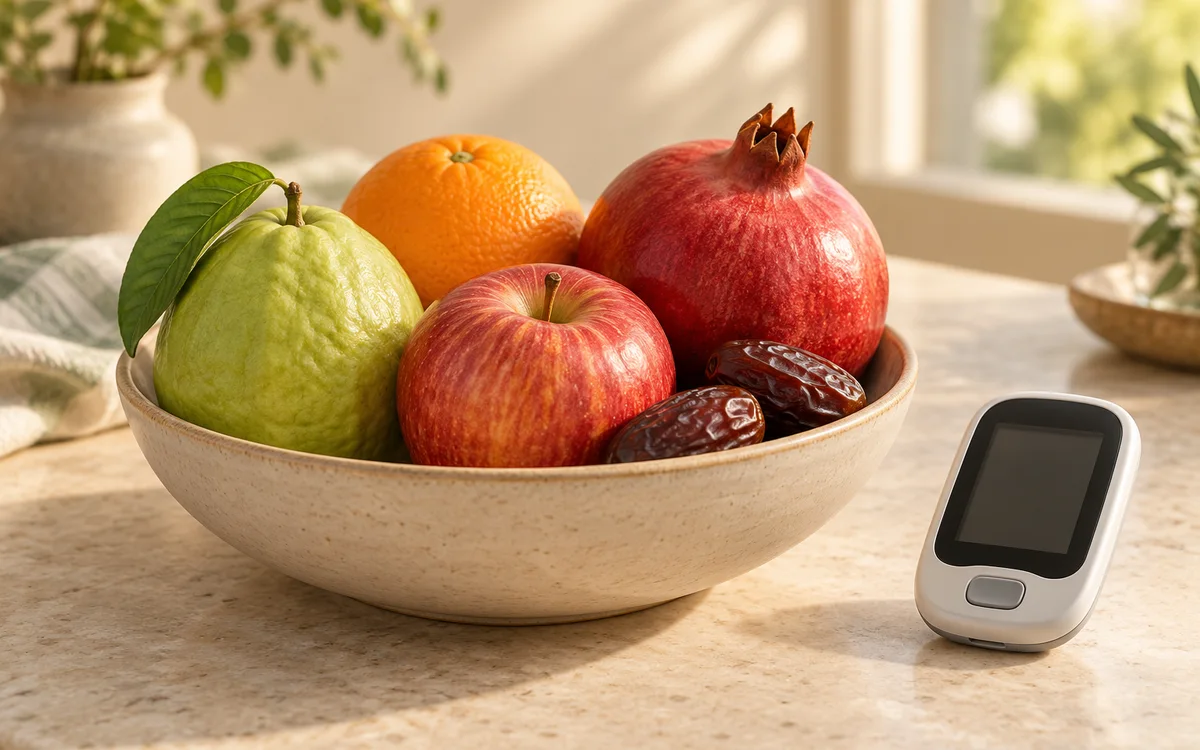
Vitamin C is the simplest way to improve non-haem iron absorption. A small amount with the meal helps; you do not need a supplement or a large dose [4, 9]. In an Egyptian kitchen you have lemon on ful, lentils and fish, tomato salad, green pepper, parsley, and guava or orange after the meal. These are practical additions that do not change the shape of the meal.
Vitamin C is damaged by heat, so add lemon after cooking rather than before. Tea with lemon is not a reliable way to cancel tea's inhibitory effect; it is better to keep tea away from the meal [8, 9]. If you have been prescribed iron, a glass of orange juice with the dose may help, but follow the written instructions [7]. Do not try to make up for low iron with juice all day; the goal is a balanced meal, not a large sugar load.
One practical point: a large amount of fruit juice adds sugar and calories, and whole fruit is better because it contains fibre. If you have diabetes, discuss the amount of fruit and juice with your clinician, but do not drop the idea of vitamin C with the meal [4]. You can use red or green pepper in the salad, or add parsley and lemon to fish, instead of relying on one juice. Variety is easier to sustain.
Tea, Coffee and Dairy: Getting the Timing Right
Some foods reduce absorption when eaten at the same time. Tea and coffee contain compounds that bind iron; milk, yoghurt and cheese contain calcium that reduces iron absorption; wholegrains and bran contain phytates [1, 4, 8, 9]. This does not mean avoiding them. It means adjusting timing. Leave tea and coffee at least an hour after an iron-rich meal, preferably between meals.
Dairy matters for bones, so do not remove it from your day; have it as a separate meal or with a meal that is not iron-rich. If you take calcium and iron supplements, take them at different times [4]. Phytates are reduced by washing, soaking, sprouting and fermentation; yeast-leavened bread helps, and vitamin C counteracts some of the effect [4, 9]. In practice: with liver or ful, drink water or lemon water, and leave tea and dairy for later.
An Egyptian example: if lunch is liver, rice and salad, have tea an hour and a half later, and dairy after dinner. If breakfast is ful, drink water or lemon water and have tea mid-morning. If you take iron on an empty stomach, do not take it with tea; take it with water, and tell your clinician if it causes nausea so the timing can be adjusted [7]. Timing is not fussiness; it is the difference between a meal that adds iron and one that reduces it.
Who Needs More Iron? Periods, Pregnancy, Vegetarians and Donors
Iron needs are not one number for everyone. Men and postmenopausal women need about 8 mg a day, women of reproductive age about 18 mg, pregnancy about 27 mg, and lactation about 9 mg [3]. UK figures differ slightly, about 8.7 mg for men and postmenopausal women and 14.8 mg for women of reproductive age [8]. What matters is knowing your group, not memorising a number.
Who needs more attention? Anyone with heavy periods, because monthly blood loss is higher [1, 6]. People who are pregnant or planning pregnancy, because needs rise and tests decide whether a supplement is needed [12]. Pregnant women should avoid liver and liver products because of vitamin A [2]. Vegetarians, because plant iron is less well absorbed [4]. Regular blood donors, because donation draws on stores [11]. Endurance athletes, because training can increase iron loss through the gut and red-cell breakdown [3]. If you are vegetarian or cutting down on meat, read the vegetarian protein, iron and B12 guide.
Food Is Not a Substitute for Treating Iron-Deficiency Anaemia
Food is the foundation, but it does not treat confirmed iron-deficiency anaemia on its own. When stores are empty and haemoglobin is low, a clinician will usually prescribe oral iron, often for 3 to 6 months until stores recover [3, 7]. Food helps you maintain the result, but it does not replace the prescribed dose, and you should not stop the dose because you have started eating liver.
Iron can cause constipation, nausea or dark stools; that is not a reason to stop it yourself, but tell your clinician if side effects are difficult [7]. Take the dose as written, away from tea, coffee and calcium, and out of reach of children because overdose is dangerous [7]. If your ferritin is low with a normal blood count, read low ferritin with a normal blood count.
Find the Cause, Not Just the Number
Iron-deficiency anaemia is a sign or a result, not a final diagnosis of the cause. The questions are: where is blood being lost, is absorption impaired, and is diet the only explanation? [1, 5]. In men and postmenopausal women, gastrointestinal causes must be considered, and the British Society of Gastroenterology (BSG) recommends gastroscopy and colonoscopy in appropriate cases to exclude bleeding, cancer, ulcer disease or coeliac disease [5].
In women of reproductive age, heavy periods are a common cause, but that does not mean everything can be solved with iron without assessment [6]. Coeliac disease, H. pylori, anti-inflammatory painkillers and parasites can also contribute, and each has appropriate tests [1, 5]. Black stools, blood in stool, vomiting blood, unintentional weight loss, difficulty swallowing, a persistent change in bowel habit or an abdominal mass need urgent assessment [5, 7]. Some causes are not gastrointestinal: heavy periods, pregnancy, repeated donation and some blood disorders. That is why history matters, not the test alone. The clinician asks about bleeding, medicines, diet and family history, then chooses the tests [1, 3, 5]. Do not interpret improvement after a week of better eating as proof that diet was the cause; improvement can be gradual and is not a diagnosis.
If you are unsure whom to start with, that question is settled by assessment and testing.
Too Much Iron: Not Every Tiredness Needs a Supplement
Iron is not helpful for everyone. In haemochromatosis, the body absorbs more iron than it needs and stores it in the liver, heart and pancreas; treatment is not simply reducing food, it is regular removal of blood [10]. People with this condition should avoid iron and vitamin C supplements unless prescribed, limit alcohol and avoid raw shellfish [10].
The upper limit for supplemental iron in adults is about 45 mg a day; that figure applies to supplements, not food [4]. Do not start iron because you feel tired, since tiredness has many causes and excess iron can harm [3, 10]. If you take iron and your ferritin is high, review it with your clinician and review your supplements. If there is a child at home, keep iron completely out of reach [7].
If a clinician prescribes iron for confirmed deficiency, do not avoid the dose because you have heard that iron is dangerous. The real risk is taking supplements without a reason or in large doses without monitoring [3, 4]. The difference between treatment and risk is testing, the cause, the dose and follow-up. If you have a family history of iron overload, tell your clinician before any supplement [10].
A Practical Egyptian Day: Breakfast, Lunch and Dinner
A practical Egyptian day could start with ful, lemon, tomato and wholemeal bread, or eggs with orange. Lunch: a small portion of liver with rice, green salad and lemon; or lentil soup with salad; or molokhia with chicken and lemon; or about 70 g of kofta. Dinner: sardines or tuna with bread, tomato and lemon; or tahini with chickpea salad; or spinach with lemon. Snacks: guava, orange, dates, nuts and seeds.
A vegetarian day: ful, lentils, chickpeas, tahini and spinach, with lemon, pepper or tomato. Tea and coffee at least an hour after the meal, and dairy in a separate meal. Do not try to eat liver every day; once a week is enough, and less is fine [2]; red and processed meat should stay around 70 g a day [8]. If you are pregnant, replace liver with another source and ask your clinician [2, 12]. This is an example, not a fixed prescription; portions are adjusted to your situation and needs [3, 4].
When buying bread, choose a local or iron-fortified type if available, and read the label rather than assuming [8]. When cooking legumes, soak them before cooking and rinse well, which helps reduce phytates [4, 9]. These small details matter when the pattern repeats.
Follow-Up: When Is Food Enough and When Is Treatment Needed?
Follow-up decides whether food is enough or treatment is needed. The basic tests are usually a full blood count and ferritin, and the clinician may add tests for inflammation, vitamin B12, folate, coeliac disease or stool, depending on the story [3, 5]. Do not start a supplement without testing, and do not stop a prescribed supplement without review. If symptoms return or bleeding increases, do not wait for the routine appointment [5, 7].
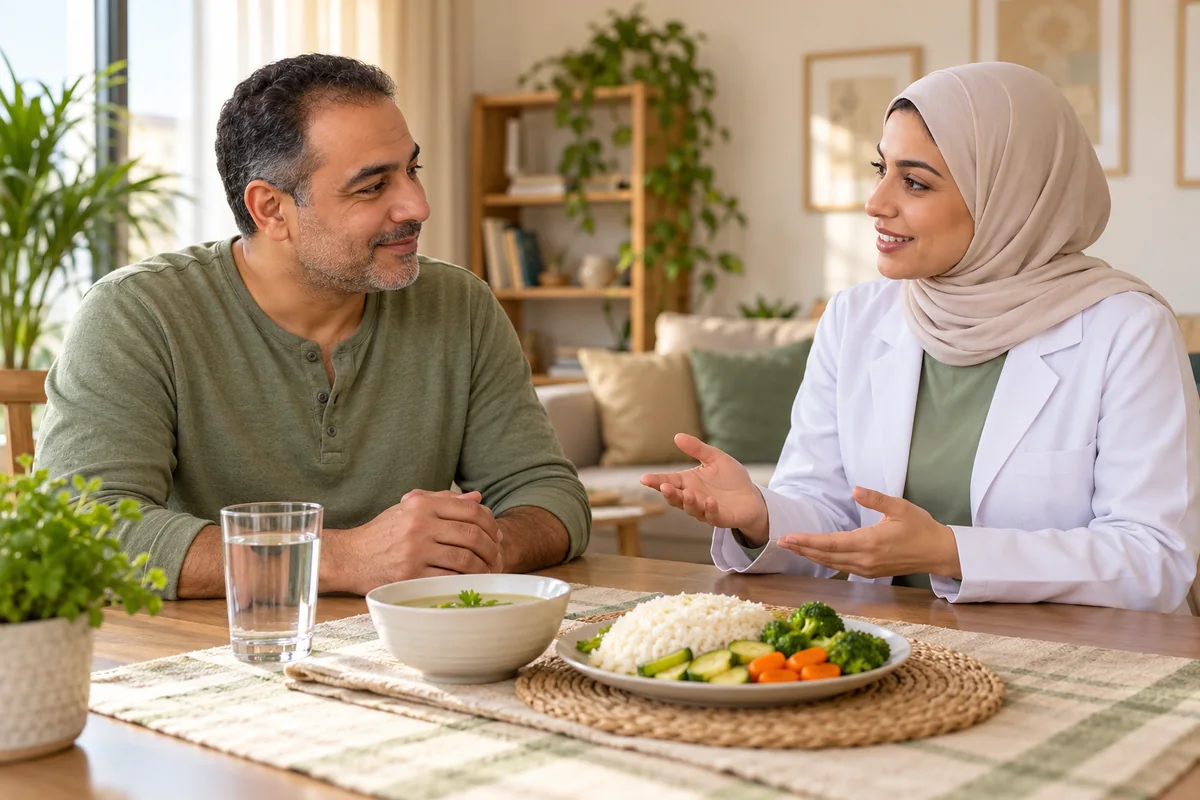
Before the visit, write down your medicines and supplements, your period history and flow, any stomach or bowel bleeding, a family history of gastrointestinal cancer and what you eat. Ask: what is the likely cause, what test is needed, how long is treatment, and when should we repeat the test? [3, 5, 7]. For more on tests, read anaemia symptoms and a full blood count. If you are unsure where to start, read anaemia: internal medicine or haematology. If you want your food plan and results reviewed with the clinical nutrition team, start from the booking page.