Why iron matters, and why children do not all need the same amount
Iron is needed to make haemoglobin, which carries oxygen, and it also supports growth, brain function and muscle function. Regular iron sources therefore matter, especially during rapid growth. Requirements vary with age, sex and stage of development: reference values are relatively high in the second half of infancy and change again during adolescence, particularly after menstruation begins [1, 11]. Those values help professionals plan diets, but they are not a reason to calculate every mouthful or turn meals into an accounting exercise. Children eat across days, so variety and consistency matter more than hitting a number in one meal.
There is also an important difference between preventing deficiency with food and treating a confirmed deficiency. A healthy child who is growing steadily usually benefits from a varied pattern containing regular iron sources. Pallor, tiredness, reduced activity, cravings for ice or soil, or faltering growth cannot be diagnosed from appearance or a food list alone. Iron stores may fall before obvious anaemia develops, and not every anaemia is caused by iron. A clinician combines age, growth, symptoms, diet and examination, then decides whether tests are indicated [1, 7, 11]. This page is designed to help you choose and serve food; it does not diagnose deficiency or set a treatment dose.
Animal and plant sources: variety beats a single hero food
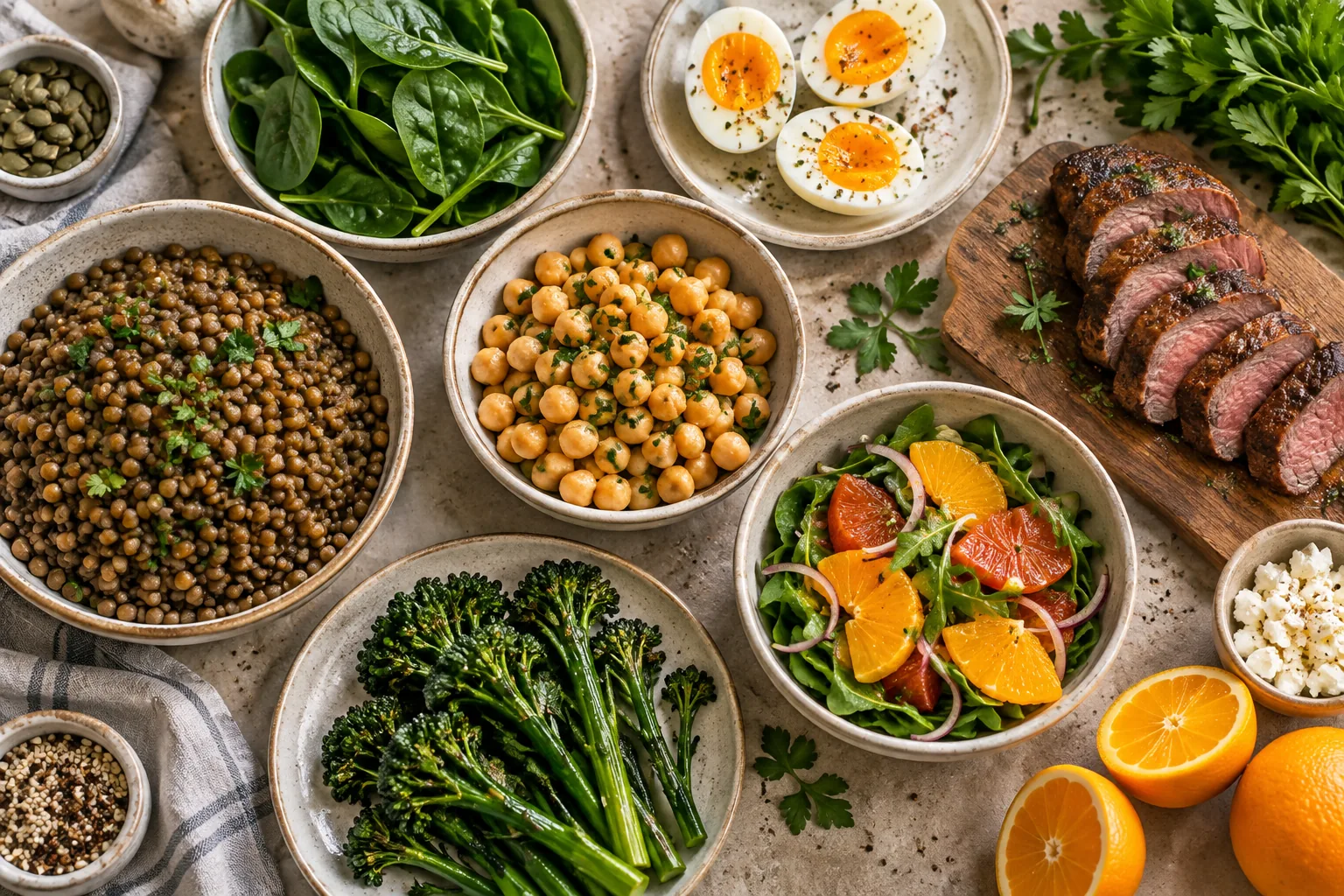
Food contains two main forms of iron. Haem iron is present in meat, poultry, fish and seafood and is generally absorbed more readily. Non-haem iron is found in lentils, fava beans, chickpeas, cowpeas and other beans, tofu, leafy vegetables, nuts and seeds, and fortified cereals or flours where available. Eggs also contain iron, but they are one contributor rather than a magical substitute for every other source [1, 2, 4]. The word “fortified” matters: check the label to confirm that iron has actually been added instead of relying on package design or a general health claim.
In practice, a family can rotate soft kofta or minced meat, poultry, boneless fish, lentils, mashed beans, hummus, or an age-appropriate fortified cereal. A child's portion does not need to resemble an adult plate; begin with a small age-suitable amount and let the child ask for more. Spinach is a useful part of a varied diet, but compounds in plants reduce the bioavailability of its iron, so it should not be treated as the sole remedy or the measure of a successful day [1]. A child does not have to eat meat every day to obtain iron either. What matters is having varied, repeated sources across the week and planning plant-based eating deliberately instead of allowing it to become a very narrow list [4, 10].
How can you help the body absorb iron from a meal?
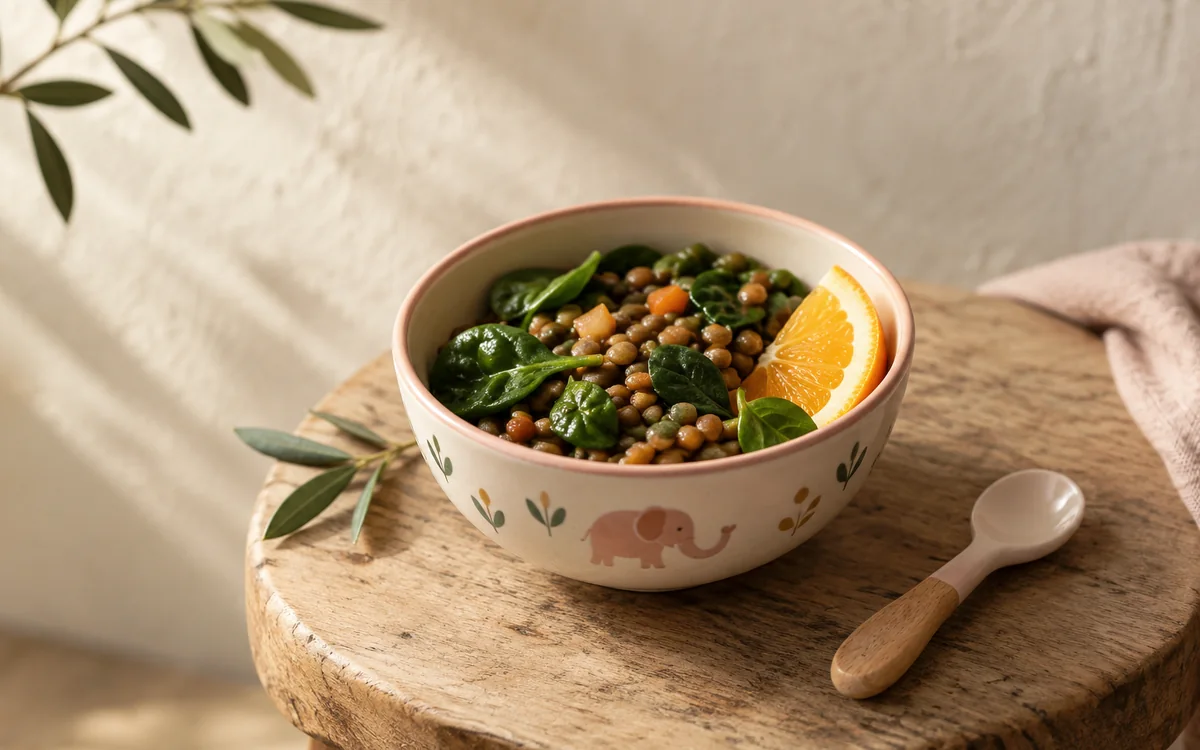
Vitamin C improves absorption of non-haem iron, so think of a simple meal pairing: a plant iron source alongside a fruit or vegetable rich in vitamin C. Examples include lentils with tomato or pepper, fava beans with tomato, chickpeas with pepper, or fortified cereal with age-appropriate strawberries or orange. Juice and vitamin C supplements are not required; ordinary fruit or vegetables can provide the pairing within a varied day [1, 2]. Meat, poultry or fish in a mixed meal can also improve absorption of non-haem iron from the other foods [1].
Tea and coffee are not suitable drinks for children, and their polyphenols can reduce iron absorption, so do not serve them with meals. Milk is nutritious, but it contains little iron, and large amounts can fill a child up and displace iron-rich meals. The answer is not to ban milk or separate every trace of calcium from every meal. The useful goal is to prevent milk from repeatedly replacing food and to preserve room in the day for varied meals [1, 5, 7]. If a child relies on milk and refuses most food, the issue is broader than adding spinach. Our guide to a child drinking too much milk and not eating explains the cycle of fullness, milk and iron risk without duplicating it here.
Build a realistic meal from ordinary family food
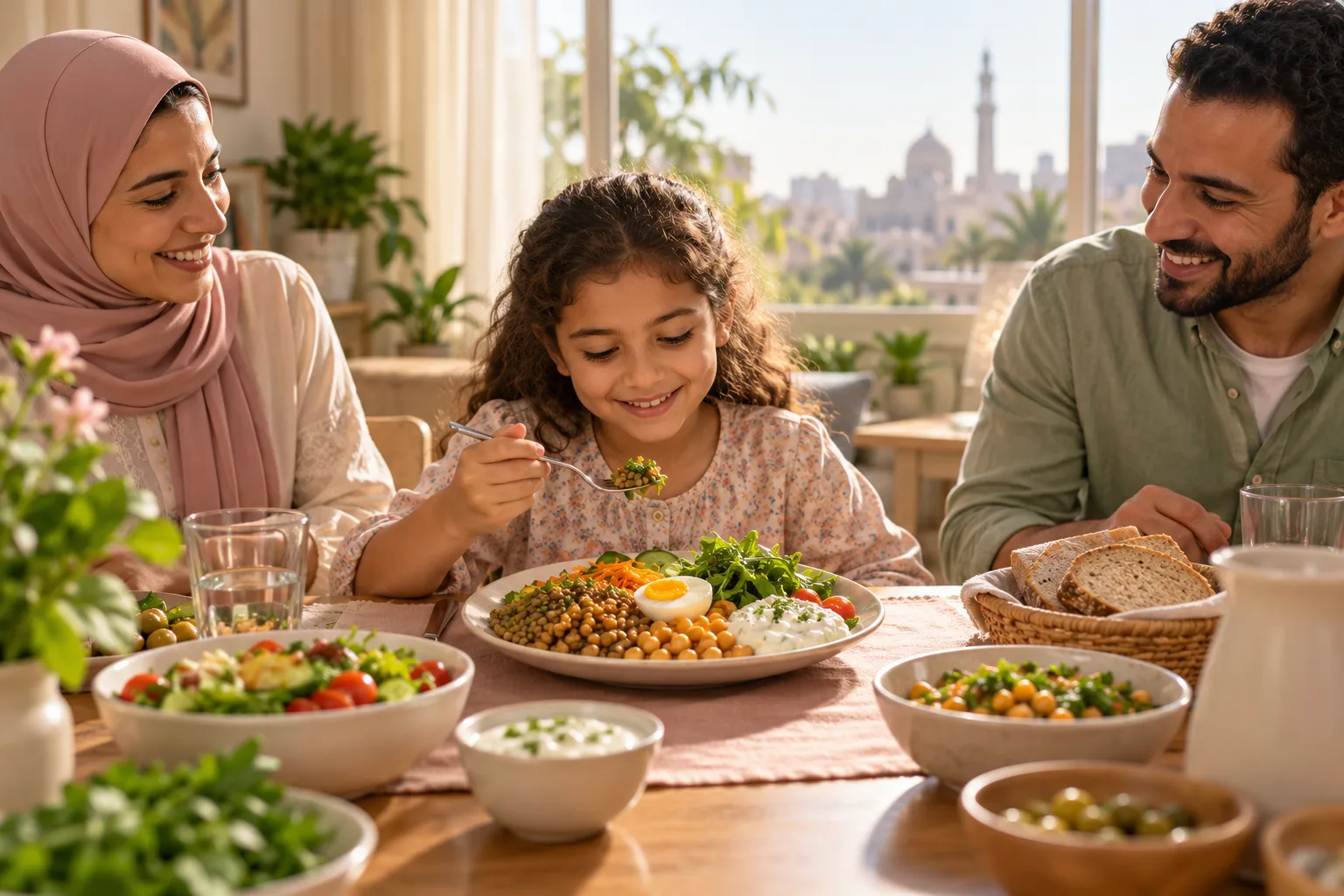
You do not need unusual ingredients or a perfect plate. Start with an iron source, add something containing vitamin C, then complete the meal with an energy food and a vegetable or fruit the child can manage. Breakfast could be an age-appropriate fortified cereal with milk and fruit, or an egg with bread and tomato. Lunch could be rice and lentils with tomato and pepper salad, pasta with a meat sauce, or boneless fish with potato and vegetables. Supper might include mashed fava beans with tomato and bread, or hummus with soft vegetables. These are meal-building ideas, not treatment recipes or fixed portions for every child [1, 2, 4].
Repeat a source in different forms instead of deciding after the first refusal. Lentils can be served as soup or mixed with rice, meat can be tender and minced rather than a dry piece, and beans can be mashed. Keep meals and snacks predictable, and offer a small amount of the unfamiliar food beside something the child knows. The adult decides what and when food is offered; the child decides how much to eat from what is available. Pressure, chasing with a spoon or bribing with sweets usually increases mealtime conflict rather than building calm acceptance [6]. Look at the pattern across several days rather than one meal. A light day is not a crisis, but a persistently tiny food list deserves review. To reduce dining table battles, see mealtime roles for parent and child.
If the child is selective or does not eat meat
Refusing meat does not automatically mean iron deficiency. The difficulty may be a fibrous texture, chewing or smell, and some children readily accept another source. Try tender minced meat, shredded poultry, boneless fish, eggs, lentils, fava beans, chickpeas, tofu or fortified cereal, with texture matched to age and feeding skill. Avoid hiding every food so completely that the child never learns about it, although an iron source can be incorporated into a familiar dish while it continues to be offered visibly and without pressure [4, 6]. If this is your main question, read Child refuses meat: is it iron deficiency? for alternatives and assessment signs without turning this page into a diagnostic guide.
A vegetarian pattern can be planned, but it needs attention because plant iron is less readily absorbed and compounds in grains and pulses reduce bioavailability. Variety, fortified sources and vitamin C with meals can help. A vegan pattern also needs reliable review of vitamin B12 and other nutrients, not iron alone [1, 10]. Seek specialist help when the food list has narrowed to only a few items, the child coughs or chokes during eating, entire textures are rejected, meals take an unusually long time, or height and weight are not following their trajectory. Those features may point to a feeding or swallowing difficulty, and simply adding an iron-rich recipe will not address the cause. If a teenager is cutting back on food out of fear of gaining weight, read about teen fears of weight gain.
Age, texture and safety are part of choosing the source
At around 6 months, once developmental signs of readiness are present, milk alone no longer meets every nutritional need. Complementary foods containing key nutrients, including iron, are introduced while age-appropriate milk feeding continues [2, 3]. A premature or low-birth-weight infant, or a baby with particular health conditions, may need a different plan from their clinician. Do not use cow's milk as the main drink before 12 months, and do not start a supplement independently. Because infant guidance also covers readiness, textures and meal frequency, see our guide to iron-rich first foods for babies aged 6 to 12 months rather than applying advice for an older child to an infant.
An iron source is only useful if it is served safely. Cook meat or poultry until tender, remove skin, bones and fish bones, then mince, shred or mash it according to the child's feeding ability. Whole nuts and seeds, large or tough meat pieces and other hard foods can be choking hazards. For young children, nuts and seeds need to be finely ground or a smooth butter spread thinly rather than offered as a sticky spoonful, while also following appropriate allergy-introduction advice [12]. Keep the child seated upright and calm, and supervise throughout eating. Eating in a moving car or while running and playing increases risk. Safety does not mean delaying texture progression indefinitely; textures advance with the child's developing skills and clinical guidance [3, 12].
When is food not enough, and what is the next step?
If tests confirm iron deficiency or anaemia, improving food remains important for correcting a dietary driver and preventing recurrence, but it is often not a substitute for calculated treatment. The formulation, dose, duration and monitoring depend on the child's weight, age, severity and cause. Iron concentration differs between products, and excess iron can be toxic [7, 9, 11]. Do not give iron “just in case” or copy another child's prescription. If a child may have swallowed tablets or drunk an excessive amount, contact emergency services or a poison centre immediately and take the container with you, even if the child looks well or early symptoms settle [9].
Seek urgent assessment for difficulty breathing at rest, fainting, profound lethargy or difficulty waking, an obviously racing heart, continuing bleeding, vomiting blood, or unexplained black tarry stool. Arrange a timely appointment for persistent pallor or fatigue, cravings for non-food items, heavy menstrual bleeding in an adolescent, chronic abdominal pain or diarrhoea, blood in stool, faltering growth, or an extremely restricted food list [5, 7, 11]. Before the visit, record three ordinary days of food and drink, approximate milk volumes, supplements, symptoms and previous growth measurements. In clinic, assessment begins with history, examination and growth review; tests need a clinical reason. If you need a structured review, you can request a paediatric consultation so the clinician can decide whether food changes, tests, treatment or follow-up are appropriate.