Mounjaro and Weight Loss: Why Bone Health Enters the Conversation
With the widespread use of tirzepatide, known commercially as Mounjaro, for type 2 diabetes and obesity management, many patients undergoing treatment ask how the medication affects their skeleton. Tirzepatide acts as a dual agonist of glucose-dependent insulinotropic polypeptide (GIP) and glucagon-like peptide-1 (GLP-1) receptors. By regulating central appetite circuits and delaying gastric emptying, it frequently leads to substantial reductions in body weight, exceeding 20% of total body mass in pivotal clinical trials such as SURMOUNT-1 [3]. However, rapid and pronounced weight reduction initiates profound physiological and metabolic adaptations. These changes extend beyond adipose tissue loss to involve lean muscle mass, connective tissues, and bone remodeling. This raises an essential question for patients and clinicians alike: does tirzepatide exert a direct adverse effect on bone tissue, or is rapid weight reduction itself the primary driver of alterations in bone mineral density? Online discussions frequently conflate alarming headlines with unverified claims, failing to separate pharmacological properties from the mechanical consequences of losing body mass. If you are currently prescribed Mounjaro or considering treatment with your physician, understanding what current science demonstrates—and what remains under investigation—is essential. Reviewing the overall progression of treatment helps align your nutritional and physical activity goals; our guide to Mounjaro results and expectations outlines what patients typically encounter across treatment milestones [3]. This guide examines the clinical evidence, physiological mechanisms, vulnerable groups, and practical steps to safeguard skeletal integrity during weight loss.
Read also: Mounjaro results timeline and expectations
Separating Three Distinct Issues: Osteoporosis, Osteoarthritis, and Temporary Body Aches
One of the most frequent sources of confusion in discussions surrounding Mounjaro and skeletal health is the conflation of three medically distinct entities. The first is osteoporosis, a systemic skeletal disorder defined by low bone mineral density and microarchitectural deterioration of bone tissue, predisposing individuals to fragility fractures from low-energy trauma [9,13]. A fundamental principle that every patient must grasp is that osteoporosis is inherently silent. Decreased bone density does not generate daily bone aches, localized throbbing, or generalized discomfort; pain only manifests once a structural fracture occurs, most commonly at the femoral neck, vertebrae, or distal radius [9]. The second condition is osteoarthritis, a degenerative joint disease characterized by progressive breakdown of articular cartilage, subchondral bone remodeling, and secondary synovial inflammation, particularly in weight-bearing joints such as knees and hips [10]. For people with excess weight and knee osteoarthritis, intentional weight loss helps rather than harms [10]. The landmark STEP 9 randomized trial published in the New England Journal of Medicine demonstrated that semaglutide administered for weight management in individuals with obesity and moderate-to-severe knee osteoarthritis produced marked reductions in knee pain scores and physical disability; this trial evaluated semaglutide in knee joint disease, not tirzepatide, and focused on osteoarthritis rather than bone mineral density [10]. The third entity is temporary general body or muscle aches, which some people on Mounjaro report. This feeling is different from osteoporosis and osteoarthritis and does not by itself mean bone damage or calcium loss, but aches that persist or worsen need a medical review. Distinguishing these three conditions dispels unwarranted anxiety and directs clinical attention where it belongs.
What Does Clinical Evidence Show About Tirzepatide and Bone?
When evaluating whether Mounjaro exerts a direct pharmacological impact on skeletal tissue, scientific rigor demands acknowledging that dedicated, long-term human bone density data for tirzepatide remain limited, given its relatively recent market introduction. Reviewing the official United States FDA Prescribing Information and the United Kingdom Summary of Product Characteristics (SmPC) confirms that bone mineral density loss, osteoporosis, and increased fracture risk are not listed as warnings, precautions, or adverse drug reactions for Mounjaro [1,2]. Regulatory warnings for tirzepatide focus specifically on thyroid C-cell tumor signals observed in rodent bioassays, acute pancreatitis, hypoglycemia risk when co-prescribed with insulin secretagogues, acute kidney injury secondary to volume depletion, and acute gallbladder disorders [1,2]. Across broader literature, a comprehensive 2026 systematic review and meta-analysis published in Drugs examined the musculoskeletal outcomes of incretin-based therapies across 60 studies comprising more than 1.25 million individuals [4]. In the most-adjusted models the authors found no effect on bone mineral density or fractures, while lean mass fell with low certainty, largely in line with weight loss [4]. Furthermore, a large 2026 retrospective cohort study published in Osteoporosis International evaluating older adults with type 2 diabetes observed lower hazard ratios for falls and femoral fractures among patients treated with semaglutide or tirzepatide compared to those receiving DPP-4 inhibitors [5]. This is an observational association and does not prove that the medicines caused the difference [5]. Biologically, GIP receptors are expressed on osteoblasts and osteoclasts, and preclinical models indicate that postprandial GIP signaling promotes bone formation and curbs resorption—a concept known as the entero-osseous axis. Nonetheless, translational evidence remains preliminary and cannot be interpreted as established clinical osteoprotection in humans. The current clinical consensus is: tirzepatide is not demonstrated to induce osteoporosis, nor is it shown to protect bone independently of body weight changes. Clinical management must therefore focus on countering the well-characterized skeletal consequences of rapid weight reduction itself.
How Rapid Weight Loss Itself Affects Bone Mineral Density
If studies have not shown a direct harmful effect of tirzepatide on bone, why do metabolic specialists and rheumatologists closely monitor bone density during substantial weight reduction? The explanation lies in human skeletal physiology and its adaptive response to changing body mass. Bone is a dynamic, living tissue undergoing perpetual remodeling, wherein osteoclasts resorb older bone matrix and osteoblasts synthesize new bone tissue. The primary driver of bone changes during weight reduction is mechanical unloading [7]. Under Wolff’s law and mechanostat theory, the skeletal framework continuously adapts its architecture and density to the gravitational and compressive loads imposed upon it [7]. When an individual loses a large amount of body weight over several months, the compressive forces acting on the femoral neck, lumbar spine, and pelvis diminish. Mechanosensitive osteocytes interpret this reduced strain as decreased demand, leading to downregulated osteoblastic bone formation and an adaptive resorption of mineralized tissue [7]. A secondary driver involves severe caloric deficit and altered endocrine signaling. Pronounced energy restriction suppresses circulating leptin, insulin, and insulin-like growth factor 1 (IGF-1), while decreasing bioavailable estrogen, all of which are essential anabolic signals for skeletal homeostasis [7]. A third critical mechanism is concomitant loss of skeletal muscle mass. Skeletal muscles do not merely facilitate ambulation and balance; their contractile pull exerts dynamic mechanical stress on bone periosteum, stimulating osteogenesis. Our detailed review on protecting muscle while losing weight examines how safeguarding lean tissue preserves functional capacity during active weight management [7,8]. Finally, profound appetite suppression can inadvertently curtail the intake of essential bone-forming substrates, specifically protein, calcium, and vitamin D. The primary pathophysiological cause of osteoporosis is an imbalance where bone resorption outpaces bone deposition; unmonitored rapid weight loss can accelerate this imbalance unless counterbalanced by deliberate nutritional and mechanical countermeasures.
Who Faces Higher Bone Risk Before Starting Treatment?
Skeletal susceptibility is not uniform across all individuals taking Mounjaro. A young adult embarking on weight reduction with robust baseline bone mass faces a fundamentally different risk profile than an individual presenting with pre-existing risk factors for skeletal fragility. Evidence-based guidelines from the American Association of Clinical Endocrinology (AACE) and the United Kingdom National Institute for Health and Care Excellence (NICE) delineate specific clinical groups at elevated risk for fragility fractures [9,13]. The foremost group consists of postmenopausal women, in whom the cessation of ovarian estrogen production accelerates trabecular and cortical bone loss in early postmenopause [6,9]. A second group comprises older adults aged 65 and above, in whom age-related reductions in bone mineral density intersect with neuromuscular decline, sarcopenia, and heightened fall risk [5,9]. A third vulnerable category includes individuals with a personal history of prior low-trauma fragility fracture, such as vertebral compression, distal forearm, or hip fractures resulting from a fall from standing height [9,13]. A fourth group involves patients receiving long-term oral glucocorticoid therapy (taken regularly for 3 consecutive months or longer), which can suppress osteoblastic activity and reduce bone formation [9,13]. Additional risk factors include low baseline body mass index, prior anorexia nervosa, chronic kidney disease, hypogonadism, rheumatoid arthritis, and gastrointestinal malabsorption disorders such as celiac disease or Crohn's disease [9,13]. Deciding whether to perform a baseline dual-energy x-ray absorptiometry (DEXA) scan is not a universal mandate for every young, uncomplicated patient initiating medical weight management; it represents a shared clinical decision tailored to validated fracture assessment tools and clinical presentation. Our comprehensive overview of who needs a bone density test outlines the formal criteria guiding DEXA referrals [9,13]. Furthermore, if you are currently taking prescribed osteoporosis therapeutics—such as oral or intravenous bisphosphonates, denosumab, or anabolic bone agents—you must never interrupt or discontinue these therapies upon starting Mounjaro; both regimens require coordinated medical oversight.
Nutrition and Movement: Supporting Bone and Muscle During Treatment
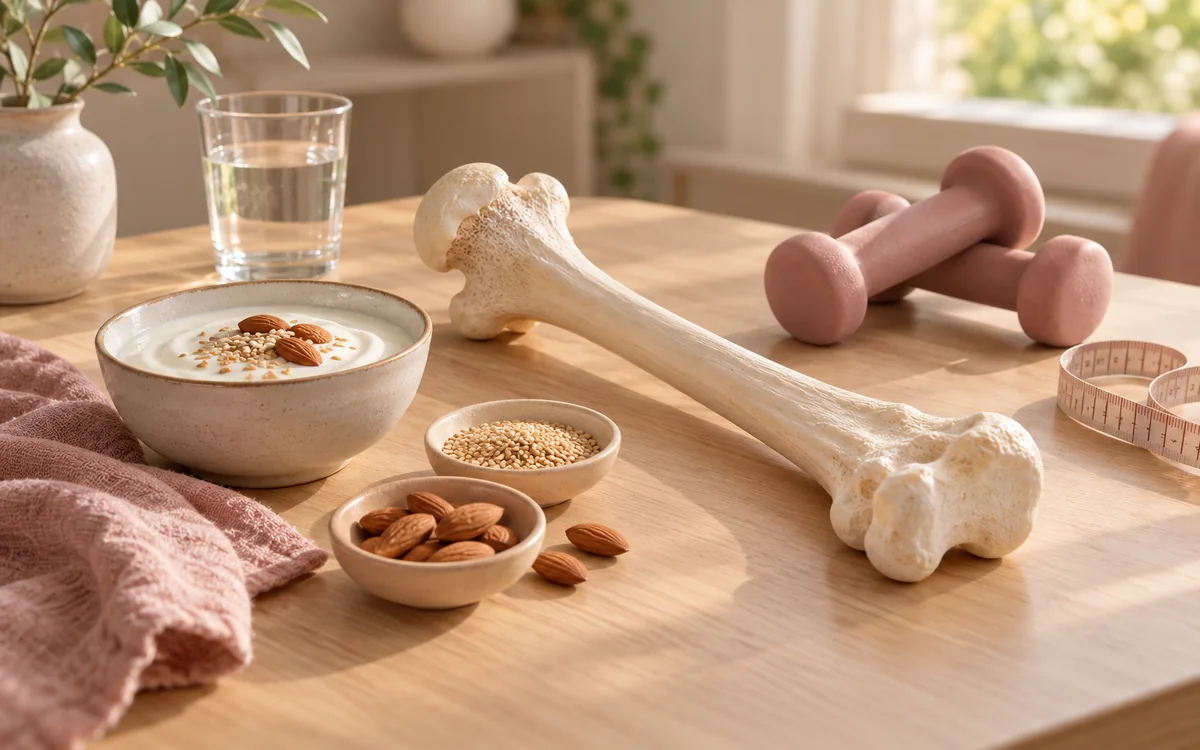
When tirzepatide suppresses appetite, patients frequently reduce their food volume so drastically that their intake falls below the threshold required to maintain skeletal homeostasis. Bone remodeling demands a continuous supply of macronutrients and micronutrients to synthesize the collagen matrix and deposit mineralized hydroxyapatite. The foundational macronutrient is dietary protein. A landmark systematic review and meta-analysis conducted by the National Osteoporosis Foundation and published in the American Journal of Clinical Nutrition found that higher dietary protein intake may have a protective effect on lumbar spine bone mineral density and does not adversely affect bone, refuting historical misconceptions that protein consumption promotes bone demineralization [11]. Distributing high-quality protein across daily meals—utilizing poultry, eggs, dairy, fish, legumes, and soy products—provides the necessary amino acids for both the organic bone matrix and muscle protein synthesis [11]. The primary structural micronutrient is calcium. Food is the first place to look for calcium, and supplements suit clear gaps reviewed with a clinician [12]. Excellent dietary sources include fermented yogurt, traditional cheeses, fortified plant-based milk alternatives, dark leafy greens, sesame seeds and tahini, and canned bony fish such as sardines [12]. Facilitating calcium absorption is vitamin D, which regulates intestinal transport proteins and osteocytic mineralization. Given that dietary sources of vitamin D are limited, measuring serum 25-hydroxyvitamin D concentrations guides clinical decisions regarding targeted replacement [14]. A critical safety guideline is avoiding unmonitored, megadose calcium or vitamin D supplements; excessive supplemental calcium intake without medical indication may heighten the risk of nephrolithiasis and vascular calcification [12,14]. There is no universal supplement dose suitable for all patients; decisions regarding calcium and vitamin D supplementation are tailored individually with the treating physician and clinical dietitian, based on dietary intake calculations, baseline serum biochemistry, and renal function. Our dedicated article on nutrient gaps during rapid weight loss details structured laboratory monitoring to avoid nutritional deficiencies during treatment [11,12].
Nutritional adequacy alone cannot preserve skeletal mass during weight loss in the absence of mechanical stimuli signaling osteoblasts to sustain structural bone formation. Physical activity provides the dynamic physiological load necessary to partially offset the mechanical unloading caused by weight loss. A pivotal randomized controlled trial by Villareal and colleagues, published in the New England Journal of Medicine, evaluated older adults with obesity undergoing caloric restriction and compared aerobic exercise, resistance training, and combined exercise modalities [8]. Total-hip bone density and lean mass fell less with combined or resistance training than with aerobic exercise alone, and physical performance improved most with combined training [8]. To safeguard skeletal integrity, two general categories of physical activity are recommended. First, weight-bearing activities involve moving against gravity while upright, such as purposeful walking, brisk strolling, and gentle stair negotiation for individuals with compatible joint status. Second, progressive resistance exercises utilize muscle contractions against an opposing force, whether through bodyweight movements, elastic resistance tubing, or external resistance. These physical modalities do not necessitate rigid athletic regimens or aggressive loading that could aggravate osteoarthritic joints; no universal workout prescription is assigned here. Instead, movement selection and progression are customized to individual cardiovascular tolerance, baseline joint health, and balance stability in consultation with your healthcare provider. Moreover, pursuing a steady, sustainable rate of weight reduction rather than extreme crash starvation allows skeletal and muscular tissues time to adapt, mitigating aggressive bone resorption.
Medical Follow-Up Steps and Consultations at La Rose Clinics
Managing weight reduction with Mounjaro safely requires a coordinated clinical approach that accounts for skeletal, muscular, and metabolic health before and throughout treatment. Preparing effectively for your clinical review begins with documenting your comprehensive health history: Have you experienced prior fractures from minor trauma? Is there a family history of osteoporosis? What is your complete medication list, including corticosteroids, thyroid treatments, and over-the-counter supplements? A critical safety rule must be emphasized: never discontinue, initiate, or adjust the dose of any prescribed medication independently, whether it is your tirzepatide regimen or an existing osteoporosis prescription. Reference guidelines use fracture risk factors, such as a previous fracture, age and corticosteroid use, to decide who needs a deeper assessment [9,13]. At La Rose Clinics, medical weight management and clinical nutrition consultations (including Mounjaro and Wegovy follow-up) are led by Dr. Shimaa Fouad at the Maadi branch and at the Fifth Settlement branch on Wednesdays from 3:30 pm. When comprehensive metabolic, renal, or internal medicine reviews or ultrasound are warranted, internal medicine clinics are situated exclusively at the Maadi branch. For patients presenting with persistent joint pain, suspected inflammatory arthritis, or requiring specialist evaluation for established osteoporosis, rheumatology specialist Dr. Shimaa Sherif provides clinical consultations at the Maadi branch and at the Fifth Settlement branch on Wednesdays. It should be noted that diagnostic bone mineral density scans (DEXA) and formal physiotherapy rehabilitation services are performed at specialized external radiology and physical therapy facilities through collaborative clinical referral; La Rose Clinics does not operate in-house DEXA imaging or in-house physiotherapy, while InBody body-composition analysis is available in-house. You can arrange your clinical review and discuss your individual risk profile by booking an assessment at La Rose Clinics, ensuring a personalized management plan that safeguards your skeletal strength and vitality for the long term.