Eating with Mounjaro and Wegovy: a flexible plan, not a punishment diet
If your clinician prescribed tirzepatide, known as Mounjaro, or semaglutide, known as Wegovy, a lower appetite does not mean your body no longer needs nourishment. The medicine may help you feel full sooner and slow stomach emptying, while nausea and constipation are common effects. The aim is therefore not to exploit low appetite by avoiding food, but to make each small amount you can eat useful and tolerable [1, 2, 3, 6, 7].
There is no single list of “forbidden Mounjaro foods” that applies to everyone. A food or drink may worsen nausea or reflux for one person and cause no problem for another. The foundation is smaller meals, slower eating, a clear protein food, vegetables or fruit, and grains or pulses as tolerated, with fluids spread through the day. If a symptom keeps returning, record the food, portion and timing instead of removing whole food groups on your own [3, 8, 10, 11].
This article does not replace the GLP-1 medicines practical guide, and it does not set a daily calorie prescription, medication dose or escalation date. Needs differ with age, health conditions, diabetes, kidney function, activity and the ability to eat and drink. Any medicine change belongs with the prescribing clinician [1, 2, 3].
Start with protein, then complete the plate to match your appetite
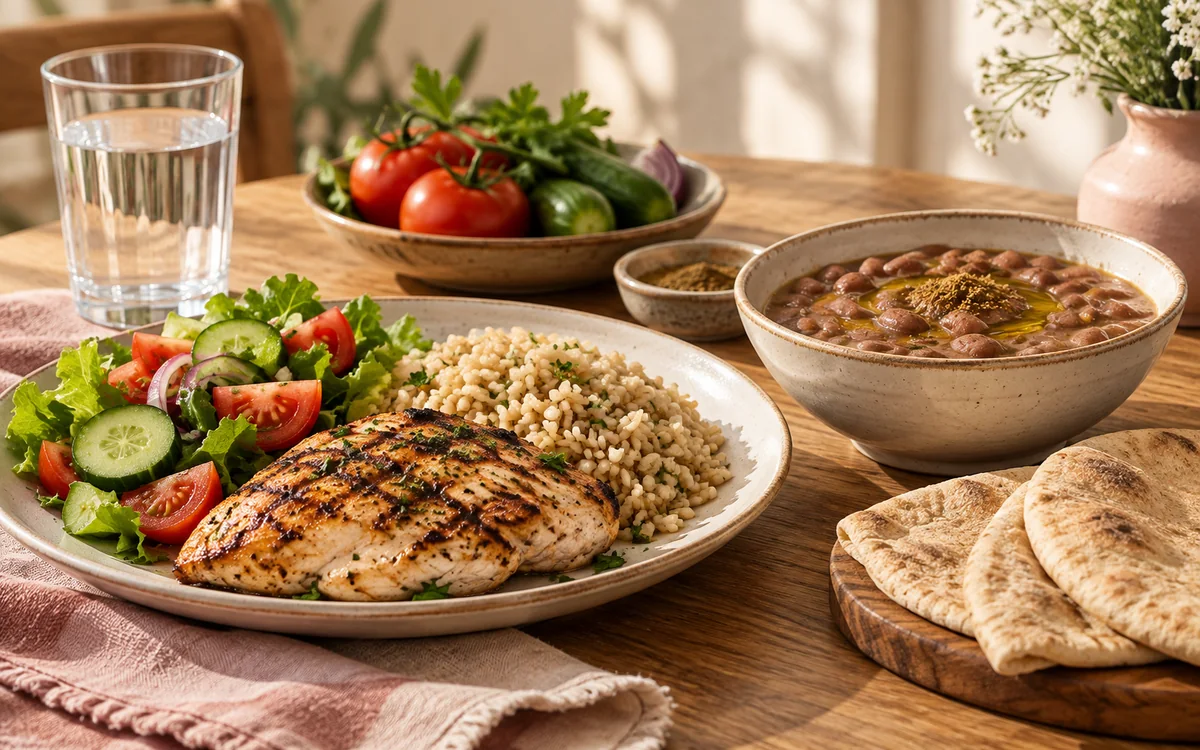
When you become full quickly, the order of the plate matters. Begin with a protein food you can tolerate: eggs, yoghurt, lower-fat and lower-salt cheese, beans or lentils, skinless chicken, or grilled or baked fish. Then add cooked vegetables or salad if tolerated, plus a suitable amount of bread, rice or potato. Carbohydrates are not “forbidden”; the point is to avoid losing the opportunity for protein and nutrient-dense foods because sweets or fried food came first and filled you up [3, 8].
Divide food into small, structured eating opportunities instead of one huge meal. That may mean a simple breakfast, small lunch, light dinner and a protein-containing snack if appetite allows. Eat slowly, chew well and stop at the first comfortable fullness signal; continuing to marked fullness may worsen nausea or vomiting. If fluids with food make fullness worse, try small sips between meals while continuing to drink across the day [3, 8, 10, 11].
Protein matters, but there is no single target that suits everyone, and protein powder is not automatically necessary. Kidney disease, extremely low appetite or repeated vomiting requires an individual plan. How to protect muscle while losing weight explains the broader picture of protein, movement and strength; the practical rule here is simply to make a suitable protein source the first visible part of most eating opportunities [3].
Ten practical foods when appetite is low
No food can magically prevent every symptom or preserve muscle by itself, but these choices make small, nourishing meals easier to assemble: 1) boiled eggs or an omelette with little oil; 2) plain yoghurt if dairy suits you; 3) fava beans prepared with little oil; 4) light lentil soup; 5) grilled or poached chicken; 6) grilled or baked fish; 7) cooked vegetables such as courgette, carrots or green beans; 8) oats or whole-grain bread when fibre is not worsening nausea; 9) a tolerated whole fruit; and 10) boiled potato or rice as a modest part of a balanced meal, especially on a sensitive-stomach day [3, 4, 8, 12].
Choose from the list rather than trying to eat everything in one day. Eggs, yoghurt, chicken and fish help a small meal contain protein. Fava beans and lentils provide plant protein and fibre, although you may need to start with a small portion if bloating or nausea is present. Cooked vegetables may feel gentler than a huge raw salad during symptoms, while simple rice or potato may be easier to tolerate than fried or high-fat food [3, 8, 10, 11].
If the smell of hot food triggers nausea, try a cool or room-temperature choice such as yoghurt, a boiled egg, or a small sandwich made with safely stored cold chicken. If one food bothers you, temporarily exchange it for another option from the same group instead of removing all protein or vegetables. The aim is gradual variety you can sustain, not a rigid list [3, 10, 12].
Food for nausea: smaller, slower and lower in fat
If nausea is mild and you can still drink and eat, make the meal smaller and slower. Do not wait until intense hunger if that worsens nausea, and do not force a large plate. Simple options may include toast, rice, boiled potato, light soup, yoghurt, eggs, or a small piece of chicken or fish. Take a few bites, pause, and continue only if the feeling remains settled [3, 8, 10, 11, 12].
Temporarily reduce fried, fatty, very sweet, spicy or strongly scented food because large, high-fat meals may worsen fullness and nausea. This does not mean living on toast and rice indefinitely. Simple food is a temporary adaptation during symptoms; as you improve, gradually bring back protein, vegetables, fruit and grains. Record what helped and what made symptoms worse because tolerance is individual [3, 9, 10, 11].
Do not treat nausea as proof that the medicine is “working well,” and do not change or stop a dose on your own. Weight-loss injection nausea and constipation: what now? explains severity assessment and clinician contact in detail. If nausea persists, intake becomes very low, or you need an anti-nausea medicine, contact the clinician or pharmacist rather than relying on food alone [6, 7, 10].
For constipation: increase fibre gradually and pair it with fluids
Fibre from fava beans, lentils, oats, whole-grain bread, fruit and vegetables can help make stool softer, but increasing it all at once may cause bloating and cramps, especially when fluid intake is low. Begin with a small increase, watch tolerance and drink suitable fluids across the day so the fibre can work. Fluid needs are not one fixed number: heat, activity, heart or kidney disease, vomiting and diarrhoea all change them, so ask your clinician if you have a fluid restriction [4].
A practical approach is to add some cooked vegetables to lunch, one piece of fruit, or a small portion of lentils instead of combining a huge bean plate, a large salad and oats on the same day. During active nausea, the first priority is being able to drink and keep simple food down; bring higher-fibre foods back gradually as the stomach settles. Light activity that is suitable for your health may also help, but severe or persistent constipation should not lead to endless food experiments [3, 4].
Contact a clinician or pharmacist if constipation does not improve or if you are considering a laxative, and do not stop this or another medicine on your own. Severe or worsening abdominal pain, marked abdominal swelling, repeated vomiting, or inability to pass gas or stool needs prompt assessment; that is not a situation to manage simply by adding more fibre [1, 2, 6, 7].
What may worsen nausea and reflux?
Start by examining meal size and cooking method before blaming one ingredient. A large meal of fried food or rich sauces, very sweet desserts, or rapid eating without adequate chewing may worsen fullness and nausea. Common reflux triggers include high-fat or spicy food, chocolate, coffee, mint, tomatoes and citrus for some people. You do not need to remove all of them. Reduce the item that repeatedly triggers your symptoms, make the final meal smaller, and avoid lying down straight after it [5, 9, 11, 14].
For alcohol, current NHS advice says it is best to avoid it with tirzepatide and not to drink it with semaglutide because it can increase nausea or vomiting. Alcohol itself may worsen reflux and can complicate glucose management for some people, particularly alongside other diabetes medicines. Do not use it as a way to “stimulate appetite,” and discuss your situation with your clinician if drinking is a regular part of your week [5, 6, 7, 14].
Carbonated drinks and large volumes of fluid with a meal may increase bloating or fullness for some people. Try small sips of water, a simple warm drink if tolerated, and distribute drinks between meals. If coffee worsens reflux, reduce it or change its timing rather than assuming it is forbidden for everyone using these injections [5, 8, 9].
A simple Egyptian day without calorie counting
This is an example of structure, not a fixed prescription or mandatory portion. Breakfast might be an egg with a piece of bread and cucumber, or yoghurt with a little oat and fruit. If fava beans feel comfortable, use a small portion with little oil and vegetables rather than a huge plate loaded with fatty additions. Eat calmly and stop at comfortable fullness [3, 8].
Lunch may begin with grilled chicken or fish, cooked vegetables, and a suitable amount of rice or potato. On a plant-based day, lentil soup or fava beans can provide protein, remembering that pulses may increase bloating for some people. If lunch appetite is low, divide the plate: eat the protein and some vegetables, then return to a small amount later instead of forcing yourself to finish [3, 4, 8].
Dinner could be yoghurt and an egg, light lentil soup, or a small chicken sandwich with cooked vegetables. A snack, if needed, might be yoghurt or fruit with a small handful of nuts when fat is not worsening nausea. Drink at intervals rather than taking all your fluid in one large amount with food [3, 4, 8].
If you have diabetes and use insulin or another medicine that can cause low glucose, do not cut food at random; appetite loss may require a review of the diabetes plan with your clinician. Kidney disease, food allergy, swallowing difficulty or a history of disordered eating also means this example needs individual adaptation [1, 2, 3, 7].
Injection timing, tiredness and when to seek help
Is it acceptable to take Mounjaro after eating? Yes. The US Mounjaro label says the weekly injection may be used at any time of day, with or without meals. The Wegovy injection label states the same principle. A meal is therefore not required for the injection, and you do not need to rearrange the prescribed day simply to pair it with lunch or dinner. Follow your clinician's instructions and the leaflet for the pen you actually have, and do not change timing or dose based on general online advice [1, 2].
Does Mounjaro make you sleepy? Sleepiness is not an intended sedative action, although tiredness is listed among common effects in current NHS guidance. Tiredness may also coincide with low intake, dehydration, vomiting, or low glucose in someone using insulin or certain diabetes medicines. If it is severe, new or persistent, or comes with dizziness, sweating or confusion, contact a clinician and do not drive when you cannot concentrate safely [6, 7].
Seek prompt assessment if vomiting repeats or you cannot keep fluids down, urine becomes dark or reduced, or dizziness persists. Severe continuing abdominal or back pain, swelling of the face or tongue, breathing difficulty or fainting needs urgent care. Read Mounjaro and Wegovy serious side effects: red flags for detail rather than assuming every pain is caused by food [1, 2, 6, 7, 13].
If you need a plan fitted to your symptoms, food and medicines, you can book a consultation with the medical team at La Rose. Bring the medicine name, last injection date, medication list, and a two- or three-day record of food, drinks and symptoms; this helps the team distinguish meal-size problems, low fluid intake, a food trigger, or a symptom that needs medical review [3, 8].