A Simple Healthy Lunchbox Formula, Not a Photo Contest
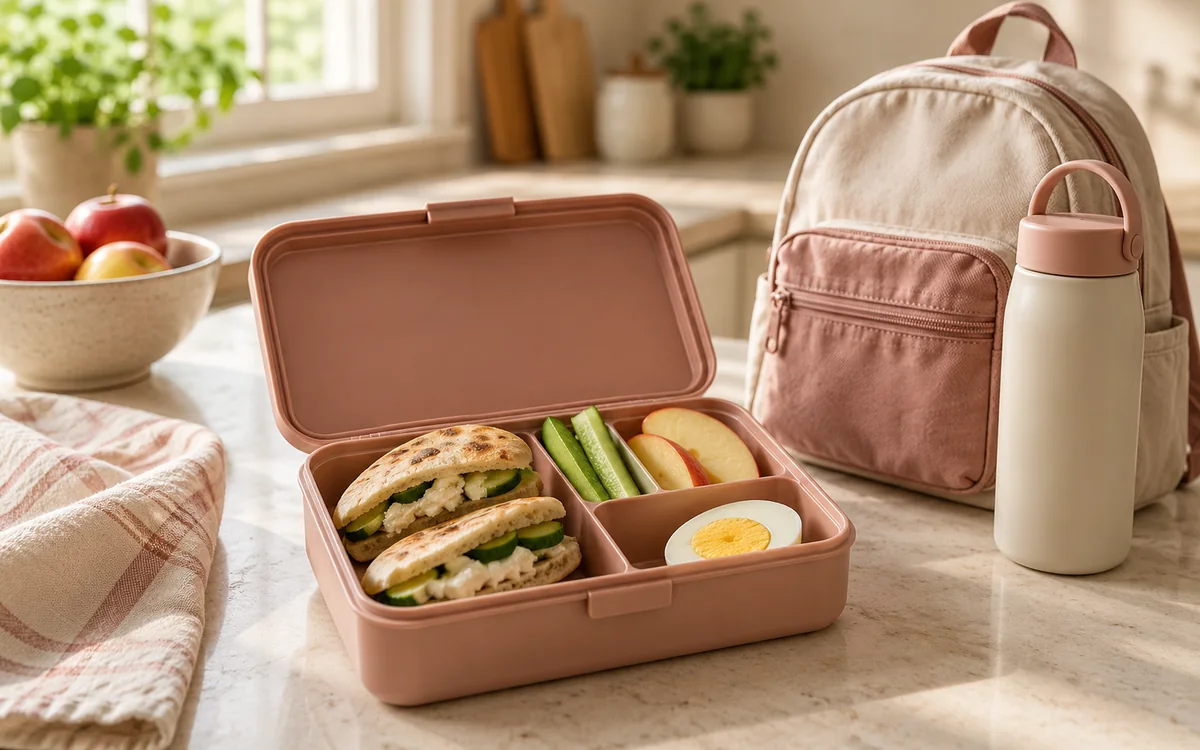
A healthy lunchbox does not need to be large, decorative or complicated. Think of four flexible parts: a familiar carbohydrate for energy, a protein or iron source, a fruit or vegetable, and water. One simple example is a small baladi-bread sandwich with egg, age-appropriate cucumber pieces, and a bottle of water. Balance is judged across the day and week; one box does not have to contain every possible food. General guidance supports a varied pattern built around minimally processed foods, grains, pulses, vegetables and fruit, while NHS lunchbox ideas build the main item around bread, rice, pasta or potatoes with a suitable filling and produce [1, 2].
Start with a carbohydrate the child already knows, such as baladi bread, toast, potato, pasta or rice, according to the storage available. Add a protein or iron source such as egg, chicken, pasteurised cheese, yoghurt, fava beans, lentils or chickpeas. Pulses, eggs, meat and fish can provide protein and iron, and meat-free choices can be practical when they are varied and suited to the child's age [7]. Then add a small, manageable amount of fruit or vegetables and make water the routine drink. The portions should reflect the child's age, appetite, break time and whether breakfast was substantial; there is no single correct lunchbox size for every child [11, 12].
If growth, weight or appetite is a concern, a lunchbox is not a diagnostic tool. Our child nutrition and growth visit guide explains how clinicians review the growth curve and the whole day's intake instead of judging one meal [7, 12].
Realistic Portions and Child Involvement Reduce Waste
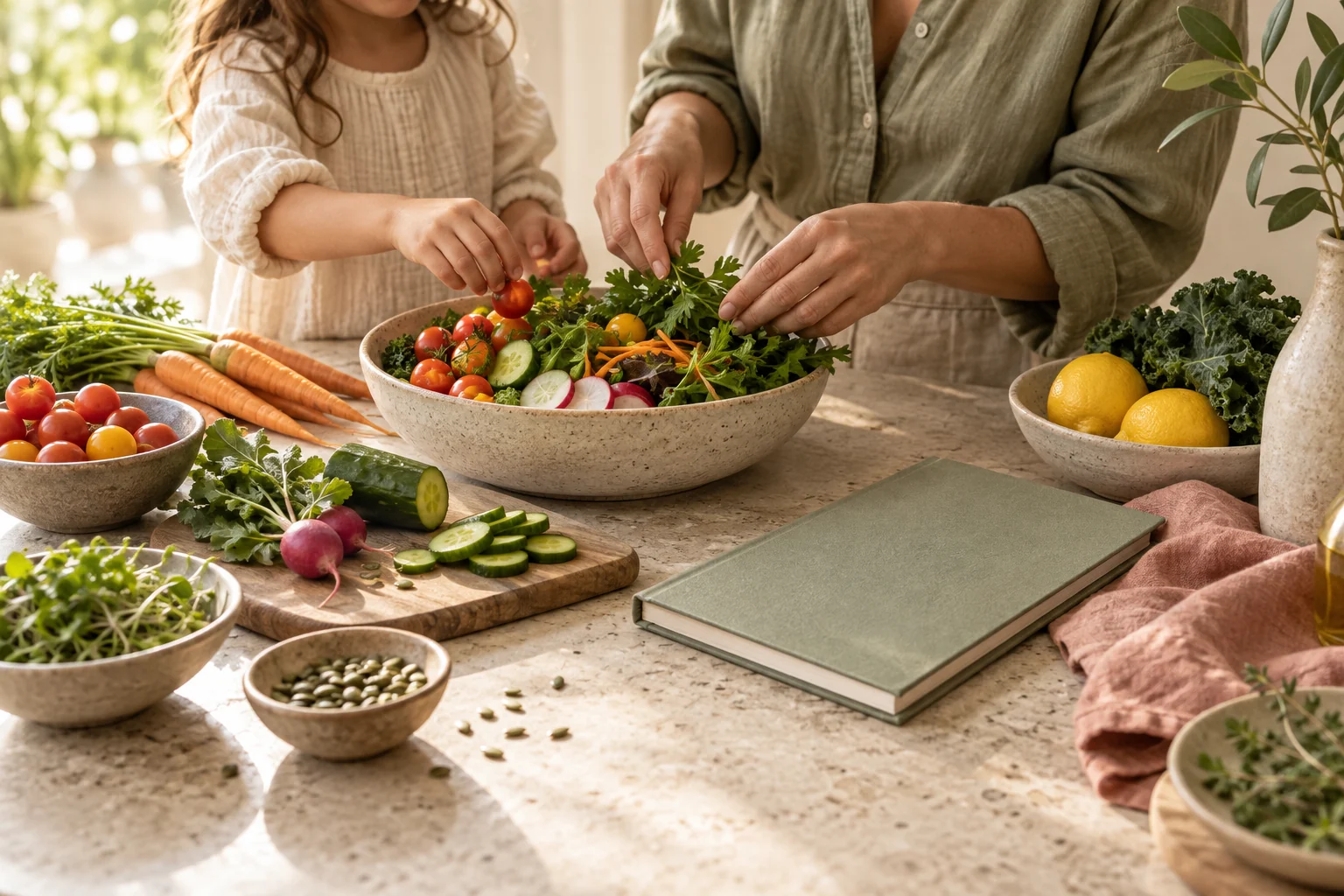
A box filled to the lid is not automatically more nutritious. School breaks are short, and a child may be busy talking and playing or may struggle with wrappers and containers. Start with an amount the child can usually finish, especially when a food is new, and add only a small extra item for a long day. The child decides how much to eat from what is offered; pressure and commentary about every bite can turn food into conflict. American Academy of Pediatrics guidance supports offering nutritious choices, allowing the child to decide the amount, and involving children in choosing or preparing food [11, 12].
Before the week begins, offer two clear options instead of an open question: egg or cheese sandwich, apple or mandarin? The child can wash cucumber, choose a container or help wrap a sandwich. Participation does not guarantee an empty box, but it gives the child some control and reveals practical preferences. Observe what returns for several days. Was the portion too large for the break? Was the sandwich dry? Was the fruit hard to open? Did a cold pack make the bread soggy? Adjusting the system from evidence is more useful than blame [2, 11, 12].
Affordable planning begins with ordinary family food, not products marketed specifically to children. Eggs can be cooked ahead, or hummus and lentils prepared safely; fruit and vegetables can be washed, and dry items portioned the night before. Cooked food should be cooled properly in the refrigerator, while the cold box is assembled shortly before leaving. Change one component at a time: keep the familiar sandwich and rotate the fruit, or keep the fruit and try a different filling. This creates variety without buying many specialised foods or throwing them away [2, 3].
12 Egyptian Mix-and-Match Ideas to Adapt by Age and Storage
These are templates to rotate, not a compulsory meal plan. Adapt texture and size to the child's age and chewing skills, and follow the cooling rules in the next section. Each idea combines a carbohydrate with protein or iron, plus fruit or vegetables and water [1, 2, 7].
1. Half a small baladi loaf with mashed egg and cucumber, plus an easy-to-peel mandarin. 2. A sandwich with pasteurised white cheese and drained tomato, plus age-appropriate apple slices. 3. A toast roll with home-cooked chicken and lettuce, plus a small banana. 4. Short pasta with chickpeas, cucumber and sweet pepper, plus a piece of fruit. 5. Baked lentil patties in a small bread roll, with safely cut tomato. 6. Mild mashed fava beans in a sandwich, with sweet pepper or orange; vitamin C can help absorption of plant iron [7]. 7. Hummus with bread pieces and cucumber, an affordable meat-free choice. 8. A small, thoroughly cooked egg-and-vegetable bake, with soft cut pear. 9. Rice, vegetables and chicken in a suitable food flask that keeps food hot, if school rules allow and the child can use it safely [3]. 10. Cubed boiled potato with egg and cooked green beans, kept cold. 11. Pasteurised yoghurt with oats and fruit in a sealed pot, with a spoon and reliable cold storage. 12. A sandwich with thinned tahini or a thinly spread nut butter and banana, only if school policy permits and there is no known allergy; whole nuts are unsuitable for young children because of choking risk [4, 5, 6].
Variety supports enjoyment and nutritional quality, but a lunchbox is not a stand-alone treatment for anaemia or a nutrient deficiency. For a more focused discussion, see iron-rich foods for children. If the family regularly chooses meat-free food, our vegetarian child nutrition guide explains how to plan protein, iron and vitamin B12 across the whole day [7].
Snacks, Juice and Sweets Without Bans or a Health Halo
A useful snack can be a small part of the lunch: whole fruit, age-appropriate vegetables, pasteurised yoghurt kept cold, bread with hummus, or popcorn only for older children who can chew it safely and where school policy allows. The label 'healthy snack' does not mean a child needs extra food all day; consider the length of the school day, meal timing and appetite. A cereal bar or oat biscuit is not automatically superior because of its marketing. Review the ingredients, packet size, sugar and salt, and compare it with simpler foods available at home [1, 2].
Water is the simplest routine drink. Whole fruit has fibre and a physical structure that juice does not. The World Health Organization notes that even juice without added sugar contains free sugars that should be limited, while the American Academy of Pediatrics report explains that juice lacks the fibre and protein of other foods and that excessive intake can contribute to dental caries and excess energy intake [1, 8]. Juice is not forbidden for every child, but it is not a substitute for water and is not required for a healthy lunchbox.
An occasional sweet or packet of crisps is not a reason for shame or for calling a child 'bad'. The aim is to stop these foods becoming the foundation of the box every day or a reward conditional on eating the sandwich or vegetables. Pressure and bribery can increase conflict and make the reward food seem even more desirable [11]. On a party day or a different occasion, include a sweet in an ordinary context and a realistic portion, while keeping variety across the rest of the day. The goal is a calm, sustainable relationship with food, not an impossible perfect box.
No School Fridge? Know What Needs Cooling and What Can Travel
Food safety matters more than presentation. Wash hands, the work surface and the lunchbox; keep utensils for ready-to-eat food separate from raw meat or poultry; and cook eggs and meat thoroughly. Wash fruit and vegetables under running water and dry them before packing. Use an intact, easy-to-clean container, wash it daily and allow it to dry fully. Public food-safety guidance summarises the foundation as clean, separate, cook and chill [3, 13].
Perishable foods such as yoghurt, soft cheese, eggs, chicken, meat, fish, cooked pasta or rice, and cut fruit need to remain cold. If the school has no refrigerator, use an insulated bag with a reliable frozen cold source. NHS guidance recommends an insulated box with an ice pack, and FoodSafety.gov advises an insulated lunch bag with frozen cold sources for perishable food [3, 4]. Prepare cooked components the night before and chill them in the refrigerator, then assemble the cold box shortly before leaving. Do not assume mild weather is sufficient, and do not save perishable leftovers for eating at home if safe cooling was lost.
If reliable cooling is genuinely unavailable, choose foods that depend less on refrigeration: whole uncut fruit that is easy to peel, bread or plain crackers, a portion of dry breakfast cereal whose shape and texture suit the child's age, or a shelf-stable product before opening while following its label. 'Dry' or 'packaged' is not a permanent safety guarantee; storage instructions may change after opening or preparation. For hot food, use a food flask designed to retain heat, fill it with properly hot food shortly before leaving, and keep it closed until the break [3]. Follow the school's instructions if it has a refrigerator or a different food policy.
Age-Appropriate Choking Safety and School Allergy Policy
A nutritionally useful food can still be unsafe if its texture or shape does not suit the child's age. Young children are more vulnerable to choking, and round, hard or sticky foods need modification. Whole grapes, whole nuts, popcorn, hard raw carrot or apple pieces, round sausage pieces, large cheese chunks, and hard or sticky sweets are important examples. The American Academy of Pediatrics advises avoiding or modifying high-risk foods for young children according to development, cutting grapes and other round foods lengthwise and then into small pieces, and spreading nut butter thinly instead of serving a sticky lump [5].
A school lunchbox should match the child's actual chewing and swallowing skills, not age alone. Consider whether the child can open the container, use the spoon and eat while seated. The school is responsible for supervision and policy, while the family prepares a safe texture and informs staff of swallowing problems or allergies. If a child is choking and cannot breathe, speak or make a sound, this is an immediate emergency rather than a situation to watch; trained school staff should start the emergency response and contact emergency services [5].
Allergy safety is separate from whether a food is generally nutritious. Review school policy before sending peanuts, nuts or shared homemade foods, because some schools restrict ingredients to protect a child with a severe allergy. If your child has an allergy, notify the school in writing and agree on an avoidance plan, emergency response and access to prescribed rescue medication under school procedures. CDC school guidance focuses on preventing exposure and preparing for severe reactions, while NHS guidance advises families to check the nursery or school food policy and disclose allergies [4, 6]. Children should not share food when ingredients or allergy status are unclear.
When a Selective Eater Brings the Lunchbox Back Untouched
Begin with calm investigation, not an accusatory 'Why didn't you eat?' The child may have had a large breakfast, had too little break time, struggled to open the box, disliked a texture change, or found the eating environment distracting. Ask a specific question: Did you have enough time? Was the sandwich dry? Could you open the lid? Observe for two or three days and, if it continues, ask the school about time and setting without making the child feel watched or embarrassed [11, 12].
For a selective eater, include one accepted food so there is something familiar, plus a very small exposure to a new or less accepted food. Keep textures separate if mixing them is a barrier. Calm repeated exposure can support acceptance of vegetables and unfamiliar foods, but progress is gradual and not guaranteed; scientific reviews support repetition while noting that effects and long-term evidence vary [9, 10]. The child does not have to finish the new food. Touching, smelling or tasting a bite can be a step, and the same food can be explored again at home away from school pressure.
Do not hide a rejected ingredient in a way that undermines trust, and do not turn sweets into a bribe. Our selective eating guide explains meal structure without pressure, while the texture bridge guide shows how to move from a familiar texture toward a new one in small steps [9, 10, 11]. Reduce the portion rather than removing an entire food group: one small cucumber piece instead of a full vegetable compartment, or half a sandwich instead of two. If the box returns untouched, change the format or timing before deciding the child is simply 'stubborn'.
When Does a Lunchbox Problem Need Broader Assessment?
One or two uneaten lunches are not a diagnosis. Seek assessment when refusal is persistent and removes whole food groups, or when there is weight loss, a clear slowing of growth, marked tiredness or pallor, recurrent constipation, pain or vomiting with food, coughing or choking while swallowing, extremely prolonged meals, severe fear of textures, or heavy reliance on milk or drinks that displace food. Selective eating is often a developmental phase, but a smaller group of children needs review of growth, nutrient intake, sensory barriers or medical causes [7, 9, 11].
Choking or breathing difficulty while eating is an immediate emergency [5]. Signs of a severe allergic reaction, such as breathing difficulty, rapidly developing swelling or severe dizziness after a known or suspected food, require the school's allergy plan and immediate emergency help [6]. Repeated vomiting, dehydration signs or inability to keep fluids down also needs urgent medical assessment. A lunchbox is not the place to retry a food that caused a previous reaction or to reintroduce it without the child's clinician's plan.
Bring photographs of several real lunchboxes, a note of what returns, breakfast and break times, and any symptoms, medicines or available test results. This helps distinguish a portion, storage or school-time problem from a broader health need. Child nutrition is available at the Maadi branch with Dr Alyaa Abu Taleb on Saturday and Monday, and paediatrics at La Rose is Maadi-only. When remote follow-up is suitable, the team can explain the verified online nutrition pathway, but swallowing difficulty or signs of illness require in-person examination. You can book a consultation with the medical team at La Rose to review growth and eating and develop practical steps for the child and family [7, 11, 12].