The Mediterranean Diet: The Direct Answer
The Mediterranean diet is not a short-term plan or a list of banned foods. It is an eating pattern built on vegetables, fruit, pulses, wholegrains, nuts and olive oil, with fish at least twice a week and very little red meat [1, 2]. Its defining feature is that the fat comes mostly from plants and fish rather than from saturated animal fat, and the meals are rich in fibre and filling. The evidence behind it is among the strongest in nutrition, particularly for heart protection [3].
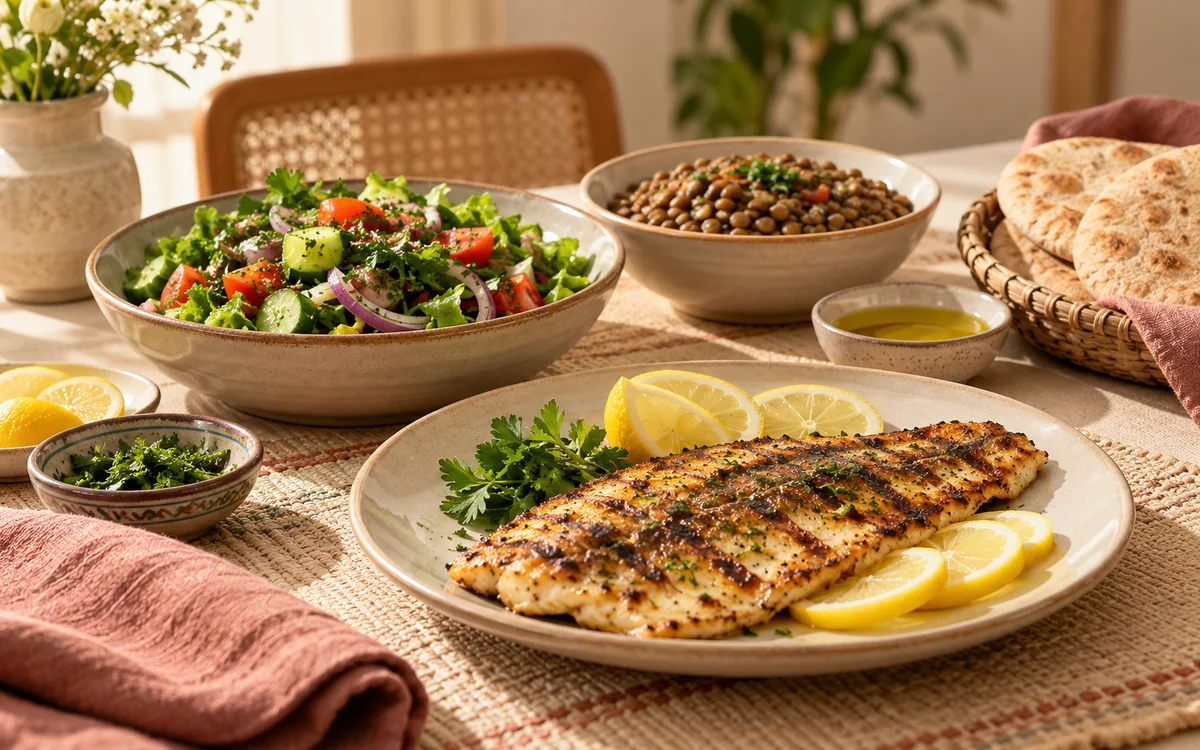
The good news for anyone living in Egypt is that our kitchen is closer to it than most people realise: ful, lentils, chickpeas, black-eyed beans, molokhia, okra, grilled fish, salads, tahini and brown baladi bread. The problem is rarely the ingredients. It is usually the cooking method, the portion size and the proportions: a lot of ghee, large servings of white rice and bread, pastries and sweet drinks, and processed meat. The practical idea is not to abandon your food and buy a foreign menu, but to rebalance the plate you already cook.
If you would like to apply it with a plan that fits your blood tests, medicines and working day, the nutrition doctors at La Rose Clinics see patients in New Maadi and in Fifth Settlement, and you can reserve through Book your appointment.
This article explains the diet using the evidence that has actually been tested, shows how it relates to the heart, diabetes, fatty liver and weight, offers a full week of Egyptian meals, and says when you should adjust it or speak to a doctor.
What Is on the Plate? The Daily and Weekly Pattern
There is no single official version of the diet, but the major sources agree on the core. Every day: vegetables, fruit, pulses, nuts and wholegrains, with extra virgin olive oil as the main fat [1, 2]. Natural cheese and yoghurt in moderate amounts, and water as the main drink. Every week: fish at least twice, with poultry and eggs in smaller portions, and red meat kept to a minimum, which one source puts at none or no more than one serving a week and another at a few times a month [1, 2]. The difference between the two is normal and the message is the same: meat becomes a guest, not the foundation.
The World Health Organization gives numbers you can use to check your own day: at least 400 g of vegetables and fruit, less than 5 g of salt, free sugars under 10% of energy, total fat under 30% of energy, and saturated fat no more than 10% [8]. The NHS advises five portions of fruit and vegetables a day and at least two portions of fish a week, one of them oily [9]. The fibre target for adults is about 30 g a day, and good sources include lentils, beans, chickpeas, bulgur, brown rice and wholemeal bread [12].
Improving the type of fat is the heart of the diet. Monounsaturated fat, such as the fat in olive oil, helps lower harmful LDL cholesterol while keeping the protective HDL up, whereas saturated fat from fatty meat, ghee and butter raises LDL [11]. So if you pour olive oil on top of ghee, you have added without changing anything. The swap is what makes the difference.
What gets less room on the plate: added sugar, juice, fizzy drinks, sweets and pastries, refined carbohydrates such as white bread and white rice, processed and fatty meats, and extra salt [1]. This matches where recent research on ultra-processed food is pointing, and there is more detail in the science update on ultra-processed foods.
One everyday point: the diet is not only about food. The sources list daily physical activity and shared meals with family and friends as part of the pattern [2]. A walk after lunch and a shared dish on the table count as practice, not as luxuries.
The Heart: What PREDIMED Showed and Where Its Limits Are
The best-known trial is PREDIMED in Spain. It randomised 7,447 people aged 55 to 80 (57% women), all at high cardiovascular risk but without cardiovascular disease at the start, to one of three groups: a Mediterranean diet with extra virgin olive oil, a Mediterranean diet with mixed nuts, or a control group advised to cut dietary fat. After a median follow-up of 4.8 years, the hazard ratio for heart attack, stroke or cardiovascular death was 0.69 in the olive oil group and 0.72 in the nuts group compared with the control diet [3]. In simple terms, risk was roughly a third lower, which is a large effect for something you eat rather than take.
We should be honest about the limits. The researchers withdrew their original 2013 report after finding protocol deviations, and published revised estimates in 2018 [3]. The participants were older and at high risk, so the result does not automatically apply to a healthy young adult. The trial was also run in Spain, with olive oil or nuts supplied to participants, so whether the same size of benefit appears with Egyptian ingredients is not proven, although the nutritional logic is the same.
Larger follow-up research points the same way. The Harvard review cites a study of nearly 26,000 women in which those who followed the pattern most closely had 25% lower cardiovascular risk over 12 years, and a pooled analysis reporting 24% lower cardiovascular disease risk [2]. These are observational, which shows association and not proof of cause, but they agree with the randomised trial.
What does the diet do for the heart in practice? It supports healthy cholesterol, blood pressure, blood sugar and body weight, and may lower the risk of metabolic syndrome [1]. It does so by swapping saturated for unsaturated fat, raising fibre, and cutting salt, sugar and processed food.
If your cholesterol test came back high, the diet is a strong step but not always enough by itself, and the decision depends on your result and your other risk factors. Read high cholesterol: understanding the test and deciding whether food changes are enough before you change anything in your treatment.
Does the Mediterranean Diet Help You Lose Weight?
The short answer: it can help, but not automatically. Harvard says the diet may support healthy weight loss when combined with calorie restriction, cites a trial in which participants kept their weight loss off for six years, and also warns of weight gain from excess calories because portion sizes are not specified [2]. MedlinePlus likewise notes that the fats in olive oil and nuts can add weight if the amounts creep up [7].
In other words, olive oil is healthy but it still carries 9 calories per gram like any other fat. A practical yardstick: one or two tablespoons for cooking and dressing across a meal, not a cupful, and a small handful of plain unsalted nuts, not a whole bag during a TV series. That way you get the benefit of the good fats without a surprise on the scale.
Why does the pattern help people stick with it? It is full of fibre and protein from pulses and fish, which keeps you fuller for longer and reduces the intense hunger that sends people back to sweets and pastries. No food group is banned outright, so eating out and family gatherings are not a crisis. On top of it you can follow a moderate calorie deficit if weight loss is the goal, and we walked through that step by step in how to calculate a calorie deficit.
How does it compare with other approaches? A low-carbohydrate version may move the scale faster at first, but it is not always easier to sustain; if you are considering it, read the low-carb diet plan to see the differences. What matters is that the right diet is the one you can keep up for a year, not two weeks, and any big change needs review if you have a chronic condition or take diabetes or blood pressure medicines.
When measuring weight loss, do not rely on kilograms alone. Waist measurements and body composition show whether you are losing fat or muscle, which is why we recommend following body composition in the clinic rather than the scale by itself.
Fatty Liver, Diabetes and Insulin Resistance: The Evidence
For fatty liver, a 2023 scoping review in Nutrients described the hypocaloric Mediterranean diet as the most accepted dietary pattern for the condition, reported that people who followed it more closely had less liver fat than those eating a high-fat Western pattern, and noted that the diet can reduce liver fat and improve hepatic insulin sensitivity even without exercise or weight loss [5]. The same review said the European guidelines (EASL, EASD and EASO) recommended it on moderate-quality evidence, and that evidence for effects on inflammation and fibrosis comes from a few small and observational studies [5]. So the diet is useful and logical, but it should not be treated as a stand-alone treatment for advanced disease.
Weight loss remains an important part: the European guidance treats lifestyle change as the foundation of management, and weight lost helps the liver [6]. If fatty liver was picked up on an ultrasound, the practical day-to-day details are in the fatty liver diet, and the Mediterranean pattern shares most of its principles: vegetables, pulses, fish, olive oil, and less sugar and sweetened drinks. An ultrasound alone cannot grade scarring, so medical follow-up still matters.
For diabetes, a 2021 review in Nutrients summarised that the diet lowered HbA1c by about 0.3 to 0.47 percentage points, that high adherence was linked to a 23% to 59% lower risk of developing type 2 diabetes, that PREDIMED recorded 52% fewer new cases, and that about 13.7% of people with metabolic syndrome in the nuts group no longer met the criteria [4]. The same review notes that the diet often beats control diets but not always other healthy patterns such as DASH [4]. That is a reminder that this is one good route, not the only one.
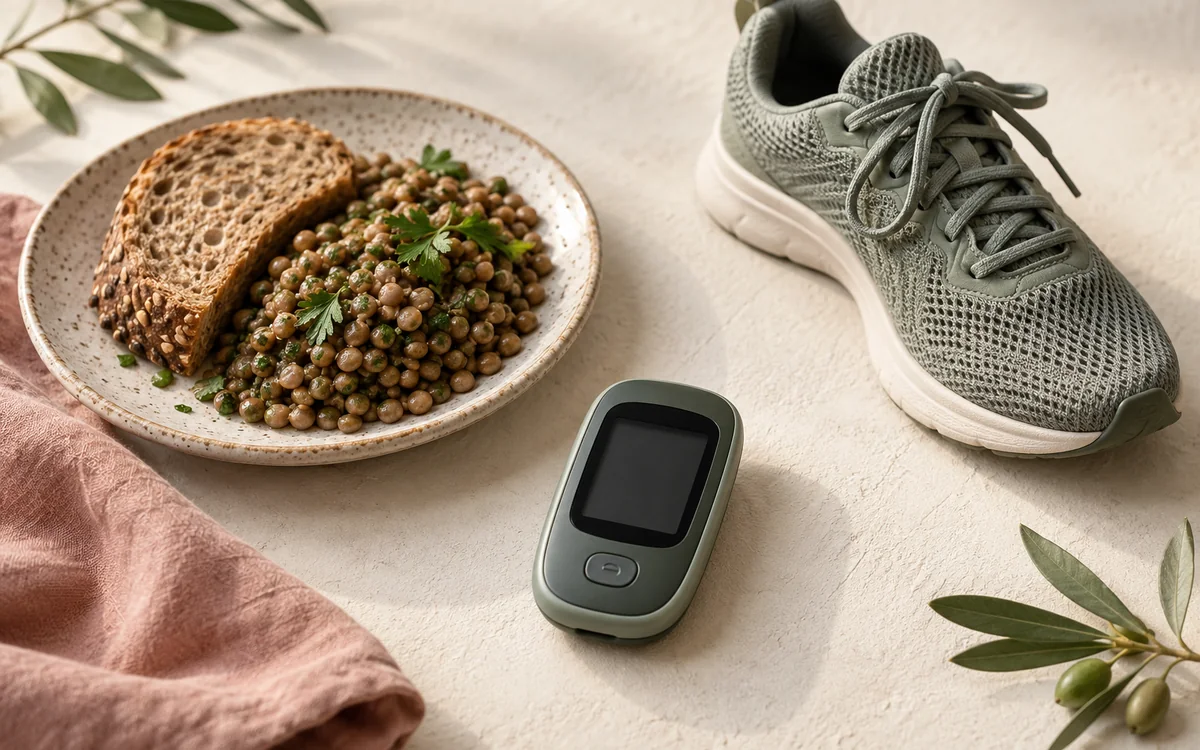
If you have insulin resistance, the same idea applies: wholegrain, high-fibre carbohydrates in balanced amounts alongside protein and healthy fats, rather than banning starch altogether, which is what we described in an insulin-resistance diet. And if you take diabetes tablets or insulin, changing your food can change your medicine needs, so medical follow-up has to go alongside the change.
The Egyptian Kitchen: What Already Fits and What to Adjust
You do not need to buy Italian food. Compare for yourself:
1. Pulses: ful medames, red and black lentils, chickpeas, black-eyed beans and white beans. These are the foundation of the diet and supply fibre and protein [12]. The adjustment: olive oil instead of ghee or lots of vegetable oil, lemon, cumin and tomato for flavour, and less salt.
2. Fish: sardines, mackerel, tilapia and mullet, grilled or oven-baked instead of fried. Oily fish is a source of omega-3, and the target is at least two portions a week, one of them oily, with a portion being about 140 g [10]. Tinned sardines in olive oil or water are a practical option, but check the salt.
3. Cooked vegetables: molokhia, okra, spinach, cabbage, courgette and green beans in tomato. The adjustment: cook them in a little oil with onion and garlic, and make them the main dish rather than a side.
4. Salads: baladi salad, cucumber yoghurt, tahini, baba ghanoush and tabbouleh. Tahini is a good plant fat, but in moderate amounts.
5. Grains: brown baladi or shami bread, bulgur, freekeh, barley and brown rice. The fibre in wholegrains is what gets you toward the 30 g target [12]. If you love white rice, make it a quarter of the plate, not half.
6. Dairy and eggs: plain yoghurt and cottage cheese or low-salt white cheese. Matured and Romi cheeses carry a lot of salt, so rinse or reduce them. Boiled or poached eggs, without extra oil.
7. Nuts and fruit: dates, almonds, walnuts, pistachios, figs, grapes and oranges. Make dessert a piece of fruit, and keep dates and honey small because they are still sugar.
What genuinely needs cutting back? Pastries and oriental sweets, sweetened drinks and juice, frequent fried food, processed meats such as basterma and sausages, and big servings of koshary and pasta. These rules fit the guidance to limit free sugars, salt and saturated fat [8], with the awareness that ghee and butter are saturated fats that push LDL cholesterol up [11].
That is why the pattern suits Egyptian families: no exotic ingredient is needed, only a different balance between vegetables, pulses and fish on one side and starch and processed meat on the other.
A Sample Egyptian Week You Can Swap Around
This table is an illustration, not a treatment plan, and portion sizes must be adjusted to your weight, activity and health [1]. Move the days around however you like:
1. Saturday: breakfast of ful with olive oil, lemon, a boiled egg and brown baladi bread. Lunch of grilled fish with salad and a small amount of brown rice. Supper of plain yoghurt with cucumber and a handful of walnuts.
2. Sunday: breakfast of oats with milk or yoghurt, figs or dates and cinnamon. Lunch of yellow lentils and a big salad. Supper of eggs with tomato and onion and brown bread.
3. Monday: breakfast of cottage cheese with cucumber, olives and brown shami bread. Lunch of molokhia with boiled or grilled chicken and a small portion of rice. Supper of vegetable soup and a tuna salad with olive oil.
4. Tuesday: breakfast of oven-baked ta'ameya with tahini salad and brown bread. Lunch of okra in tomato with skinless chicken leg. Supper of fruit and a handful of almonds.
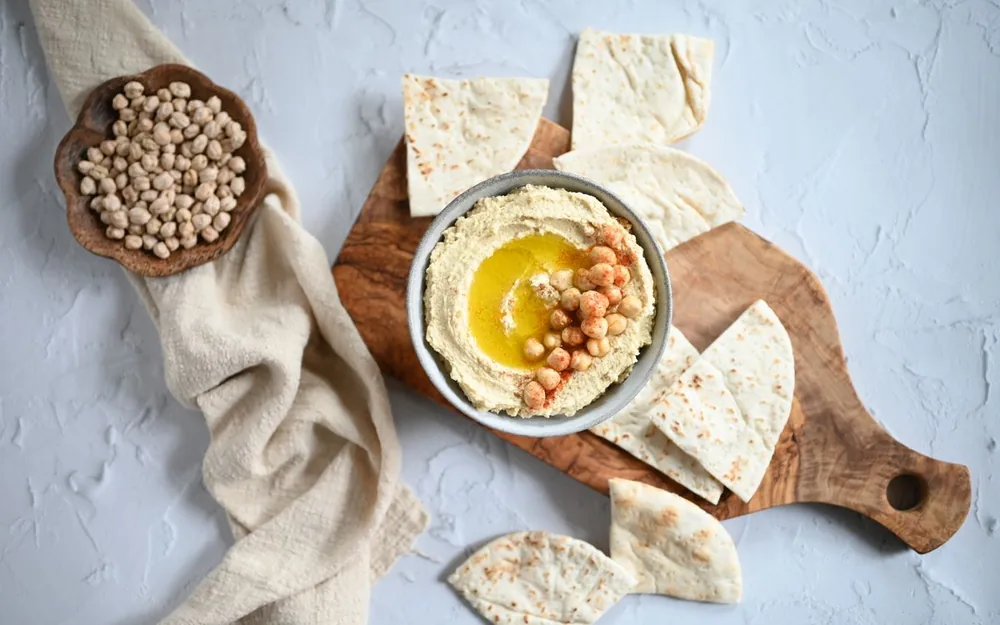
5. Wednesday: breakfast of yoghurt with fruit and nuts. Lunch of grilled sardines, or sardines cooked in tomato, with bulgur and salad. Supper of hummus with olive oil and raw vegetables.
6. Thursday: breakfast of scrambled eggs with vegetables and brown bread. Lunch of green beans with a very small piece of red meat and lots of vegetables. Supper of fattoush with toasted bread and yoghurt.
7. Friday (the family lunch): roast vegetables, grilled fish or chicken instead of rich casseroles, vermicelli rice once in a small amount, and fruit instead of dessert. This is a day to enjoy without guilt, because the rest of the week is balanced.
Swap ideas: lentils for chickpeas or ful, fish for tinned tuna or prawns, brown rice for bulgur or freekeh. If your goal is weight loss, reduce the amounts, not the types, and check the week against your calorie deficit using the Egyptian-food weekly diet plan.
Tips for carrying it out: prepare one pot of pulses and divide it, keep tinned fish in the drawer for emergencies, keep chopped vegetables in the fridge, make the main lunch the meal with pulses or fish and vegetables, and keep supper light, which suits working hours and Cairo traffic.
In Ramadan the principle is the same: break the fast with dates, water and soup, then a balanced plate after prayer, and a pre-dawn meal with ful or eggs, yoghurt and brown bread, while cutting back on qatayef and sweetened drinks. Portions need adjusting if you have diabetes or blood pressure and take medicines.
When to Adjust the Diet, and Common Mistakes
The diet is safe for most people, but some situations need adjusting. MedlinePlus lists practical points: with fewer dairy foods calcium may fall, so ask your doctor about replacing it; with less meat iron may fall, so eat iron-rich foods together with vitamin C such as tomato or lemon to help absorption; and alcohol should be avoided by pregnant women and by people with conditions that alcohol can worsen [7]. Cleveland Clinic says wine is optional, and if you do not drink you should not start [1]. So nothing in the diet requires you to take up alcohol.
Fish in pregnancy and childhood: the NHS says pregnant and breastfeeding women should have no more than two portions of oily fish a week, that shark, swordfish and marlin should be avoided in pregnancy and by children under 16 because of mercury, and that tuna has weekly limits in pregnancy [10]. If there is a pregnancy, breastfeeding or small children at home, choose grilled small species such as sardines and mackerel within these limits.
Kidneys and medicines: with chronic kidney disease, pulses, nuts and vegetables rich in potassium and phosphorus may need to be managed, and if you take blood thinners such as warfarin, big changes in leafy greens can affect them. So any major change should be made with your doctor, and these are among the few situations where talking about food really needs medical follow-up.
Common mistakes:
1. Pouring olive oil on top of the same old meal instead of swapping, which adds calories for no benefit.
2. Treating "healthy" as a licence for huge portions: see the notes on nuts, olive oil and brown rice above.
3. Drinking "natural" juice daily instead of eating the whole fruit, because juice gives sugar without the fibre.
4. Eating lots of cheese, olives, pickles and salted fish, which pushes salt past the 5 g daily limit [8].
5. Buying products labelled "Mediterranean" or "diet" that are highly processed. Read the ingredients; the same lesson appears in the evidence on ultra-processed foods.
6. Judging the diet after one week. Effects on cholesterol, blood sugar and the liver take weeks to months.
7. Neglecting movement: daily activity is part of the pattern itself [2].
A final note: acute symptoms are not a job for a diet. Crushing chest pain, sudden breathlessness, weakness on one side of the body or slurred speech needs emergency care immediately, and so do persistent vomiting, yellowing of the eyes or skin, or blood in vomit or stool.
Applying the Diet with a Nutrition Doctor at La Rose
If you want to adapt this eating pattern to your health needs, La Rose’s clinical nutrition doctors can discuss it with you at the New Maadi and Fifth Settlement branches. A consultation starts with your medicines, recent tests, usual meals and daily schedule. The clinician can then help you choose changes you can maintain. Diabetes, kidney disease, pregnancy and food allergies may change portions or food choices; the sample week in this article is an educational example, not an individual prescription [7].
Bring a medicine list and any recent results, and explain which foods you enjoy and can obtain at home. You might begin with one clear change, such as including more vegetables or legumes across the week, then review how it fits your appetite, test results and weight goal. Branch addresses and booking options are on our contact page, and appointment times are confirmed when you book. Our guide to choosing a weight-loss diet in Egypt explains how to compare broader eating patterns before a visit. If you are looking for the nutrition clinic in Maadi, its page has the service details.