How to calculate a calorie deficit: the short answer
A calorie deficit means eating a little less than your body burns in a day. To calculate it, estimate your total daily energy expenditure (TDEE), which is your resting burn (BMR) multiplied by an activity factor, then subtract roughly 300 to 500 calories. The Mifflin-St Jeor equation was built from measurements in 498 healthy adults [1], but the result is an estimate, not a fixed fact about your body.
That is why the calculation is only a starting point. Try the number for two to three weeks, compare it with the scale, your waist and how full and energetic you feel, then adjust. A sensible pace is gradual: the CDC describes about 1 to 2 lb a week (roughly 0.5 to 1 kg) as gradual loss, and people who lose weight at that pace are more likely to keep it off [3].
At La Rose Clinics, calorie targets are set after a full assessment with Dr Alyaa Said Abu Taleb (clinical nutrition, Maadi) or Dr Shimaa Fouad (weight management, Maadi and Fifth Settlement). You can Book your appointment by phone, WhatsApp or the booking page.
BMR, TDEE and the Mifflin-St Jeor equation with a worked example
BMR is the least energy your body needs to run the basics: breathing, circulation, the brain and body temperature. It accounts for 60% to 70% of the energy you use in a day, about 10% goes on digesting food, and the rest is movement [2]. Body size, lean mass, body fat, sex, age and genetics all shift the number [2].
The equation used most often today is Mifflin-St Jeor. The original study measured resting energy use directly (by analysing breathing gases) in 498 people, 247 women and 251 men aged 19 to 78. The older Harris-Benedict equation (1919) overestimated measured resting energy by about 5% [1]. The formula uses kilograms, centimetres and years:
1. Men: BMR = (10 × weight in kg) + (6.25 × height in cm) - (5 × age) + 5 [1]. 2. Women: BMR = (10 × weight in kg) + (6.25 × height in cm) - (5 × age) - 161 [1].
Worked example: a 35-year-old woman who weighs 78 kg and is 163 cm tall. (10 × 78) = 780, (6.25 × 163) = 1018.75 and (5 × 35) = 175. So 780 + 1018.75 - 175 - 161 = about 1,463 calories a day. That is her BMR: what her body would need if she stayed in bed all day. The next step is to multiply it by an activity factor to reach her TDEE, which is the subject of the next section.
What if your real figure differs from the formula? That is normal. Any equation is an average across many people, and your body can sit above or below it. Some factors also change the burn temporarily, including fasting, skipped meals, temperature, illness and thyroid hormones [2], so if you have thyroid symptoms or a recent illness, the theoretical number may drift further from reality.
Activity factors: how to choose one without overestimating
TDEE = BMR × activity factor. The factors in common use in nutrition calculations (conventions, not direct measurements) are:
1. Mostly sedentary (desk work, little walking): 1.2. 2. Lightly active (exercise or walking 1 to 3 days a week): 1.375. 3. Moderately active (exercise 3 to 5 days a week): 1.55. 4. Very active (near-daily training or a physical job): 1.725.
In our example, the woman with a BMR of 1,463 walks three times a week. We pick 1.375, which gives a TDEE of about 2,011 calories (1,463 × 1.375). If we had wrongly chosen 1.55, the figure would be about 2,268, roughly 250 calories too high, enough to cancel half of the planned deficit.
The most common mistake is picking a factor that is too high. People count the gym hour and forget the long stretches of sitting around it. A practical rule: if you hesitate between two factors, pick the lower one and check the scale after two weeks. In Egypt, intense summer heat and long commutes also mean many people move less than they imagine, so a stroll around the mall should not be counted as a workout.
There is also a ready-made NIDDK tool, the Body Weight Planner, which builds a personalised calorie and activity plan from your goal weight and timeframe. It is designed for adults aged 18 and over, and not for pregnant or breastfeeding women [5]. It is a useful cross-check for your own sums, though it is still an estimate.
A sensible deficit size, and why a bigger one backfires
In short: a deficit of 300 to 500 calories a day, or roughly 10% to 20% of TDEE, suits most adults. In the example, the woman needs 2,011, so her intake would sit around 1,600 to 1,700 calories. The rough arithmetic is that about 7,700 calories of deficit correspond to one kilogram of body fat, but that is an approximation and ignores the slowing of your burn as you lose weight, so real-life loss is usually slower than on paper.
Small goals also carry medical value. The CDC notes that modest weight loss improves blood pressure, cholesterol and blood sugar [3], and NIDDK suggests an initial goal of 5% to 10% of your starting weight within 6 months [4]. For someone at 78 kg, that means roughly 4 to 8 kg first, not 20 kg in a month.
Why does a very large deficit backfire? The reasons you can notice yourself:
1. Intense hunger makes your plan collapse at the first hard week or family occasion. 2. Unrealistic goals are discouraging, as the CDC warns [3]. 3. Promises such as "Lose 30 lb in 30 days" or weight loss "without diet or exercise" are listed by NIDDK as warning signs of an unsafe programme [4]. 4. As the deficit grows, protecting muscle gets harder, which is covered in the next section [7].
If a calculation produces a very low intake, or you feel dizzy, constantly hungry or weak, review the plan with a professional rather than cutting further. BMR estimates resting energy expenditure; it is not a universal minimum intake for everyone. If you want a ready-made plan, a diet plan for weight loss for one week in Egypt gives the full seven days, and if you are weighing a particular approach, there are separate guides to the low-carb diet plan in Egypt and the Mediterranean diet in Egypt.
Protein and protecting muscle during a deficit
When you eat less than you need, muscle protein balance tips negative, so enough protein matters to stop muscle being lost along with fat. A 2023 review, however, explains that resistance training (weights or bodyweight work) is the main driver of muscle retention, and protein alone gives mixed results across studies [7].
The same review noted that deficit size matters: in one study, modest protein intakes at 600 to 700 calories a day for 8 weeks failed to prevent loss of lean mass [7]. Its practical advice is at least 1.2 to 1.5 g of protein per kg of body weight daily on very-low-calorie diets, spread fairly evenly across meals, with a limited deficit [7]. That figure applies to the very-low-calorie setting, so for a moderate deficit ask your dietitian for your own number.
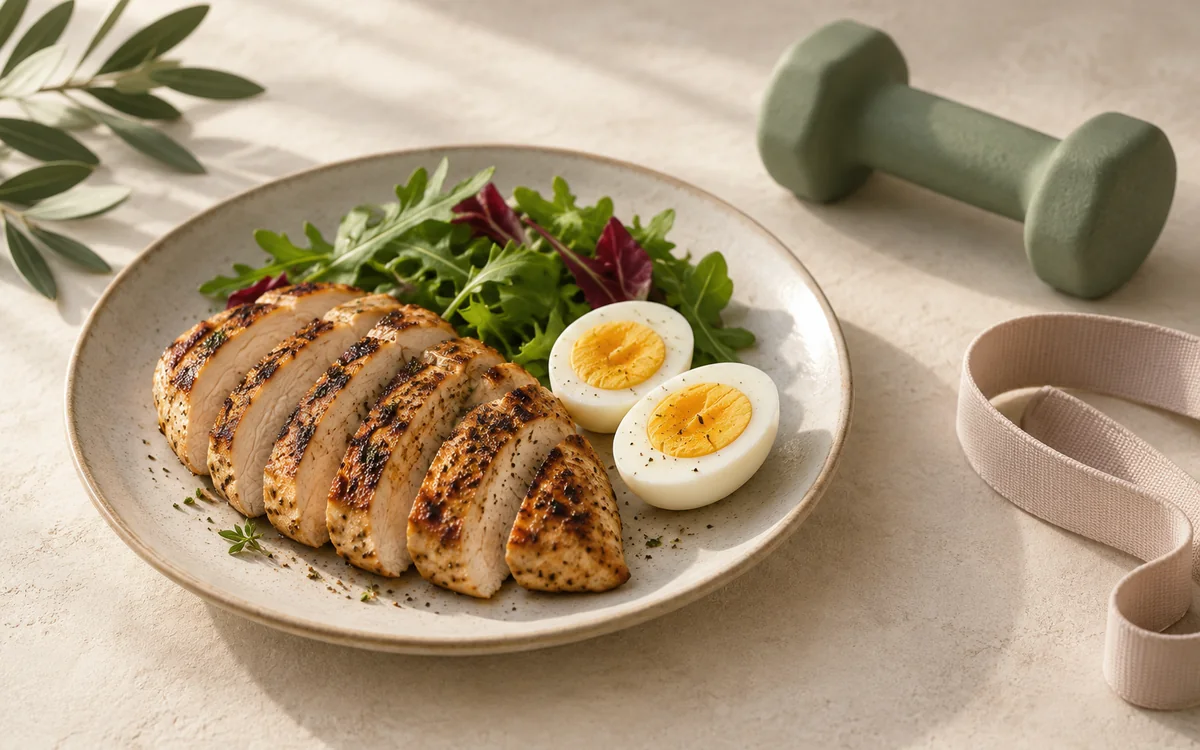
In practice in Egypt: build every meal around a clear protein source, such as eggs, ful with low-fat cheese, chicken, fish, lentils and yoghurt. It also helps with fullness. Specific foods and examples are in the guide to high protein foods for weight loss, and if your question is whether more protein is always better, the detailed answer is in the Q&A on protein needs and whether more is better.
To make sure what you lose is fat and not muscle, it helps to track body composition, not the scale alone, which we explain in protecting muscle while losing weight.
Tracking Egyptian foods without getting lost
Global apps give excellent figures for Western foods, but Egyptian food is harder for them, because the same dish differs from house to house. A plate of koshary at a restaurant may be double the one at home, a loaf of baladi bread varies in size, and a plate of ful depends on how much oil went in. That is why gram-accurate tracking is unrealistic, and a "consistent approximation" system works better [3, 10].
The items that really change the total:
1. Oil and ghee: one extra tablespoon in ful, molokhia or rice adds a lot of calories without being visible. 2. Portion of rice, pasta and bread: weigh or measure the portion for one week only, so you learn to judge it by eye. 3. Sugar in tea and coffee, and juices: drinks count like small meals if repeated through the day. 4. Taameya and fried foods: the gap between fried and grilled is large, and it is the easiest change. 5. Eating out: delivery and restaurant portions are usually bigger than you think.
A simple method: photograph every meal on your phone for 3 days, then review the photos yourself or with a specialist. The idea is laid out in the tip on photographing one day of meals. If you fast or it is Ramadan, the same arithmetic applies to the window between iftar and suhoor, and the deficit is calculated over the whole day, not meal by meal.
If you want a ready model before you learn to measure, a diet plan for weight loss for one week in Egypt gives you a full week of familiar Egyptian meals with approximate calories.
Plateaus and metabolic adaptation: why the number changes over time
As soon as you lose weight, your BMR falls, because a smaller body needs less energy. There is also a second factor, metabolic adaptation: the burn falls further than the new size alone would predict. The clearest study followed 14 contestants from The Biggest Loser after 6 years. At the end of the competition their resting burn was down by about 610 calories a day, and 6 years later it was about 704 below baseline. The contestants had regained 41 kg, and the adaptation reached about 499 calories below what was expected [6].
An important warning for reading that study correctly: the sample is small, the weight loss was extreme (about 58 kg), and there was no control group [6]. It is not the case of someone losing 6 kg. The practical lesson is that adaptation is real and can persist, so a milder, slower, stepwise deficit fits better, and it makes little sense to keep relying on a number you calculated 3 months ago.
If the scale stops moving, try these before cutting calories again:
1. Recalculate TDEE with your current weight. 2. Check actual portion sizes with photos for a full week. 3. Remember that a salty meal can hold water and hide progress, which we explain in the tip on noting a salty meal. 4. Poor sleep makes it harder as well, with details in the Q&A on sleep and weight plateaus. 5. Measure your waist and body, because the scale is not the only truth.
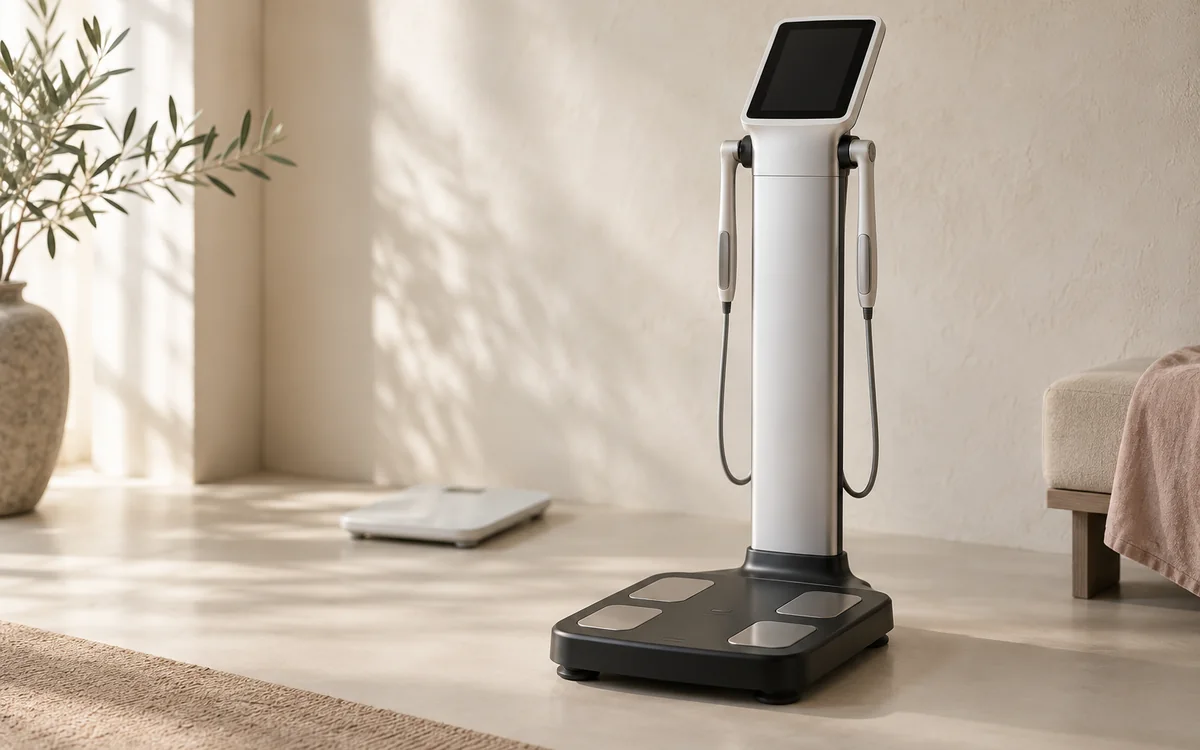
Many people find the scale stuck while their measurements fall. That is covered in the Q&A on measurements going down while the scale stays still. A body composition analyser such as InBody separates fat, muscle and water, and you can learn to read its output in our guide to InBody results explained, and the idea of long-term follow-up in body composition, not the scale. After that you can adjust calories by the trend in fat and muscle, not by weight alone.
Who should not self-calculate: pregnancy, diabetes, eating disorders and teens
The equations were built on healthy adults. In some situations it is better to set calories with a specialist from the start:
1. Pregnancy: the NHS says you do not need to eat for two and that no special diet is needed, just varied food [9]. NIDDK's calorie tool is not intended for pregnant or breastfeeding women [5]. If you are pregnant or breastfeeding, nutrition is set with a specialist, and breastfeeding is covered in our article on postpartum weight loss while breastfeeding. 2. Diabetes and medicines: for anyone on insulin or diabetes tablets, eating less or skipping meals can lead to hypos, because the risk rises when the balance between food, activity and medication is upset [8]. The medication plan needs adjusting with your doctor before any deficit. 3. Eating disorders: if you have a current or past history, the NHS advises talking to a healthcare professional before changing how you eat [10]. NIMH describes preoccupation with weight, body shape and controlling food as possible signs, and stresses that early detection matters for recovery [12]. If you notice binge episodes, read about them in the Q&A on binge eating episodes. 4. Teenagers: because they are still growing, the NHS focuses on changing the habits of the whole family and on realistic targets set with the child, not on a diet [11]. Details are in our guide to teen weight loss. 5. Chronic conditions and medicines: if you have a medical condition or take medicines, a medical review first makes the difference, because a professional can review your medicines and supplements [4].
If you are a healthy adult without any of the above, the calculation in this article works as a starting point. Even then, stop and ask for an assessment if you get dizziness, marked weakness, missed periods, palpitations or weight loss much faster than planned.
If you want your number set personally at La Rose
If calorie calculations leave you uncertain, or you need a plan that fits diabetes medicines, blood-pressure treatment or a history of disordered eating, you can discuss the figures with a La Rose clinical nutrition doctor. Appointments are available at the New Maadi and Fifth Settlement branches according to the current booking schedule. The visit starts with your health history, medicines and usual food, then sets a food goal that can be reviewed as circumstances change rather than treating an online calculator as a prescription [4].
A short food record may help you understand portions. After that, you and your clinician can choose a less burdensome way to monitor habits, weight or measurements. Counting every calorie indefinitely is not required. Bring recent test results and a medicines list, and use our contact page for the branch address and an appointment. If you do not need a precise number now, begin with balanced meals and read our Egyptian-food weekly plan for examples. The weight management first visit guide explains what happens at the first appointment.