Who This Guide Is For
This guide is for adults who have had an acute pancreatitis attack and left hospital, and for people living with chronic pancreatitis under a doctor's care. It covers food at three points: the first days of an attack, the first weeks after discharge, and long-term daily eating [2, 4].
It is not for diagnosing new abdominal pain. If the pain started hours or days ago, you need examination and tests first, not a food experiment [4, 7]. It also does not replace your doctor's plan if you have kidney disease, advanced heart disease, are pregnant, or the question is about a child, because those plans depend on an individual assessment [2].
Acute and Chronic Pancreatitis Are Not the Same Diet
The pancreas makes enzymes that digest food and hormones such as insulin. In acute pancreatitis there is sudden inflammation; most people start to improve within about a week and leave hospital in 5 to 10 days, while severe cases stay longer [7]. Chronic pancreatitis is permanent damage to the gland, with recurring pain, weight loss, poor fat digestion and a risk of diabetes [3, 4].
The commonest causes of the acute attack are gallstones, heavy alcohol drinking, some medicines, high triglycerides or calcium, and genetic factors [4, 7]. In chronic disease, alcohol and smoking are the main drivers of progression [3]. The distinction matters because food is managed over days in acute pancreatitis and over months and years in chronic disease [1, 3].
Signs That Need Urgent Help
Some signs do not belong at home. Seek urgent help for severe pain spreading to the back, pain that will not settle, fever or shivering, persistent vomiting, constant bloating, a fast heartbeat or difficulty breathing, or dizziness and fainting [4, 7]. UK guidance is that these situations go to emergency care immediately, and that is a sensible standard anywhere: sudden severe pain with general symptoms is not the moment to try a light meal [7].
Other signs deserve a prompt review but are not necessarily emergencies: continuing weight loss, pale greasy diarrhoea, marked thirst and frequent urination, or swollen legs. These point to malabsorption or complications, and they improve when the cause is treated, not when you eat less [3, 4].
When to Start Eating After the Attack
The old advice was to stay nil by mouth for days until the pain settled completely. Modern guidance has moved. The 2024 American College of Gastroenterology guideline recommends early oral feeding within 24 to 48 hours as tolerated in mild acute pancreatitis rather than fasting, although that recommendation is conditional and based on low-quality evidence [1].
More importantly, the guideline favours an initial low-fat solid meal over a stepwise liquid-to-solid progression [1]. A meta-analysis of randomised trials found that a full solid diet shortened hospital stay without increasing post-refeeding pain [10], and two further analyses found the same direction in mild and moderate disease [8, 9]. Clear liquids are therefore not compulsory, and you do not have to stay on them until you feel completely normal [1].
What the First Meals Look Like
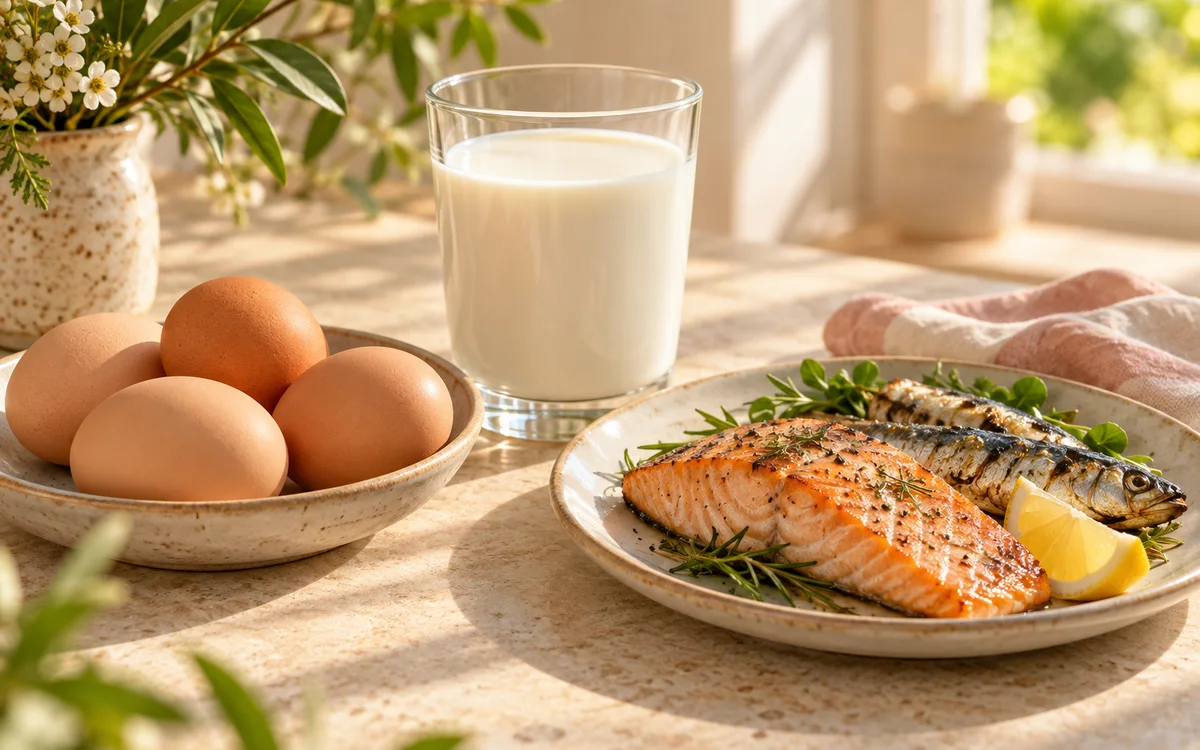
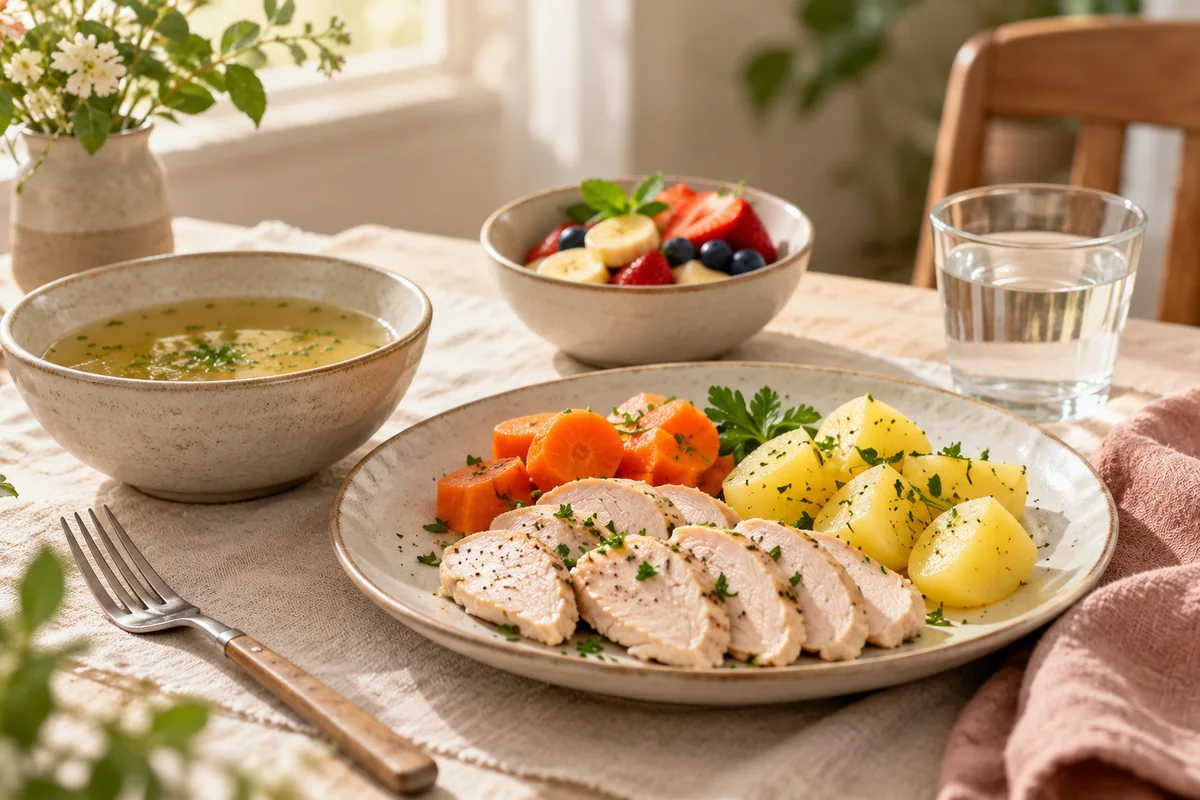
The first meal is usually small: plain rice or pasta, boiled or grilled chicken without skin, grilled fish, cooked vegetables, and low-fat milk or yoghurt. Portion size matters more than variety at this stage, so start with about half of what you would normally eat [1, 5].
Low fat means cutting oil, ghee, butter and frying, not eating zero fat. Grilling, boiling and steaming reduce fat without removing flavour [5]. If pain returns after eating, do not push through it: tell your doctor and step back to a smaller, simpler meal, because returning pain needs review rather than proving that you failed [1, 2]. Do not take the whole meal in one go: split it into two or three, and drink fluids between meals rather than with them, since extra fullness adds no benefit [5].
How to Advance Food Without Rushing
Advance one step every 3 to 5 days: increase a portion slightly, or add one food, and watch for pain, bloating and diarrhoea. If all is well, continue. If pain returns, go back a step and speak to your doctor before trying again [1, 2].
Do not let fear keep you on soup and rice for weeks. Eating too little increases weight loss and muscle loss, which slows recovery [2, 3]. The aim is ordinary balanced meals spread over 4 to 6 small meals a day, not a permanent list of forbidden foods [3, 5]. Keep a short note of what happens, because a two-week pattern is clearer than a single day, and it helps your doctor judge whether symptoms come from food or from something else [1, 2].
Fat: Low for Now, Balanced for the Long Term
This is where most diet advice goes wrong. During the attack and the first weeks afterwards, a low-fat diet helps comfort and reduces bloating, which is what public sources such as NIDDK and the NHS still advise [5, 7], and it is also the initial approach in acute pancreatitis [1].
In chronic pancreatitis the logic is different. The European HaPanEU guideline states plainly that dietary fat restriction and very high fibre diets should be avoided in chronic pancreatitis, with a relatively strong recommendation [3]. The reason is that cutting fat does not treat malabsorption, it adds to the calorie and weight deficit, while the correct treatment for enzyme deficiency is pancreatic enzymes taken with food [3].
So: low fat for a short period during and after a flare, and an ordinary balanced diet long term, with enzymes if there is insufficiency. Do not stay on 20 or 30 grams of fat a day for years without a reason [3].
The Chronic Pancreatitis Plate
In chronic disease the goal is enough energy and protein, with fat spread across meals rather than removed. If there is malnutrition or weight loss, small frequent high-energy meals are recommended, at roughly 25 to 35 kcal per kilogram per day depending on the case [3]. Protein at every meal, vegetables and fruit, and sensible portions of starchy food [3].
Fibre is generally useful, but very high fibre diets are avoided in chronic pancreatitis because they add bloating and fullness for no benefit [3]. Oats and vegetables are fine; an extreme fibre regime is not. If ordinary food is not enough, nutrition support is planned with your doctor or dietitian rather than decided alone [2, 3]. If appetite is poor, raise the energy density within the same volume: a little olive oil, ground nuts, or full-fat milk if your doctor agrees, instead of increasing the portion and struggling [3].
Enzymes and Malabsorption: Signs and Dosing
When the pancreas does not make enough enzymes, fat passes into the stool. The signs are pale, floating, greasy, offensive stools with bloating and weight loss [3, 4]. This is not a food fault, and it is treated with prescribed pancreatic enzymes, not by cutting fat further [3].
The reference dose is at least 40,000 to 50,000 PhU of lipase with a main meal and half that with a snack, taken with the food rather than long before it [3]. If stools are still greasy or weight is not improving, review with your doctor: the dose may be low, adherence may be an issue, or the cause may not be enzyme deficiency [3]. Do not increase or stop the dose on your own [3, 6].
Vitamins, Minerals and Bone Health
Deficiencies of vitamins A, D, E and K are common on blood testing in chronic pancreatitis, and vitamin D deficiency is present in a large share of patients, while clear deficiency with symptoms is less common [3]. The recommendation is therefore to measure levels when there is malabsorption or symptoms, not to give every patient high-dose supplements without testing [3].
Vitamin D and bone health matter especially, because osteoporosis risk is increased in chronic pancreatitis [2, 3]. If you take supplements, review the dose with your doctor, since excess vitamin A is harmful [3]. Calcium, magnesium and zinc are checked when malnutrition is present [3]. If you have repeated fractures or diagnosed osteoporosis, that needs a proper bone assessment, not a supplement taken by guesswork [2, 3].
Pancreatogenic Diabetes: Carbohydrate Is Not the Enemy
Chronic inflammation affects the insulin-producing cells, and the resulting diabetes is called pancreatogenic or type 3c diabetes; risk rises with disease duration [3, 4]. If you have marked thirst, frequent urination, unexplained weight loss or high glucose readings, you need review [4].
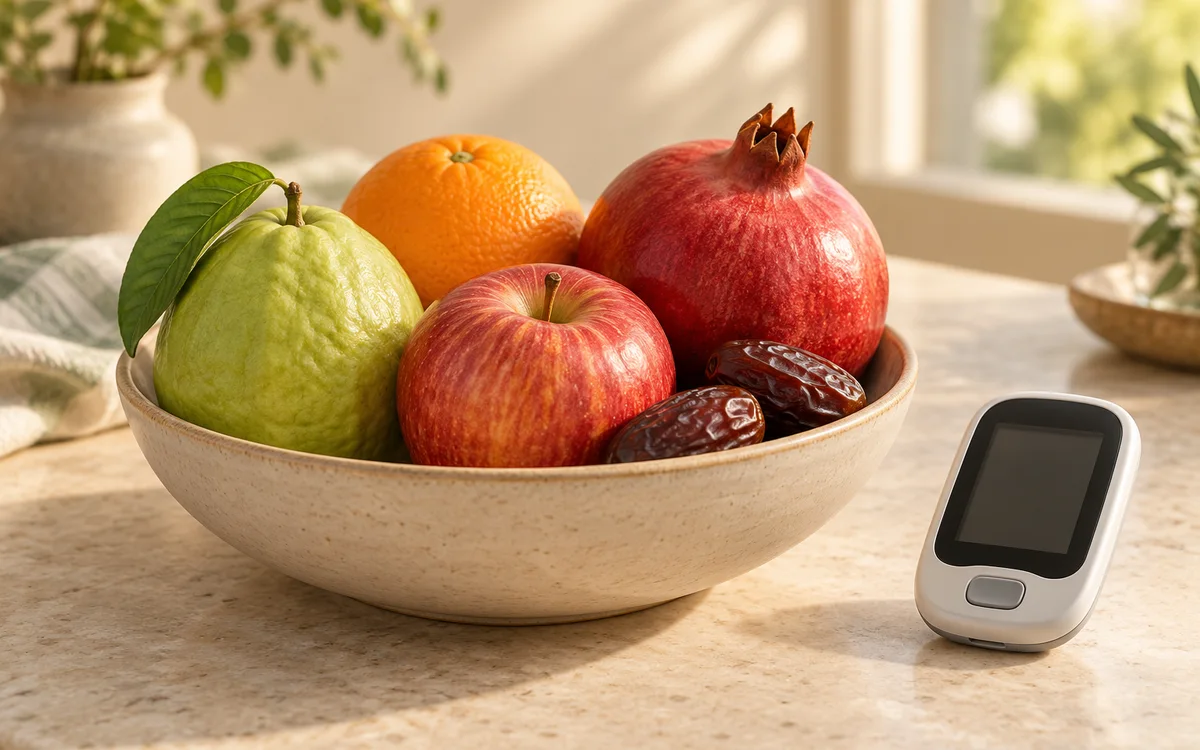
A common mistake is to remove all starchy food. That worsens weight loss and malnutrition, and can cause low glucose if you take insulin [3]. The right approach is to spread carbohydrate across small meals, monitor glucose, and adjust medicine with your diabetes team [3, 5]. A low-fat diet on its own is not a diabetes plan [5].
Alcohol and Smoking: The Two Biggest Levers
Alcohol is a leading cause of chronic pancreatitis, and the advice is complete abstinence rather than reduction [3, 5, 7]. If alcohol caused the disease, stopping is the single strongest step to reduce attacks and slow damage, and it needs real support rather than blame [3].
Smoking is an independent risk factor and speeds progression, and all patients are advised to stop [3, 7]. This works alongside diet, not instead of it. If you need help stopping, ask your doctor, because quitting without a plan is harder than a structured programme [3, 7].
Practical Egyptian Meal Ideas
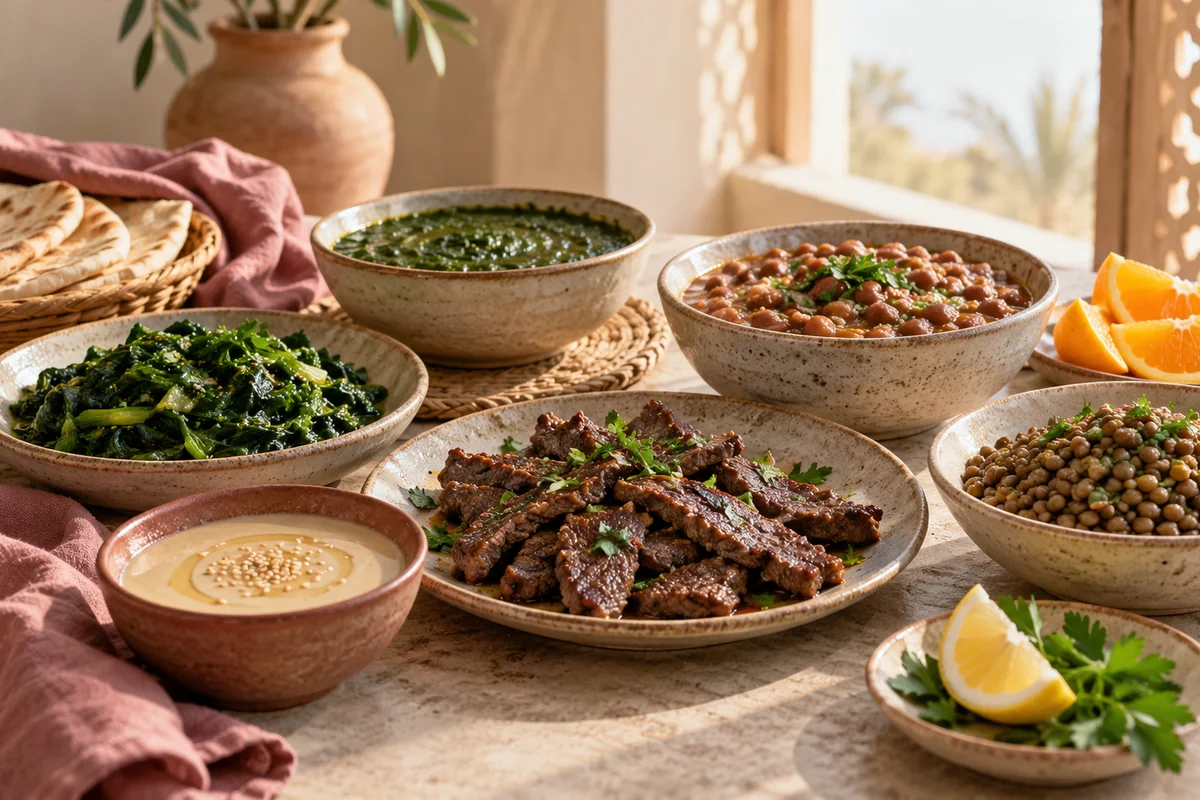
During recovery days: plain rice or pasta with a simple tomato sauce, boiled or grilled chicken without skin, grilled fish, courgette or okra cooked with little oil, thinned lentil soup, low-fat yoghurt, and soft fruit [5]. Breakfast might be a boiled egg with baladi bread and cottage cheese, or oats with low-fat milk [5].
Long term with chronic disease: the same dishes, but with fat spread across the day instead of concentrated in one meal. Cut down on frying, samosas, ta'meya and heavy koshari in a single day, and distribute oil between meals [3]. If food causes bloating, reduce the portion and increase the number of meals, and see your doctor if symptoms persist [3, 5]. Drink enough water through the day, especially with diarrhoea or fluid loss, because dehydration adds fatigue and dizziness [5].
Common Mistakes That Keep Circulating
The first mistake is prolonged fasting until the pain disappears. Modern guidance starts eating early as tolerated [1, 2]. The second is banning fat forever. That worsens malnutrition, and in chronic disease routine fat restriction is avoided [3]. The third is believing turmeric, liquorice or garlic treat the pancreas. There is no adequate evidence, and daily liquorice raises blood pressure and interacts with medicines [3, 5].
The fourth is banning all dairy, eggs and pulses. There is no scientific reason to remove them all; quantity and added fat matter more [5]. The fifth is stopping enzymes when you feel better. Insufficiency does not resolve on its own, and the dose is managed with your doctor [3]. The sixth is relying on blood fat tests instead of assessing symptoms, weight and stools [3].
Follow-Up: Questions to Take to Your Doctor
At follow-up, ask which phase you are in, what your weight and protein target is, whether you need enzymes and at what dose with meals, and whether you need vitamin testing for malabsorption [2, 3]. Bring a list of foods you tolerate and foods that upset you, plus your test and imaging results, because the decision rests on symptoms, weight and stools rather than on a forbidden-food list [3].
If you use weight-loss medicines and have a history of stones, read gallstones with rapid weight loss. If your blood tests show high triglycerides, the article on high triglycerides explains the causes and next steps. If weight is falling without a clear reason, start with unintentional weight loss. If you have diabetes alongside pancreatitis, the diabetic diet plan has ideas that work with Egyptian food. If you are unsure who should follow you, read clinical nutrition doctor vs dietitian. You can book through the booking page, and do not delay urgent symptoms [2, 3, 4].