Diabetic Diet Plan in Egypt: The Direct Answer
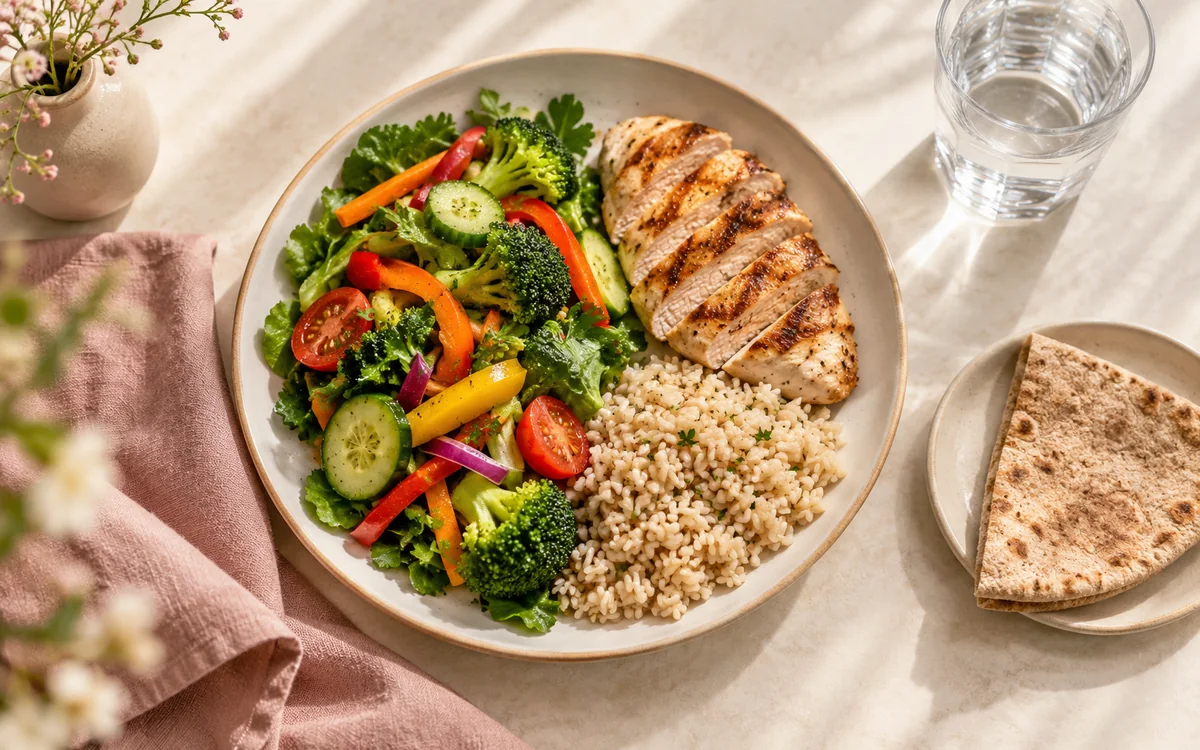
The most useful diabetic diet is built on the plate method: half the plate non-starchy vegetables, a quarter protein and a quarter high-fibre carbohydrate such as beans, whole grains or fruit, eaten at regular times and in portions that suit your medicines [3, 10]. There is no single ideal split of carbohydrate, protein and fat that suits everyone, so the plan has to be adjusted to your glucose readings, medicines, work and usual food [4, 11]. At La Rose Clinics in Maadi, Dr Alyaa Said Abu Taleb (clinical nutrition) builds and reviews the plan with you, Dr Mohab Ashraf Fouad (internal medicine and diabetes) looks after the medical side, and you can use Book your appointment to arrange a visit.
This guide is written for adults with type 2 diabetes or prediabetes who eat the way most of Egypt eats: foul and ta'amiya in the morning, rice, macaroni or koshari at lunch, baladi bread with almost every meal, and sweet tea. It shows how to keep the food you enjoy while bringing your readings under control, how to read a plate, how to judge carbohydrate without a calculator, a sample day, snacks, Ramadan and family occasions, the warning signs of low blood sugar, and when to see a doctor or a dietitian.
The topic matters because high glucose over many years damages blood vessels and nerves, which can lead to heart attacks, strokes, kidney failure, loss of vision and foot ulcers [6]. The World Health Organization describes lifestyle change, meaning a healthy diet and about two and a half hours of moderate activity a week, as the main way to prevent or delay type 2 diabetes [6].
The Plate Method with Egyptian Food: Foul, Bread and Rice
Start with the picture, not the numbers. The plate method uses a 9-inch plate: half non-starchy vegetables, a quarter protein food and a quarter high-fibre carbohydrate food [3]. It helps with portions without any counting, and people who are not on insulin may not need to count carbohydrate when they use it [3]. Kaiser Permanente's version places grains, fruit, yoghurt and starchy vegetables such as potatoes, corn and beans in the carbohydrate quarter, counts milk drunk with the meal in that same quarter, and suggests water or another low-calorie drink with the meal [10].
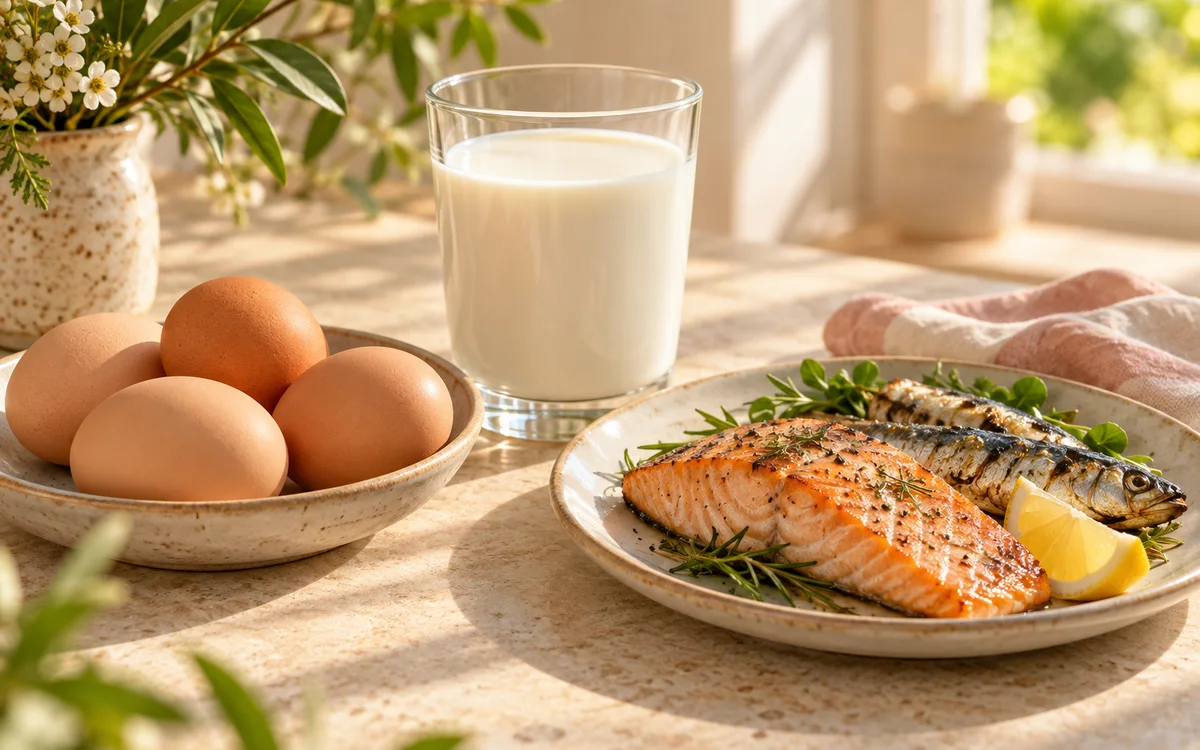
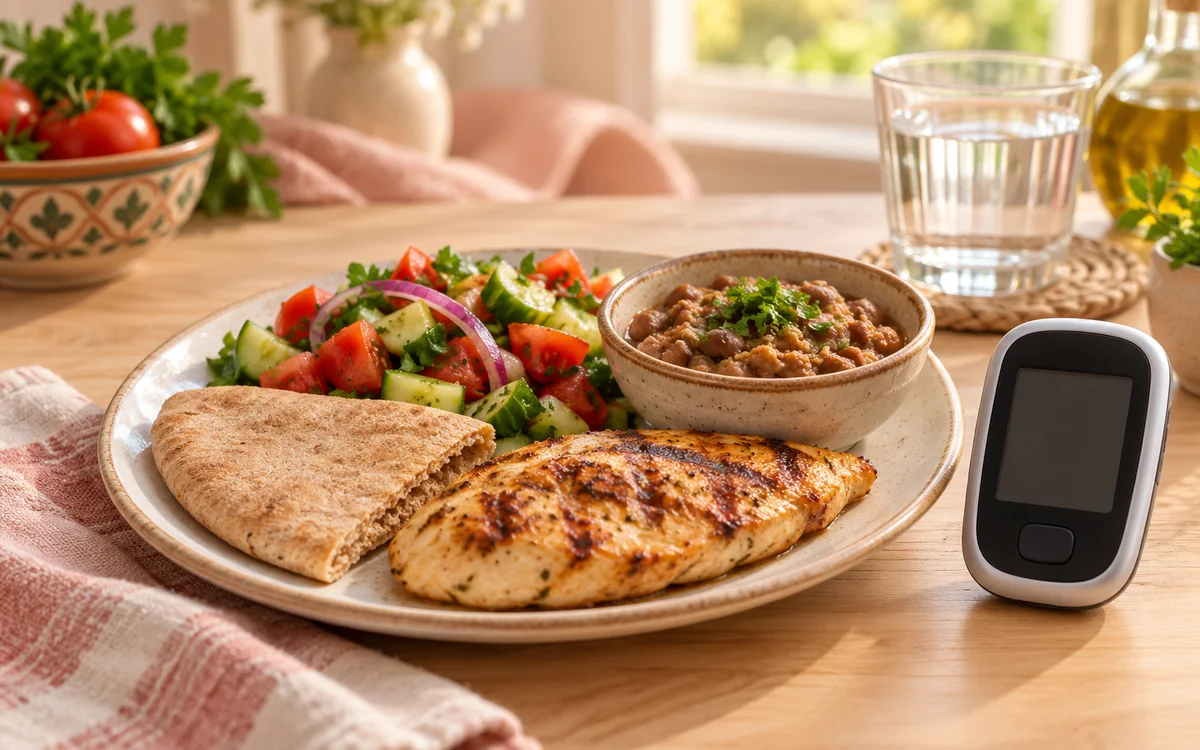
Now translate it into Egyptian food. Half the plate: a salad of cucumber, tomato, lettuce and rocket, plus cooked vegetables such as green beans, okra, courgettes, aubergine, cauliflower or spinach that are not swimming in oil. One quarter protein: grilled or baked chicken, fish, an egg, a small piece of lean meat, cottage cheese or low-salt white cheese, or plain yoghurt. One quarter carbohydrate: this is where rice, macaroni, potato, baladi bread, foul and lentils all live, and it is one quarter in total, not one quarter each.
That last point is where most Egyptian plates go wrong. Beans and lentils are counted with the carbohydrate foods [10, 5], so a plate of koshari with rice, macaroni and lentils plus a loaf of bread is really three or four carbohydrate foods fighting for a single quarter. Choose two at most and fill the rest with vegetables and protein. If koshari is your meal, take a smaller serving of rice and macaroni, add more lentils, chickpeas, salad and tomato sauce, and go easy on the fried onions.
Foul is a good example. The NHS lists pulses such as chickpeas and lentils among healthy choices for type 2 diabetes [1]. A plate of foul with lemon and olive oil, a tomato and cucumber salad, a boiled egg and half a small wholemeal baladi loaf makes a sensible breakfast; a heap of foul with three loaves does not. Oil is the other quiet problem, so measure it with a spoon instead of pouring it.
Bread: a leaflet from University Hospitals Sussex dietitians puts wholemeal bread and pitta in the medium glycaemic index group and white bread in the high group [9], and the NHS recommends wholegrain choices such as wholemeal bread [1]. In practice that means bran-rich baladi bread rather than white fino or shami loaves, and a known amount per meal, for example one small loaf shared across two meals instead of one loaf each.
Carbohydrate Awareness: Judging Starch Without Complication
Carbohydrate is the nutrient that raises blood glucose most directly: it is broken down into glucose, and the more you eat, the higher glucose climbs [5, 11]. That does not mean avoiding it. MedlinePlus advises limiting high-carbohydrate foods by eating them less often or in smaller amounts rather than cutting them out entirely [11], and the American Diabetes Association consensus found no ideal percentage of calories from carbohydrate, protein and fat that suits everyone [4].
Know where carbohydrate hides. Besides bread, rice, pasta and potatoes, medical leaflets list fruit and fruit juice, milk and yoghurt, pulses such as beans and lentils, corn and peas, honey, syrup and jam, and sweets, cakes and biscuits [5, 9]. In an Egyptian kitchen that also means sweetened tea, karkadeh with sugar, mahalabiya, basbousa and kunafa, sweet potato, black honey, dates, mango, grapes and figs.
Spread it evenly. The Sussex dietitians advise similar amounts of carbohydrate from day to day, spread across the day [9], and MedlinePlus says eating a similar amount at each meal can help [11]. A practical routine is to decide the carbohydrate for the meal first (one quarter of the plate), then build vegetables and protein around it.
Quality counts. the nutrition consensus report favours fibre-rich carbohydrate over added sugars and refined grains, emphasises non-starchy vegetables, and prefers whole foods to highly processed ones [4]. The US National Institute of Diabetes and Digestive and Kidney Diseases (NIDDK) names brown rice, whole grains, beans and fruit as high-fibre carbohydrate foods [3].
The glycaemic index ranks carbohydrate foods by how quickly they raise glucose [9]. Low-GI foods are usually wholegrain or higher in fibre or protein [5]. Portion still matters: even low or medium GI foods such as grapes, banana and pasta can push glucose higher than usual if eaten in large amounts [9], and some low-GI foods are high in fat, salt or sugar [5]. If you do choose a fast-acting carbohydrate, think about what it is eaten with, and add vegetables or salad [9].
As for carbohydrate counting, not everyone needs it, but it can help people who take mealtime insulin [3]. If you use insulin, your doctor or dietitian will teach the method; if not, the plate and steady portions are usually enough [3].
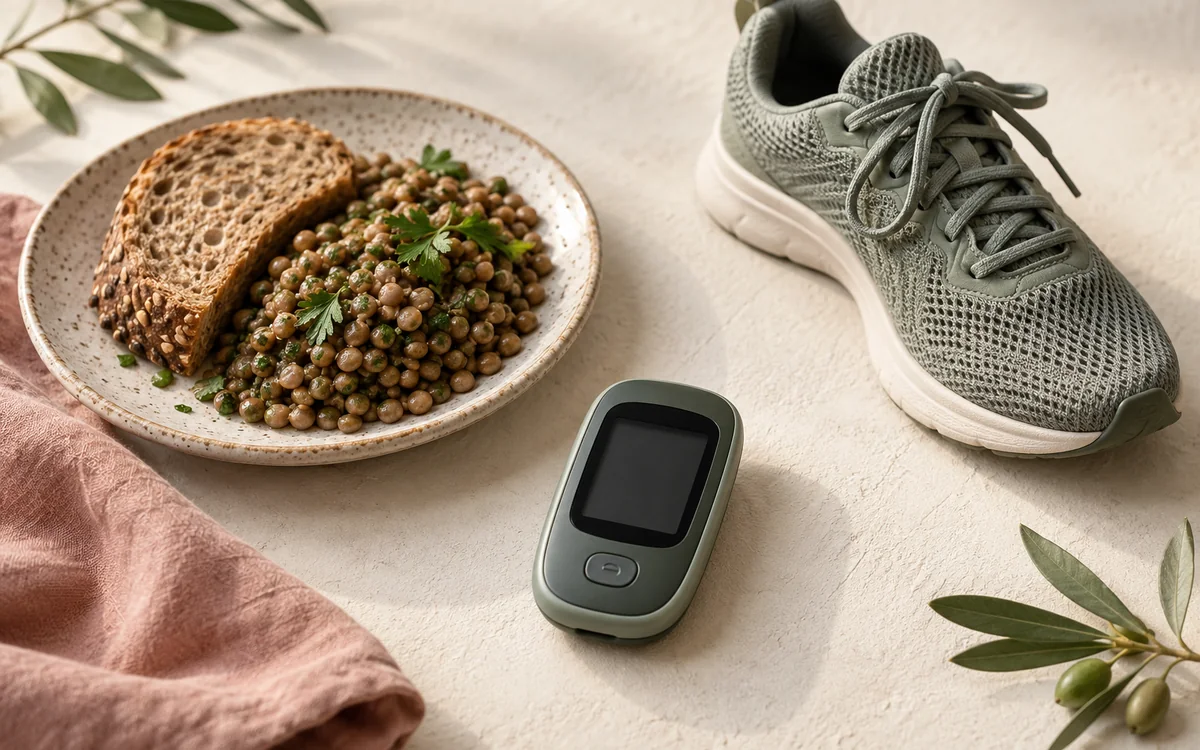
One simple experiment helps. If you own a glucose meter, test before a meal you eat often (your usual foul breakfast, for example) and again about two hours later, as your doctor advises. If the reading climbs a lot, change one thing only, such as a smaller portion of bread, more salad or water instead of juice, and test the same meal again. Bring those numbers to the clinic, and following your HbA1c test alongside meter readings gives a clearer picture of whether the plan is working, because they let the plan be fitted to you.
A Sample Day of Egyptian Food for Diabetes
This is an illustration, not a prescription, and the amounts need to be adjusted to your glucose, medicines and weight. The idea is one carbohydrate quarter per meal, half vegetables, a quarter protein, and carbohydrate spread evenly across the day [9, 11].
Breakfast: a plate of foul with olive oil and lemon, a salad of cucumber, tomato and rocket, a boiled egg and half a small baladi loaf. Or cottage cheese with cucumber, tomato and olives and a small baladi loaf. Tea or coffee without sugar; Kaiser Permanente lists unsweetened tea and coffee as suitable drinks [10]. If your habit is ta'amiya, have one or two that are baked or air-fried rather than deep fried, and add more salad.
Mid-morning, if you need something: a small apple or orange, or a pot of plain yoghurt.
Lunch: grilled chicken breast or grilled fish, a big plate of cooked vegetables (okra, green beans or courgettes), green salad, and a small portion of rice. Together the rice and any bread count as the carbohydrate quarter. Instead of rice you could have boiled potato or macaroni with tomato sauce, but one of them, not two. Molokhia is another excellent choice because it is a vegetable, as long as the rice that comes with it is small.
Dinner: light and as early as you can manage. A tuna salad, or low-salt white cheese with vegetables, or vegetable soup with eggs, and half a loaf. Late, heavy meals make morning readings harder to control, so try to leave at least two hours between dinner and bed.
A week on the plate method: rotate the lunch protein between chicken, fish, liver or lean meat, and lentils with vegetables; change the starchy food each day (rice, macaroni with sauce, potato, bulgur); and keep foul or falafel for breakfast on three days a week. If you test with a meter, check before the meal and about two hours after it for one week, write the results next to the name of the meal, and you will see which dishes push you highest.
Movement counts too: the NHS and the World Health Organization both recommend about two and a half hours of activity a week [1, 6]. A short walk after lunch is enough to start, and many people notice the after-meal reading improves.
Snacks and Fruit for People with Diabetes: What Works
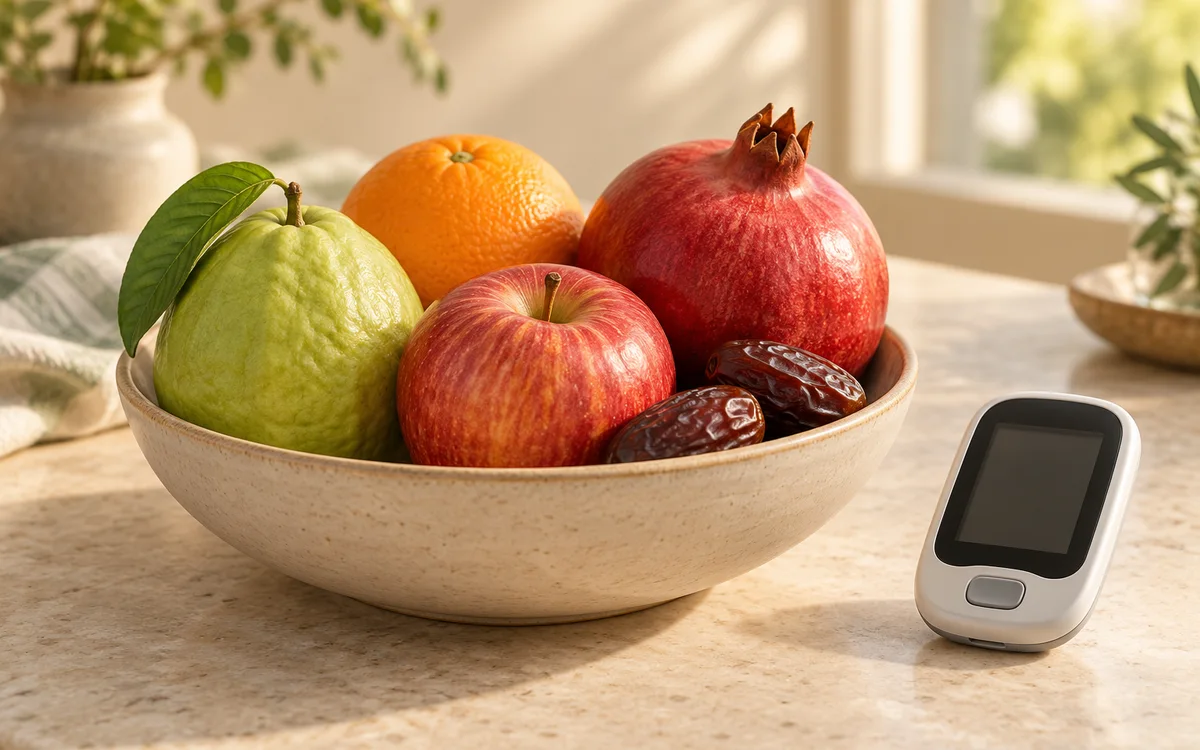
No fruit is completely off limits, but fruit counts as carbohydrate on the plate [5, 10]. A practical rule: one medium piece or a small cup at a time, with a meal or soon after it rather than a large amount alone on an empty stomach, and without juice. Fruit juice raises glucose quickly because it is concentrated and has no fibre, which is why whole fruit is the better choice [5, 9].
The Sussex leaflet's table puts apples, pears, citrus fruit, plums and cherries in the low group; grapes, mango, banana and pineapple in the medium group; and dried dates, melon, apricots and raisins in the high group [9]. That means watermelon, dates and mango deserve a small, measured portion, while apples, oranges, guavas and strawberries are easier to manage. Check your own reading, because people differ.
Snacks that fit: cucumber, carrot and lettuce sticks with hummus or yoghurt, a piece of fruit with cottage cheese, a boiled egg, plain yoghurt with cucumber, or a small handful of unsalted seeds or nuts. Be careful with nuts and seeds: the Sussex leaflet warns that chocolate and nuts have a low glycaemic index but are calorie dense, especially if you are trying to lose weight [9], so a small handful is enough.
Put protein in the snack, because it keeps you fuller for longer, and you will find more ideas in our article on high protein foods. Stay away from crisps, biscuits, cake, juice, fizzy drinks and heavily sweetened tea. that report recommends replacing sugar-sweetened drinks with water [4]. You do not have to snack if you are not hungry, but if you take insulin or certain tablets, snack timing may matter, and that is your doctor's decision [3].
As for sugar substitutes and sweeteners, the sources we reviewed give no clear guidance, so ask your doctor or dietitian rather than relying on advertising.
Ramadan, Eid and Family Occasions: Steady Glucose Without Deprivation
Ramadan can go well if it is planned, but the risks are real: low glucose, especially late in the fast before iftar, severe high glucose after iftar and suhoor, and dehydration [7]. The International Diabetes Federation groups people into low, moderate and high risk, and the decision to fast should be made with your doctor about 6 to 8 weeks before Ramadan, so medicines and meals can be adjusted [8]. Some older diabetes tablets carry a higher risk of lows, and doctors prefer alternatives [8].
When should you break the fast? The guidance says to break it if glucose falls below 3.9 mmol/L, rises above about 16.7 mmol/L, or if symptoms of low sugar, acute illness or dehydration appear [7, 8]. Checking glucose with a meter does not break the fast [7]. Always carry a fast-acting sugar source, never stop insulin on your own, and speak to your doctor about dose and timing [7].
A smart suhoor: a small portion of wholegrain starch (granary bread, lentils, oats or bulgur), vegetables and fruit such as cucumber and watermelon in sensible amounts, protein (eggs, beans, lentils or chickpeas), and a dairy food [7]. Foul helps here because it digests slowly and keeps you full.
Iftar: one or two dates, not a plate of them; the review says dates should be limited because they are high in sugar [7]. Then soup and salad, then a main meal with a small portion of starch and lean protein, and no deep-fried starters or pastries [7]. Reduce salt [7], and drink at least eight cups of water between iftar and suhoor [7]. Avoid juices, sugary drinks and caffeine; unsweetened laban or yoghurt is a preferred drink [7]. For sweets, kunafa, qatayef, basbousa and baklava should be tiny and occasional [7]. Fresh fruit about two hours after iftar is a better swap.
Exercise: keep it light to moderate, and avoid strenuous effort for one to two hours before iftar [7].
Eid: the warning is that highs recur during the three days of Eid after Ramadan [8]. Minimise fried foods and sugar-rich sweets [7]. Ka'ak, biscuits and pastry contain starch, sugar and fat together [5], so keep to one piece after a proper meal, not alongside tea all day.
At any family occasion: start with salad and protein, then starch, drink water, and do not arrive starving. Agree with yourself on one sweet with unsweetened coffee, and enjoy it.
Low Blood Sugar: An Important Warning if You Take Insulin or Certain Tablets
Changing your food can push glucose too low if you take insulin or some diabetes medicines, such as gliclazide and glimepiride, which belong to the sulfonylurea group [2, 3]. A low is usually a reading below 4 mmol/L [2]. The signs are strong hunger, dizziness, sweating, shaking, a racing heart, confusion and blurred vision, and in severe cases a fit or loss of consciousness [2].
What raises the risk? Missing or delaying a meal, eating less carbohydrate than usual, extra exercise, and alcohol, especially without food [2]. the same report also warns that lows can come late after alcohol [4]. That is why a diet for people on insulin is different: your doctor needs to know before you cut carbohydrate, fast, or follow a strict diet. The NHS says plainly not to switch to a very strict low-calorie diet without speaking to a health professional, as it may not suit people on insulin or other diabetes medicines [1].
First aid if you are awake: take a fast-acting sugar, such as a small glass of fruit juice, a sugary fizzy drink or glucose tablets, and recheck after 10 to 15 minutes [2]. Once your reading is above 4 mmol/L, eat something longer acting such as biscuits, a sandwich or your next meal [2]. Juice and sugar are not banned here; this is an emergency.
If the person is unconscious or cannot swallow: give nothing by mouth, put them in the recovery position, use glucagon if available, and call the emergency services [2].
Speak to your doctor if lows keep happening, happen at night, are severe, or if you can no longer feel the warning signs [2]. Check your glucose before driving [2]. Always carry a fast sugar source and let people around you know what to do.
The key point: do not change your diabetes medicine yourself when you change your food. If you lose weight or reduce carbohydrate, the medicine may need adjusting by your doctor so that lows do not happen.
Why an Individual Plan Matters, and Who to See
No single diet fits every person with diabetes. MedlinePlus says a provider tailors the plan to your medicines, weight, other conditions, lifestyle and goals, summed up as the right foods in the right amounts at the right times [11]. the ADA report recommends that every adult with type 1 or type 2 diabetes is referred for individualised nutrition therapy with a registered dietitian at diagnosis [4], and the NIDDK describes the same approach [3]. Meal and snack timing also depends on medicines, activity and work hours [3].
Doctor versus dietitian: an internal medicine and diabetes doctor assesses the condition, tests, medicines and complications, follows the HbA1c, and decides whether a medicine needs changing. A dietitian builds the plan around your real food, your schedule and your fasting, follows your readings with you, and adjusts the plan at each visit. This is especially important in Ramadan, because the nursing journal review says a dietitian should be central given how iftar foods vary by culture, and that individualised meal plans improve outcomes [7]. Ramadan-focused education also reduces lows and improves HbA1c [7].
Weight: moderate loss helps. the consensus says 5% weight loss gives clinical benefit in type 2 diabetes [4], and the NHS encourages weight loss if you are overweight, without a very strict diet unless a professional advises it [1]. If you are wondering about weight and diabetes medicines, you can read about Mounjaro for type 2 diabetes; that decision is medical rather than nutritional.
Common myths: there is no clear proof that particular herbs, spices or supplements manage diabetes, so ask your doctor before taking anything [3]. Cinnamon, fenugreek and apple cider vinegar do not replace the plan. And cutting out all starch is not required; what matters is amount and type [11, 4].
If you are still at the diagnosis stage, read about early diabetes symptoms and tests. If you have prediabetes or insulin resistance, there is an article on an insulin resistance diet. For pregnancy, gestational diabetes food has its own rules and is followed with the doctor. And for medical follow-up of your condition, you can see a diabetes doctor in Maadi.
You need a doctor, not only a dietitian, if: you were just diagnosed, your medicines changed, you take insulin and want to change your food, lows keep recurring, you have symptoms such as great thirst, frequent urination, numbness or blurred vision, or your readings stay high despite sticking to the plan. High glucose over a long period damages blood vessels and nerves [6].
Follow-Up at La Rose Clinics in Maadi
Branch address: 14 El-Mokhtar St off El-Nasr St, behind QNB, New Maadi. Nutrition follow-up is with Dr Alyaa Said Abu Taleb, clinical nutrition specialist from the National Nutrition Institute, on Saturdays and Mondays from 2 to 7 pm. The medical side (assessing glucose, medicines and tests) is with Dr Mohab Ashraf Fouad, specialist in internal medicine, diabetes, gastroenterology and liver disease, on Saturdays from 4 to 7 pm. Both doctors see patients at the Maadi branch only.
At the first visit you will talk about your real food, your medicines, your work and your glucose readings if you have them. It helps to bring a three-day food diary, your meter readings and the names of your medicines. From that we build a plan around your usual Egyptian food and adjust it at follow-up. Our guide to the first clinical nutrition visit explains what happens. Individualized medical nutrition therapy under clinical supervision significantly improves HbA1c control and reduces diabetes-related complications [4].
A clinical nutrition clinic in Maadi works with diabetes, weight, fatty liver and more. You can book by phone or WhatsApp on 010 4066 1893, or through the booking page. Schedules can change and are confirmed when you book. Questions about cost are answered on WhatsApp. You can use Book your appointment to choose your day.