First visit to a rheumatologist: the direct answer
If you are preparing for your first visit to a rheumatologist, this specialty deals with the diagnosis and treatment of diseases of the joints, muscles and connective tissues [13]. At La Rose Clinics you can see Dr Shimaa Sherif, specialist in rheumatology, joint diseases, physical medicine and rehabilitation, at the Maadi branch (14 El-Mokhtar Street, off El-Nasr Street, behind QNB Bank, New Maadi) on Saturday, Monday and Tuesday from 3 to 8 pm, or at the Fifth Settlement branch (CMC Medical Mall, 4th floor, North 90th Street, behind the Air Force Specialized Hospital) on Wednesday from 3:30 to 8 pm. Book by phone or WhatsApp on 010 4066 1893 to confirm the day and branch that suit you.
No single test confirms or rules out a rheumatic disease; the doctor builds the diagnosis from your description of symptoms, a joint examination, and blood test and imaging results [2, 6]. So you do not need to order a package of tests on your own before being seen; what matters is bringing any earlier results you already have [6, 14]. This guide shows how to prepare your test folder, medication list and symptom diary, and what happens in the visit itself [2, 6].
Read also: book a rheumatology consultation at La Rose
When should you see a rheumatologist? Warning signs and red flags
Not every joint pain needs a rheumatologist, but some signs make a rheumatology visit the better choice. The NHS advises seeing a doctor when pain disrupts daily activities or sleep, keeps getting worse or returning, or comes with morning stiffness lasting more than half an hour [5]. Rheumatoid arthritis typically shows as swelling, warmth and pain in small joints of the hands and feet on both sides, sometimes with fatigue [2, 6]. EULAR recommendations stress that anyone with new inflammatory joint swelling should be seen promptly by a rheumatology specialist, because early treatment matters [14].
If you also have a skin rash that worsens in the sun, or general symptoms alongside joint pain, the doctor may consider autoimmune conditions such as lupus and order immune tests according to your case [3, 11]. Inflammation markers such as erythrocyte sedimentation rate and C-reactive protein help show whether inflammation is active [8, 9].
Some signs should not wait for a clinic appointment. The NHS says a swollen joint that is hot to the touch, or joint pain with fever or feeling generally unwell, needs an urgent appointment or immediate medical help, and severe pain after a fall or injury, or being unable to bear weight on the joint, needs emergency care [5]. A hot joint with fever can signal a joint infection and needs urgent assessment [5].
If your complaint starts with vague general symptoms, you can review our first internal medicine visit checklist in Maadi; internal medicine with Dr Mohab Ashraf is available at the Maadi branch only [13].
What to bring to your first visit: organizing tests and reports
The most useful step is gathering your earlier results into one folder ordered by date, oldest to newest, instead of loose papers or unclear phone photos [6, 14]. The doctor needs to see the values with their dates to compare disease activity over time [14].
Bring any blood tests you have already had, such as complete blood count [7], erythrocyte sedimentation rate [8], C-reactive protein [9], rheumatoid factor [10], antinuclear antibodies [11], uric acid [12], and anti-CCP antibodies if done [6]. There is no need to order new tests on your own before the visit; the doctor decides what is needed after examining you [2, 6]. For a breakdown of each test, read our guide to rheumatism blood tests explained after your visit.
Also bring earlier X-rays, MRI and ultrasound of the affected joints, with the reports and the images themselves if you have them, because X-ray, MRI and ultrasound are used to assess joint inflammation and damage and to follow it over time [6, 17]. Bring any bone density (DEXA) result you have as well; DEXA, imaging and physiotherapy are done at external centres rather than at La Rose, so patients bring their reports with them [2].
Arrange the folder so each kind of result sits together: blood tests in one part, imaging in another, and any old reports from other doctors in a third. Write the date on any page where it is not clear. This saves time in the visit and lets the doctor see how results changed quickly [6, 14]. If a test was done at a particular lab, keep the original result sheet rather than just a photo of the number, because normal ranges differ between labs [7, 8].
Medication and supplement list: accurate preparation without errors
Your doctor will ask which medicines you take as part of your medical history [2]. Before the visit, write a list of every medicine with its name, dose and how often you take it. If writing is hard, put the original packs in a bag and bring them with you.
Do not limit the list to medicines for chronic illnesses; also include painkillers and anti-inflammatories you take when needed, cortisone if you take it, and vitamins, supplements and herbal products [9, 11]. Medical sources advise telling your doctor about all medicines and supplements you take because some can affect test results [9, 11, 12].
Please note: do not change the dose of any medicine or stop it on your own before the visit because of tests; show the full list to the doctor, who decides [11, 12].
Symptom diary and questions to ask: communicating clearly
Anxiety in the consultation can make you forget important details, so keep brief notes for a week or two before your appointment [2, 6]. Record what time of day pain peaks, how many minutes morning stiffness lasts, which joints are swollen or warm, and which daily tasks have become hard, such as opening a jar, dressing or climbing stairs [5, 6]. The doctor may also ask you to complete a short questionnaire about everyday activities [6].
Also note whether a relative has an autoimmune disease, because doctors ask about lupus or other autoimmune diseases in the family [3]. If you recently had an antinuclear antibody test that came back positive, read our article on positive ANA test meaning; a positive result alone does not mean disease, since many healthy people test positive [11].
Prepare questions for the doctor, such as: What is the most likely initial diagnosis? Do I need more imaging or blood tests? What is the treatment plan and its goals? Which side effects should I watch for? [2, 6]
If you are on treatment now, also note whether it eases your symptoms and which side effects you noticed. This helps the doctor assess your condition more precisely, since regular follow-up is a core part of care [2]. If symptoms come and go, you can photograph a swollen joint on a bad day so the doctor can see how it really looks [5, 6].
What happens inside the consultation room: examination and evaluation
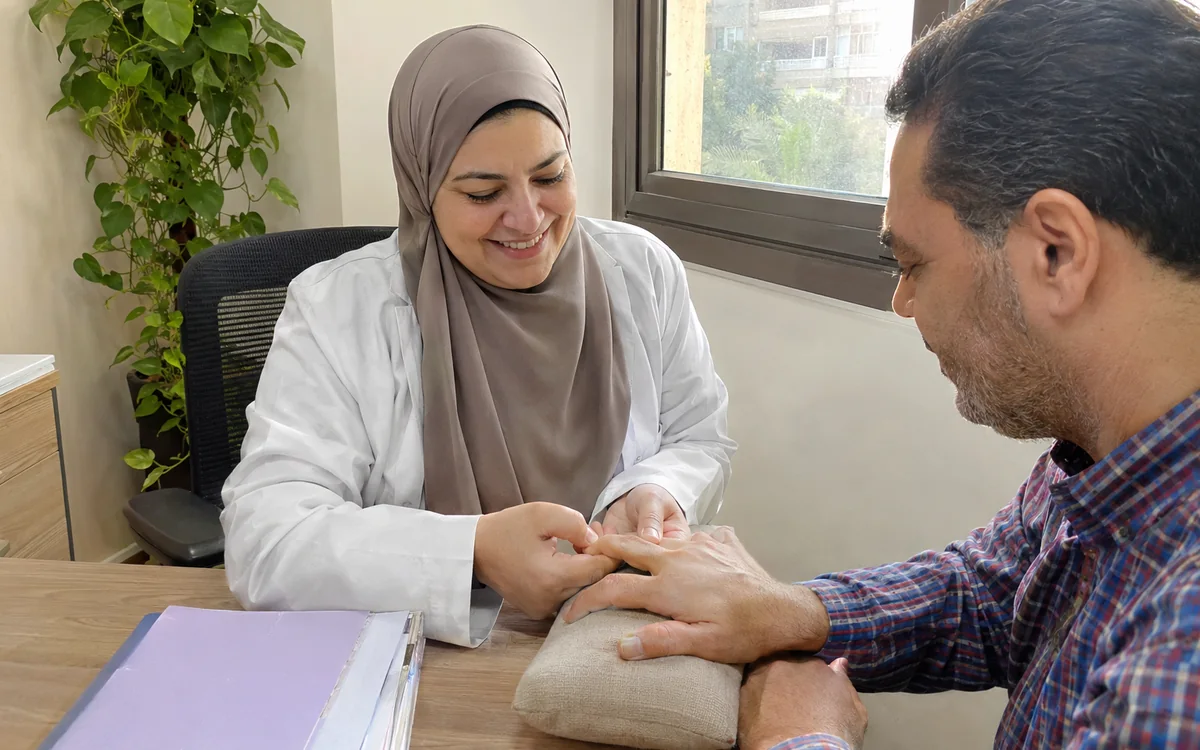
The visit starts with a conversation: the doctor asks about your symptoms, when they began and how they affect your life, plus your medicines, medical history and family history [2, 3]. Then the doctor examines your joints and their movement, watches how you walk, bend and move in daily activities, checks the skin for rashes or nodules, and may listen to your chest [2]. Your ability to manage everyday tasks is assessed too, and you may complete a short questionnaire about it [6].
Next the doctor reviews the test and imaging results you brought and decides whether further tests or imaging are needed [2, 6]. When body weight is loading the joints, InBody body-composition analysis is available in-house at the clinic. At the end, the doctor explains the working diagnosis and the treatment plan [2].
Take your time answering. Every detail about when the pain occurs and how it affects your sleep and work helps the doctor reach a suitable diagnosis [2, 6]. If something is unclear, ask the doctor to explain it until you understand, and after the visit write down the treatment plan and the tests requested so nothing is forgotten [2].
Follow-up and treatment plan: long-term management and safety
Rheumatic diseases are often long-term, and modern treatment is built around a clear target: reaching remission or the lowest possible disease activity, known as treat-to-target [14, 15]. According to NIAMS, the goals of treatment are to relieve pain, reduce inflammation and swelling, prevent or slow joint damage, and improve daily function [2].
After treatment starts, the doctor follows your condition regularly to see how the disease is progressing, whether the medicine works and whether there are side effects, which may involve blood and urine tests and imaging [2]. The plan is adjusted over time according to your symptoms and disease severity [2].
Physical activity and weight management are part of the care plan [2]. Physiotherapy sessions are not provided in-house at La Rose, so if the doctor decides you need them, bring your session reports to follow-up visits.
Follow-up is your chance to tell the doctor what has improved and what remains, and to bring the results of any tests or imaging requested since the last visit, plus an updated medicine list if the doctor changed anything [2, 15]. You can contact the clinic on WhatsApp if you have a question about your appointment.
La Rose clinic branches: Maadi and Fifth Settlement, hours and directions
La Rose's rheumatology clinic, led by Dr Shimaa Sherif, specialist in rheumatology, joint diseases, physical medicine and rehabilitation, runs at two branches [13].
The Maadi branch is at 14 El-Mokhtar Street, off El-Nasr Street, directly behind QNB Bank, New Maadi. Rheumatology clinic days are Saturday, Monday and Tuesday from 3 to 8 pm. From Maadi Grand Mall it is about 1.6 km (5 minutes by car), from Degla Square about 2.6 km (7 minutes), from Road 9 Maadi about 3 km (8 minutes), from Old Maadi and Maadi metro station about 3.4 km (8 minutes), from El Basatin about 3.5 km (10 minutes), from Corniche El Maadi about 5.5 km (11 minutes), from Tora El-Balad about 6 km (15 minutes), and from Zahraa El Maadi about 7 km (11 minutes). Street parking is available in front of the building, and internal medicine with Dr Mohab Ashraf is at the Maadi branch only.
The Fifth Settlement branch is in CMC Medical Mall, 4th floor, North 90th Street, behind the Air Force Specialized Hospital, New Cairo. The rheumatology clinic runs on Wednesday from 3:30 to 8 pm. From Cairo Festival City it is about 5.2 km (10 minutes by car), from El Yasmeen about 5 km (10 minutes), from Al Narges about 6.5 km (12 minutes), from El Banafseg about 6.9 km (10 minutes), from First Settlement about 7.4 km (12 minutes), from Katameya Heights about 8 km (12 minutes), and from Point 90 Mall and AUC Avenue about 9 km (12 minutes). To book and confirm timings at either branch, call or message on WhatsApp on 010 4066 1893.