What can one day of photos show, and what can it not show?
The idea is simple: instead of relying on a general statement such as “I eat normally,” you have a real sequence of foods and drinks from the beginning to the end of a day. A photo can prompt recall of coffee additions, a taste while cooking, a snack in the car, or a second serving that followed the first plate. Food records are designed to describe all foods and beverages consumed over one or more days, and recording close to the eating event reduces complete dependence on memory [1, 2].
A photograph is not a laboratory test or a device that calculates truth. Appearance alone cannot reveal the oil incorporated into a dish, a restaurant recipe, the type of drink in an identical cup, or how much remained after the image. Reviews of image-assisted dietary assessment describe promise and lower writing burden, but missed photographs, changed behaviour while recording, and difficulty estimating portions or hidden ingredients remain important sources of error [1, 4].
One day is also not “your diet.” It is a short sample containing normal variation, and a workday may differ from a weekend. The purpose here is to notice a possible pattern or prepare questions for a consultation, not to diagnose a deficiency or prove the cause of weight change. Assessing usual intake requires an instrument and number of days suited to the goal, often including repeated non-consecutive days rather than one isolated record [2, 3, 4].
Choose an ordinary day and do not perform for the camera
Choose a day resembling your ordinary life: not a large celebration, an illness day, or the first day of a new diet. If your schedule changes, select a type of day that genuinely occurs and label it: office day, working from home, weekend, or travel. You do not need to manufacture a perfect day; the record is useful because it is candid, not because it looks polished.
Begin with the first item containing energy or additions and continue until bedtime. Plain water can be summarised in a note if that is easier, but photograph other drinks and what is added to them. Do not avoid a food because of its appearance, add vegetables for the image, or postpone eating for better light. Recording can itself alter behaviour because you know you are observing it. Researchers call this reactivity, and it is an important reason to treat the day as a snapshot rather than complete truth [2, 3, 4].
Set a few rules before starting: one quick photo, no scale, no calorie counting, and no posting. If you forget an item, add a note when you remember instead of discarding the day. If someone else prepared the dish, there is no need to interrogate them; the dish name and two clear details are enough to start. Keep the task light enough to finish, because record quality can decline as burden and reporting duration increase [1, 2, 3].
Capture each eating or drinking occasion clearly
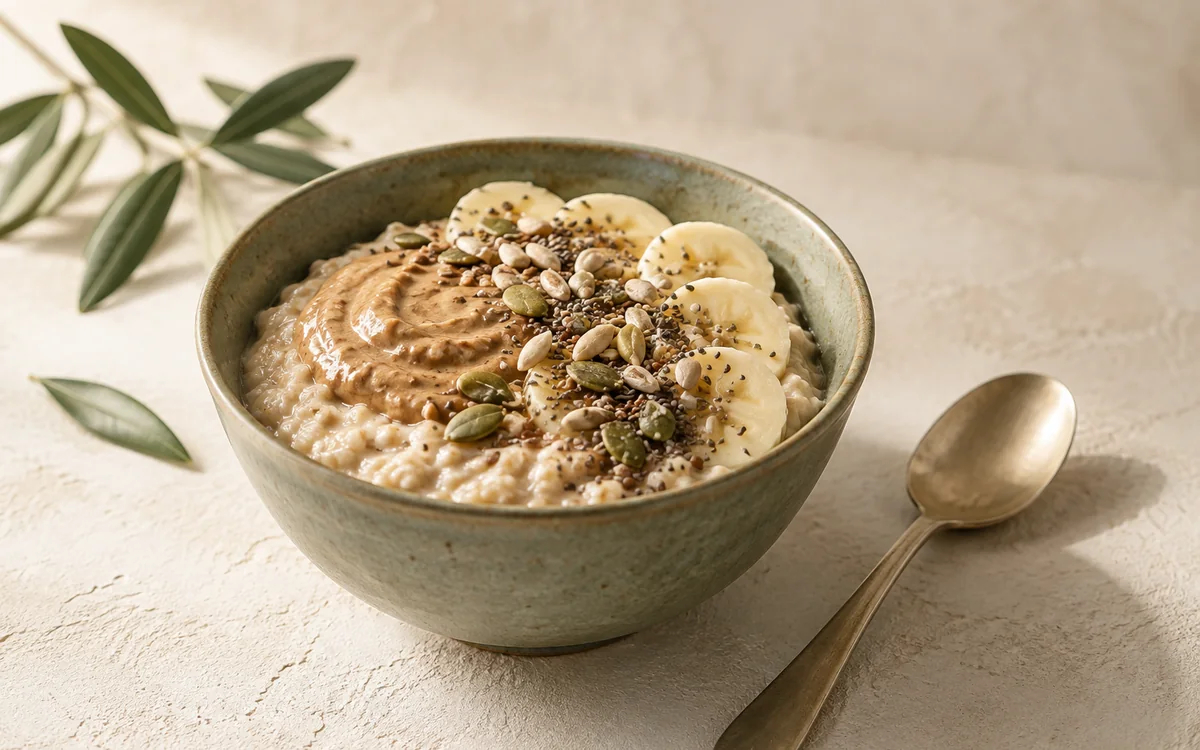
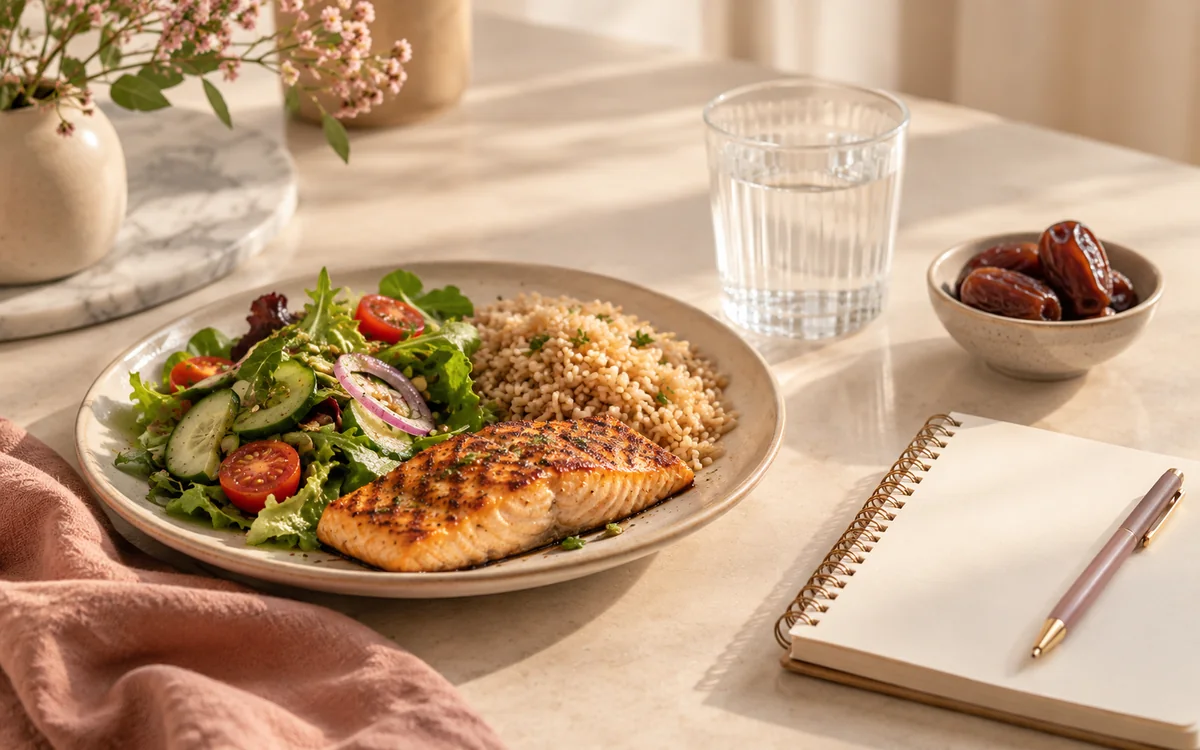
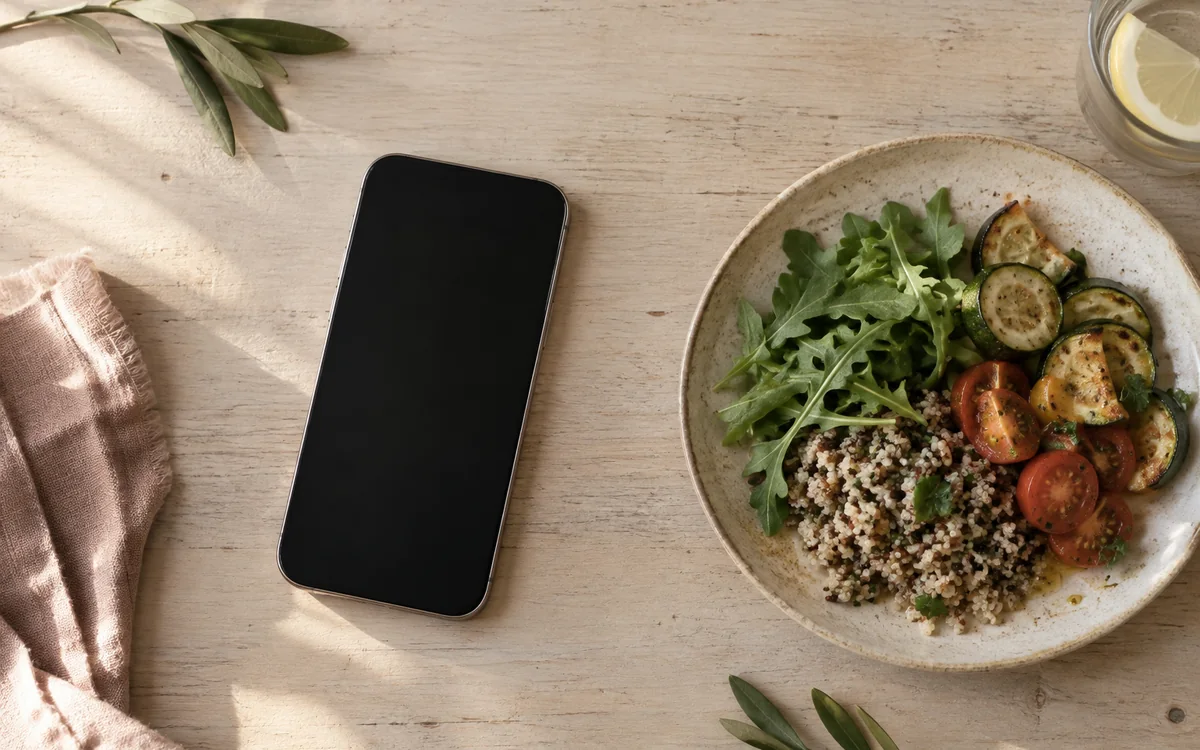
Photograph the food before the first bite or sip, keeping the plate or package reasonably visible. Add the time and a simple name: “beans and bread,” “coffee with milk and sugar,” “handful of nuts,” or “restaurant sandwich.” If size is unclear and you plan to review the images with a professional, place a familiar object such as a spoon or usual cup beside the plate without turning the exercise into geometry. More rigorous research methods sometimes use a reference card and before-and-after images, yet portion estimates are still not guaranteed [1].
Take another image if you add a serving, refill a drink, or return to food later. Sauces, dressings, sugar, milk, and appetisers may not be visible in one frame, so a two-word note completes the image. If you take a bite while standing in the kitchen, photograph what you can or note it promptly. The USDA multiple-pass recall method specifically revisits forgotten foods, time, eating occasion, and details because more than one pass helps complete the story [5, 6].
Do not try to calculate nutrients from the image yourself. Even specialised systems often need human review, food and recipe identification, and an estimate of leftovers. The photo has a simpler job here: it anchors your memory and gives a clinician a place to begin asking. When a recipe matters, list the main ingredients or photograph a product label separately, especially for an allergy or treatment requirement, but leave suitability decisions with the treating team [1, 2].
Add minimal context and protect your privacy
A photograph shows “what,” but “where, when, and what was happening” can sometimes explain the pattern. Beside each occasion, add one short line if useful: approximate hunger, eating alone or with others, feeling rushed or calm, and whether the meal was satisfying. You do not need to analyse every emotion or find a reason for every bite. Information about time, location, eating occasion, and concurrent activity can enrich a food record, but collect only what you intend to use [2].
Use neutral language: “I ate standing after a meeting because lunch was late” is more accurate than “I ruined the day.” Do not place a pass or fail mark on each image. Healthy dietary principles concern adequacy, balance, moderation, diversity, and safety, while the exact pattern varies with age, activity, culture, and health. A single picture cannot compress those principles into a score [7, 8].
Food images are personal health information. Disable cloud backup if you do not need it, use a private album, and crop faces, medicine names, addresses, or workplace details captured by accident. Do not photograph another person without permission or send the album to a group chat. Review images before sharing them with a professional and use a channel agreed with the clinic. Research on passive image capture likewise notes that pictures may include private people and settings and require participant review before transmission [1].
Review the sequence that evening without judging it
That evening, arrange the images by time and inspect the sequence before the contents. When did eating begin? Did a long gap precede intense hunger or hurried eating? Did a drink or small taste recur even though you would not normally remember it? Was the day altered by short sleep, commuting, or pressure? These are questions, not accusations. A record can describe meal, snack, and contextual timing, but an association observed in one day cannot establish a cause [2, 4].
Then consider the wider picture. Was there reasonable variety across vegetables or fruit, protein sources, and suitable starchy foods or grains? Are drinks visible? Did a very small meal leave you hungry? WHO guidance explains that healthy diets take many forms and rest on adequacy, balance, moderation, and diversity, while the NHS Eatwell Guide considers balance across a day or week rather than requiring every plate to stand alone [7, 8].
Select one observation to test, not a repair list. You might note, “the gap between lunch and dinner was long, so I will prepare a suitable snack,” or “dinner was delayed because no clear option was ready.” If the second problem recurs, Freezer meal pairs: easy and safe offers a practical backup-meal method. Do not use the images to ban an entire food group or punish yourself the next day; useful change needs context and review, not a reaction to one frame [3, 7, 8].
Separate observation from diagnosis
If the images show frequent eating, that alone does not establish emotional eating or a disorder. If they show only two meals, that does not prove fasting is appropriate or that your body received what it needed. Appetite and timing are affected by work, sleep, activity, medicine, and illness, while a picture cannot measure blood glucose, absorption, or metabolism. Keep the statement precise: “I noticed this on this day,” not “I found the cause of my weight” [2, 4, 7].
Ask about the experience without forcing it into a rigid category. Were you hungry, enjoying food, distressed, or experiencing more than one thing? Physical hunger and emotion can coexist, and comfort eating does not automatically indicate a disorder. How can I tell physical hunger from emotional eating? explores those boundaries; here it is enough to record context without blame and not deny a bodily need merely because emotion was present [9, 10].
If your purpose is to track a symptom such as bloating, reflux, or headache, do not conclude from one coincidence that a particular food caused it, and do not begin a broad elimination diet. Note the symptom time, severity, and relevant medicines, then let a clinician decide whether a targeted record or tests are needed. Chronic treatment, pregnancy, allergy, or a swallowing disorder also changes how images should be interpreted; an individual plan cannot be copied from another person's plate or an app [2, 4, 12].
When is self-tracking unsuitable, and when should you seek help?
Photography is optional and does not suit everyone. Stop if you begin selecting portions for appearance, fear the images, review them for hours, hide food, or compensate through fasting, vomiting, laxatives, or compulsive exercise. Severe concern about weight or shape, restrictive eating, withdrawal from food-related situations, dizziness, palpitations, or fainting justify early assessment. NICE recommends not relying on one screening tool and considering behavioural, physical, and psychological signs together [9].
Eating a large amount at a celebration is not automatically binge-eating disorder. A core feature of a binge episode is consuming a large amount over a short time while feeling a loss of control; diagnosis also considers recurrence, distress, and a specialist assessment. If this recurs or tracking feeds the cycle, seek a professional experienced in eating disorders instead of collecting more images or imposing a harsher diet [9, 10].
Some medical signs should not be delayed by photography. Continuing unintentional weight loss needs review, swallowing difficulty or coughing and choking with meals needs urgent assessment, and vomiting blood requires immediate medical help according to the associated symptoms. Fainting, confusion, severe dehydration, or rapid deterioration should not wait for a routine nutrition appointment. Obtain appropriate care first; after stabilisation, the team can decide whether any record would help [9, 11, 12, 13].
Turn the images into useful questions at a consultation
Before the visit, keep the day as it happened rather than producing an edited version. Label the type of day, briefly note sleep and work timing, and add only medicines or symptoms your clinician asked you to record. Prepare three questions: Were these gaps appropriate for my situation? What details are missing for assessment? Do I need to repeat the record on another day? A professional can review timing, drinks, additions, portions, and context, then decide whether the images are enough for discussion or whether a 24-hour recall or records from several days are needed [2, 3, 5, 6].
Your first clinical nutrition visit explains other useful information, including medical history, medicines, available test results, and a realistic goal. Images are one small part of assessment, not a replacement for symptoms, examination, or tests when indicated. Do not delete an embarrassing item or apologise for your day. The visit should understand reality and build an appropriate next step, not grade the album.
If there are no urgent signs but meal timing, appetite, weight, or your relationship with food is causing uncertainty, you can request a clinical nutrition appointment at the clinic. Mention that you have a one-day photo record and ask how to share it safely rather than sending it automatically. Individual decisions remain with your treating clinician or dietitian, who may ask you to stop recording or change the method according to your situation [2, 9].