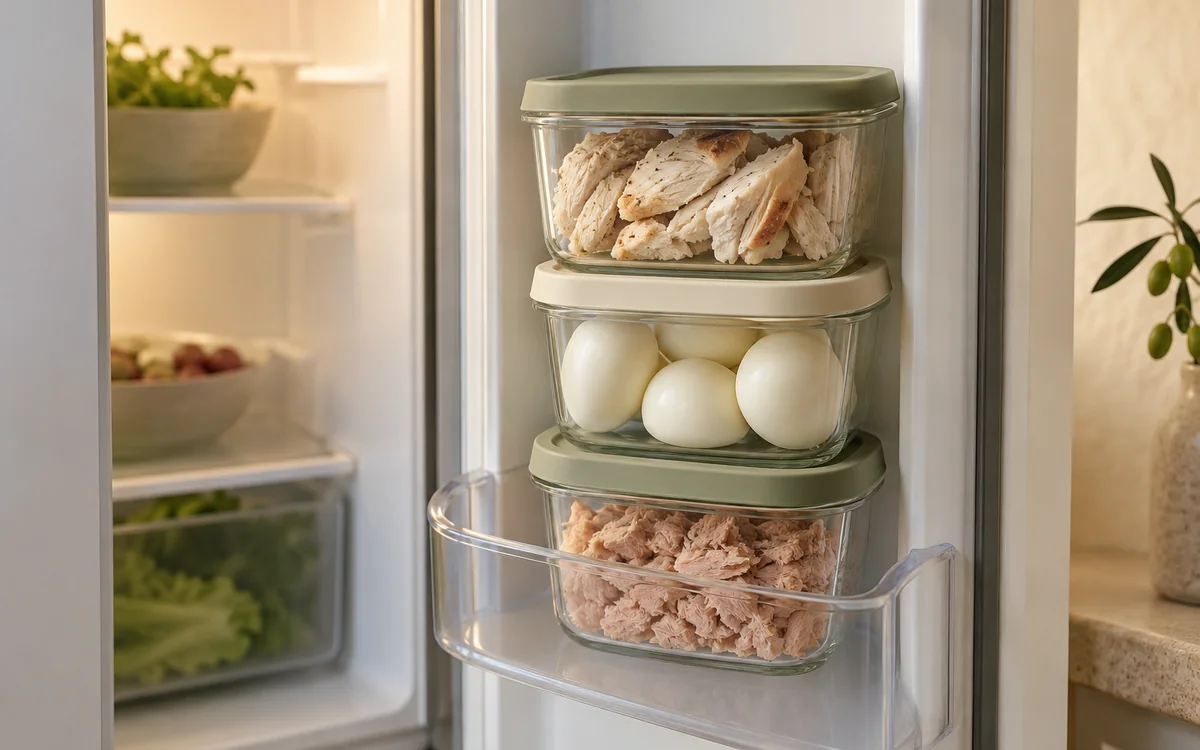
The idea is two portions that rescue a day, not a perfect week
When you cook chicken, fish, meat, or lentils, reserve two plain portions before adding sauce and place each in a separate container. Two is not a clinical prescription and does not need to cover a whole week. It is a small reserve for the day you return late and have no capacity to start dinner from scratch. When you use one, replace it from ordinary cooking. The system renews itself without a huge preparation day or a freezer full of forgotten containers.
Why begin with protein? In many meals it is the component that needs more cooking or forethought, while bread, rice, or frozen vegetables may be quicker to arrange. A protein container alone does not make a complete meal, however. Balanced eating depends on adequacy, balance, and diversity, and its shape varies with the person, culture, and available food. Complete the portion with vegetables or fruit and a suitable starchy food. Every meal need not reproduce a plate diagram exactly; balance can be considered across a day or week [1, 2].
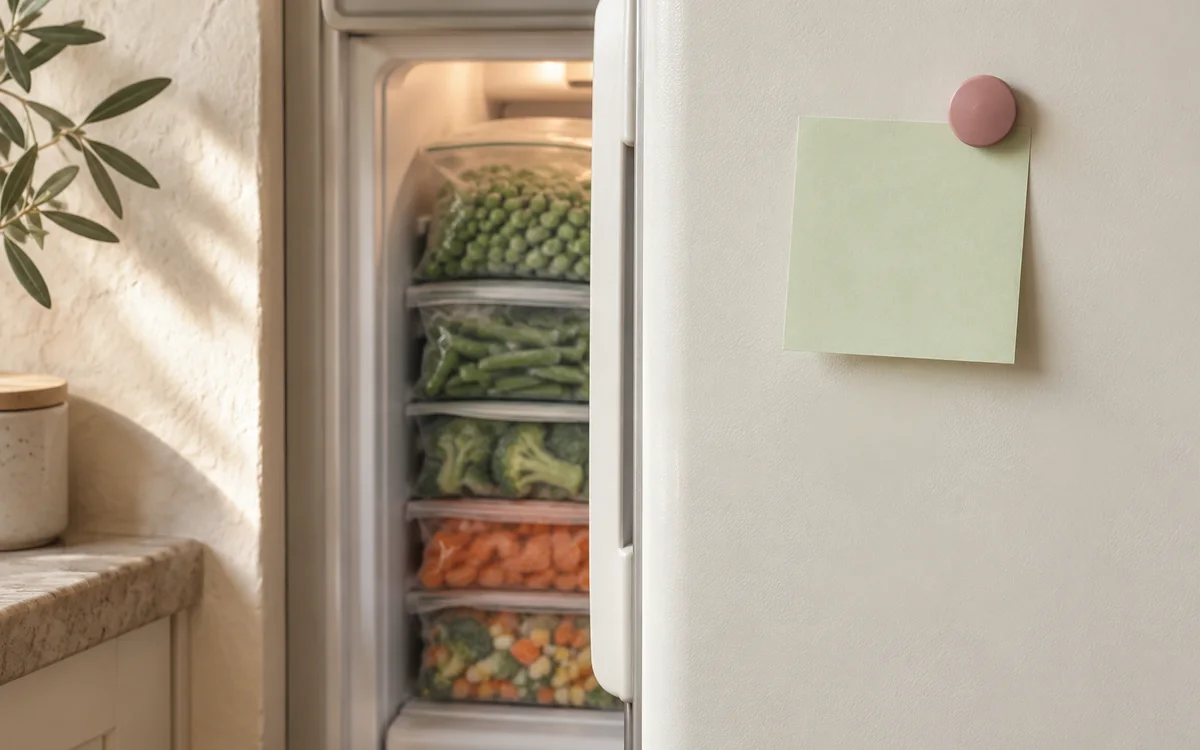
If your difficulty is seeing ingredients without knowing how to combine them, Freezer meal pairs: easy and safe explains how to list three complete meals on the door. This guide has a narrower purpose: choosing, storing, and safely using the protein portion. It is an organisation tool, not treatment for a disease or a promise of weight loss or muscle gain [1, 2, 4].
Choose a protein source that suits the meal, and vary it
Protein does not mean chicken breast alone. Options include fish, meat, poultry, eggs, pulses such as lentils, chickpeas, and beans, as well as soy foods, nuts, and seeds. Milk, yoghurt, and cheese contribute too, although their storage, serving, and meal roles differ. Variety supplies different nutrients and prevents monotony, while pulses bring fibre alongside protein. Choose leaner meats most of the time and reduce reliance on processed meats high in salt and fat [1, 2, 3].
Think about use before freezing. Plain cooked lentils can become soup or join rice and vegetables. Plain chicken can enter a sandwich or a bowl with vegetables and rice. Fish needs secure wrapping and a suitable thawing and reheating plan. Nuts or an unopened can of tuna may be cupboard backups rather than freezer portions, with attention to labels, allergy, and salt. The idea does not require every protein source to enter the same system.
The quality of the whole diet matters more than chasing one component. If every portion carries a heavy sauce, or the finished meal lacks vegetables and a suitable energy source, the word “protein” does not restore balance. Rotate plant and animal sources when appropriate and use locally available foods you can sustain. The World Health Organization emphasises that a healthy diet varies with individual needs, culture, and food availability while retaining adequacy, balance, moderation, diversity, and safety [1, 3].
A portion is not one number for everyone
Do not copy the portion used by an athlete or a person on social media. Protein needs vary with age, body size, activity, training, pregnancy or breastfeeding, illness, and total food and energy intake. The word “portion” also does not reveal its protein content: equal weights of cooked lentils and chicken do not provide equal amounts, while yoghurt and cheese differ again. Population reference values are starting points for planning, not personal prescriptions for each meal [1, 5].
Research on distributing protein among meals still does not establish one ideal rule for every adult. A scientific review found evidence for an optimal muscle-focused distribution limited and inconsistent, with adequate daily intake remaining fundamental. In practice, including a suitable source at more than one meal may help someone who repeatedly misses protein at breakfast or lunch, but dividing an inadequate total does not make it adequate, and extra protein does not automatically become muscle [4].
Build the container around a usual meal, your satisfaction, and your plan rather than a fixed picture. You may label it “one portion” or “serves two” instead of grams when you have no prescribed target. If you need a range, Is more protein always better? summarises why calculation is individual. A professional reviews the whole day, movement, conditions, medicines, and tests, then turns the range into real food you can sustain [1, 4, 5].
Cook, cool, and label before freezing
Start safely at preparation: wash hands and surfaces, separate raw meat, poultry, and fish from salad and ready-to-eat food, and cook each food to a safe internal temperature, using a food thermometer when available. Do not wash raw chicken because splashes can spread microbes around the sink. Once it is cooked, use a clean spoon and containers, and never return cooked food to a plate that held the raw item [6].
Reserve the two portions before adding a sauce that may limit later uses or make the meal very high in salt. “Plain” means flexible, not undercooked or entirely unseasoned. Suitable herbs and spices are fine, but chicken, meat, or fish stored as cooked food must be thoroughly cooked. Divide a large pot among small or shallow containers so it cools faster, and refrigerate or freeze perishable food within two hours, or within one hour when the surroundings exceed 90°F (32°C) [6, 7].
Write the food, cooking date, and quantity or number served. Clearly note any allergen, especially in a shared household. Close the container securely and leave suitable expansion space where needed. Do not stack a large amount of warm food tightly in one corner; spread it so cold air can circulate. Freezing stops the growth of many microbes, but it does not sterilise food or repair unsafe handling that occurred before freezing [7, 8].
Thaw, reheat, and complete the meal
The easiest plan is moving a portion to the refrigerator the night before or in the morning. Safe thawing methods are the refrigerator, cold water with the food in a leak-proof package and regular water changes, or the microwave followed immediately by cooking or reheating. Do not leave the portion on a counter or in a car. Some leftovers, especially soup, can be reheated from frozen, but they need extra time and stirring so heat reaches the centre [6, 7, 8].
During reheating, cover and stir when the method allows to reduce cold spots. U.S. leftovers guidance recommends reheating leftovers to 165°F (74°C) and bringing soups and sauces to a clear boil. Do not heat one area while leaving another lukewarm. Follow product instructions because some frozen foods appear cooked but actually require full cooking. Heat the amount you will eat instead of repeatedly warming the whole container [7, 8].
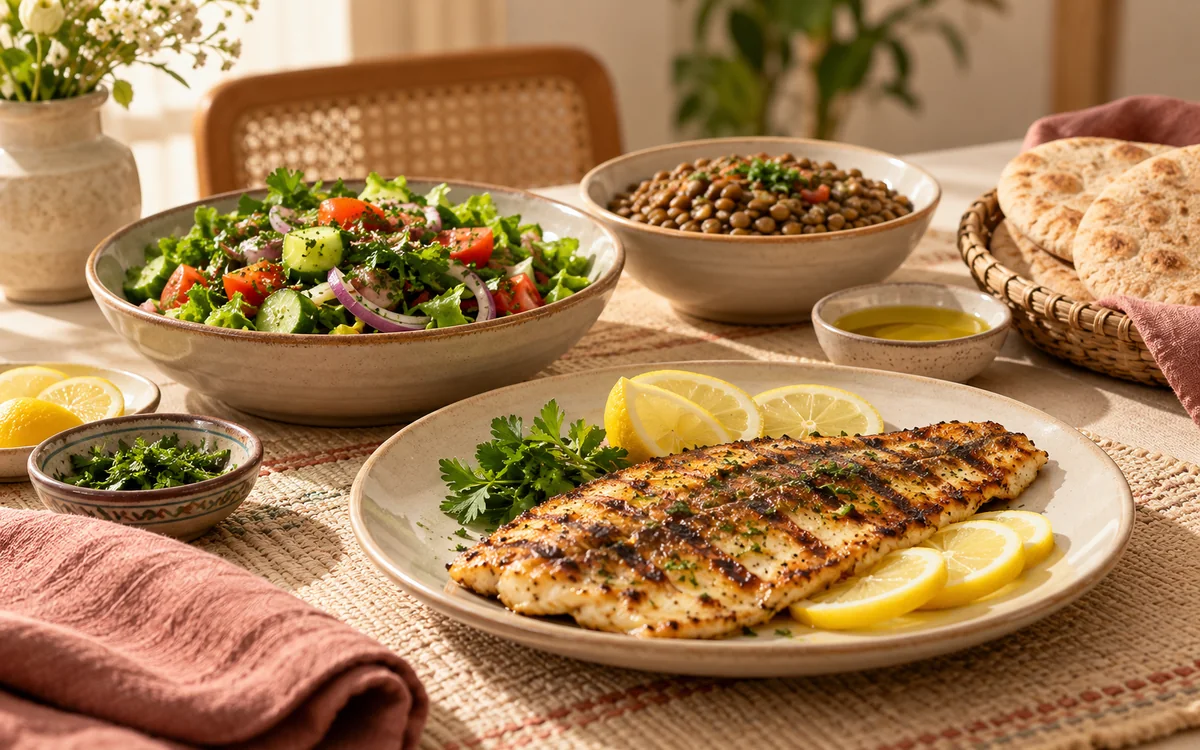
Then ask what is missing to make this a meal. A lentil portion may need bread or rice and vegetables; chicken may be completed with frozen vegetables and potato or bread; fish can join rice and salad. Carbohydrate need not be banned because the meal contains protein; it supplies energy, with type and amount adjusted to the person and day. Frozen vegetables remain vegetables and can save time. The reserve is meant to prevent a missed meal, not reduce eating to an isolated protein portion [1, 2, 3].
Adapt the reserve when medical needs apply
If you have chronic kidney disease, do not raise or lower protein on your own. Stage, laboratory results, dialysis, and nutritional status change the plan. Kidney guidance emphasises an adequate but not excessive amount in relevant stages, with individual medical nutrition therapy and review of potassium, phosphorus, and sodium when needed. A container that is “healthy” for one person may not suit another, and potassium-containing salt substitutes are not automatically safe for everyone with kidney disease [12].
With diabetes, a protein portion does not cancel the need to consider the rest of the meal or medicine effects. Pregnancy or breastfeeding, older age, surgical recovery, and poor appetite may also change needs, energy requirements, and food-safety priorities. A vegetarian reserve can use lentils, beans, chickpeas, or soy, while the quality and variety of the whole day and nutrients such as iron and vitamin B12 still matter. Do not use backup portions to begin broad restriction without a diagnosis [1, 2, 3].
Allergy is different from preference. Read the label every time, prevent contact between an allergen-contaminated utensil or container and the affected person's food, and label ingredients clearly. Tongue or throat swelling, breathing difficulty, wheeze, severe dizziness, or loss of consciousness after eating may indicate a severe reaction requiring the emergency plan and urgent help [11]. If you need to connect conditions, medicines, and tests with your day, Your first clinical nutrition visit explains what a professional reviews before setting portions [11, 12].
Rotate the two portions and review what your body is telling you
Place older portions at the front and newer ones behind. When you use a container, add it to the shopping list or replace it from the next suitable dish. If one portion stays forgotten, do not blame yourself. Ask whether it is too large, unappealing, slow to thaw, or dependent on an unavailable addition. Freeze a smaller amount, write “move in the morning,” or choose an easier source. A two-portion system you use is better than ten forgotten containers. Consult a storage chart instead of guessing because times differ by food [7, 8, 9].
Do not rely on smell or tasting to prove safety; illness-causing microbes can be present without an obvious sign. Discard food when its storage conditions or timing are unknown, and never taste it as a test. Seek medical assessment for bloody diarrhoea, diarrhoea lasting more than three days, high fever, vomiting that prevents fluids, or dehydration such as little urination, dry mouth, and dizziness on standing. Fever with flu-like symptoms during pregnancy, and illness in young children, older adults, or immunocompromised people, justify earlier contact [6, 10].
If you repeatedly miss meals, your appetite or weight changes unintentionally, or you cannot judge a suitable portion alongside a condition or medicine, you can request a clinical nutrition appointment at the clinic. Bring a medicine list, recent tests, and a picture of an ordinary day of eating. Assessment can distinguish an organisation problem from a need for individual adjustment or referral, and decisions remain with your treating clinician or dietitian [1, 12].