Belly fat loss for men in Maadi: the direct medical answer
If you are looking for an evidence-based medical approach to lose belly fat for men in Maadi, the right starting point is a comprehensive clinical assessment with the clinical nutrition and weight-management team at La Rose Clinics in Maadi, led by Dr Shimaa Fouad and Dr Alyaa Said Abu Taleb, alongside internal medicine evaluation with Dr Mohab Ashraf Fouad. The clinic is located at 14 El-Mokhtar Street, off El-Nasr Street, directly behind QNB Bank in New Maadi [1, 2, 3]. A medical consultation is not a generic printed diet sheet; it is a thorough evaluation of body composition using InBody analysis, precise waist circumference measurements, an assessment of visceral fat accumulation, and a review of blood pressure, blood glucose, liver health, and sleep patterns to ensure sustainable fat loss while preserving vital muscle mass [1, 4, 5].
The clinical nutrition and weight-management service in Maadi is available on Saturday, Monday, and Tuesday from 2 to 8 pm, with Dr Shimaa Fouad's consultation hours running from 3 to 8 pm. You can book an appointment or ask questions by phone or WhatsApp on 010 4066 1893 [3]. Clinical nutrition care is also provided at our Fifth Settlement branch in CMC Medical Mall on Wednesdays from 3:30 to 8 pm, but this guide focuses entirely on the patient journey for men at our Maadi branch. Below, you will discover how to lose visceral fat safely, why spot reduction is a myth, what occurs during your first visit, and how to reach our clinic easily from across Maadi [2, 5].
What is the fastest safe way to lose belly fat? The reality of spot reduction
The question we encounter daily in clinical practice is: what is the fastest way to lose belly fat for men? The honest medical answer begins by dispelling the most persistent misconception: targeted spot reduction through specific abdominal exercises or herbal concoctions does not exist. A rigorous clinical trial published by Vispute and colleagues demonstrated that six weeks of intensive abdominal exercise training produced no significant reduction in abdominal subcutaneous fat or waist circumference compared with a control group; the exercises strengthened the abdominal musculature but did not selectively burn the overlying fat [8]. When the body mobilizes fat stores in response to an energy deficit, it draws triglycerides systemically based on hormonal and genetic signals, not from the working muscle group [8, 9].
The fastest, scientifically proven, and medically safe pathway to reduce men's abdominal fat comprises four integrated pillars. First, a moderate daily caloric deficit of 500 to 750 calories, facilitating a steady loss of 0.5 to 1 kg (1 to 2 lbs) per week, which represents the safe benchmark established by the CDC and the NHS [3, 4]. Second, prioritizing adequate dietary protein intake between 1.2 and 1.6 grams per kilogram of body weight daily. Clinical research synthesized by Leidy and colleagues demonstrates that higher dietary protein elevates satiety hormones, enhances thermogenesis, and prevents skeletal muscle breakdown during weight reduction, thereby sustaining the resting metabolic rate [11]. For a deeper practical perspective on maintaining muscle mass during caloric restriction, review our guide on Protecting muscle while losing weight after finishing this section.
Third, incorporating structured resistance training two to three times weekly. A comprehensive systematic review and meta-analysis published by Wewege and colleagues in 2022 confirmed that resistance training significantly decreases total body fat percentage, absolute fat mass, and visceral adipose tissue in adults while preserving lean mass [9]. Fourth, increasing non-exercise physical activity through purposeful daily brisk walking targeting 8,000 to 10,000 steps, combined with moderate or high-intensity interval training, which Maillard and colleagues demonstrated in their meta-analysis to exert potent reductions on visceral fat depots and waist circumference [10]. This integrated strategy is the sole evidence-based route to sustainable abdominal fat loss [4, 9].
What causes a large belly in men? Genetics, beverages, and sleep patterns
The development of a prominent belly in men is not merely a consequence of overall weight gain; it reflects a distinct male physiological and hormonal storage pattern. Androgenic hormones and adipocyte receptor distribution predispose men to store excess energy predominantly within the deep abdominal cavity and surrounding internal organs—a phenotype known as android or apple-shaped obesity—whereas premenopausal women typically store subcutaneous fat in the hips and thighs [1, 14]. Beyond genetic susceptibility, five major clinical and lifestyle drivers fuel abdominal fat accumulation in men [12, 14, 15].
The primary dietary driver is the consumption of sugar-sweetened beverages, commercial fruit juices, and sodas. A landmark multi-year cohort study published in Circulation demonstrated that regular intake of sugar-sweetened beverages is directly and longitudinally associated with accelerated accumulation of deep visceral adipose tissue over six years of follow-up, largely driven by hepatic fructose metabolism triggering de novo lipogenesis [12]. The second contributing factor is alcohol consumption, particularly beer. Research by Schütze and colleagues in the European Journal of Clinical Nutrition demonstrated that heavy alcohol consumption leads to systematic weight gain and waist circumference expansion in men, reflecting high caloric density and acute suppression of lipid oxidation [14].
The third critical factor is inadequate sleep duration and poor sleep architecture. An extensive study by Giannos and colleagues analyzing NHANES data established that sleeping fewer than seven hours nightly is significantly correlated with elevated visceral adipose tissue mass in adults, driven by elevated nocturnal cortisol, increased hunger hormone ghrelin, and blunted satiety signaling through leptin [15]. Fourth is the frequent coexistence of obstructive sleep apnoea, characterized by loud habitual snoring and excessive daytime sleepiness; visceral adiposity and neck fat narrow upper airways, while nocturnal hypoxemic episodes exacerbate systemic insulin resistance and hinder metabolic weight loss [7, 15]. Finally, chronological aging and sedentary habits induce gradual sarcopenia—a 3% to 8% loss of skeletal muscle per decade after age 30—slowing resting energy expenditure and making fat accumulation effortless if dietary intake remains unadjusted [1, 9].
Belly fat health risks in men: waist benchmarks and InBody testing
Abdominal fat in men is far more than a cosmetic frustration; its true danger stems from the biological characteristics of the adipose tissue involved. Abdominal fat exists in two compartments: subcutaneous fat, which lies directly beneath the skin and is pinchable, and visceral adipose tissue, which is stored deep within the abdominal cavity wrapping around the liver, pancreas, and intestines [1, 2]. Visceral fat is an active endocrine organ that releases pro-inflammatory cytokines and free fatty acids directly into the portal circulation, driving hepatic insulin resistance, metabolic dysfunction-associated steatotic liver disease, dyslipidemia, systemic hypertension, and a dramatically heightened risk of type 2 diabetes and coronary heart disease [1, 3].
To determine whether your abdominal adiposity poses clinical danger, international health organizations have established precise waist circumference cut-offs for men. The World Health Organization and the UK National Health Service define a healthy waist circumference for adult men as under 94 cm (37 inches). A waist measurement between 94 cm and 102 cm denotes increased risk of metabolic and cardiovascular complications, while a measurement exceeding 102 cm (40 inches) represents very high risk requiring immediate clinical intervention [1, 3]. Furthermore, the National Institute for Health and Care Excellence recommends evaluating the waist-to-height ratio, stipulating that a healthy adult's waist circumference should measure less than half their height (a ratio below 0.5 indicates healthy weight, 0.5 to 0.59 represents increased risk, and 0.6 or greater signifies high risk) [2].
A standard bathroom scale provides a misleading reflection of male fat loss, as it cannot differentiate between changes in fluid balance, skeletal muscle mass, and visceral adipose tissue. A man engaging in resistance training may successfully shed substantial visceral fat while gaining muscle, leaving scale weight unchanged. At La Rose Clinics, we monitor progress using a standardized waist tape measure alongside clinical InBody bioelectrical impedance analysis to track visceral fat level and skeletal muscle mass [1, 2]. To explore how these metrics are interpreted, review our comprehensive guides on Visceral fat score and waist measurement and Body-fat percentage in men and women.
Losing belly fat for men in a week: myth versus scientific reality
The query 'how to lose belly fat in a week' is among the most frequently searched phrases online, yet it represents the single most deceptive trap for men seeking rapid body composition change. Biologically and physiologically, it is impossible to oxidize several kilograms of visceral adipose tissue within seven days. One kilogram of stored body fat equates to approximately 7,700 calories of stored biochemical energy; burning two or three kilograms of true adipose tissue in one week would necessitate an extreme daily deficit that exceeds physiological capacity and endangers organ function [3, 4].
When a man experiences rapid scale drop over a week on a crash diet or water fast, the weight lost is almost entirely water weight and depleted glycogen. Each gram of stored glycogen in liver and muscle tissue binds approximately three to four grams of water; severe carbohydrate restriction rapidly sheds this fluid and depletes vital lean muscle tissue rather than abdominal fat stores [4, 5]. The inevitable metabolic consequence of such extreme regimes is a sharp downregulation of the resting metabolic rate, debilitating lethargy, and neuroendocrine-driven hyperphagia that triggers rapid rebound weight regain, disproportionately redeposited as visceral fat [4, 5].
Clinical guidelines from the CDC and international health authorities emphasize that the gold standard for durable fat reduction is 0.5 to 1 kg (1 to 2 lbs) weekly [4]. This measured rate ensures that lost weight originates from visceral and subcutaneous fat oxidation while rigorously preserving structural skeletal muscle mass, hepatic health, and cardiovascular function. During the initial two weeks of a tailored, calorie-controlled nutrition plan, you will observe a noticeable reduction in abdominal bloating and a reduction in waist tape measurements due to diminished water retention and improved glycemic stability; however, permanent resolution of a prominent belly requires structured dedication over progressive months [3, 4, 5].
Herbal remedies for men's belly fat: what does evidence-based medicine say?
Popular culture frequently promotes herbal remedies and commercial supplements claiming to 'melt abdominal fat overnight'—ranging from cumin tea, concentrated ginger, raw apple cider vinegar, and flaxseed concoctions to high-dose green tea and green coffee extracts. However, what does rigorous clinical science state regarding these therapies? An exhaustive systematic review published in Obesity by Batsis and colleagues evaluated hundreds of clinical trials on dietary supplements and alternative weight-loss therapies, reaching a definitive conclusion: high-quality evidence does not support the efficacy of any herbal supplement or commercial natural product in producing clinically significant total or abdominal fat loss [13].
MedlinePlus, produced by the US National Library of Medicine, similarly emphasizes that dietary supplements for weight reduction are not held to the stringent safety and efficacy standards required of approved pharmaceuticals, and no over-the-counter supplement can substitute for calibrated dietary modification and physical activity [6]. Many popular slimming teas simply exert mild diuretic or laxative effects, creating a fleeting sensation of lightness that reflects fluid shifts rather than visceral lipolysis. Furthermore, excessive consumption of unregulated herbal mixtures can cause severe gastritis, gastroesophageal reflux exacerbations, liver toxicity, and adverse interactions with routine cardiovascular medications [6, 13].
Beverages such as unsweetened green tea, black coffee, and ample water serve as valuable components of a healthy regimen by delivering antioxidants and replacing calorie-dense sugary drinks, but they possess no inherent fat-burning properties in the absence of an energy deficit [5, 6]. The sustainable solution to a male belly is never an herbal tincture; it is a scientifically calculated nutrition plan tailored to your metabolic rate, designed by a clinical nutrition specialist who adapts your regular household meals into a sustainable lifestyle [5, 13].
Medical belly fat management at La Rose and clinical red flags
At La Rose Clinics in Maadi, we manage male abdominal adiposity as a comprehensive metabolic and medical condition rather than a superficial sizing issue. A prominent belly in men is frequently accompanied by metabolic red flags requiring dedicated clinical evaluation by Dr Mohab Ashraf Fouad, specialist in internal medicine, diabetes, gastroenterology, and abdominal ultrasound in Maadi. Critical indicators include persistent blood pressure readings exceeding 130/85 mmHg, ultrasound-confirmed hepatic steatosis (fatty liver), impaired fasting glucose or elevated HbA1c, or severe nocturnal snoring accompanied by gasping awake, morning headaches, and profound daytime somnolence [1, 2, 7]. In such presentations, a clinical examination and metabolic assessment are conducted; if obstructive sleep apnoea is suspected, patients are directed to specialized hospital sleep centers, as in-house polysomnography sleep laboratories are not situated within the clinic [2, 7].
Nutritional management is structured by Dr Shimaa Fouad, clinical nutrition physician, and Dr Alyaa Said Abu Taleb, clinical nutrition physician. They formulate a balanced nutritional protocol calibrated to your working hours, metabolic rate, and InBody-measured visceral adipose baseline [1, 2]. Regarding advanced metabolic medical therapies, pharmacotherapy is never an over-the-counter shortcut; it is a physician-governed prescription decision determined following thorough laboratory review, contraindication screening, and risk-benefit analysis, with doses and titrations remaining strictly under medical supervision [1, 5].
Concerning non-surgical body contouring, our clinical policy at La Rose is transparent: aesthetic contouring technologies do not treat deep intra-abdominal visceral fat and cannot replace systemic dietary weight reduction. Their established clinical role is that of a refining adjunct once a patient nears their target weight, selectively treating localized stubborn subcutaneous deposits and tightening superficial skin laxity around the abdomen and flanks [2, 5]. For patients residing in East Cairo, review our guide to Belly fat treatment in Fifth Settlement for details regarding our Wednesday clinic at CMC Medical Mall.
What does the belly fat consultation at the Maadi branch include?
Your initial consultation at our Maadi clinical nutrition clinic is structured to provide an accurate diagnostic baseline and an actionable strategy rather than empty promises. The visit begins with an in-depth clinical history with the nutrition physician: we explore your weight trajectory, past dieting attempts, occupational ergonomics, sedentary hours at a desk or behind the wheel, sleep duration and quality, meal timing, and daily intake of sugar-sweetened beverages and caffeinated stimulants [1, 5]. We review family history of cardiovascular disease, diabetes, and hepatic steatosis, alongside a thorough audit of your current medications and supplements to identify any pharmacologic contributors to metabolic resistance [1, 2].
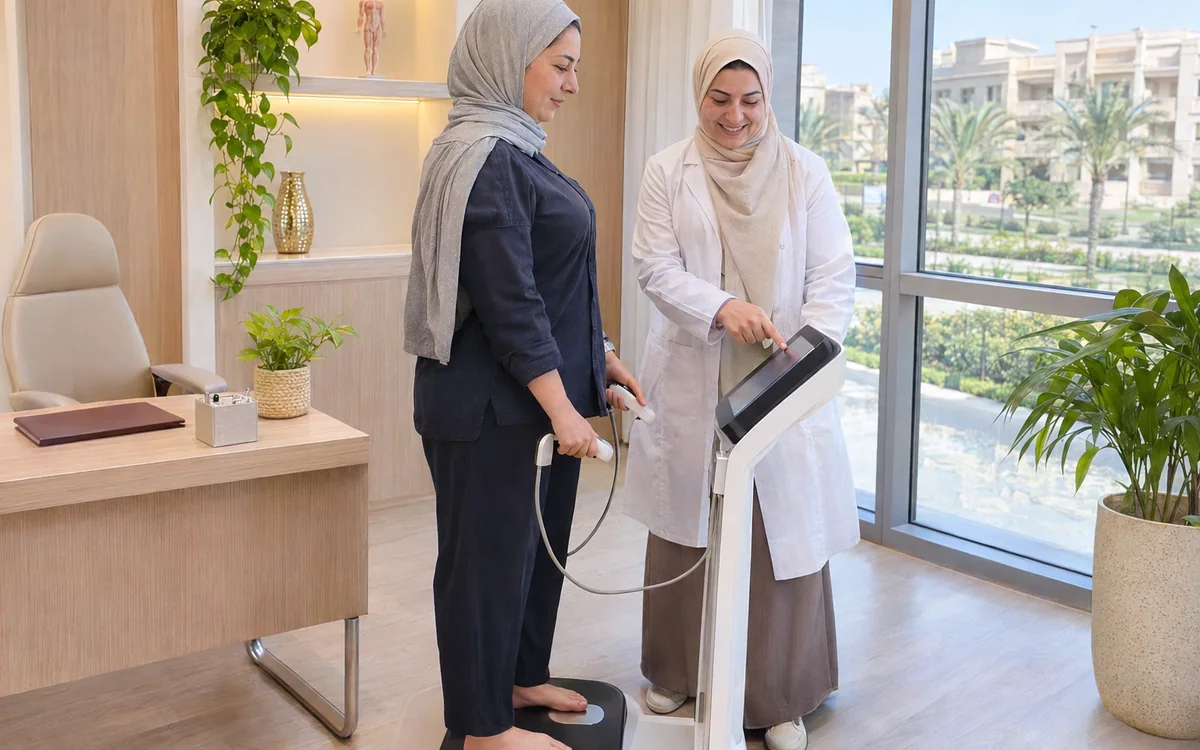
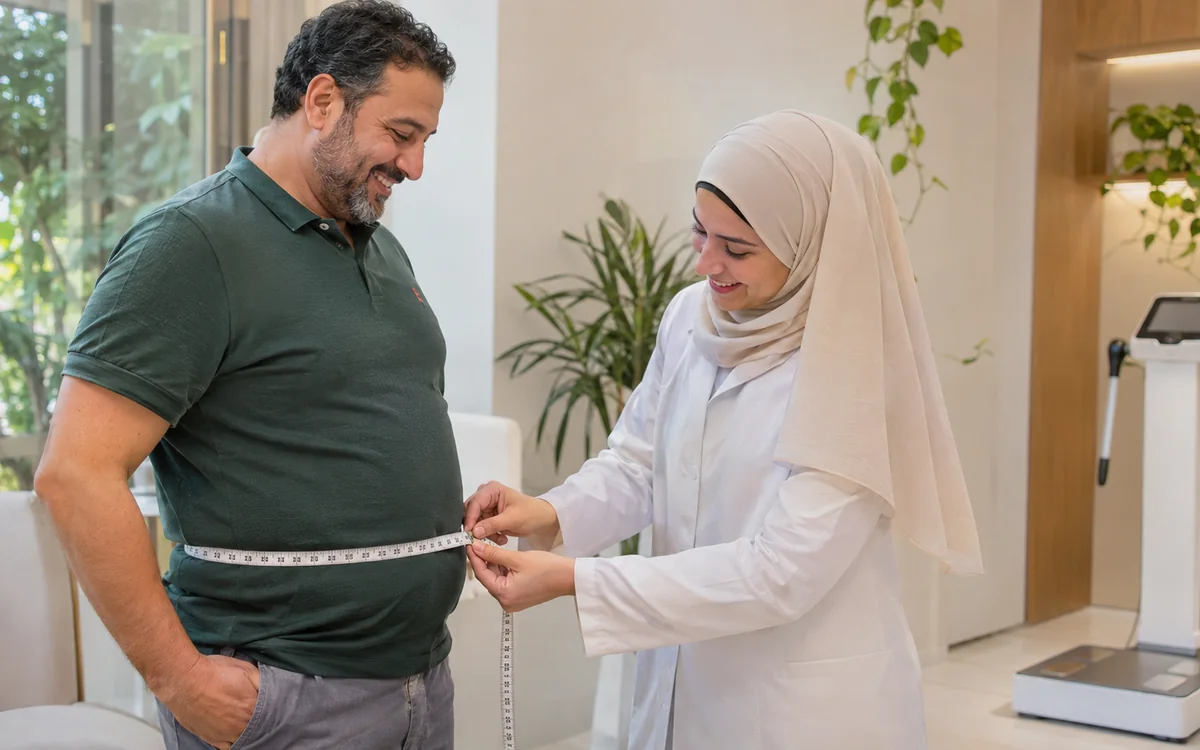
Following clinical history, the physician measures resting blood pressure and standardized waist circumference, followed immediately by an InBody clinical bioelectrical impedance body composition analysis within the clinic. The InBody scan provides precise compartmental quantification of total body fat percentage, segmental skeletal muscle mass in each limb and the trunk, visceral fat level, basal metabolic rate, and extracellular-to-total body water ratios [1, 2]. These metrics distinguish whether abdominal protuberance reflects dangerous visceral adiposity, fluid retention, or benign subcutaneous deposits, establishing realistic clinical milestones [2, 5]. For practical details on test preparation and metric interpretation, review our guide on the InBody test in Maadi.
At the conclusion of the consultation, you receive an individualized medical nutrition plan constructed specifically for your physiology and lifestyle—never a standardized template. The dietary structure utilizes accessible Egyptian household foods—such as ful, eggs, cottage cheese, portion-controlled baladi bread, grilled poultry, fish, and abundant seasonal vegetables—with strategic protein distribution to maintain continuous satiety and steady energy, coupled with a joint-safe daily movement plan and a clear follow-up schedule [1, 4, 5].
Lab tests and medical reports to bring to your Maadi nutrition visit
To optimize the clinical value of your initial consultation at the Maadi branch, we recommend bringing any routine laboratory results completed within the past six months, alongside recent diagnostic imaging reports if available. Having baseline labs during your first appointment allows the clinical team to evaluate your metabolic profile immediately, identifying whether subclinical insulin resistance, hepatic steatosis, or thyroid slowing requires targeted management alongside nutritional changes [1, 2, 5]. If you do not have recent blood tests, do not arrange an expensive commercial panel in advance; our physicians will evaluate your clinical status first and order only the precise diagnostic tests that will alter your management plan [2, 5].
The most clinically valuable tests for evaluating male abdominal adiposity and metabolic syndrome encompass: 1) Fasting plasma glucose and HbA1c to quantify glycemic control and rule out prediabetes or occult type 2 diabetes. 2) A comprehensive lipid panel including total cholesterol, triglycerides, LDL, and HDL; elevated triglycerides accompanied by low HDL represents a hallmark biomarker of visceral adiposity. 3) Liver function tests, including ALT and AST enzymes, to screen for metabolic dysfunction-associated steatotic liver disease and hepatic inflammation. 4) Renal function tests and serum uric acid to screen for hyperuricemia, frequently clustered with visceral adiposity. 5) An abdominal ultrasound report, if recently performed, to assess liver texture and exclude gallstones [2, 3, 5].
Additionally, prepare a complete list of your current prescription medications and over-the-counter supplements, or photograph the packaging labels on your smartphone. Certain antihypertensive agents, psychiatric medications, or corticosteroids can influence fluid balance, weight regulation, and metabolic rate, requiring careful coordination with your clinical nutrition plan [2, 5].
Structured follow-up protocols and long-term sustainable habits
Shedding deep abdominal fat is not a short sprint; it is a systematic recalibration of your metabolism, body composition, and daily behaviors. Consistent clinical follow-up at La Rose is the vital factor that distinguishes temporary weight loss from permanent abdominal flattening and long-term metabolic health. Follow-up consultations are typically scheduled weekly or bi-weekly depending on individual requirements. At each visit, waist circumference is remeasured and an InBody analysis is conducted to track visceral fat reduction and verify skeletal muscle preservation [1, 4, 11].
If the bathroom scale remains unchanged while waist tape dimensions decrease and InBody scans reveal lower visceral fat and preserved muscle mass, the physician reassures you that positive tissue remodeling is occurring. If true weight plateaus occur, we systematically adjust caloric targets, macronutrient ratios, or resistance exercise volume to overcome adaptive thermogenesis without severe deprivation [4, 5, 11]. Regular clinical visits also equip you with practical strategies to manage corporate dinners, business travel, social obligations, and high-stress weeks without falling off track [4, 5].
Once you attain your target visceral fat score (below level 10 on the InBody scale) and a healthy waist circumference (under 94 cm for men), we transition your protocol into a structured maintenance phase. During maintenance, calories are progressively titrated to energy balance while reinforcing sustainable nutrition and activity habits, guaranteeing that visceral fat remains permanently controlled [1, 4, 5].
Address, clinic hours, and booking your nutrition visit in Maadi
The La Rose Clinics Maadi branch is located at: 14 El-Mokhtar Street, off El-Nasr Street, directly behind QNB Bank, New Maadi, Cairo. Convenient street parking is available directly in front of the clinic building. Operating hours at the Maadi branch are Saturday, Monday, and Tuesday from 2 to 8 pm, with Dr Shimaa Fouad's consultation hours running from 3 to 8 pm. To book your consultation or ask any questions, call or message via WhatsApp on 010 4066 1893 [3].
Reaching the clinic is straightforward from across Maadi and surrounding neighborhoods based on recorded road measurements: from Maadi Grand Mall, the clinic is approximately 1.6 km and about 5 minutes by car; from Degla (Degla Square), it is about 2.6 km and about 7 minutes by car; from Road 9, Maadi, it is approximately 3 km and about 8 minutes by car; from Old Maadi and Maadi Metro Station, it is about 3.4 km and about 8 minutes by car; from El Basatin, it is about 3.5 km and about 10 minutes by car; from Corniche El Maadi, it is about 5.5 km and about 11 minutes by car; from Tora El-Balad, it is about 6 km and about 15 minutes by car; and from Zahraa El Maadi, it is about 7 km and about 11 minutes by car [3]. Travel times are approximate and vary with peak traffic.
Critical medical alert: if you experience sudden crushing chest pressure radiating to the shoulder or jaw, acute severe shortness of breath, unexplained fainting, or sudden severe abdominal pain, these are medical emergencies requiring immediate presentation to the nearest hospital emergency room rather than an outpatient nutrition clinic. For non-urgent clinical evaluation of your abdominal fat and metabolic health, Book a consultation at the Maadi branch and take the first structured step toward reclaiming your health and vitality.